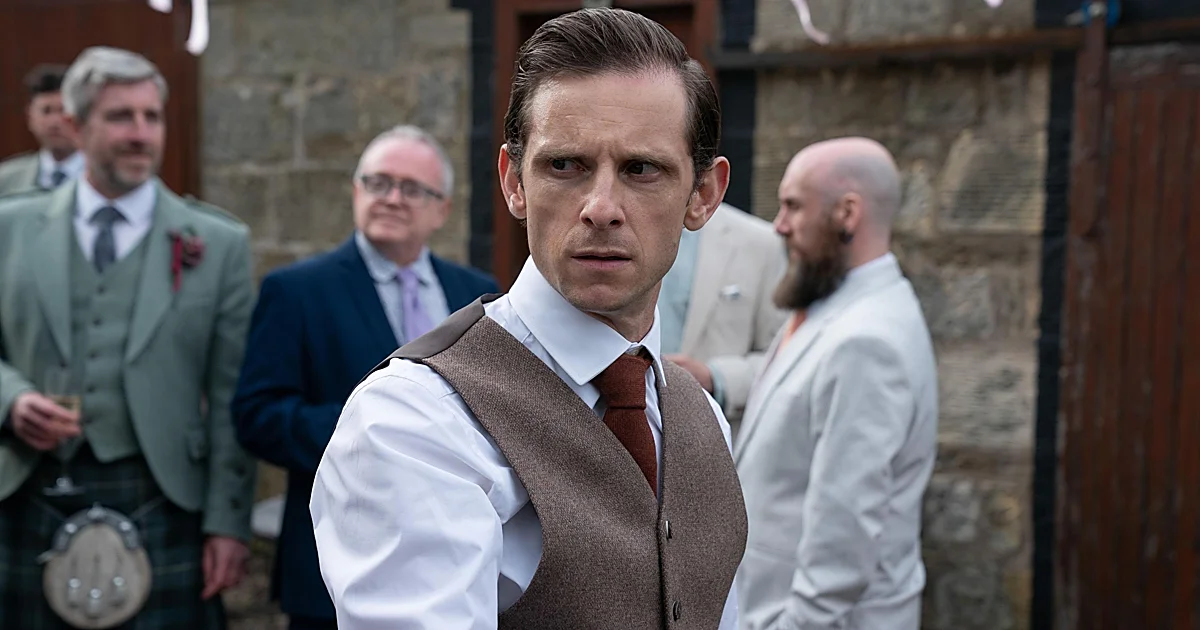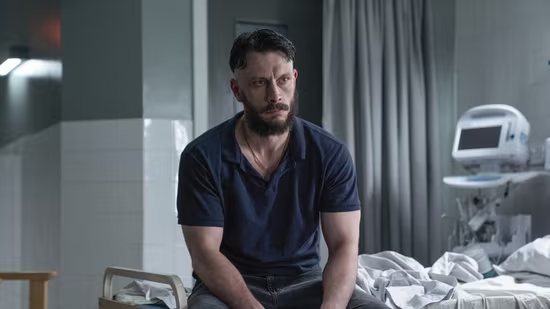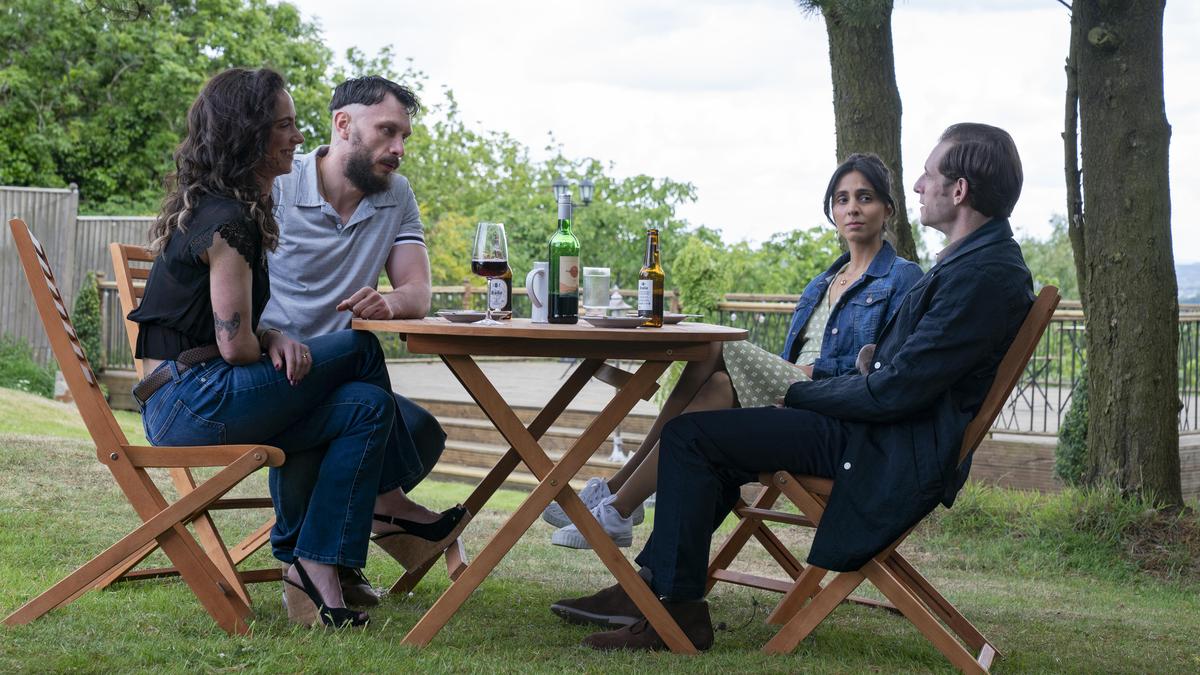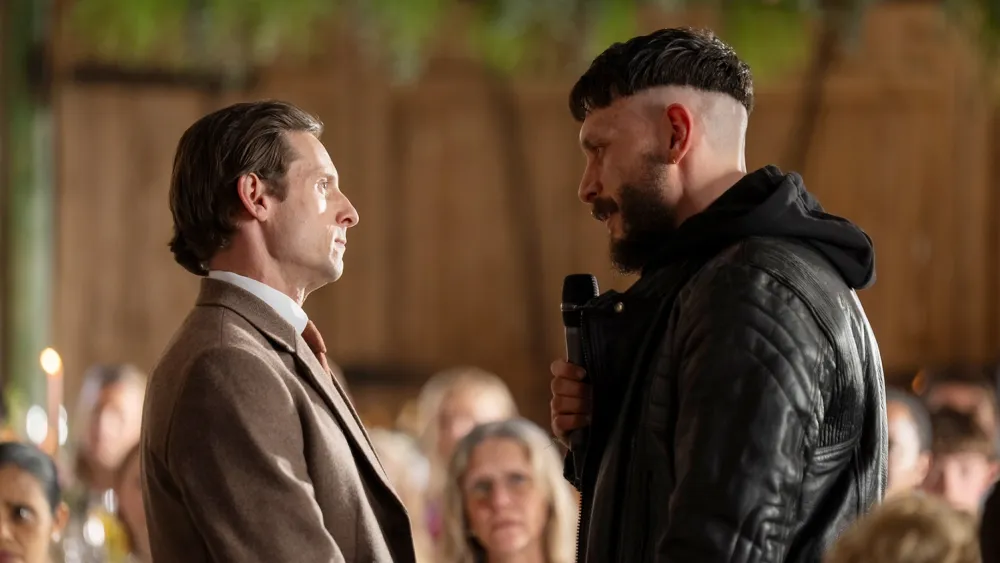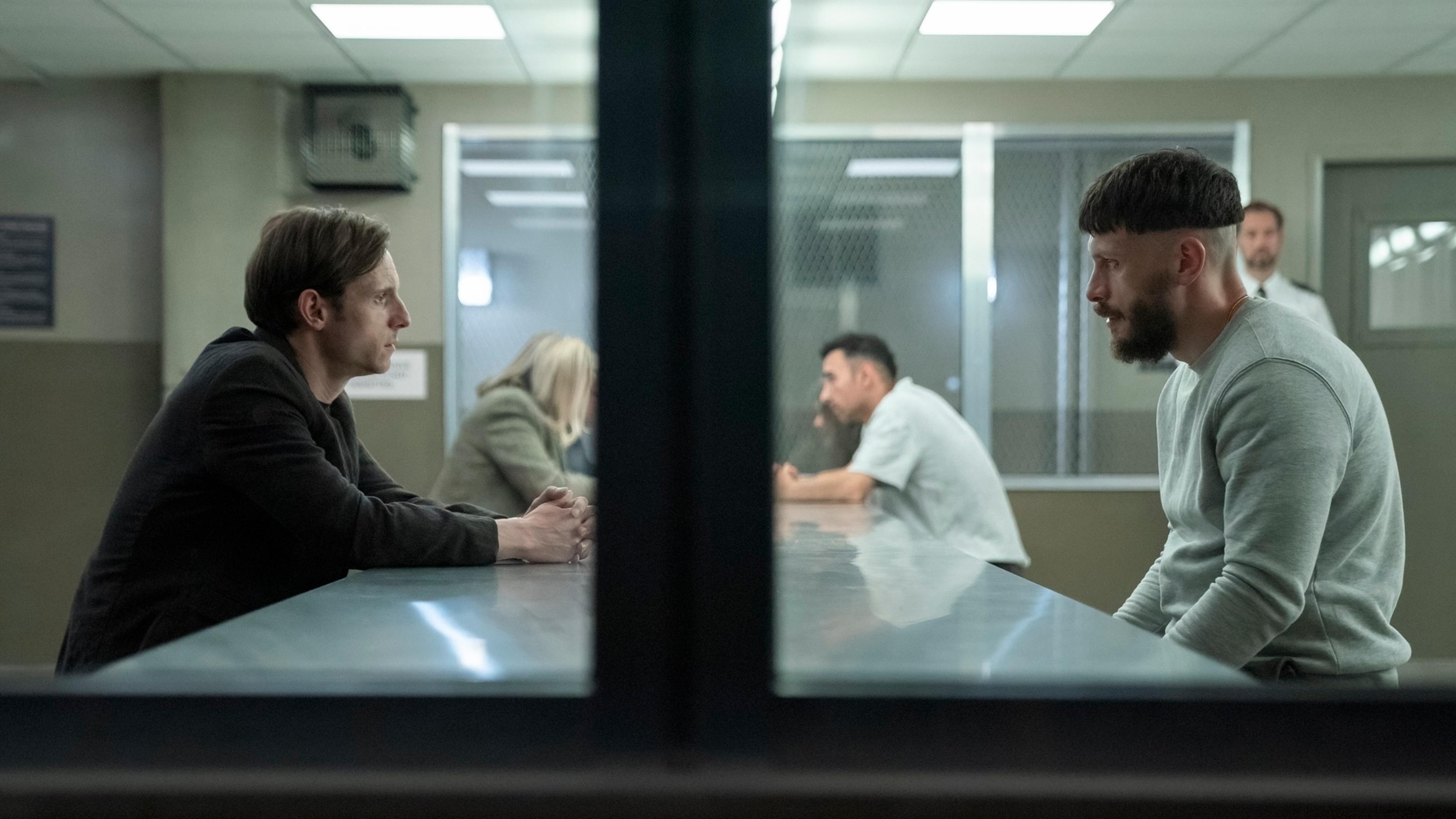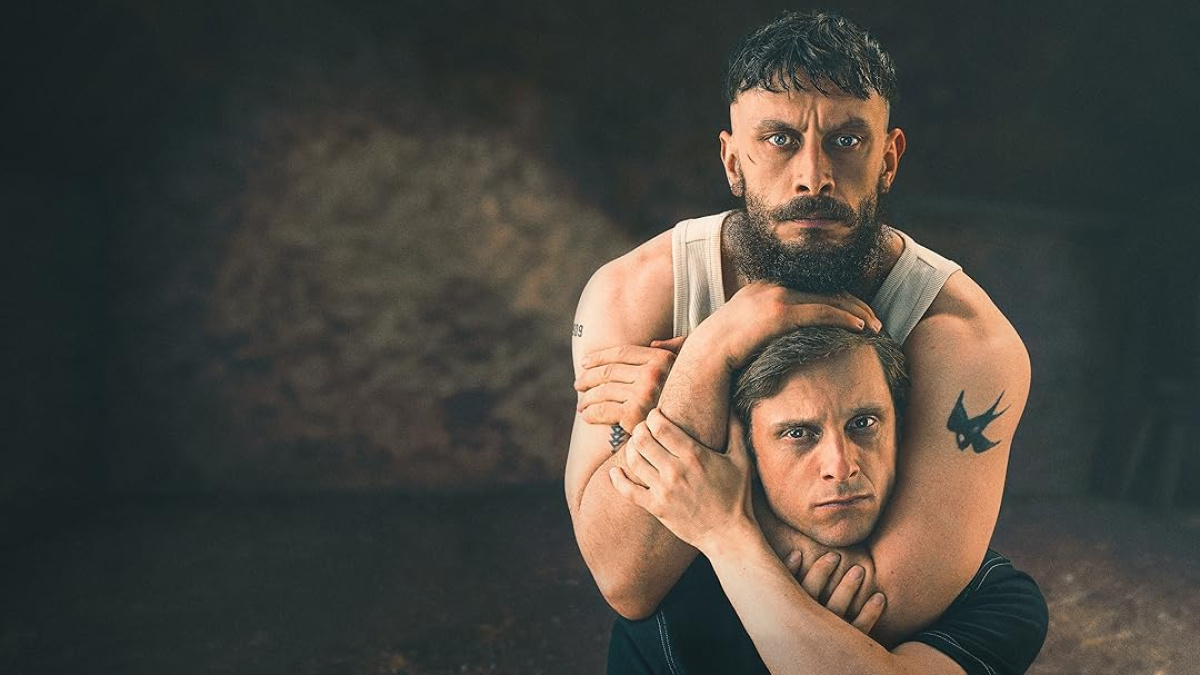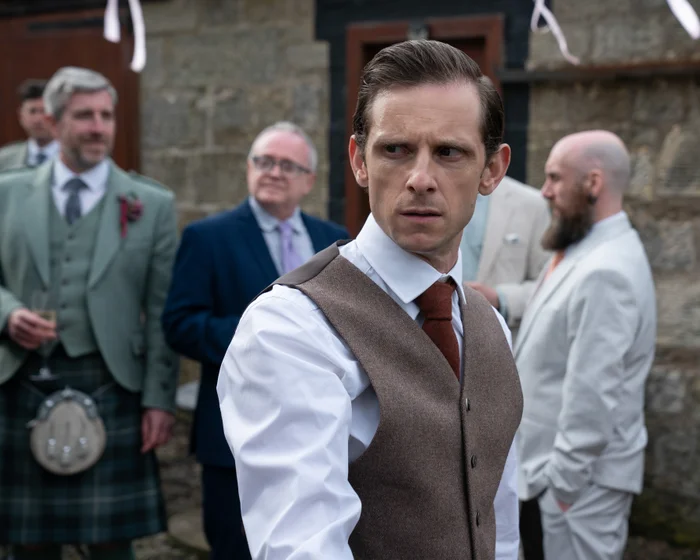
Richard Gadd, the creator of Baby Reindeer, has returned with a new series that asks some challenging questions.Taking its place alongside Louis Theroux’s Inside the Manosphere and the award-winning UK drama Adolescence, Half Man makes no apologies for its focus on aggression and masculinity. Over six episodes, we bear witness to a type of origin story, covering the complex relationship between Niall (played by Jamie Bell and Mitchell Robertson) and Ruben (Gadd and Stuart Campbell), who are forced into a brotherhood that shapes their whole lives.Theirs is a story of turmoil and anguish. Punctuated by devastating life events, it takes its characters to the darkest and most destructive places, and asks the audience to decide if they deserve to resurface.Flippable Widget #1What does it mean to be a man?The biggest question of the series is also one of the biggest questions of our time. Half Man asks what it means to be a man by exploring masculinity, violence, destructive tendencies and shame.Through the contrast of its main characters – Niall is mild and shy; Ruben overtly cruel – the show brings nuance to the way “manhood” shows up for different men. A violent man can be one who negotiates with his fists, or one who manipulates in private. The show toys with conflicting definitions, exploring the intersections of bravado and queerness, sex and sexuality, cruelty and humility.Ruben is a criminal. An abuser. A reckless, impulsive and unpredictable predator. But Niall is also an oppressor of sorts; self-centred and egotistical to the point of alienating family and friends. He typifies victimhood, using his past as an excuse for appalling behaviour in the present. This type of toxic masculinity is not as obvious as Ruben’s, but Half Man pointedly asks: does that make it better?Flippable Widget #2Can people ever really change?Over the course of his life, Niall shows a lot of empathy for Ruben, who effectively becomes his step-brother. He paints him as a victim of emotions he cannot control, his path to destruction laid out in adolescence.Both Niall and Ruben spend 30-odd years making the same decisions with predictable results. But with Ruben in prison, Niall seems ready to step out of his shadow. He spends years forging his own path and sense of self … only to find himself back where he started, on the most important day of his life.As the two men come face to face with their past, they are in many ways the same people we met as boys. Ruben’s anger boils over and Niall retreats into self-pity. Nothing has changed. This is always where they would end up. Viewers are forced to reckon with the idea that it’s never too late to change. Maybe it is.As it moves between past and present, Half Man becomes a story of inevitability: two men destined to find one another again and again.Flippable Widget #3Do monsters walk among us?Ruben is almost a caricature. His physical violence is sickening. He communicates in grunts and smirks. When he and Niall face off in a final showdown – Ruben’s shirt off, hands bound, skin glistening with sweat – he is more cartoon villain than man.But that might be the point. He is played as a monster because that’s what society needs him to be. That’s how we know who’s “bad” and who’s not. But the show challenges us to reconsider. An abuser can be charismatic, polite, a father, a friend.Flippable Widget #4As Half Man takes us on a journey to understand how Ruben’s past shaped the man he became, we see how dehumanising a dangerous man can help him to slip by, othered and unnoticed.This show touches on many topics, including family, identity and truth. But ultimately, it is a terrifying exploration of manhood in all its often ugly complexity. It’s an uncomfortable watch that reminds us that men like these are everywhere – and some are easier to identify than others.Watch the new series Half Man, only on Stan.
Half Man: the new drama that asks some tough questions
Half Man blasts onto our screens to explore manhood, identity, obsession and love
658 words~3 min read