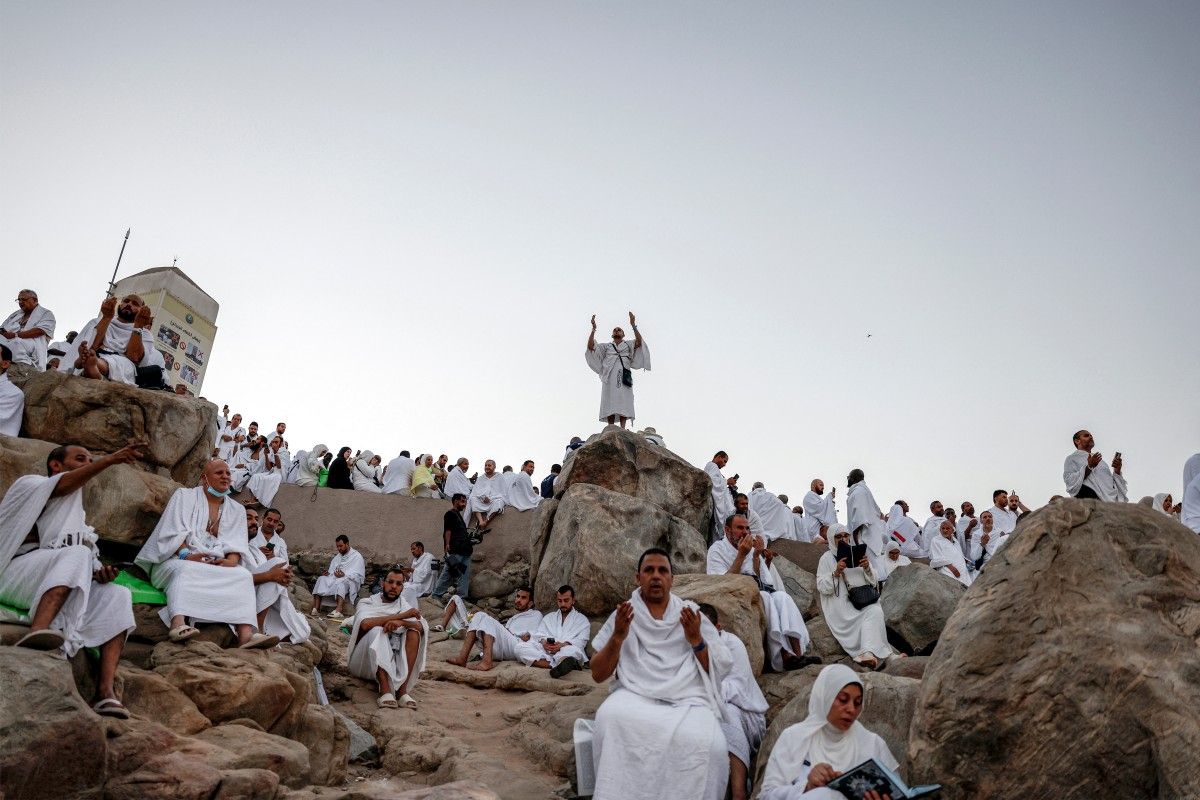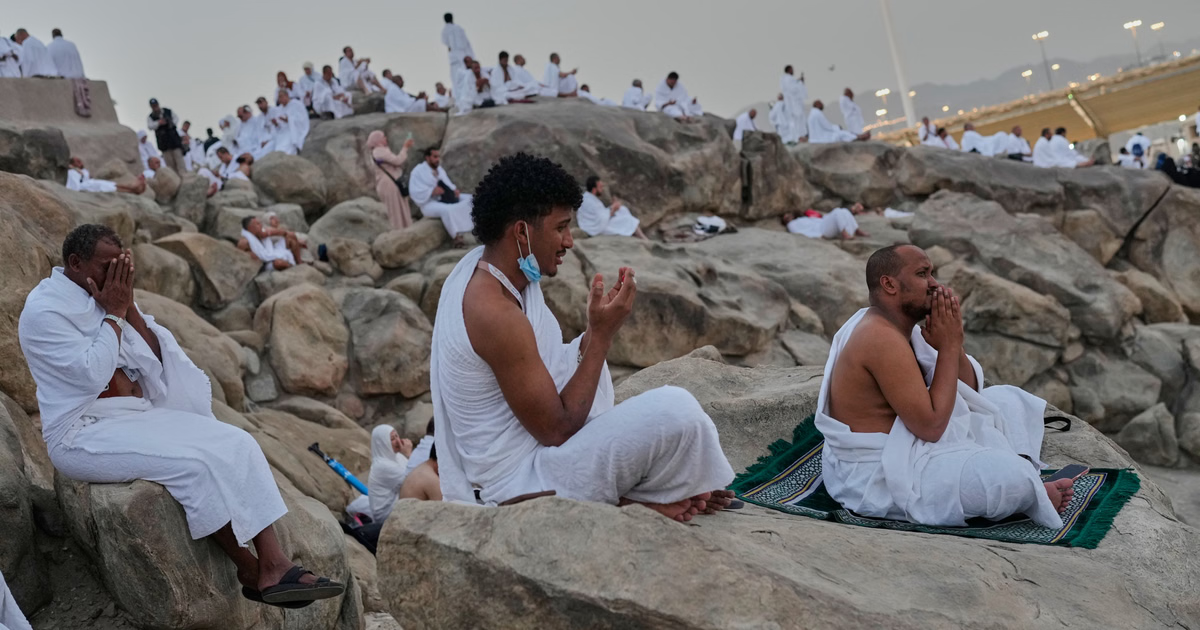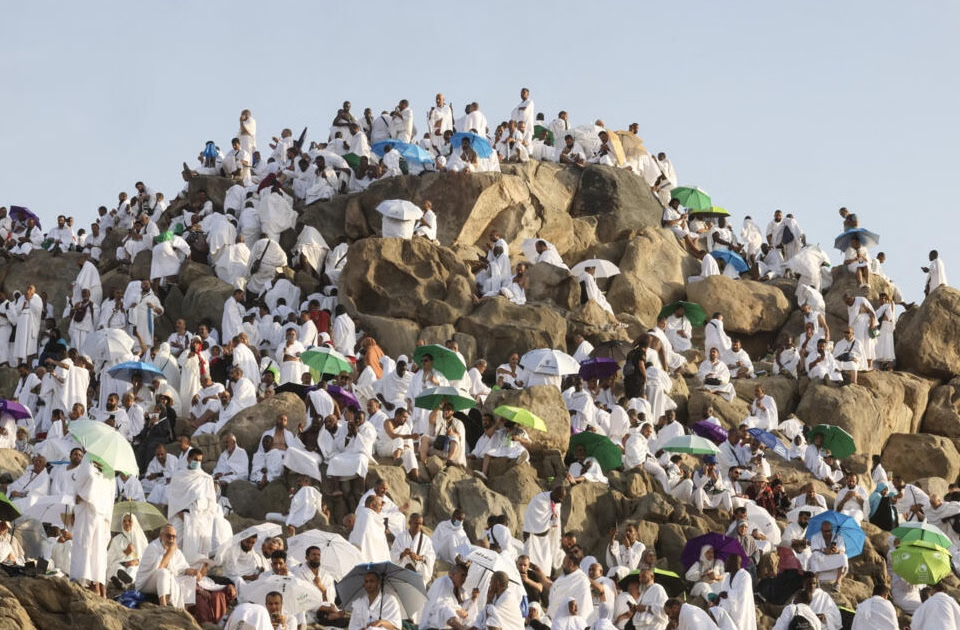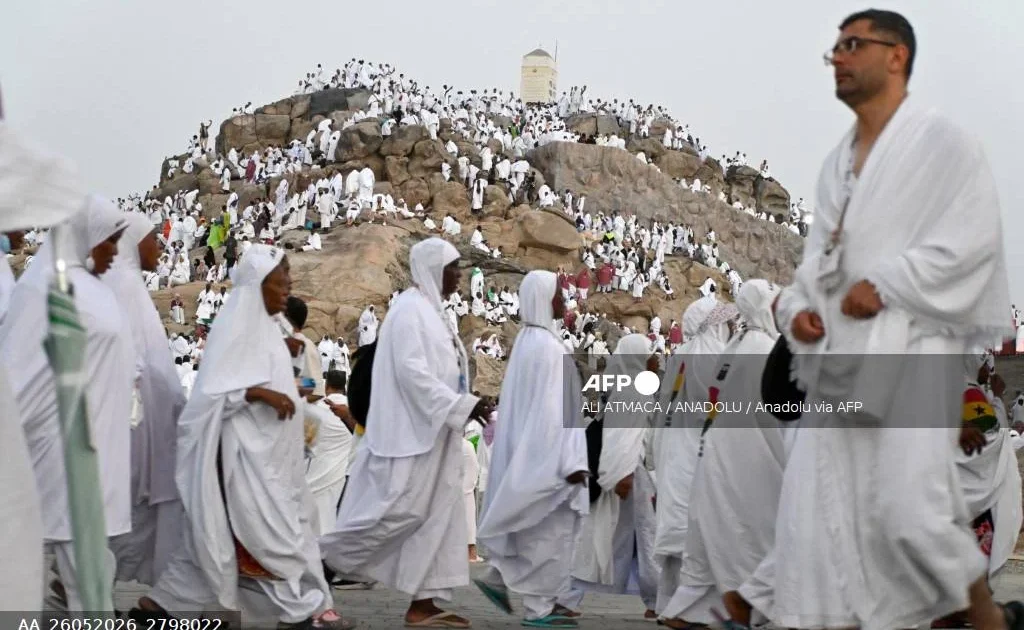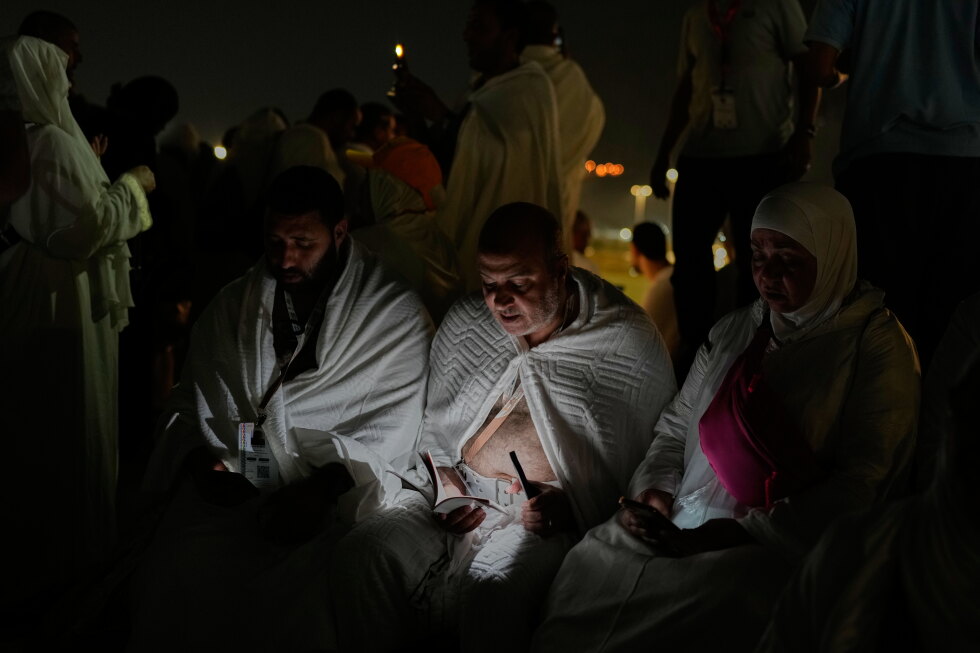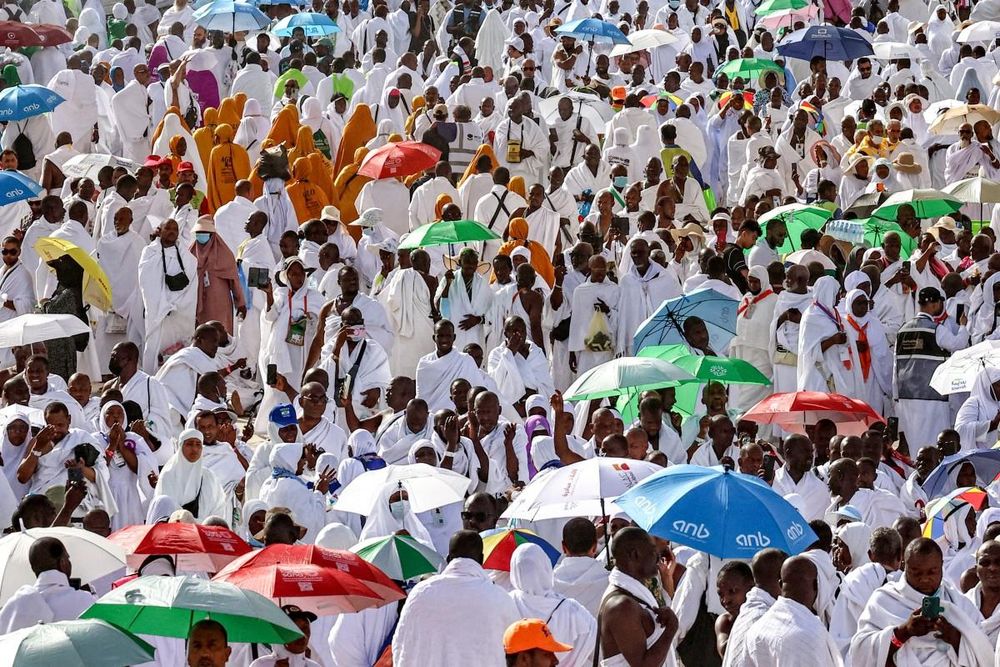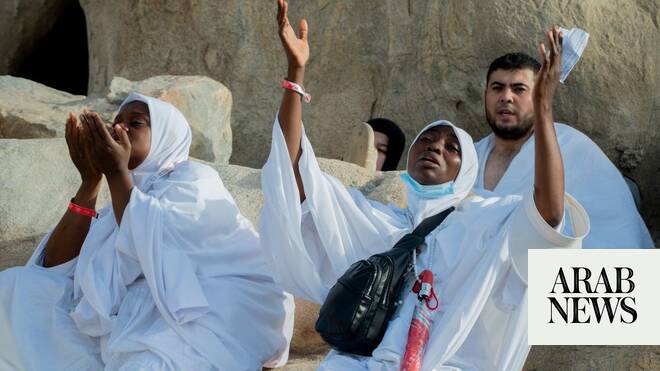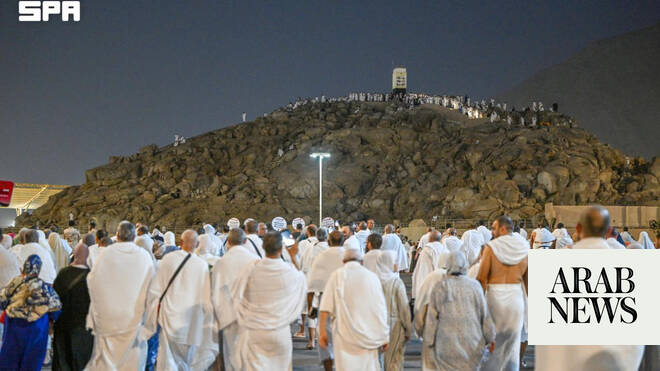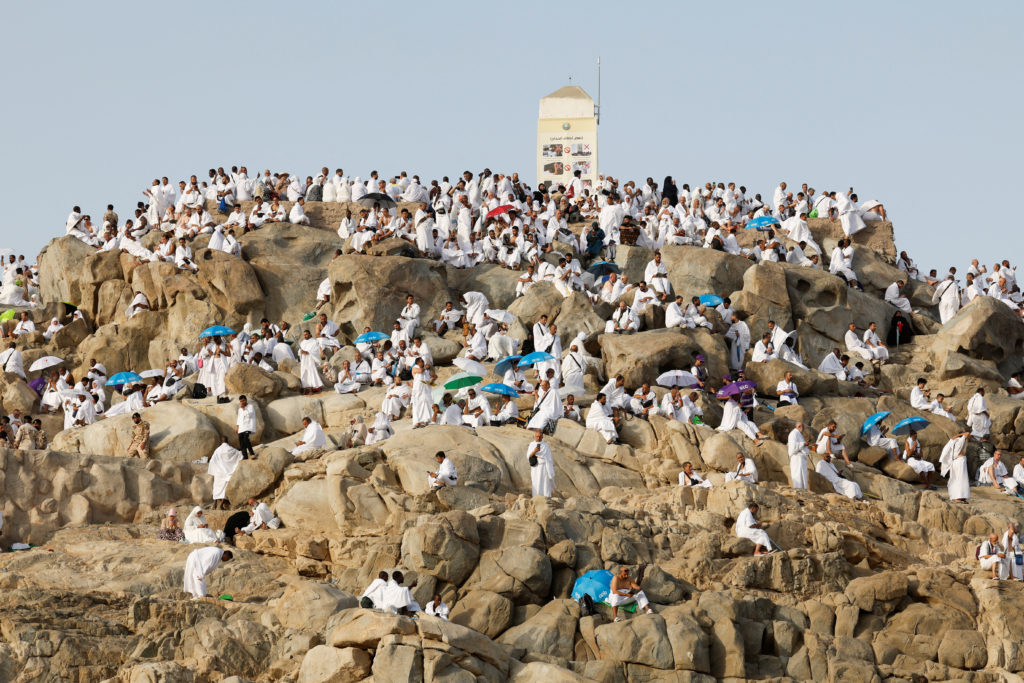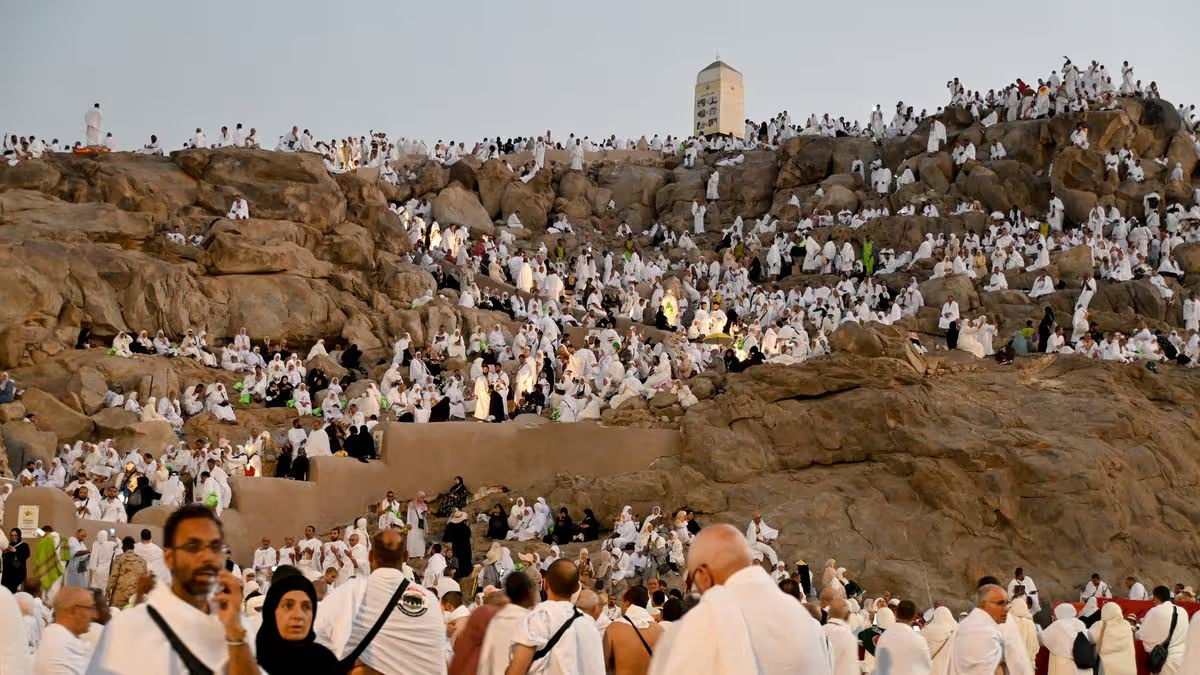
Today07:34 BSTPilgrims head for Mount Arafat todayMuslims are marking the Day of Arafah today, which will see pilgrims make their way from Mina to a nearby hillside and a plain called Mount Arafat and the Plain of Arafat in Saudi Arabia.It falls on May 26, 2026, the day immediately preceding Eid al-Adha and is the second day of the Hajj pilgrimage, observed with intense prayer.Muslim pilgrims gather at Jabal al-Rahmah and spend the night in prayer(Image: Anadolu via Getty Images)Today06:56 BSTHajj, A History: Modernity and onward Today, the ancient pilgrimage has entered the sci-fi era. To cope with millions of faithful flooding into Mecca, the journey has been completely transformed by hyper-modern tech, space-age architecture, and tight security.The jet age boom (1925 – 1950s)When Saudi Arabia took control of the region, they immediately crushed the tribal raiding that had plagued pilgrim caravans for centuries. Then came commercial flights, replacing gruelling camel treks and steamships. Suddenly, pilgrim numbers skyrocketed from tens of thousands to hundreds of thousands.The rise of the tent city (1950s – 1980s)Mecca had to grow—and fast. The Grand Mosque was expanded to fit 300,000 worshippers, and the historic walking path between Safa and Marwah was roofed over to shield pilgrims from the blistering sun. Nearby, the valley of Mina was transformed into a massive, structured tent city.The safety overhaul (1990s – 2010s)With millions now attending, crowd control became a matter of life and death. The government launched a multi-billion-pound safety blitz:The Jamarat Bridge: Rebuilt into a high-tech, multi-level pedestrian complex to prevent dangerous stampedes during the stoning ritual.Fireproof Tents: Following a devastating blaze in 1997, traditional cloth tents were replaced with permanent, air-conditioned, fireproof structures.The Hajj Metro: An elevated light rail train opened in 2010, bypassing highway gridlock to shuttle hundreds of thousands of pilgrims between holy sites.The sci-fi future (2020s – now)Today, the Hajj is fully digital. Pilgrims use the "Nusuk" app, track their journey with smart ID bracelets, and are guided by AI crowd-monitoring. High-tech robots even roam the Grand Mosque to sanitise floors and hand out holy Zamzam water.Under Vision 2030, the mosque can now host a staggering 2.5 million people at once. Yet, despite the trains, robots, and air-conditioning, the core rituals remain exactly identical to the steps walked 1,400 years ago.Today05:30 BSTHajj, A History: Kings, camels, and colonial spiesFor centuries, the Hajj wasn’t just a spiritual journey—it was a high-stakes adventure through shifting empires, bandit-filled deserts, and wartime politics. Here is how the legendary trek survived through the ages.The mega-caravans (7th – 15th Century)Travelling alone to Mecca was a death wish due to brutal weather and ruthless desert bandits. The solution? Safety in numbers.Pilgrims banded together to form mega-caravans. Tens of thousands of people and endless lines of camels departed from major hubs like Baghdad, Damascus, and Cairo. To keep them safe, empires appointed an "Amir al-Hajj"—a powerful military commander whose sole job was to fight off bandits.Empires and the holy train (16th – early 20th century)By the 1500s, powerful Muslim empires like the Ottomans took over the bill, pouring fortunes into funding and protecting the pilgrimage.Imperial wealth was used to rebuild the Kaaba and protect the Grand Mosque from flash floods. The ultimate game-changer came in 1908 when the Ottomans built the Hejaz Railway. This revolutionary train line from Damascus to Medina cut a deadly 40-day desert trek down to just five days.The colonial clawback (19th – early 20th century)By the 1800s, European superpowers like the British and Dutch ruled over millions of Muslims in India and Indonesia. Terrified of political rebellion, they stepped in to aggressively control the Hajj.Disease Lockdowns: Steamships brought a massive boom in travellers—but also deadly cholera outbreaks. European rulers set up strict quarantine camps on remote islands to medically screen pilgrims.Hajj Bureaus: The West created specialised passports and tracking bureaus. This was a massive surveillance operation designed to monitor travellers and crush anti-colonial political movements before they could start.Muslim pilgrims gathering at Jabal al-Rahmah (Mount of Mercy)(Image: Anadolu via Getty Images)Today04:22 BSTHajj, A history: Ancient times Every year, millions of Muslims make the ultimate journey of a lifetime to Mecca. But while modern pilgrims use high-tech apps and air-conditioned trains, the breathtaking story of the Hajj actually stretches back four millennia.From a desperate mother stranded in a scorching desert to a historic final sermon, this is the extraordinary story of how the world's most famous pilgrimage came to be.A mother's desert miracle (c. 2000 BCE)The story begins with a heartbreaking test of faith. According to Islamic tradition, the Prophet Ibrahim (Abraham) was commanded by God to leave his wife, Hajar, and their baby son, Ismail, alone in the brutal, barren valley of Mecca.Stranded in the blistering heat, a desperate Hajar sprinted between the hills of Safa and Marwah seven times searching for water. Just when all hope seemed lost, the Angel Jibril (Gabriel) scraped the earth—and a miraculous spring, the Well of Zamzam, gushed from the sand.Years later, Ibrahim returned. Together with his son, they built the Kaaba—the iconic black cube structure—as the first house dedicated to worshipping one God, inviting the world to visit.The age of idolsOver the centuries, the original spiritual message was lost. During a chaotic era known as the "Age of Ignorance," pagan tribes took over Mecca and filled the sacred Kaaba with hundreds of idols. The holy pilgrimage was completely distorted, turning into a mix of pagan rituals, poetry competitions, and noisy trade markets.The Islamic blueprint (632 CE)Everything changed in 630 CE when the Prophet Muhammad reclaimed Mecca, destroying every single idol to rededicate the Kaaba to one God.In 632 CE, just months before his death, the Prophet led tens of thousands of followers on The Farewell Pilgrimage. Here, he locked in the permanent blueprint for the Hajj. He personally demonstrated the exact rituals used today—including circling the Kaaba (Tawaf) and walking between the hills (Sa'i).Standing before the crowd, he delivered a powerful final sermon demanding global unity and equality—establishing a sacred tradition that remains completely unchanged to this day.Today02:29 BSTThe key rituals of HajjIhram: Before starting, pilgrims enter a state of spiritual purity called Ihram. Men wear two simple, seamless white cloths, and women wear modest, identical clothing to strip away markers of wealth and status, symbolising total equality before God.Tawaf: Pilgrims circle the Kaaba - the black cube-shaped structure at the centre of the Grand Mosque in Mecca - counter-clockwise seven times.Sa'i: Pilgrims walk back and forth between the hills of Safa and Marwa to honour Hajar's desperate search for water for her son, Ishmael.Day of Arafat: Considered the spiritual peak of the Hajj. Pilgrims spend the day on the plains of Mount Arafat to pray, reflect, and seek God’s mercy and forgiveness.Stoning of the Devil: Pilgrims gather pebbles in Muzdalifah and throw them at three pillars in the city of Mina. This ritual symbolises the rejection of temptation and evil, commemorating Prophet Abraham’s faith.Eid al-Adha & Qurbani: After the stoning, pilgrims perform an animal sacrifice (or purchase a sacrifice voucher) to commemorate Abraham's willingness to sacrifice his son, distributing the meat to the poor.Final Tawaf: Pilgrims perform a final farewell walk of the Kaaba before concluding the pilgrimage.Today01:10 BSTWhat was the first ever Hajj like?The first official Islamic Hajj was led by the Prophet Muhammad in 632 CE (10 AH), an event known as the Farewell Pilgrimage.While Muhammad established the current rituals, the spiritual origins and rites of the pilgrimage date back to 2000 BCE, originating with the Prophet Ibrahim (Abraham) and his son Ismail.25th May22:40 BSTPilgrims express hope that war in Iran will endMany pilgrims who spoke to the AFP news agency expressed hope that the war in Iran would soon end."The war in Iran has affected the entire world. Nobody wants wars or harm to countries and peoples," said Mohammed Chahada, an Egyptian man in his 50s, as he walked through a crowd exiting the Grand Mosque.Despite the uncertainty over the war, pilgrims said they were overjoyed to be in Mecca."I have wanted to perform the pilgrimage my entire life, for 40 or 50 years," said Jreish Mohammed, a 68-year-old from Morocco. "And this year, my dream came true."25th May21:43 BSTPilgrims brave intense heatSaudi Arabia's National Center for Meteorology said daytime temperatures in Mecca during the Hajj this week are expected to range between 42C and 47C.Pilgrims have been braving the heat in Mecca(Image: STRINGER/EPA/Shutterstock)25th May21:22 BSTIranians attend Hajj despite war with the US and IsraelIran's allocation was reportedly cut to 30,000 pilgrims this year, nearly two-thirds fewer than usual, amid tensions over the war in the Middle East.Iranian travel plans had shifted to using overland convoys through Iraq, before the ceasefire restored air access and enabled Iranian pilgrims to fly into Medina from April 25. Semafor reports.In 2016, no Iranian attended Hajj amid a rupture of diplomatic ties between the two countries and accusations from Tehran that Riyadh wasn’t doing enough to protect pilgrims.25th May20:25 BSTOver 1.5 million pilgrims begin Hajj amid regional tensions More than 1.5 million pilgrims have arrived in Saudi Arabia for the annual Hajj pilgrimage, which is taking place amid a fragile ceasefire in the Iran war and a global energy crisis.Saleh bin Saad al-Murabba, commander of the Hajj passport forces, said that more than 1.5 million pilgrims had entered the kingdom by Friday, with more expected.25th May20:17 BSTTrump wants Saudi Arabia and other Gulf states to join Abraham AccordsAbout 1.5 million Muslim pilgrims are performing the Hajj in Mecca as Saudi Arabia hosts the annual pilgrimage.It comes as Donald Trump said in a Truth Social post this morning that following discussions over the weekend with Persian Gulf and other regional leaders, "it should be mandatory that all of these Countries, at a minimum, simultaneously, sign onto the Abraham Accords". The set of agreements has normalised diplomatic relations between Israel and Arab states including Bahrain, the UAE, Morocco and Sudan."It should start with the immediate signing by Saudi Arabia and Qatar, and everybody else should follow suit. If they don't, they should not be part of this Deal in that it shows bad intention," Trump said."In speaking to numerous of the Great Leaders mentioned above, they would be honored, as soon as our Document is signed, to have the Islamic Republic of Iran as part of the Abraham Accords. Wow, now that would be something special! This will be the most important Deal that any of these Great, but always in Conflict Countries, will ever sign."He added: "Therefore, I am mandatorily requesting that all Countries immediately sign the Abraham Accords, and that, if Iran signs its Agreement with me, as President of the United States of America, it would be an Honor to have them also be part of this unparalleled World Coalition."25th May19:45 BSTWhat does Hajj mean?Hajj is an Arabic word that literally means "to intend a journey" or "to set out with a specific purpose".In Islamic belief, its roots are linked to the Prophet Abraham (Ibrahim) and his son Ishmael (Isma‘il), who are said to have been commanded by God to build or rebuild the Kaaba in Mecca.The pilgrimage rituals associated with Hajj are understood in Islam as being restored and formalised later by the Prophet Muhammad in the 7th century CE.25th May18:04 BSTWhy Muslims touch the holy KaabaTouching the holy Kaaba is a deeply symbolic act of devotion for Muslims.While they do not worship the structure itself, many touch the surface to follow the tradition of Prophet Muhammad and honour the historical legacy of the prophets.Touching the Kaaba is believed to bring spiritual blessings and the forgiveness of sins.Many Muslims touch the Kaaba during Hajj(Image: Saudi Press Agency/APAImages/Shutterstock)25th May17:02 BSTKey steps of the Hajj pilgrimageHajj unfolds through a series of sacred rites carried out over several days in and around Mecca, each marking a different stage of the spiritual journey.Day 1Step 1: Ihram (entering the pilgrimage) - Pilgrims enter a state of spiritual purity, wearing simple white clothing and declaring their intention to perform Hajj.Step 2: Tawaf (circling the Kaaba) - Worshippers circle the Kaaba seven times in the Grand Mosque at Mecca.Step 3: Sa’i (walking between Safa and Marwah) - Pilgrims walk back and forth between two hills, retracing a historic act of devotion.Step 4: Mina (the tent city) - Millions gather in a vast encampment outside Mecca, spending time in prayer and reflection.Day 2Step 5: Arafat (the central day of Hajj) - Considered the most important day, pilgrims gather at Mount Arafat in prayer and reflection.Step 6: Muzdalifah (overnight under the sky) - Worshippers sleep outdoors and collect small stones for the next ritual.Day 3Step 7: Stoning of the pillars - Pilgrims symbolically throw stones at pillars representing temptation and evil.Step 8: Eid al-Adha sacrifice - The festival begins, marking an act of devotion linked to Prophet Ibrahim.Step 9: Shaving or cutting hair - Pilgrims mark spiritual renewal by cutting or shaving their hair.Step 10: Final Tawaf - A final farewell circling of the Kaaba before leaving Mecca.Days 4 and 5Return to Mina - Pilgrims repeat the stoning ritual at all three pillars before completing their pilgrimage.25th May16:15 BST'I'm in a state of blessing and happiness'Egyptian pilgrim Samya Abdul Moneim says she is grateful to God have made it to the Hajj - which is a requirement for every Muslim who can afford it and is physically able to make it."I am in a state of blessing and happiness," she told AFP. "It''s an indescribable feeling, truly. I mean, thank God, I am in a blessing."25th May15:37 BSTPilgrims brave intense Mecca heatAs they brave the intense heat to perform religious rituals, many pilgrims have been seen using umbrellas for shade and carrying handheld fans.Volunteers are also handing out water bottles to help them stay hydrated and fans spray fine mists of water.Mecca has recorded sweltering highs of 44C today.Saudi Arabia saw highs of 44C today(Image: STRINGER/EPA/Shutterstock)Pilgrims have braved the intense heat in Mecca(Image: STRINGER/EPA/Shutterstock)25th May15:12 BSTHajj pilgrimage begins against backdrop of fragile Iran ceasefireWorshippers have been pouring into Saudi Arabia, with the mass gathering taking place against a backdrop of a fragile ceasefire in the US-Iran war.Diplomic efforts are ongoing in the background, with talks focusing on wider Middle East tensions and concerns around Iran's nuclear programme.The US has repeatedly called for Iran to give up its enriched uranium, while Iranian foreign ministry spokesman Esmaeil Baqaei said nuclear issues were not part of the initial framework and would instead be dealt with in later negotiations.Authorities in Indonesia, home to the world's largest Muslim population, have issued instructions to avoid pilgrims incurring extra travel costs. High fuel prices have meanwhile pushed up travel costs for pilgrims in India.25th May14:49 BST'For many pilgrims, it's the most difficult thing they will do in their lives'Youssef Chouhoud, a political scientist at Christopher Newport University in Virginia, said from the tent city of Mina that this Hajj "is, in effect, a hard reset for me"."I pray that I emerge on the other side of this journey with a new sense of purpose and the discipline to see it through," he told AP."It is for many pilgrims the most difficult thing they will ever do in their lives," he added. "But nothing this meaningful is ever going to be easy".Youssef said it was inspiring "to see so many who have sacrificed so much to be here [...] only to compete with one another in giving charity and helping each other along the way. All this in the hope that their intentions and actions may be accepted by their Lord."25th May14:23 BSTHajj 2026 explained as Eid Al-Adha date also confirmedMuslims across the world are arriving in the holy city of Mecca, where almost two million worshippers will embark on the sacred annual Hajj pilgrimage.Hajj is one of the Five Pillars of Islam, making it a mandatory religious duty for all adult Muslims considered physically and financially able to perform the pilgrimage. The journey must be made by all worshippers at least once in their lifetime.Two million Muslims are expected to perform Hajj this year(Image: AFP via Getty Images)Hajj symbolises unity and devotion as well as giving Muslims a chance to seek spiritual purification and strengthen their faith.Full story: What happens during Hajj 2026 as Eid Al-Adha day confirmed25th May14:03 BSTWhy do Hajj pilgrims pray together?Congregational prayer is a central part of Hajj, with worshippers often seen gathering in vast numbers to pray shoulder-to-shoulder across Mecca's holy sites.For many Muslims, this physical closeness stregthens community and spiritual connection.Praying together also demonstrates equality, unity, and submission to Allah without regard to race, nationality, or social standing.25th May13:22 BSTScenes from Mecca Striking scenes from Mecca show huge crowds of worshippers dressed in white as Hajj gets underway in Saudi Arabia.The simple garments, known as Ihram, are worn to symbolise equality and unity - regardless of wealth, nationality or status.Muslims line up to pray in Mecca(Image: Saudi Press Agency/APAImages/Shutterstock)An aerial view of the Grand Mosque complex(Image: AFP via Getty Images)25th May12:48 BSTHow many people attend Hajj?Hajj is one of the largest religious gatherings in the world, attracting millions of pilgrims to Saudi Arabia each year.This year, up to two million Muslims are expected to land in the holy city of Mecca.25th May12:26 BSTTimelapse: Hajj 2026 pilgrims circle KaabaA timelapse from Mecca shows Muslim worshippers performing Tawaf - the ritual of circling around the Kaaba. Tawaf is an obligatory act of devotion performed during both the Hajj and Umrah pilgrimages.Content cannot be displayed without consent25th May12:10 BSTHajj crowds grow as temperatures climbHotels, airports and roads are filling up fast as pilgrims continue pouring into Mecca for Hajj.Worshippers are being advised to protect themselves with an umbrella, hydrate often and avoid peak outdoor hours with temperatures set to reach highs of 44C today.Temperatures have exceeded 40C in Mecca(Image: AFP via Getty Images)25th May12:04 BST'Feast of sacrifice' at end of HajjThe majority of Muslims will be celebrating Eid al-Adha on May 27.The festival is one of the two blessed Eids celebrated as Muslims. It follows the end of the annual Hajj pilgrimage period, and is also known as the "Feast of Sacrifice".Performed after the Eid prayer, Muslims around the world come together to take part in Qurbani - the ritual sacrifice of livestoc, typically a sheep, goat, cow, or camel - reflecting the legacy of Prophet Ibrahim and his unwavering obedience to Allah.Qurbani commemorates the faith of Prophet Ibrahim, who was willing to sacrifice his son Ismail in obedience to Allah’s command. It provides a means for Muslims to reach the level of submission he showed to Allah.25th May11:58 BSTTemperatures exceed 40C as millions land in Saudi ArabiaPilgrims often undertake long-distance walking under intense heat when traveling between holy sites to perform their rituals in Mecca.This week, sweltering conditions are expected as the Gulf countries enter the summer season.Maximum temperatures are expected to range between 42C and 44C, with lows of 26C and 29C.25th May11:53 BSTHow worshippers prepare for HajjBefore pilgrims arrive, they prepare and meditate on their intention (niyyah) to perform the Hajj.Then it is time to enter the spiritual state of Ihram or ritual purity. Muslims wear special white garments to symbolise the equality of pilgrims in front of Allah - with no difference between the rich and poor, or ethnic backgrounds.To reach a state of holiness, certain things such as sex, smoking or shaving parts of the body, are also prohibited during Hajj.Muslim worshippers walk along the Grand Mosque complex under the water-mist fans installed in the holy city of Mecca(Image: AFP via Getty Images)25th May11:46 BSTWhat is Hajj?Among the five most important Muslim practices, known as the Five Pillars of Islam, is completing Hajj - a pilgrimage to Mecca.Muslims should complete this at least once in their lifetime - as long as they are physically and financially able to do so.In visiting the holy city of Mecca, the birthplace of the Muslim prophet Muhammad, and completing various religious rites, Muslim pilgrims meet this mandatory duty.
Hajj 2026 live: Muslims in Mecca mark Day of Arafah as millions on pilgrimage
Muslims in Mecca are marking the Day of Arafah which is the most sacred day in the Islamic calendar with millions having gathered for the annual Hajj pilgrimage
3,308 words~15 min read