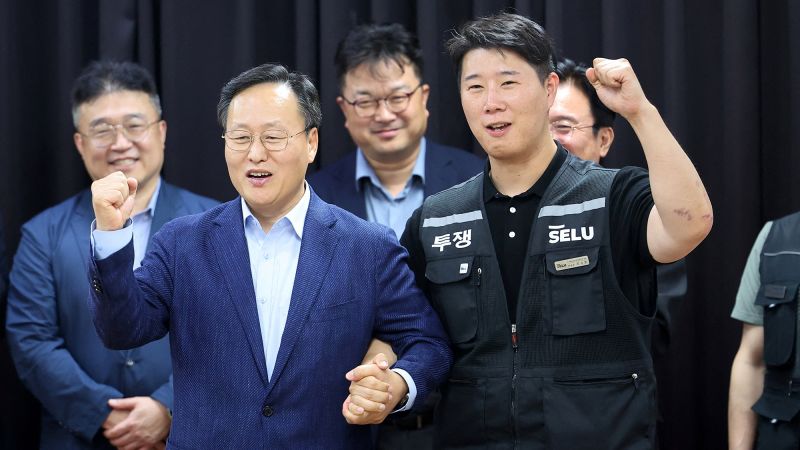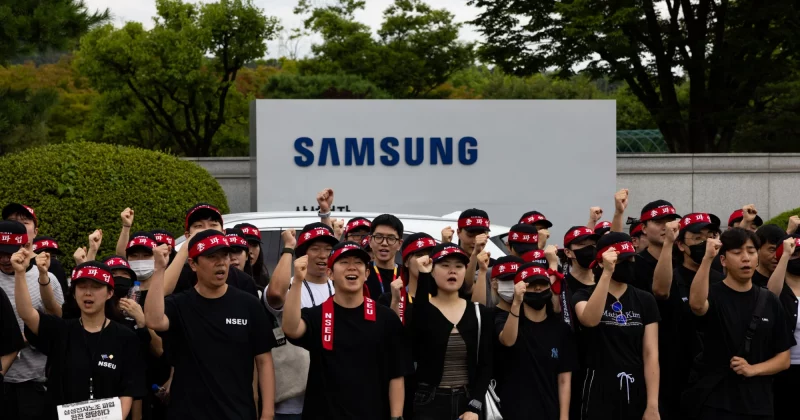
Transparent profit-sharing cements staff retention as Samsung races to catch up The SK hynix headquarters in Icheon, Gyeonggi Province (Yonhap) Two of the world's largest memory chipmakers are riding the same artificial intelligence boom, but in recent years one has held on to its workers far more tightly than the other.A study released Tuesday by corporate research firm Leaders Index found that by 2024, staff turnover at SK hynix had fallen to roughly 1 percent, while rival Samsung Electronics was losing staff at more than 10 times that rate.Part of the gap could be due to differences between the two firms' areas of operation. While both are major memory chip producers, Samsung is a broader company, covering not just a wider array of chips but also devices ranging from mobile phones and TVs to refrigerators.But another reason for the difference is how each company has passed its AI windfall on to employees.SK hynix's combined staff turnover and resignation rate fell from 2.4 percent in 2022 to 1.3 percent in 2024, the second-lowest among the 108 large companies examined.SK hynix could afford to be generous. An early leader in high-bandwidth memory, the advanced chips that AI processors depend on, the company posted operating profit of 21.3 trillion won in 2024 — equivalent to $15.8 billion at the time.Samsung's rate also declined, from 12.9 to 10.1 percent, but never left double digits. The study covered firms from Korea's top 500 by revenue that filed comparable sustainability reports for 2022 through 2024.The staff turnover figures through 2024 reflect a reform that tied bonuses to operating profit and made the payout formula transparent, giving employees a clear reason to stay. A cooling job market did the rest.Staff compensation has grown further since then, along with company performance. In September 2025, SK hynix and its union scrapped the ceiling on profit-sharing, previously capped at 1,000 percent of base salary, and agreed to route a full 10 percent of operating profit into the bonus pool.That year, SK hynix logged record revenue of 97.15 trillion won and operating profit of 47.21 trillion won. The result was confirmed in February, when multiple news outlets reported a profit-sharing payout for 2025 averaging 2,964 percent of base salary.Samsung's route through the same boom has been rougher. Days before a planned 18-day walkout by some 48,000 unionized workers, the company struck a tentative deal last Wednesday through government mediation. It creates an uncapped special bonus for the Device Solutions division, which produces chips, funded by 10.5 percent of agreed business results and paid in stock. If approved by union members now voting on it, the deal would narrow the same bonus gap with SK hynix that fueled the unrest.One caveat tempers the comparison. Samsung's rate spans its entire global workforce, not just its chip arm. Leaders Index said it asked Samsung for the Device Solutions figure alone, but the company declined to provide it, leaving a direct chip-to-chip comparison out of reach.
SK hynix cuts staff turnover to 1% as Samsung lags: study
Two of the world's largest memory chipmakers are riding the same artificial intelligence boom, but in recent years one has held on to its workers far more tight
492 words~2 min read