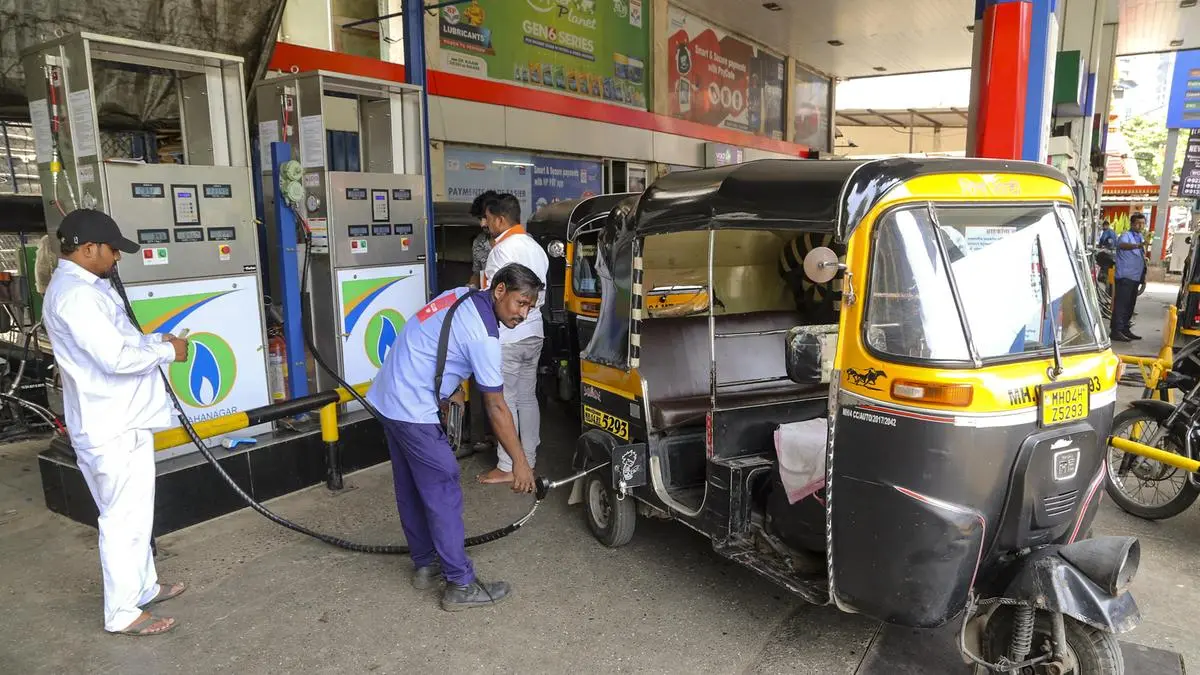
File picture: A petrol pump worker fills CNG in an auto-rickshaw at a fuel station
| Photo Credit:
The retail price of Compressed Natural Gas (CNG) in Chennai was increased to ₹95 per kg, effective today, May 26. Meanwhile, auto-rickshaw drivers in Chennai are demanding an immediate and stable revision of meter fares after Compressed Natural Gas (CNG) prices held firm at Rs 95 per kilogram.While the fuel rate has remained steady through April and May, contrasting recent price hikes in cities like Delhi, local drivers state that the current pricing structure makes operations unsustainable without a matching increase in official passenger fares.Auto drivers in Chennai expressed concern over the impact of fuel price increases on their daily income and livelihood. They said that while fuel prices may continue to rise, fare structures and meter systems also need to be revised accordingly.An Auto Driver, Veerapathiran, speaking to ANI, said, "The government can increase the price, but they have to provide us with a stable meter system. The meter fare should also be revised and kept stable. If they raise the fuel price further, it will definitely affect our livelihood. Still, if the fare is revised properly, we do not mind the increase."Drivers said rising operational costs are putting pressure on transport workers, especially those dependent on CNG-operated autos and commercial vehicles for daily earnings.Fuel prices in India are revised based on international crude and gas rates, exchange rates, and local levies. The recent increases come amid elevated global energy prices due to the ongoing West Asia tensions and supply concerns, which have kept both the crude oil and natural gas markets volatile.The back-to-back hikes in CNG, petrol, and diesel are set to raise transport and logistics costs, with potential knock-on effects on inflation. For households, the impact will be felt through higher commuting expenses and possible increases in prices of goods transported by road.However, the Centre maintained that it has forgone nearly ₹14,000 crore in tax revenue after reducing excise duty on petrol and diesel to shield consumers from rising fuel prices, according to Sujata Sharma, Joint Secretary in the Petroleum Ministry. The government had cut central excise duty by ₹10 per litre on both petrol and diesel on March 27, following a sharp rise in global crude oil prices due to tensions in West Asia.Published on May 26, 2026