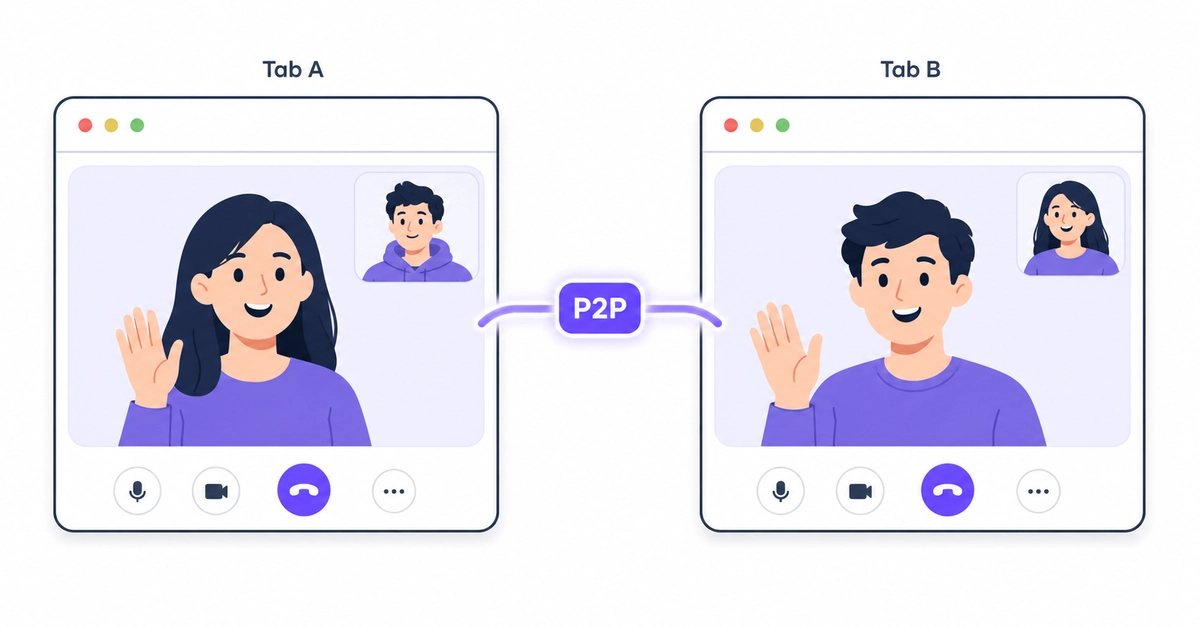
Camdiv matches you with a random stranger and puts you both on live video. I wrote separately about the genuinely hard part, which is moderation. This post is about the part people assume is hard and mostly isn't: getting two browsers to see and hear each other. WebRTC handles the media. The interesting work lives around it.
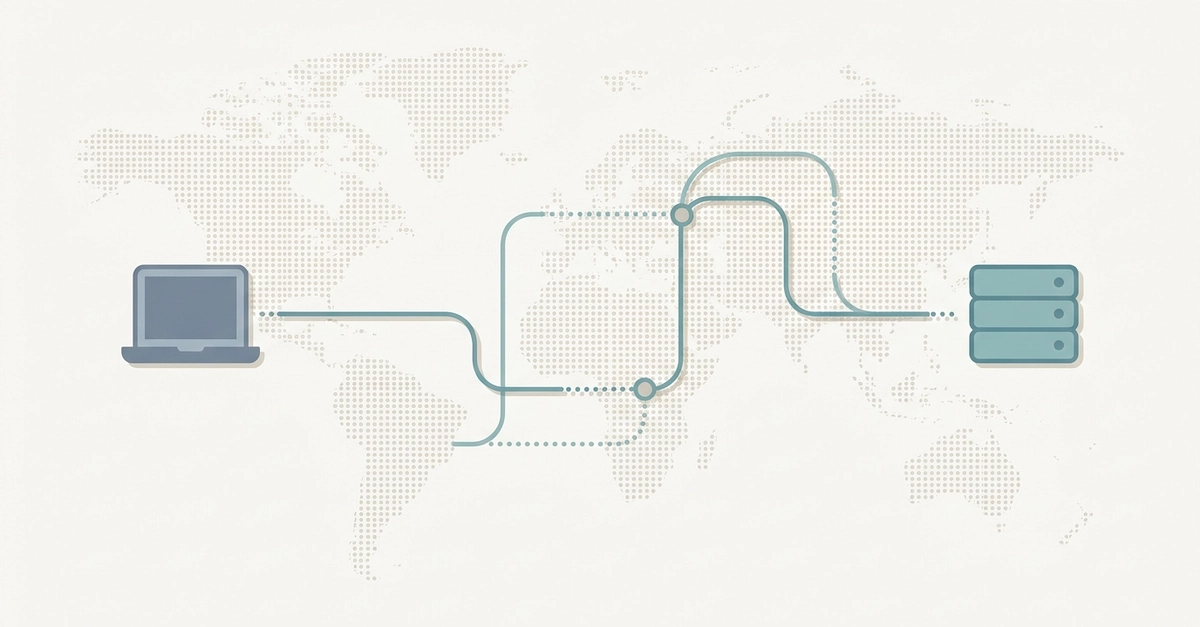
Think about the clock the user feels. They click Start, then they wait, staring at their own face, until a stranger appears. Every millisecond in that gap is something we have to earn back: finding a partner, telling both browsers about each other, negotiating a peer connection, and punching through whatever router or firewall each person sits behind. Four problems, and all of them are latency.
The whole path looks like this:
Step one: find a partner fast
Matching is the first place you can blow the latency budget, and the easiest place to over-engineer. The instinct is to reach for a database or a Redis sorted set and query it on every request. We don't. The matching queues live in memory, in the Node process.