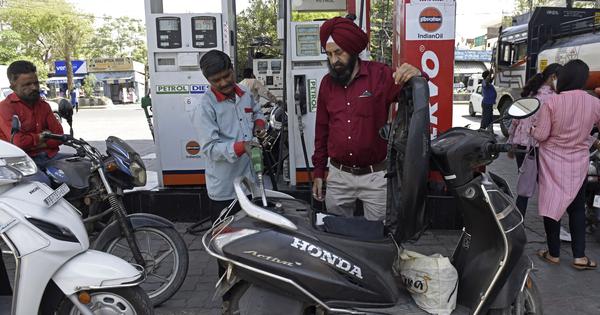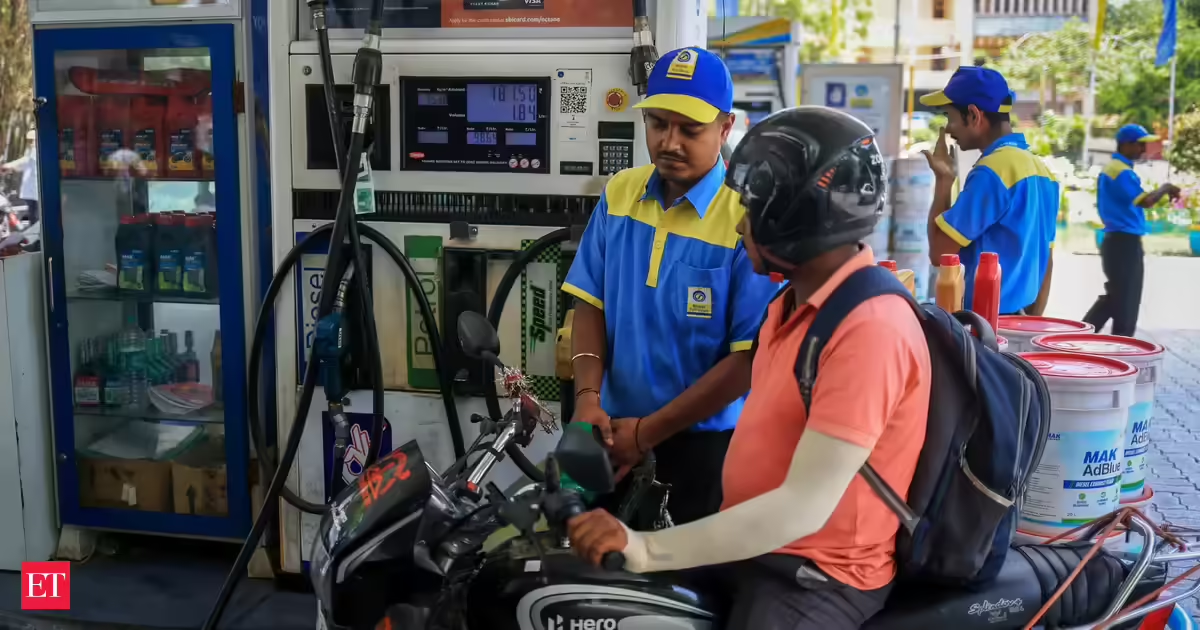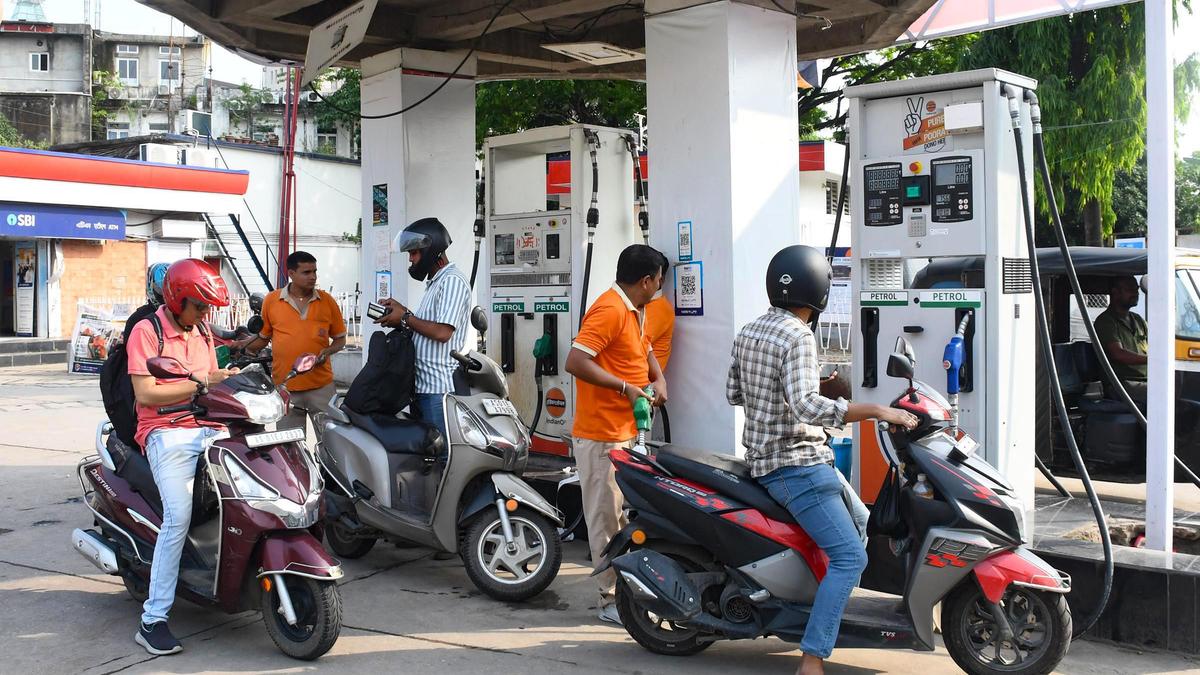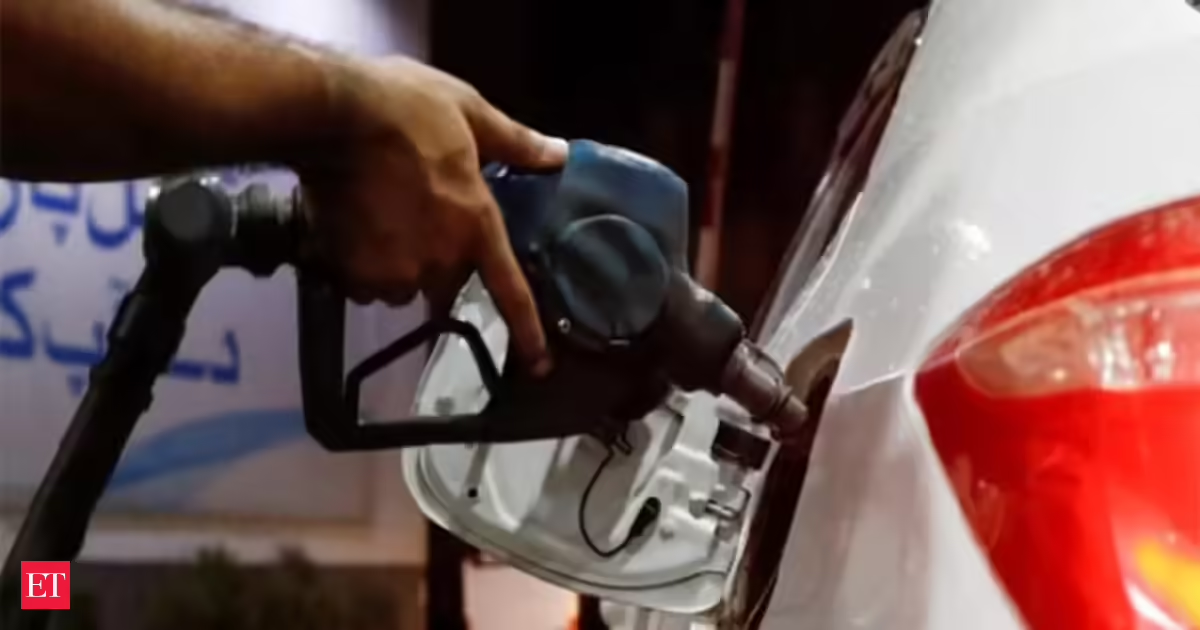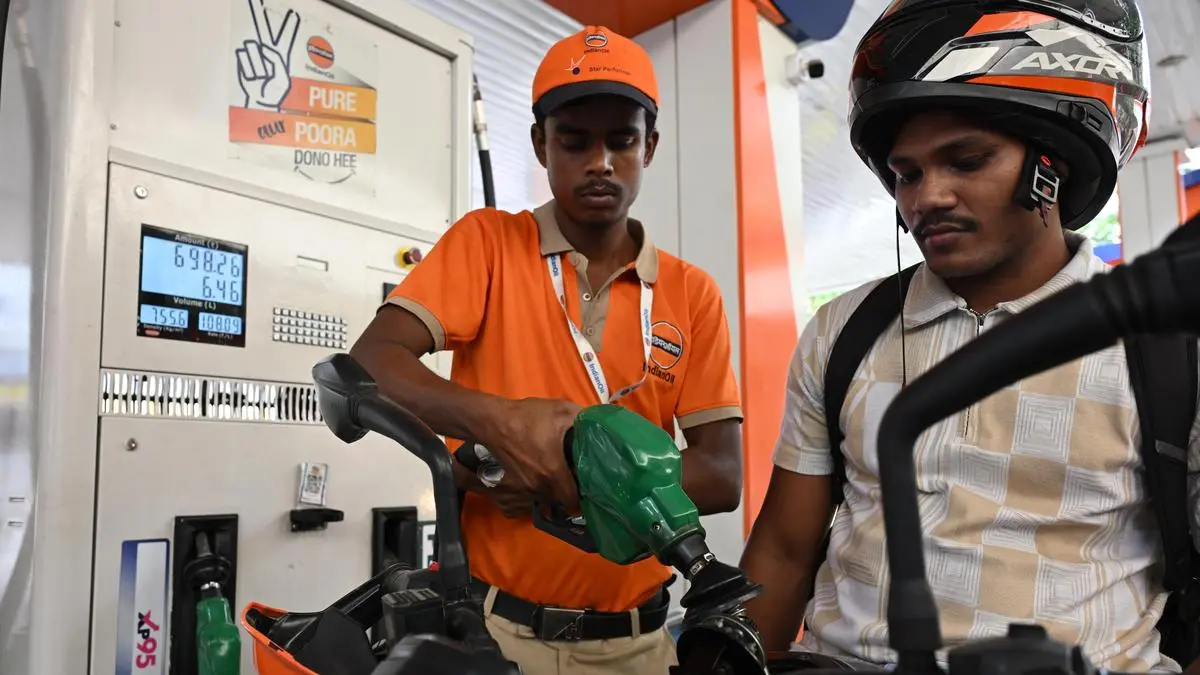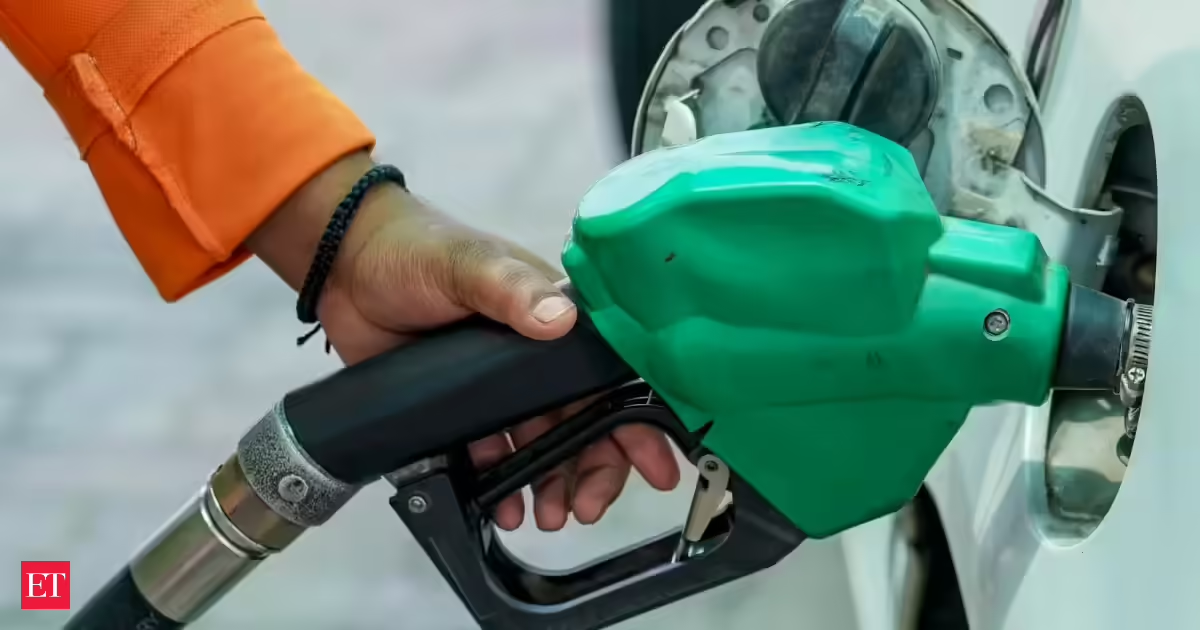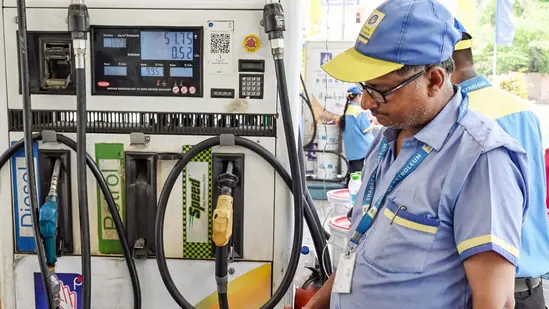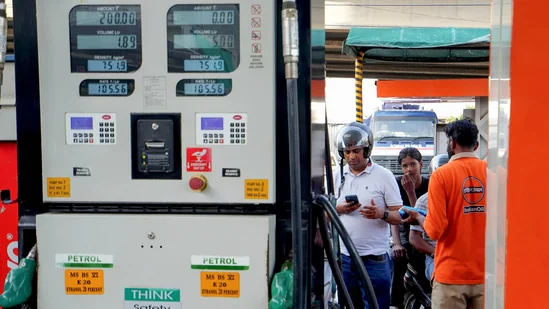
State-run oil companies on Monday raised petrol prices by ₹2.61 per litre and diesel prices by ₹2.71 a litre, the fourth rate hike in two weeks that has cumulatively seen petrol and diesel becoming costlier by ₹7.35 and ₹7.53 per litre, respectively, since May 15, the date of the first retail fuel price revision since the West Asia conflict drove international crude to multi-year highs.After the fourth price hike on Monday, pump prices of petrol in Delhi crossed ₹100-mark for the first time in four years. (PTI)Monday’s price revision — which pushed pump prices of petrol in the Capital beyond ₹100 a litre for the first time since 2022 — came days after international oil prices fell below $100 a barrel. Benchmark Brent crude fell by 5.84% to $97.49 per barrel in intraday trade on Monday (9.30pm) from $103.54 a barrel on Friday.Industry executives and sector analysts said the incremental hike cycle was unlikely to end soon as the three state-run oil marketing companies (OMCs) were not only recovering current revenue losses on petrol and diesel, but also recouping their past under-recoveries of auto fuels and cooking gas.Also Read | Why India may not be done with petrol, diesel price hikes yet | ExplainedPetroleum ministry joint secretary Sujata Sharma said the initial daily losses of OMCs were to the tune of ₹1,000 crore (before first price hike on May 15), which is reduced to “slightly less than ₹600 crore” after price hikes. Sharma did not disclose per litre under-recoveries on individual fuel products such as petrol and diesel.According to experts, this loss figure included huge revenue losses on liquefied petroleum gas (LPG or cooking gas), and not just on the two auto fuels. Under a transparent pricing mechanism of individual petroleum products, current under-recoveries on petrol and diesel would not be more than ₹10-13 each, they said.After the fourth price hike on Monday, pump prices of petrol in Delhi crossed ₹100-mark for the first time in four years. Last time petrol crossed ₹100 in Delhi was May 21, 2022 (at ₹105.41 per litre). That day, diesel was priced at ₹96.67. According to available data, an all-time high petrol price was recorded at ₹110.04 per litre on November 2, 2021, and for diesel, it was ₹98.42 on November 1, 2021.Also Read | Amid rising fuel costs, PMPML opts for route optimisation over fare hikeThe latest price increase raised pump prices of petrol at ₹102.12 per litre and diesel ₹95.20 a litre in Delhi. Across metros, petrol has risen to ₹113.51 in Kolkata (up ₹2.87), ₹111.21 in Mumbai (up ₹2.72), and ₹107.77 in Chennai (up ₹2.46).Diesel is ₹95.20 per litre in Delhi, ₹99.82 in Kolkata, ₹97.83 in Mumbai, and ₹99.55 in Chennai, with increases of ₹2.71 per litre, ₹2.80, ₹2.81, and ₹2.57 respectively. Variations in local levies account for city-to-city differences.According to company executives and sector experts, a fifth fuel price hike is expected unless Brent stabilises below $100 a barrel — and, in the best-case scenario analysts cite, closer to $70. The increases follow the same incremental pattern as April 2022, when pump prices rose by roughly ₹9 per litre in daily 80 paise steps in the aftermath of Russia’s invasion of Ukraine. That revision took just over a week. The current cycle has moved at a comparable pace, though the under-recovery gap is larger and the crude price environment remains more volatile.International oil prices are, however, softening since the first price hike on May 15. Brent crude closed at $103.54 on Friday from the $109.26 the day of first hike, registering over 5% decline. Since the conflict broke out on February 28, Brent rose roughly 42% from $72.87 as on Friday. The declining trend continued on Monday.India imports over 88% crude oil it processes and pays in dollar, hence rupee depreciation has been also a drag. However, the rupee gained for a second consecutive session on Friday, closing at ₹95.60 per dollar, helped by softening crude and anticipation of monetary policy intervention.The hike comes against a striking financial backdrop. Despite absorbing the full impact of the West Asia conflict in the January–March 2026 quarter (the crisis began on March1), the three OMCs posted a combined net profit of ₹19,470 crore — a 40.74% rise over the same period last year. For the full year 2025–26, their combined net profit surged 130% to ₹77,280.65 crore, from ₹33,601.57 crore in 2024–25, on the back of stable crude prices and healthy refining margins for much of the year before the conflict erupted. IOC and HPCL posted strong quarterly profits; BPCL’s remained flat.Union finance minister Nirmala Sitharaman said the increases were inevitable.“The increases now are coming from oil marketing companies (OMCs) because they are the ones procuring (raw material crude oil) and selling (finished product - fuel),” Sitharaman said on the sidelines of the Cotton Textiles Export Promotion Council export awards event.She said had the excise duty not been slashed earlier, an increase of ₹10 would have happened.“Had we not given that reduction at that time, a ₹10 increase would have happened, which we absorbed, that is almost a ₹1 lakh crore hit on the functional budget. But the increases now are coming from OMCs, because they are the ones procuring and selling,” the minister added.The Opposition hit out at the government.“The BJP’s appetite isn’t satisfied even after slapping a central tax of ₹1,000 crore daily on petrol-diesel. When international prices were low, they didn’t pass on the benefits to the people, instead, they looted them relentlessly,” Congress chief Mallikarjun Kharge wrote on X.
Petrol crosses ₹100 in Delhi after fourth fuel price hike in two weeks
Petrol and diesel have become costlier by ₹7.35 and ₹7.53 per litre, respectively, since May 15. | India News
920 words~4 min read