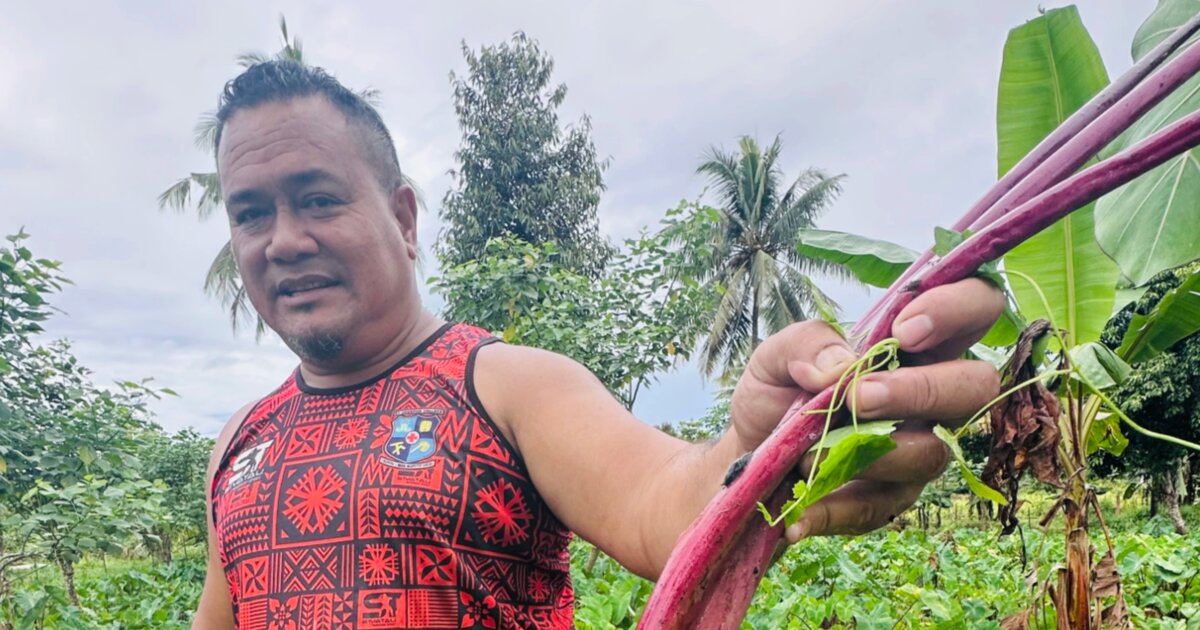
Tauilili Polito Vili runs a 50-acre taro farm. But in recent years, something unexpected has taken root: a thriving tiapula (taro planting material) nursery that has become one of the most productive in his district.
With support from Pacific Horticultural and Agricultural Market Access Plus Program (PHAMA Plus), Tauilili received training, equipment and planting material to start nursery production. What began as a small quarter-acre plot quickly exceeded expectations. The tiapula grew fast, strong and plentiful, and demand from other farmers was immediate.
“The nursery now brings me a steady side income without needing heavy labour, and I can harvest the suckers myself,” he said.
In just two years, he is now selling more than 5,000 tiapula a week. His nursery has expanded to three acres, with more land already earmarked for growth. What began as a small addition to his farm has become a core part of his business, while also helping neighbouring farmers access planting material needed to rebuild taro production.
His experience reflects a broader story unfolding across Samoa’s taro sector. Taro is central to Samoa’s food security, cultural identity and rural livelihoods. It remains a key cash crop and one of the few scalable opportunities for smallholders to earn income from agriculture, supporting more than 18,000 households across the country.