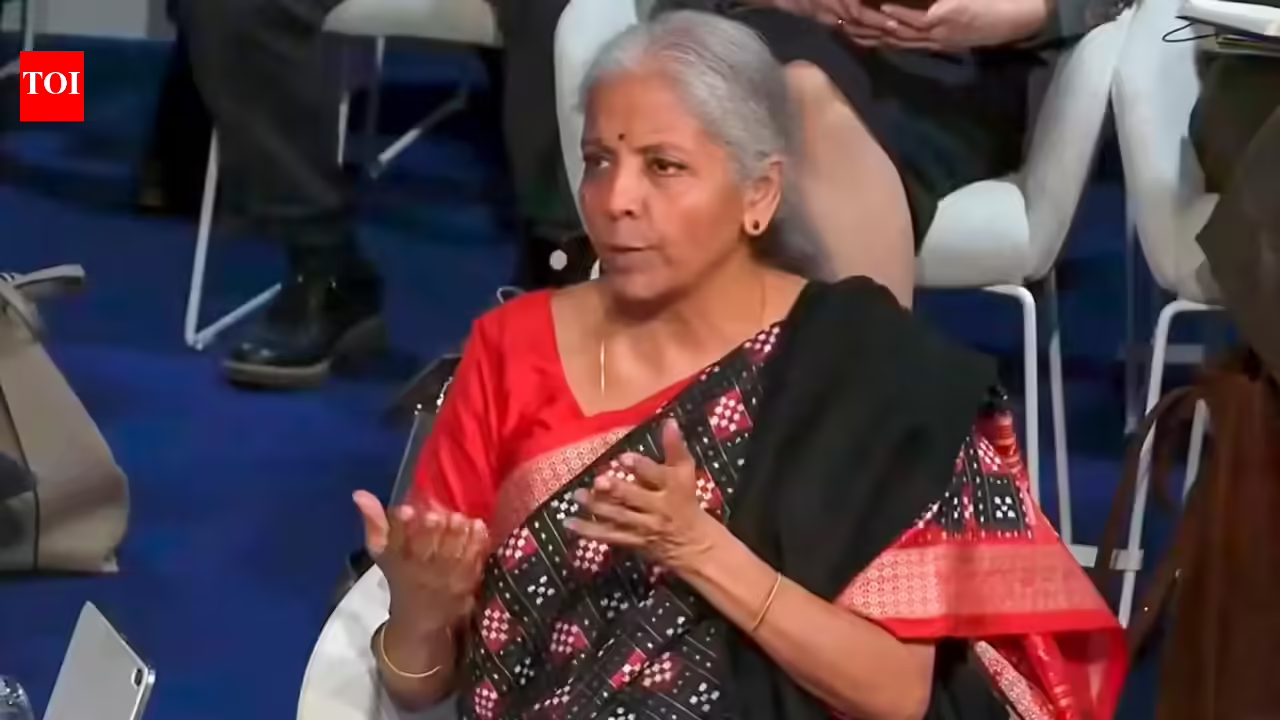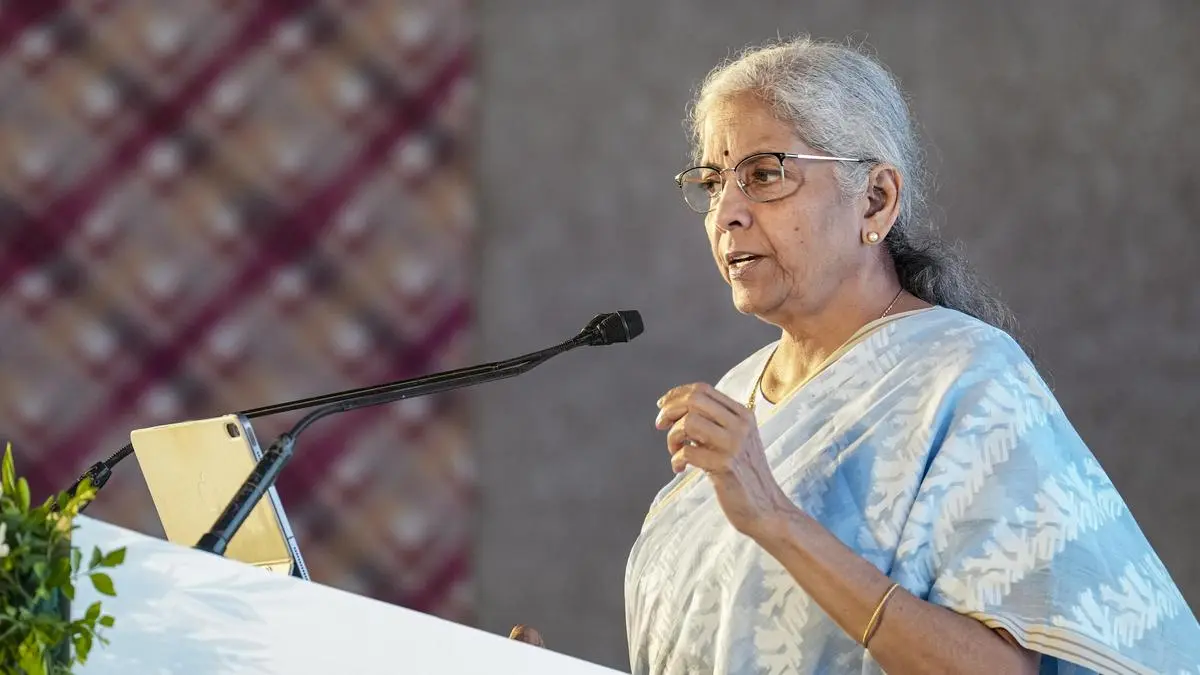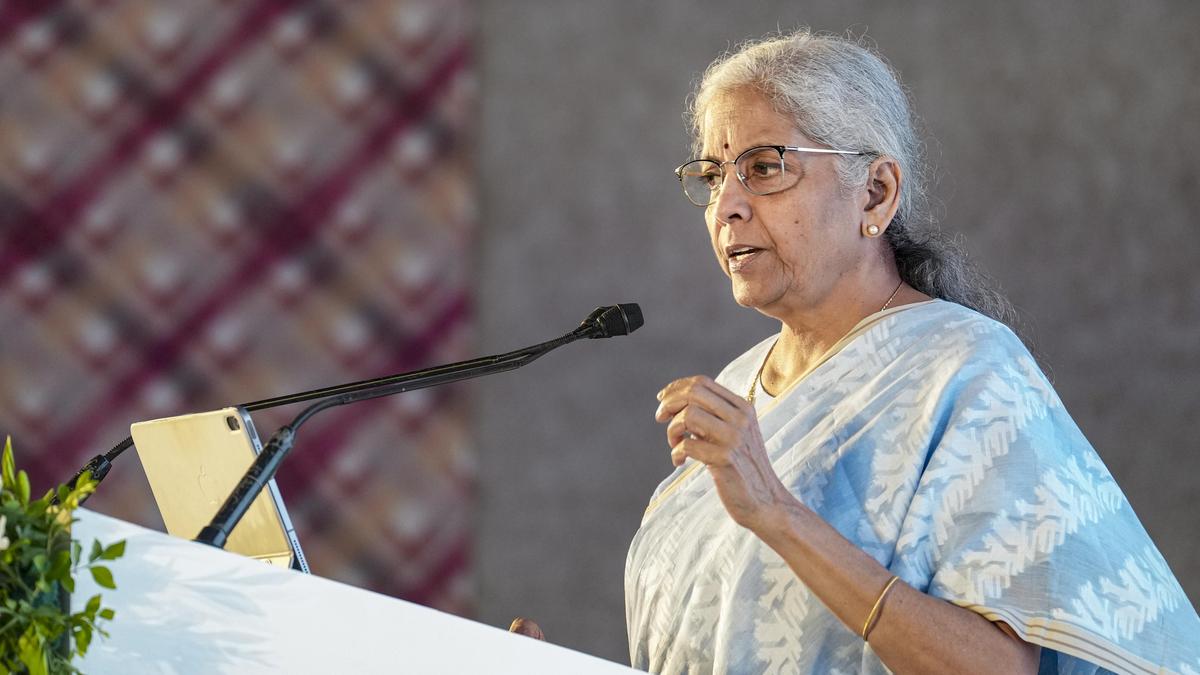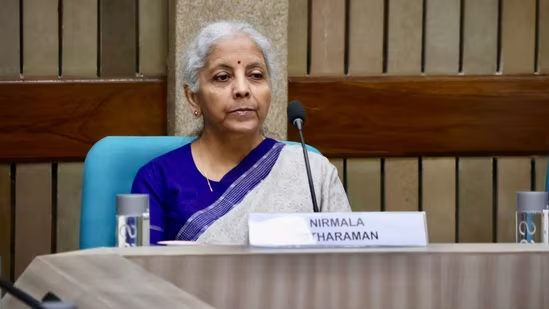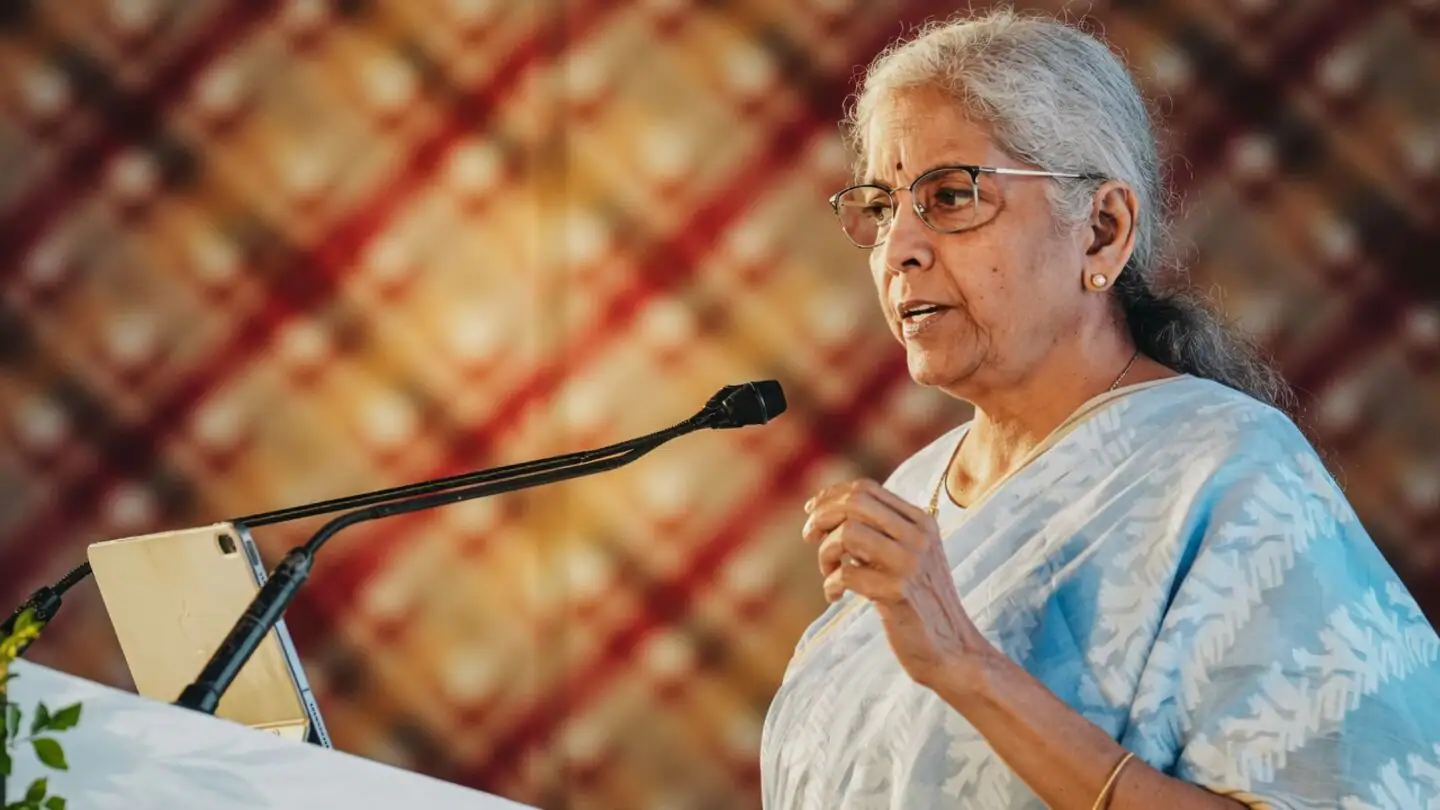
Finance minister Nirmala Sitharaman on Monday said India’s economy remains resilient and climate positive with high-frequency indicators showing broadbased domestic demand, while challenges faced by the country are being fuelled by external factors.Sitharaman said the government’s policy response has been very calibrated to absorb the shock where citizens and businesses are exposed, support micro, small and medium enterprises (MSMEs) and exporters facing working capital stress and preserve the underlying growth momentum.Also read: West Asia crisis not a diplomatic issue, will lead to higher fuel costs for common man: Finance Minister Nirmala SitharamanAttending Small Industries Development Bank of India’s (Sidbi) 37th foundation day, she said PM Narendra Modi's call to conserve foreign exchange as far as possible should be understood in the context of three Fs: fuel, fertiliser and foreign exchange.The FM said crude prices have been fluctuating, adding that there has been an unimaginable increase in the fertiliser prices, and high gold rates are creating some challenges on the external front. “To just put it into context, all these three payments will have to be in foreign exchange,” she said.‘Will Consider Suggestions’There is a need to instill confidence into people with words and policy actions, the finance minister said. “And that's what you're seeing at various levels, and India continues with a robust economy,” she said. “A lot of inputs have been gathered. We will look into every one of these suggestions,” she said on the sidelines, responding to a question on whether the government was contemplating more measures.The finance minister underlined that there was a need to recognise that the private sector is ramping up investments and goods and services tax (GST) collections are surging. “Formalisation is deepening, and infrastructure activity remains steady across the country,” she said, adding that India cannot afford fearmongering. GST revenues, which indicate economic activity, have remained strong even after rate rationalisation and crossed Rs 22 lakh crore for 2025-26, she said.“The gross revenue year-on-year is 8.3% more, and that's not a small number in these times of uncertainty,” the minister said, adding that for the first month of FY27, domestic wholesale tractor sales rose by 26%, passenger vehicle by 25%, three-wheeler and two-wheeler sales increased by 32% and 28% year-on-year, respectively. “New business premiums of life insurers rose by 39%. So, with that, the healthy banking system is also supporting India's growth momentum,” she added.Sitharaman pointed out that the government has already provided over Rs 1 lakh crore for the economic stabilisation fund, much before the Strait of Hormuz blockade took place. “Just to make sure that we are not caught by some unforeseen events, we had made the provision in the budget,” she said, adding that this was an emergency cushion created before the full impact of the West Asia situation arose, ensuring that India could respond quickly to global shocks, supply chain disruptions, and sudden stress in any sector.Navigate and adapt The finance minister also flagged rising protectionism and called on the textile industry to learn to navigate through the uncertain global environment “where rules of trade are being rewritten in real time.”Also read: The three Fs that Sitharaman flagged as India braces for a widening global oil shock, forex strainIndia is clinching free trade agreements to help its exporters get access to outside markets, but many countries are imposing non-tariff barriers, Sitharaman said at an event of the Cotton Textiles Export Promotion Council. These barriers include stringent sustainability requirements, supply chain due diligence laws and carbon border adjustment mechanisms imposed by various advanced countries, she said.Exporters need to adapt fast to the changing environment to thrive, Sitharaman said, while acknowledging that some of the country’s global competitors don’t face the same stringent criteria as India.Global retailers, including H&M, Zara and Marks & Spencer, are embedding sustainability requirements into their sourcing criteria, she said. Sitharaman promised all possible help to textile and garment makers, telling them to be proud of the industry’s centuries-old achievements that were not always contingent on government subsidies.
India's economy resilient amid external shocks, says Sitharaman
India's economy shows resilience and strong domestic demand. Finance Minister Nirmala Sitharaman highlighted that external factors are causing challenges. The government is taking calibrated policy actions to support businesses and maintain growth momentum. High-frequency indicators like GST collections and sales of vehicles and tractors show positive trends. The finance minister assured that suggestions for further measures will be considered.
661 words~3 min read