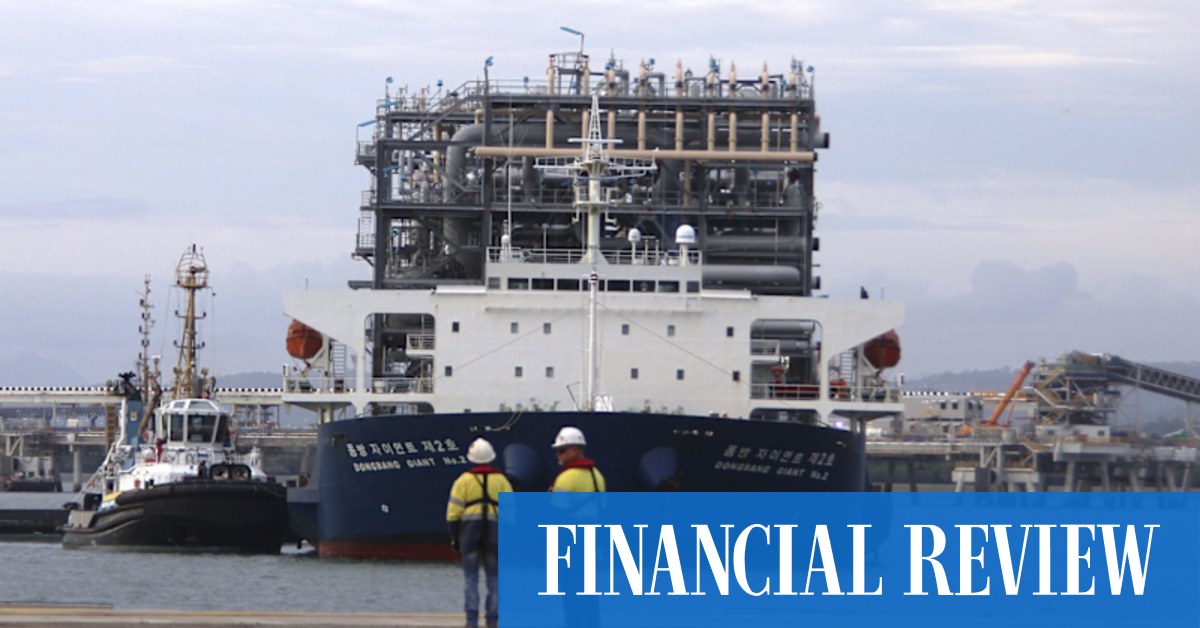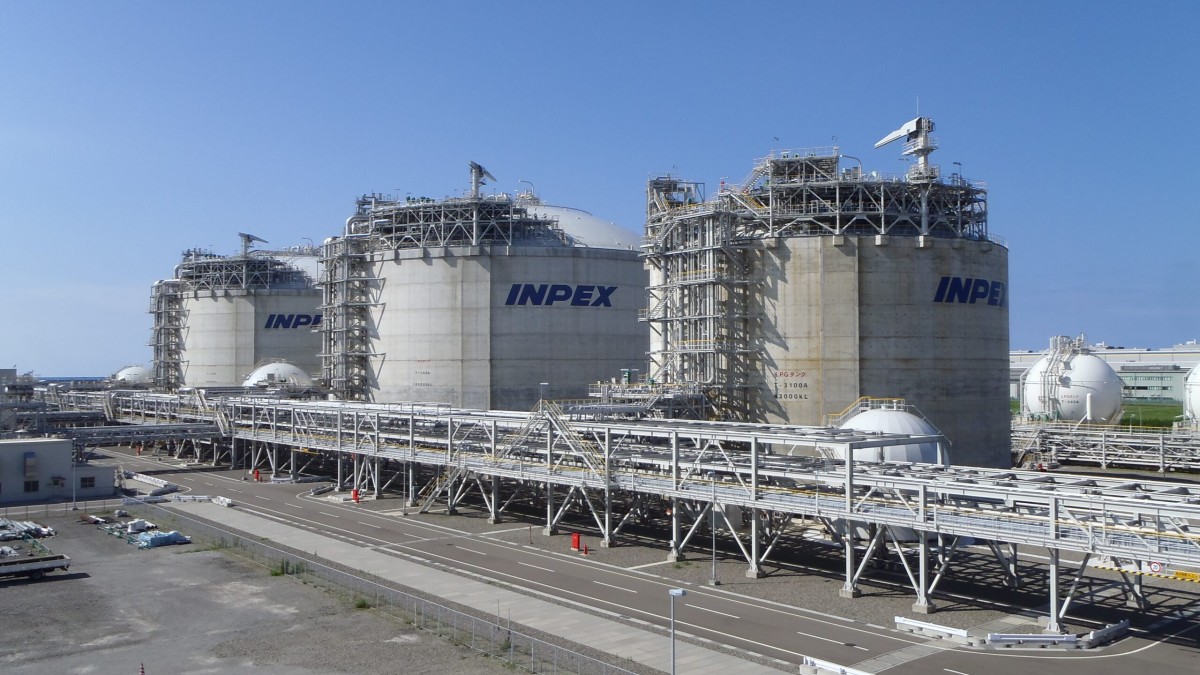
Federal Labor has set up a fight with Australia's second-largest oil and gas company, Santos, after revealing a reservation policy that would hit the company's flagship export venture.In moves likely to be welcomed by users but which have been scorned by exporters, the Albanese government has provided the clearest indication yet of how a domestic gas obligation would work.A draft "framework" released yesterday shows producers will have to supply — not just offer — an amount equivalent to 20 per cent of liquefied natural gas (LNG) exports every year.Any producer wishing to sell LNG overseas would need to meet its obligations in order to maintain export approvals.And to meet those obligations, the government says a producer will be able to use a range of commercial options.Among them are reducing exports, importing LNG, helping to bring online extra supply, swapping gas with other producers and paying providers to make the gas available.While the proposed scheme would give producers some flexibility if they were unable to immediately meet their obligations, they would be expected to make up the difference in future years.Companies that failed to comply with the policy could face penalties of up to $100 million or an amount three times the value of any benefit they reaped.Alternatively, they could have their exports restricted."A minimum liquidity requirement will be included to ensure the Reservation Scheme places downward pressure on prices by ensuring there is always a modest oversupply," the framework notes.Minister fires warning shot to industryChief executive of lobby group Australian Energy Producers (AEP) Samantha McCulloch warned the draft would "undermine" investment in new gas, "displace" domestic-focused producers and "damage" Australia's standing as a reliable partner of gas in the international market.The industry has been critical of the government's consultation process, but Minister for Resources Madeleine King warned legislation could have moved ahead without corporate input."We could have brought in legislation that reflects how we think it should operate, the CEO and others from AEP and gas industry would have objected to that wildly," she said."What we have chosen to do is have a discussion paper, and an open discussion for consultation, yet they also object to that."So I really don't know what they hope is the middle ground."Shadow Minister for Resources Susan McDonald said the scheme set out in the proposal would "wipe out" domestic gas producers while also failing to bring prices down for consumers."This reservation, I am sorry to say, will mean that we have a whole lot of gas piled up in places we just can't use it," she said."The government is talking about import terminals being an option in Victoria, I mean what a shocking state that we would consider importing gas in to this country, which already has so much gas."Ms King insisted the scheme as laid out in the white paper would drive down costs, but would not say by how much."We're introducing the policy so that there's a modest oversupply, and in the part of the principle, is to make gas exporters sell into the market, and that's what drives down the prices," she said."I don't have a number, we are aiming for affordable gas and plenty of it."Scheme won't apply to existing contractsThe government said the scheme would apply nationally but it noted existing arrangements such as Western Australia's reservation policy would be "recognised".The government also stressed that existing contracts between LNG exporters and their customers "entered on or before 22 December 2025" would be respected.But oil and gas industry analyst Saul Kavonic said the contract productions appeared to be limited.Saul Kavonic, the head of energy research at MST Marquee, said companies faced high hurdles before they could be considered for a lower domestic supply obligation.He said they would have to "exhaust all 'viable' avenues" to meet their commitments.These could include, for example, paying rival LNG producers to sell them more gas or underwriting new domestic gas projects to increase supply.The upshot, Mr Kavonic concluded, was that the Gladstone LNG project operated by Santos in Queensland was caught firmly in the crosshairs of the policy."GLNG has zero net domestic supply," Mr Kavonic wrote."There is a widespread view within industry and Government that GLNG has got off too lightly to date and must share the burden more, so there will still probably be some impact."Santos argues all its supply is needed to maintain contract obligationsUnlike its neighbouring LNG projects on Curtis Island — the QCLNG plant operated by Shell and the APLNG facility run by Origin — Santos's GLNG has historically had to buy extra gas from the domestic market to fulfil its overseas contracts.This is because the company built an LNG plant with more capacity than it could supply through its own reserves: 7.8 million tonnes a year, or about 10 per cent of Australia's LNG exports.In a note to clients, Mr Kavonic said it was probable that Santos would seek to avoid the new domestic reservation policy by arguing all its supply was needed to meet contracts.But he said the proposed reservation scheme seemed to be designed to deal with this likelihood in several ways.For starters, Mr Kavonic said GLNG would be captured by the requirement to "exhaust all 'viable' avenues" in supplying the local market.What's more, he expected Santos's rivals APLNG and QCLNG to "very loudly" make offers to supply gas on GLNG's behalf.Doing this, he said, would "undermine" any arguments from Santos it pursued every option."Even if GLNG gets a lower [supply obligation] to protect its contracts, the difference may accrue to a higher obligation in future years."GLNG could end up with the lion's share of [supply obligation] from 2030 when its KOGAS [Korea Gas Corporation] contract rolls off."More broadly, Mr Kavonic argued the proposed scheme handed enormous power to the federal resources minister of the day.He said this opened the possibility of "backroom dealing" as companies jockeyed for the most favourable treatment from the government, regardless of the merits of their projects."There is still opportunity to make this reservation policy the final gas policy that ends the constant market," he said."Near term broad Ministerial discretion could evolve into a more rules based system in time, enabling this outcome."But we don't hold our breath."Producers warn plan will not provide cheaper gasIn a statement, Australian Energy Producers said the proposal scheme would backfire on the government's aims of oversupply and cheap gas.The lobby group, which represents major oil and gas exporters, said the policy would threaten existing export contracts and "mute investment signals for new domestic supply".It also argued the proposal sent a worrying signal to key trade and investment partners such as Japan, South Korea and Malaysia.
Government sets up fight with Santos over gas reservation plan
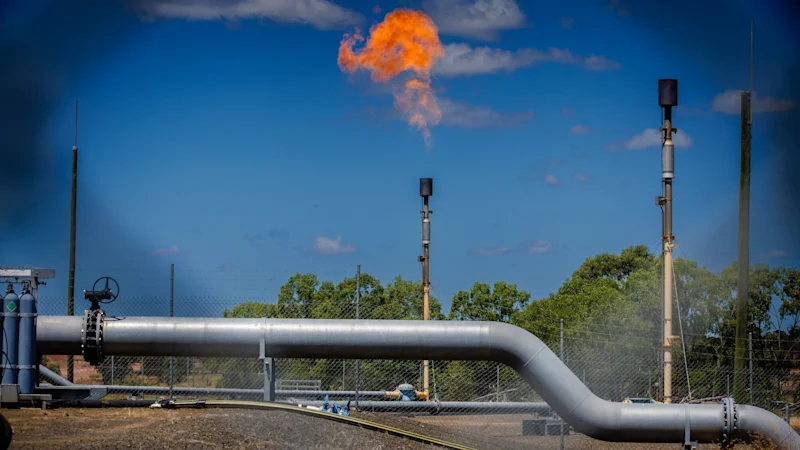
The draft framework outlines a requirement for gas producers to supply 20 per cent of their export to the domestic market, which the gas lobby argues will "undermine" the industry.
TL;DRAI
Australia's Labor government proposed a reservation scheme requiring LNG exporters to supply 20% of annual exports to the domestic market, with penalties up to $100M for non-compliance. Santos's GLNG project (7.8M tonnes/year, ~10% of Australian LNG exports) is squarely in scope as a historic net domestic gas buyer, facing escalating supply obligations as its KOGAS contract rolls off post-2030.
1,098 words~5 min read