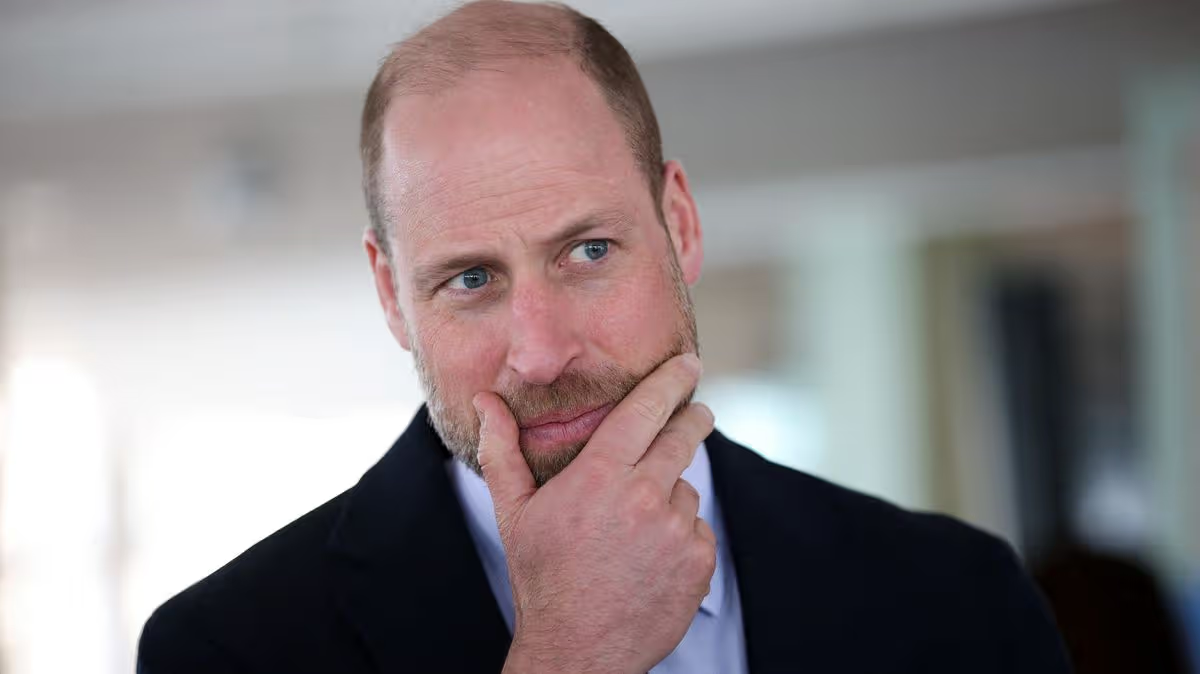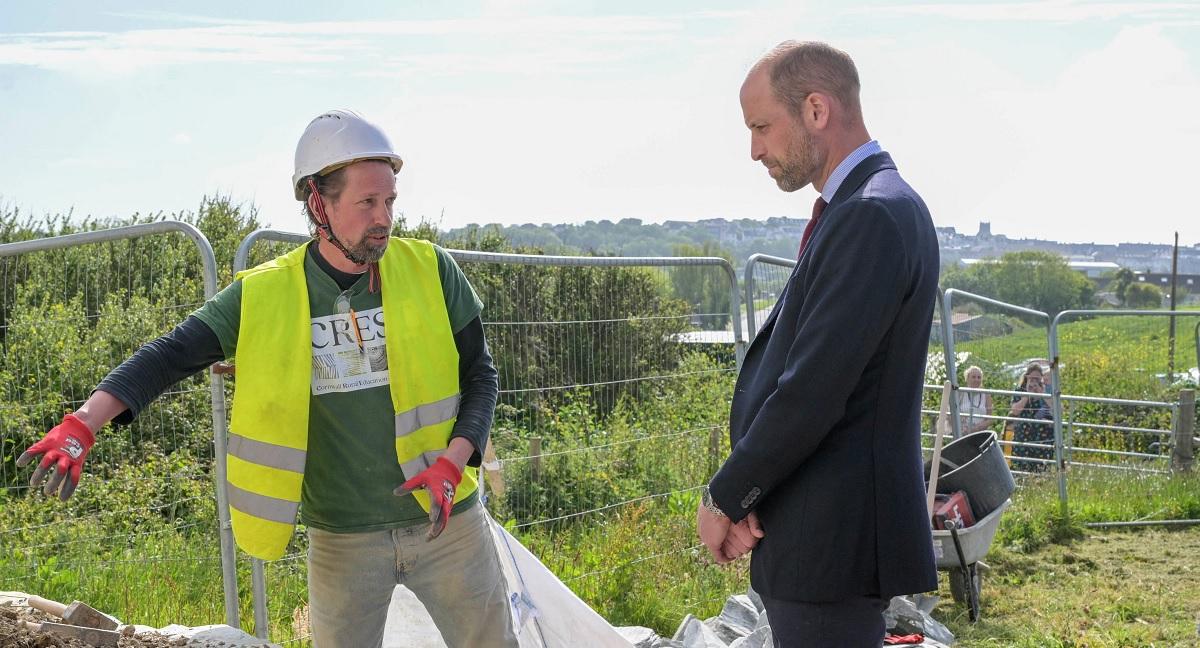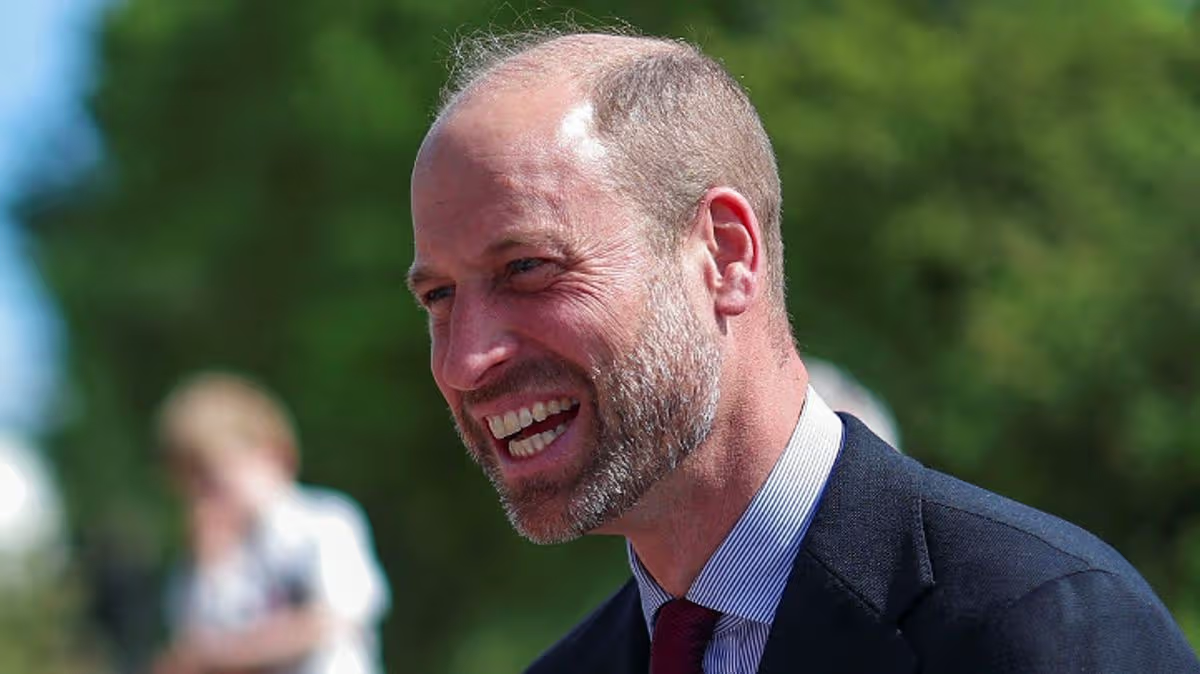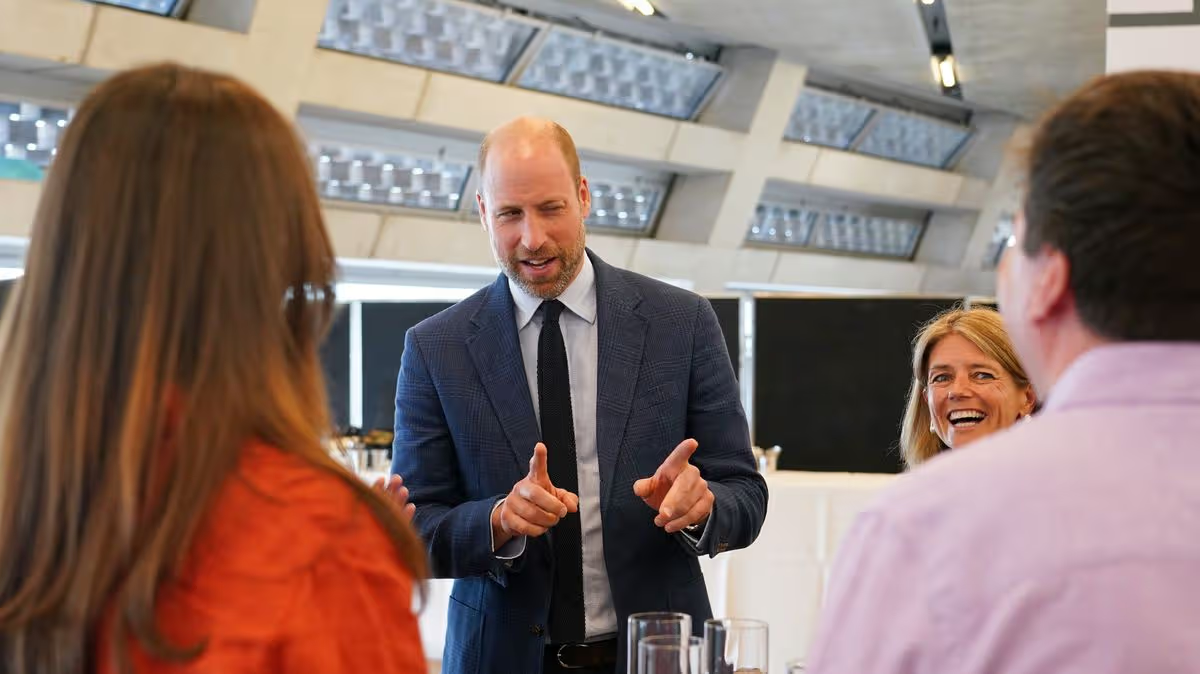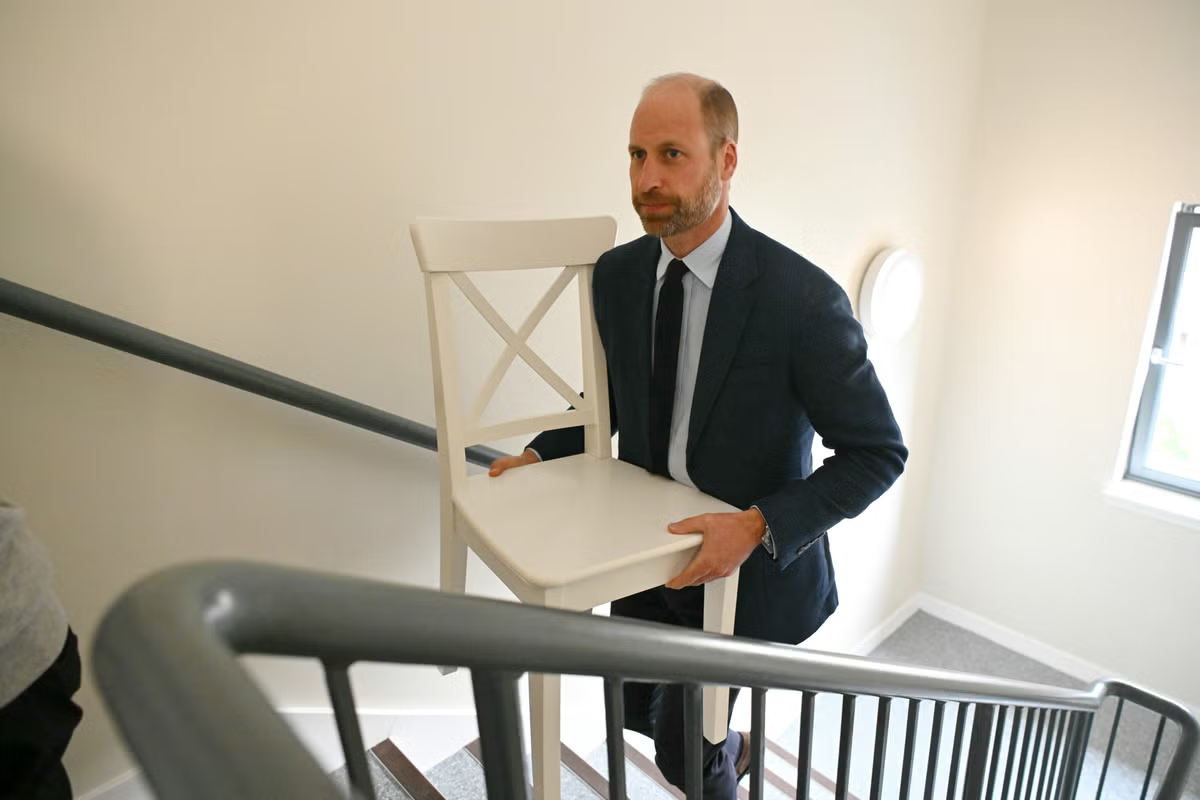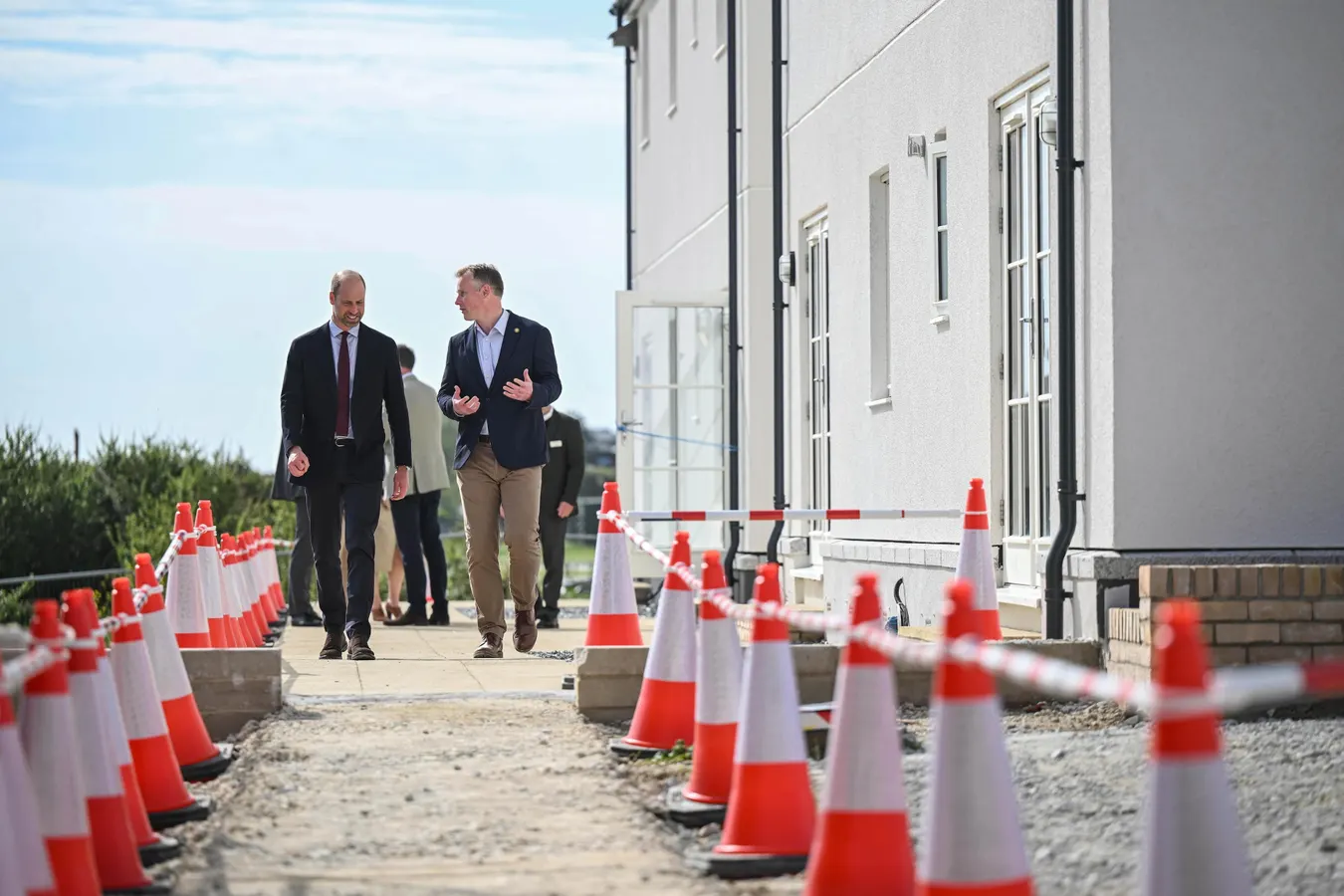
The Duke of Cornwall during a visit to a new Duchy of Cornwall housing development in Nansledan, marking the final stages of a project that includes homes purpose-built to address homelessness.Andrew Parsons / Kensington PalaceIn a country where homelessness has become so normalized that most people walk past it without a second glance, a small cluster of homes on the edge of Newquay is making a quietly radical argument: that homelessness is not inevitable, that the people experiencing it deserve dignity rather than warehousing, and that the actors who can actually solve it have been sitting outside the conversation the whole time.The development is called Nansledan — an urban extension of Newquay being built on Duchy of Cornwall land. As of this spring, sixteen of its newest homes — two four-bedroom houses and eight one-bedroom units in phase one — are home to people who, until recently, were experiencing homelessness in one of the UK's most beautiful and most deprived counties. The properties will be operated by St Petrocs, Cornwall's leading homelessness charity, now in its 40th year. And the entire project is the lead exemplar of Homewards, Prince William's flagship initiative to demonstrate that homelessness can be made rare, brief, and unrepeated.What makes Nansledan different isn't the homes themselves — though by all accounts the build quality is exceptional and the environmental credentials are first-class. What makes it different is who came together to build them, and on what terms.A coalition that shouldn't have been possible"Unprecedented times call for unprecedented coalitions," is the phrase I've found myself using more and more in this work. Nansledan is one of the clearest examples of it I've seen.The Duchy of Cornwall donated the land. The Duke of Cornwall's Charitable Foundation provided the capital grant to build. The Royal Foundation's Homewards initiative covered St Petrocs' legal and pre-development fees. St Petrocs brings four decades of frontline expertise and will operate the homes under restrictions that legally bind them to charitable use in perpetuity. And the design itself was shaped by people with lived experience of homelessness, who told the architects what "home" actually feels like — a front door of your own, rooms that don't announce themselves as different from the rest of the street, decent furnishings, the basic human dignity of not being marked.MORE FOR YOUThat last principle has a name in the Nansledan playbook: blind tenure. Walk down the street and you cannot tell which homes are privately owned, which are rented, which are affordable, and which are supported accommodation. The architecture refuses to ‘other’ anyone.For Henry Meacock, CEO of St Petrocs, that's the breakthrough hiding in plain sight. "This project feels like it came at the right time," he told me. "We were the right partners to be able to work with the Duchy and with Homewards." The homes, he explained, are part of a broader Duchy strategy that treats housing for people exiting homelessness as a baseline obligation of any new community, not an afterthought. Phase two is already mapped, with another eight homes to come.The Duke of Cornwall during a visit to a new Duchy of Cornwall housing development in Nansledan, marking the final stages of a project that includes homes purpose-built to address homelessness.Andrew Lloyd / Kensington PalaceThe voices that matter mostThe impact of that philosophy is perhaps best captured by one of the St Petrocs residents at Nansledan, who shared their story with striking honesty: "When I first came to St Petrocs, I was broken and I had lost all hope. St Petrocs gave me the time and space I needed to recover. Over time, I was able to get involved with their vocational development programme which helped me feel connected to the world again, to be part of a community. I remained active and tried to take advantage of all the opportunities that came from this. I am now moving forward; I am focused on my future. I have a new job and things are going well, although life is always up and down."I have been pleased to be able to share my experience with others and play a role in supporting St Petrocs, including by being part of the project at Nansledan. If there is one message I can give to anyone who is in a low place, it is that there is always hope. No matter the situation you are in, it is never too late. And through my involvement I hope that others will be able to follow their own path into a better place knowing that they are not alone."The mental shift behind the modelTalk to Pete Mackie — Executive Director of the Institute of Global Homelessness, a Homewards national advisor, and one of the world's leading academics on the issue — and the conversation moves quickly from buildings to systems."Homelessness isn't inevitable. It absolutely isn't," he said. "Everyone has a right to a home. And the evidence tells us it's possible to prevent and end homelessness." Finland is the case study he and his peers point to most often — a country that built a strategy around guaranteed accommodation and adequate income, sustained it across electoral cycles, and watched homelessness collapse. When successive governments weakened those pillars, the numbers crept back up. The lesson, as Mackie puts it, is brutally simple: we already know what works.What Homewards is doing, in his view, is twofold. It's shifting a long-stuck narrative — from crisis response to prevention, from individual failure to systemic failure — and it's using the convening power of the Royal Foundation to bring actors to the table who have historically been absent. Landowners. Banks. Employers. Furniture providers. Schools running upstream interventions to identify children at risk of family breakdown before homelessness ever begins."The homelessness sector knows most of the other actors in the sector well," Mackie said. "What's been really hard is bringing in some of the actors that Homewards has managed to bring in." Pret has made hiring commitments. Banks are working on predictive data to identify households heading toward crisis. In Aberdeen, the Homewards focus is on bringing empty properties back into use; in Newport, it's unlocking land that had been written off as unusable. Six UK locations, each running a different experiment in what "rare, brief and unrepeated" actually requires.The Duke of Cornwall during a visit to a new Duchy of Cornwall housing development in Nansledan, marking the final stages of a project that includes homes purpose-built to address homelessness.Andrew Parsons / Kensington PalaceThe leadership behind itWhat's striking, in conversation with the people doing this work, is how often Prince William's personal involvement comes up unprompted. "It's been really interesting to see him pushing his various teams to make this happen and make this work," Meacock said. "There's a genuine desire to make a difference — on-the-ground difference in these individual projects, and then that systemic change and aspiration in terms of the wider work of Homewards. And yes, there have been detractors, because there always are. But keeping steady on course and pushing through and making these changes happen — that's all coming from the Prince."It is a conviction Prince William himself has expressed clearly: "Homewards aims to give people across the UK hope that homelessness can be prevented by showing them the progress we can make when we collaborate. It's a big task, but I firmly believe that by working together it is possible to make homelessness rare, brief and unrepeated, and I am very much looking forward to working with our six locations to make our ambition a reality."It is, in other words, what convening power looks like when it's used well: not as ceremony, but as leverage.What Nansledan provesThe hardest thing about ending homelessness isn't technical. We know how to build dignified homes. We know how to wrap support around the people living in them. We know which populations are most at risk and why. What we have lacked is the political will, the coalitions, and the moral imagination to act at the speed and scale the problem demands.Nansledan doesn't solve homelessness in Britain. Sixteen homes, even sixteen extraordinary ones, won't. But it does something arguably more valuable: it proves the model. It shows what becomes possible when a landowner, a charity, a royal foundation, and a community of people with lived experience design something together. And it offers a template that, if the will exists, can be replicated wherever land, capital, and care can be brought into the same room.Which, as Pete Mackie reminded me, is no longer a question of can. It's a question of must.
How Prince William's Homewards Is Quietly Rewriting The Playbook On Homelessness — Starting In A Cornish Village
In a Cornish village called Nansledan, sixteen homes just went to people who were sleeping rough. Designed with them. Indistinguishable from every other house on the street. A front door that doesn't announce your circumstances.
1,426 words~6 min read