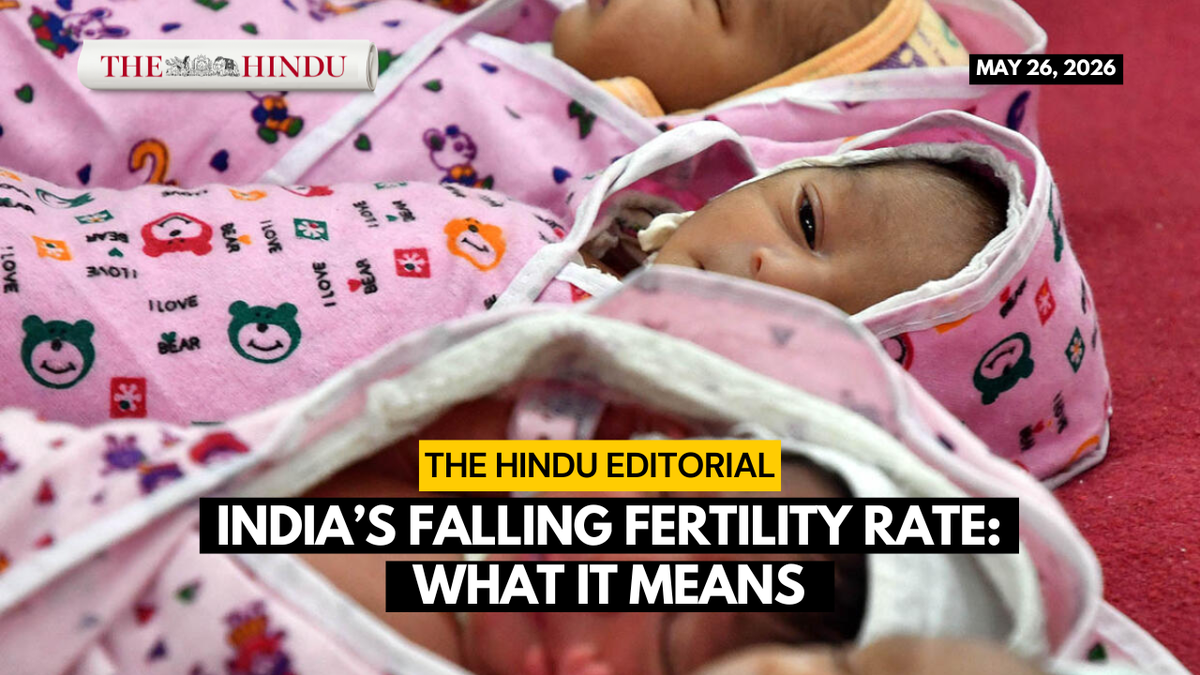
If India wanted proof of its shifting demographic status, then the latest SRS bulletin, 2024 has provided just that. The figures from the Sample Registration System – Statistical Report, 2024, offer incontrovertible proof — falling fertility rate, low crude birth rate — to show that India’s pace of population growth is considerably slowing down. While the pundits predict at least three decades of population growth for the country, the plunging fertility rate certainly commands pause for contemplation and forward planning, for India to crest a crisis that several nations are struggling to manage. India’s Total Fertility Rate has dropped to 1.9, lower than the replacement level of 2.1, aided, in large, by a falling birth rate. As per the latest SRS data, India’s birth rate fell from 21 in 2014 to 18.3 in 2024; while death rate marginally went down from 6.7 to 6.4. The country is well on its way from population ‘explosion’ to one of ageing population and shrinking workforce expansion. India might still reap its demographic dividend — the median age in India is 29.2 years, in stark contrast to China (median age of 40.2), and several other European nations. In 2026, India has approximately 370 to 380 million youth, aged 15-29 years, representing roughly 27 % of the country’s population. Estimates also put India’s below 35 years population at over 65% of the total, making it one of the world’s youngest cohorts.In demographic terms, falling birth rate reflects a decline in fertility, linked to factors such as urbanisation, better education, access to contraception, and the desire for smaller families. India’s high life expectancy at birth (72 years) and dipping death rate offer the other side of the transition paradigm, implying better access to health care. India needs to reassess the path ahead and pivot to prepare for the needs of a future greying nation, when the demographic dividend disappears. The SRS data, however, flags a more immediate concern too — one of vast regional and rural/urban disparities. Overall, performance in rural areas is not on a par with the urban centres, and the southern States continue to stay ahead of the northern States. Overall, child survival improvements are real (the Infant Mortality Rate has fallen to 24) but high-burden States in the north are still at a much higher IMR. States and areas that lag will need targeted interventions, whether it is access to health care, awareness or education facilities to effect a national convergence. Published - May 26, 2026 12:20 am IST
From black to grey: on the Sample Registration System – Statistical Report, 2024
If India needed proof of its demographic transition, the latest SRS Bulletin 2024 provides it
TL;DRAI
India's TFR dropped to 1.9 (below replacement level 2.1), with birth rate falling from 21 in 2014 to 18.3 in 2024, per the SRS 2024 report. Median age remains 29.2 vs. China's 40.2, but slowing workforce expansion warrants long-term talent pipeline planning.
417 words~2 min read