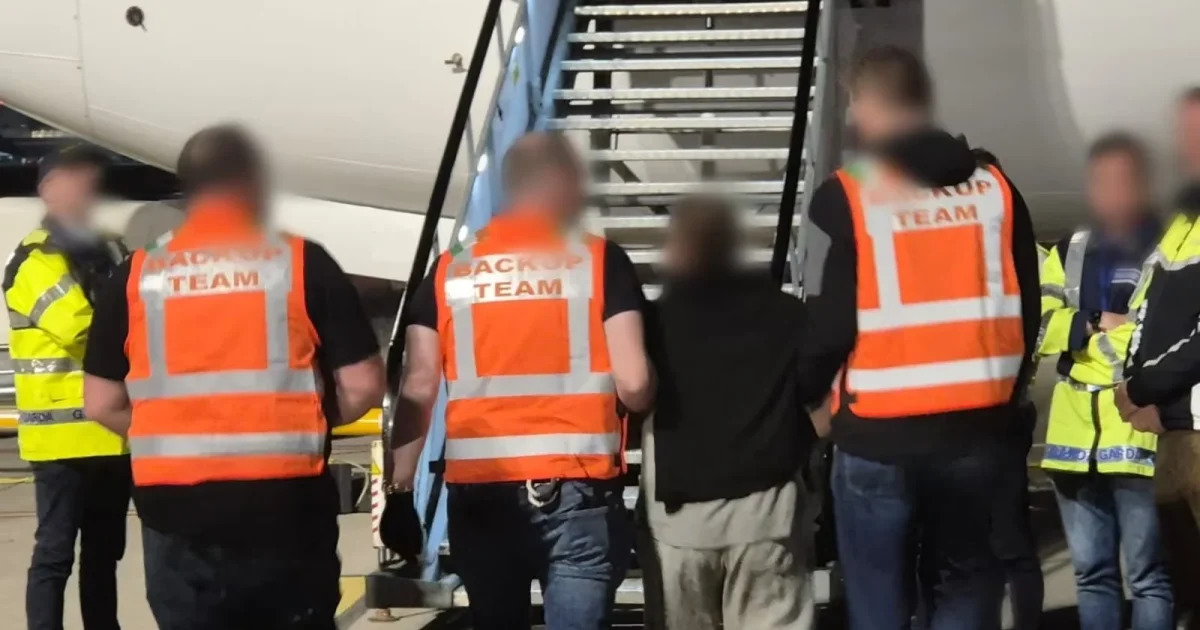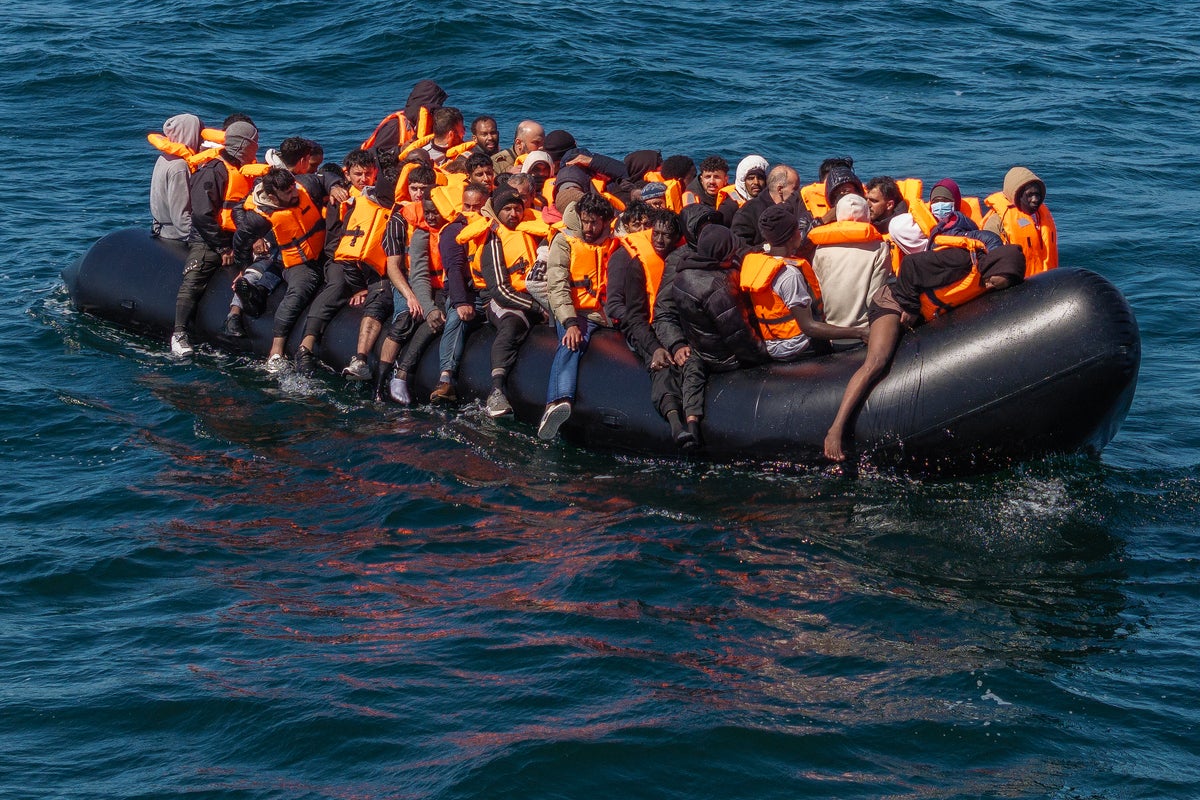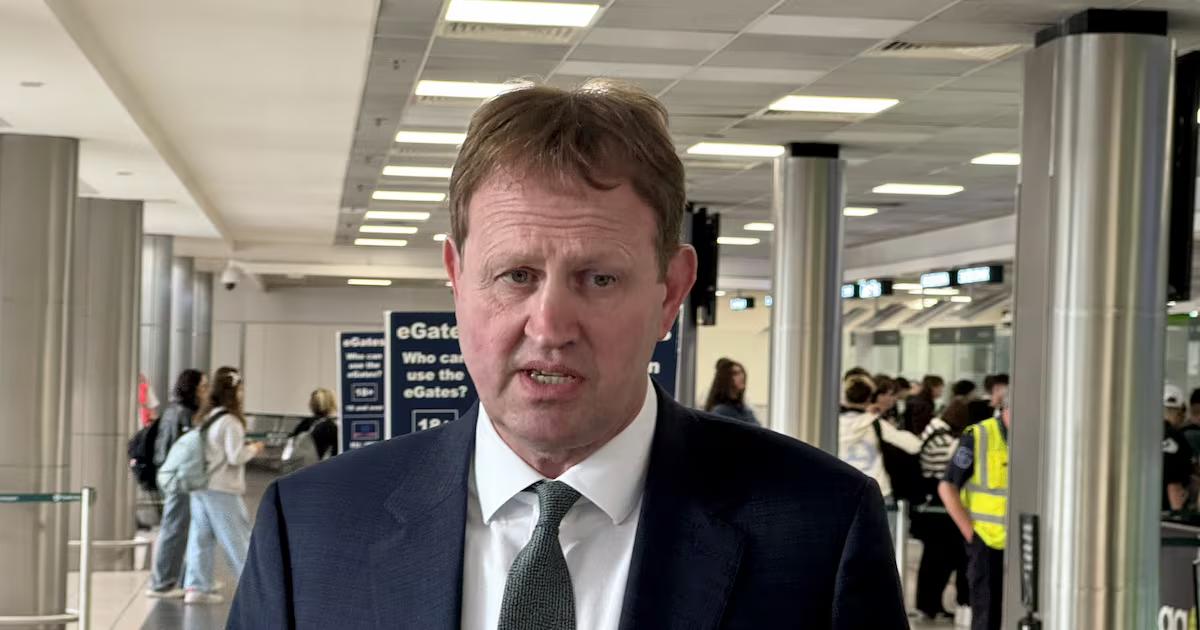
There will be further deportations of EU citizens who commit serious crimes in Ireland, Minister for Justice Jim O’Callaghan has confirmed. O’Callaghan said: “If you come to Ireland and you’re here as a guest and you commit a serious criminal offence, you know it’s my intention that you should be removed.”Speaking on Monday after the removal of 22 Polish and 12 Lithuanian nationals on Sunday, May 24th, O’Callaghan said he was “taking a very serious approach in response to people who have come to Ireland and have committed serious criminal offences” and would continue to do so.He doubled down on his commitment to deport those convicted of serious crime, saying he wanted to “emphasise clearly” that he has implemented a new policy.“I am removing people from the EU who are in Ireland and who have been convicted of serious criminal offences, and I’ve removed people who are international protection applicants or from non-EEA countries in similar circumstances.” O’Callaghan said although citizens of EU countries have the benefit of an EU directive which permits free movement for work, “it does come subject to very serious conditions”. “If people have committed serious criminal offences they lose the privileges that come under the free movement directive.“It was for that reason that 34 people were removed from Ireland, served with exclusion orders because of the serious crimes they had committed,” he said.[ Pork sausages served on flight deporting 24 men from Ireland to PakistanOpens in new window ]Those convicted of serious sexual offences would not be deported until they were in the last year of their sentences, in deference to the victims involved.“If anyone is convicted of a serious sexual offence, I inform the victims in advance, to look for their consent actually, and so that no one is removed out of the jurisdiction from prison ... until they’re serving their final year in custody,” he said.O’Callaghan said all cases of potential deportation would be looked at “on an individual basis”. “If I just adopted an across-the-board policy ... certainly when it comes to the free movement directive, I would be opening myself up to a legal challenge, because my response has to be proportionate.”O’Callaghan was speaking as he and Minister for State Colm Brophy inspected upgraded electronic passport gates for arriving passengers, known as eGates, at Dublin Airport. Some 25 new and upgraded eGates have been installed to strengthen security measures using improved facial comparison technology, enhanced impostor detection measures, and a new two-step verification process. Nicola Caul, eGate project manager, alongside Ministers at the launch of the upgraded eGate facilities at Dublin Airport. Photograph: Bairbre Holmes/PA The machines can read passports issued by participating countries and compare those passports with lists of people who have been denied access to Ireland or for whom an international arrest warrant is in place. The second step in the process involves the gates comparing the physical image on the passport to the person at the eGate.Brophy said the upgraded system will “help staff manage increasing passenger volumes safely and efficiently while continuing to maintain high security standards”.The upgraded eGates will continue to operate alongside existing immigration and international security verification systems, with passengers referred to immigration officers when further examination is required.In 2025, 6.3 million passengers used an earlier iteration of the eGates and those figures are expected to increase this year following the installation of the upgraded system. In all, some 18 million passenger arrivals were completed at Dublin Airport last year.
Deportations to continue for EU citizens who commit serious crimes in Ireland, says Minister
It comes as 12 Polish and 22 Lithuanian nationals deported because of the serious crimes
577 words~3 min read