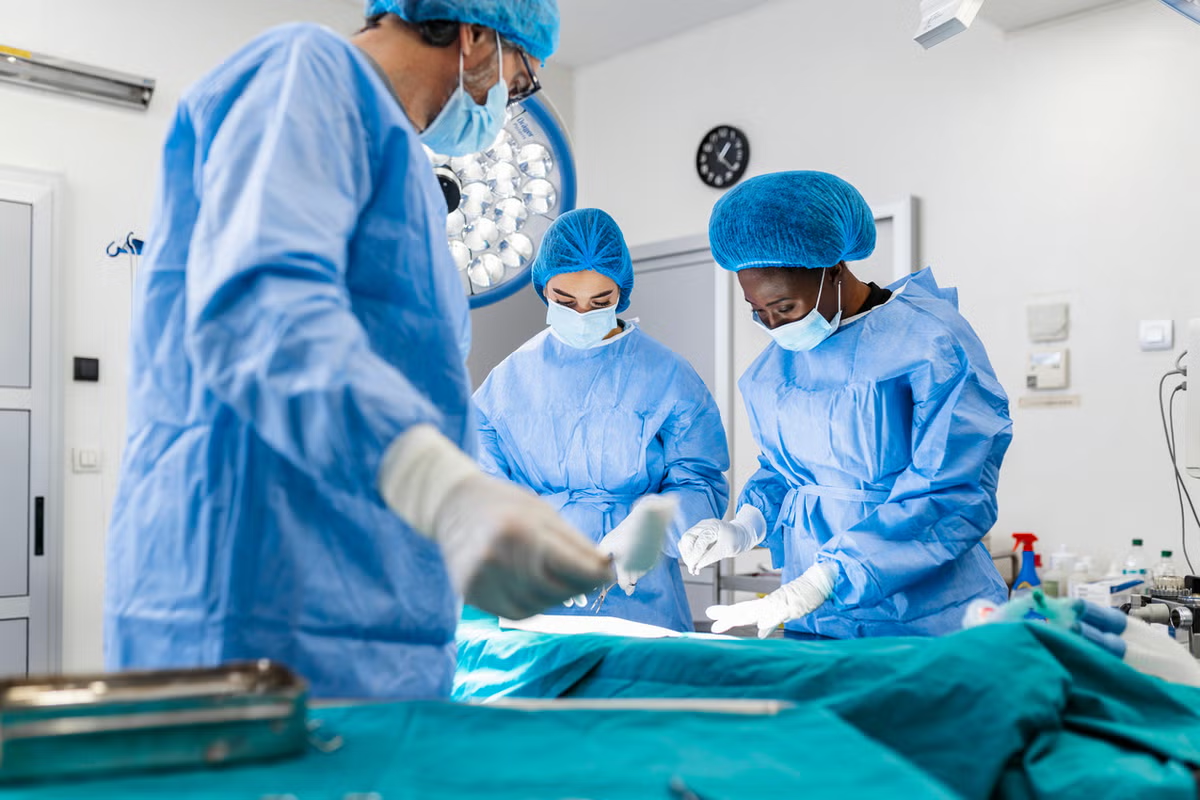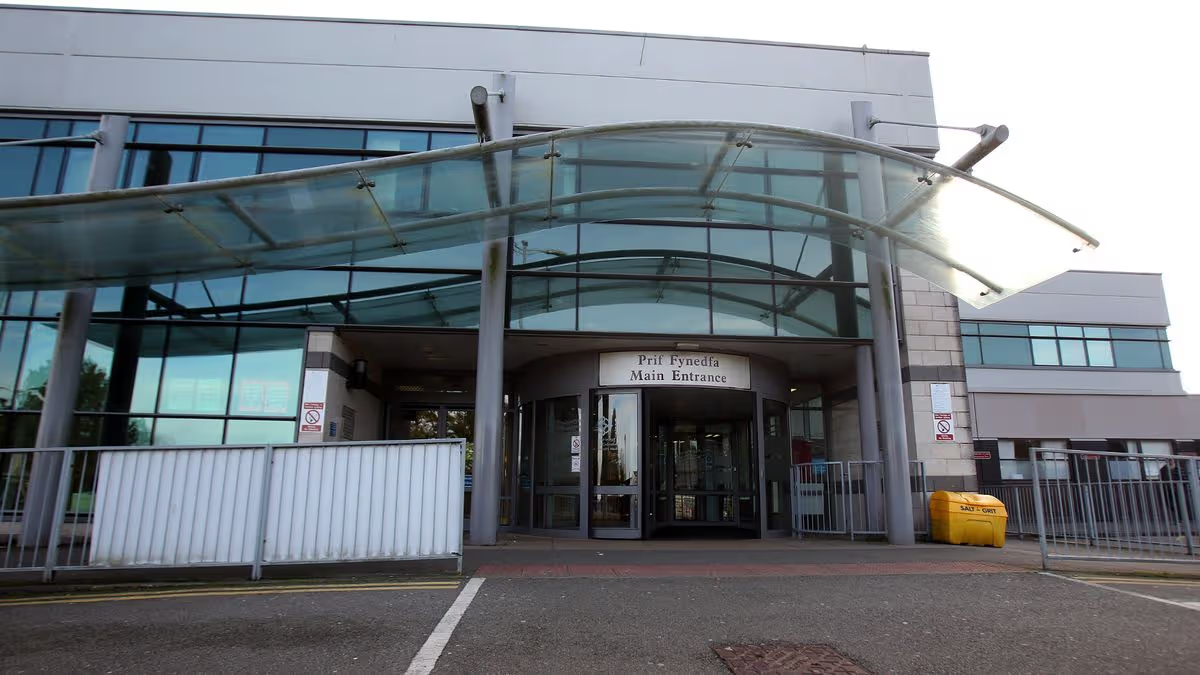
NewsUK NewsNHSThe blundering surgeon mistook a tattoo for a medical marking which indicated a tumour site on the body, and this led to part of a healthy section of bowel being removed15:42, 25 May 2026A blundering surgeon removed the wrong part of a cancer patient's bowel after they mistook a tattoo for a medical drawing.Officials apologised after admitting at a troubled health board that several "never event" mistakes happened. The tattoo blunder was one of five "wrong site" procedures where surgeons operated on the wrong body parts.The cancer patient was undergoing an operation at the Ysbyty Gwynedd hospital in Bangor, north Wales when the surgeon mistook the tattoo for a medical marking indicating the tumour site. As a result, the surgeon carried out an extended right hemicolectomy instead of the left-sided surgery - leading to the removal of a healthy section of bowel instead of the cancerous tissue.READ MORE: Alan Brazil issues startling health update as talkSPORT host says 'I was nearly gone'READ MORE: Retired pilot unable to talk or swallow after what he thought was just headache as he cut the grass"This led the surgeon to take out the segment of bowel that did not have the cancer in it," a health board report said. The patient has since had further investigations in preparation for further surgery.The incident was a "never event," an instance where a wholly preventable occurrence happens. They are classed as serious and entirely preventable instances that should never happen should the healthcare provider follow safety guidelines.A total of 139 never events were recorded between April and July last year, according to the NHS. In a separate incident another cancer patient was told they had undergone a procedure on an incorrect area. An investigation into the incident at Wrexham's Maelor Hospital is ongoing.The matters came to light via an internal health board report which will be discussed by health chiefs later this week. A person who believes they have suffered a "never event" can bring a compensation claim against the NHS.Article continues belowAccording to the NHS Resolution website, you’ll need to prove that health practitioners have failed in their duty of care and you’ll also need to prove “causation” - that the harm caused is as a result of the practitioner to meet the appropriate standards.For a compensation claim to be successful, claimants must be able to demonstrate that the professional providing healthcare has fallen short of the standard expected of them. You may be able to claim damages both for the pain you’ve suffered and your general loss of amenity, and also for the loss of earnings and other expenses incurred due to the alleged negligence.Personal injury claims are subject to a three-year limitation period. This means that claims must be made within three years of the claimed negligence occurring, or within three years of becoming aware of the harm caused.Choose Daily Mirror as a 'Preferred Source' on Google News for quick access to the news you value.CancerNHSHealthHospitals
Surgeon removes wrong part of cancer patient's bowel after tattoo mistake
The blundering surgeon mistook a tattoo for a medical marking which indicated a tumour site on the body, and this led to part of a healthy section of bowel being removed
493 words~2 min read