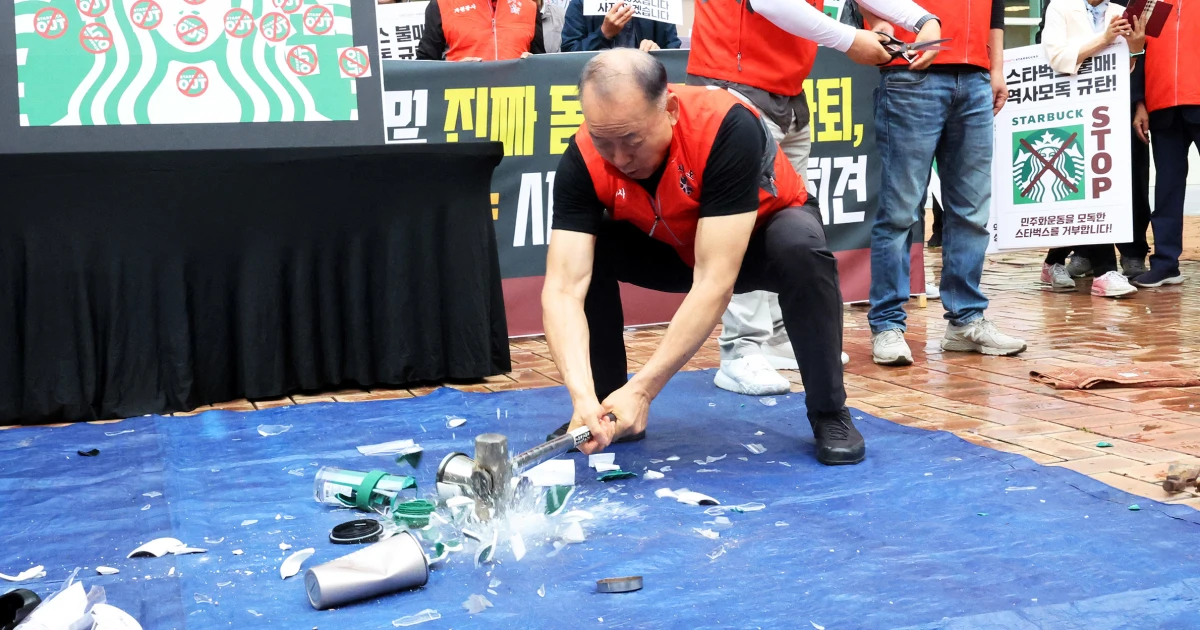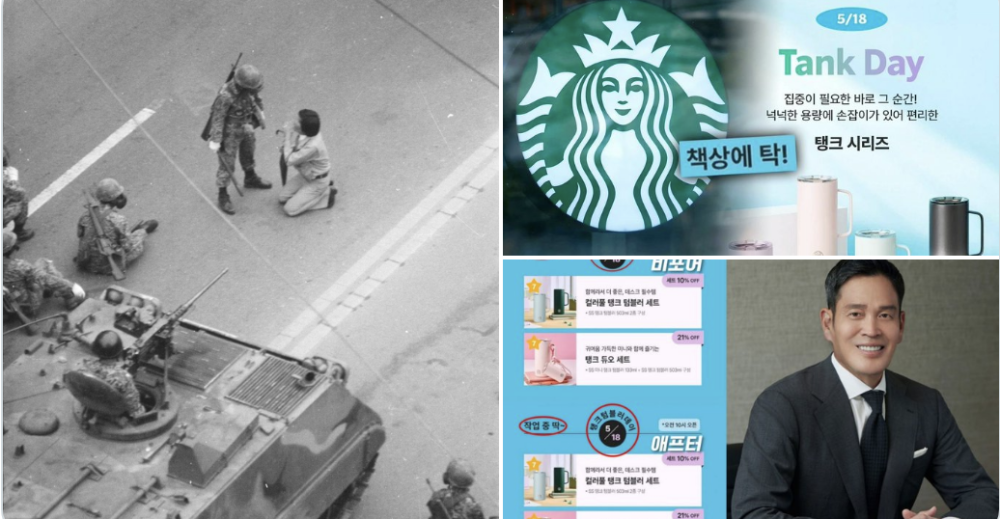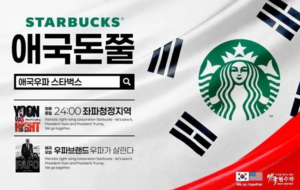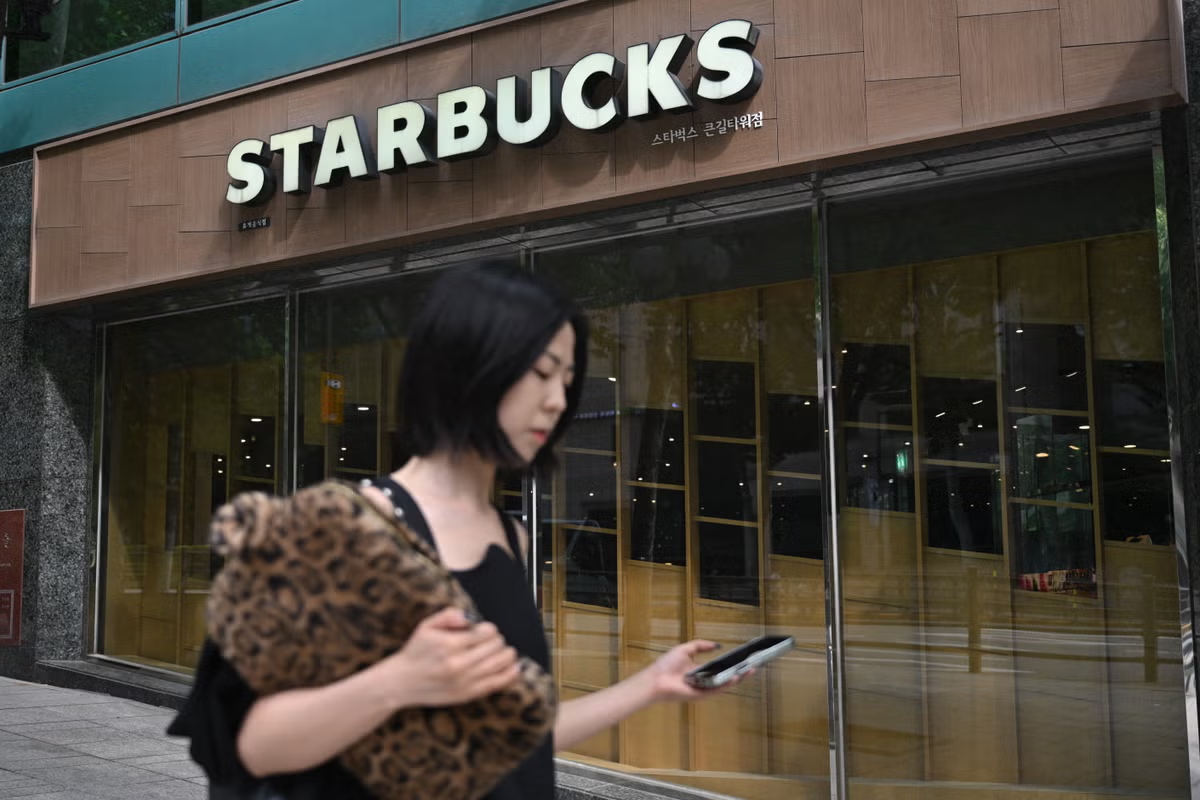
On May 18, the 46th anniversary of the Gwangju Democratization Movement, Starbucks Korea ran a tumbler promotion called “Tank Day.”
The promotional copy included the phrase “Bang on the Desk” – a phrase instantly recognizable to any Korean adult as an echo of the police cover-up following the 1987 torture and death of democracy activist Park Jong-chul. Park’s interrogators told the public that they had slammed the table and he had died on the spot. Within hours, what the company framed as a routine product launch had become a national scandal.
The May 18 Gwangju Democratization Movement remains the most politically charged date on the South Korean calendar. In 1980, Chun Doo-hwan, a military strongman who had seized power through a coup the previous year, deployed tanks and paratroopers into the southwestern city of Gwangju to suppress a civilian uprising, killing hundreds. Official government figures put the death toll at roughly 200, though survivors and civic groups have long maintained the actual number was far higher, with some estimates reaching into the thousands. The exact figure remains contested to this day. Survivors, bereaved families, and much of the Korean public still regard the events as a defining wound in the country’s democratic history.