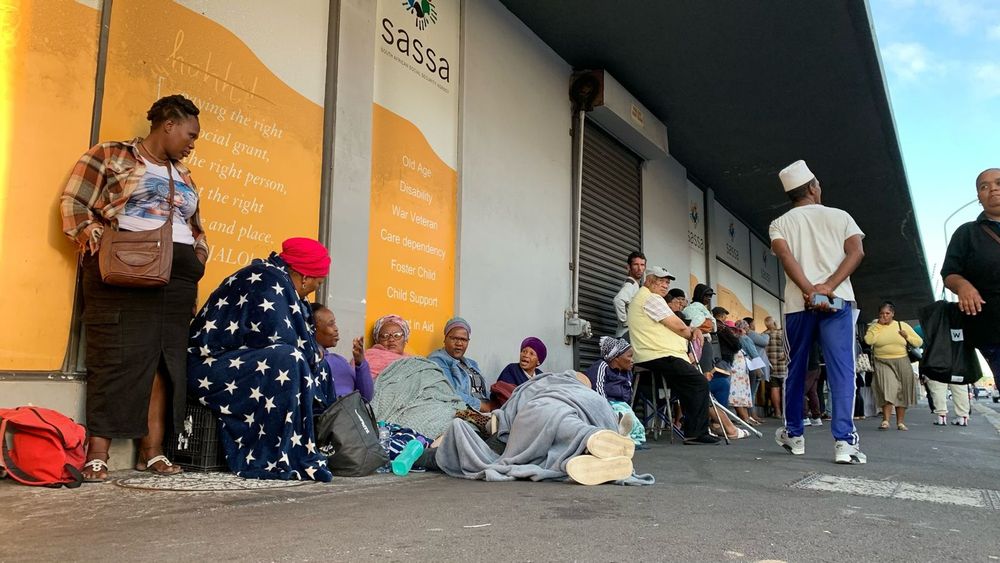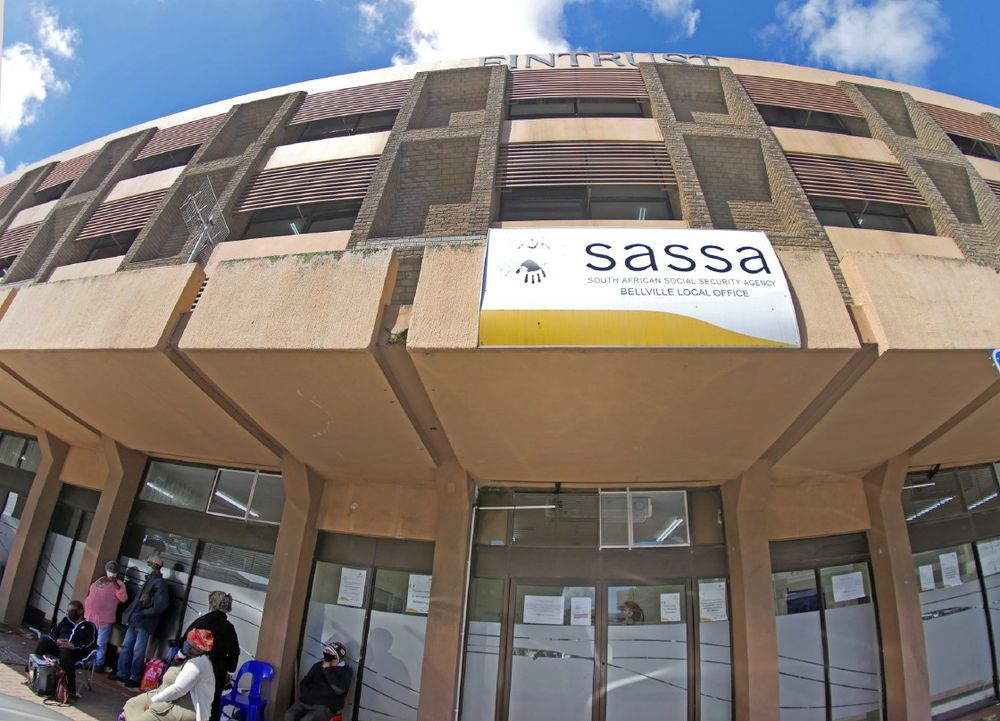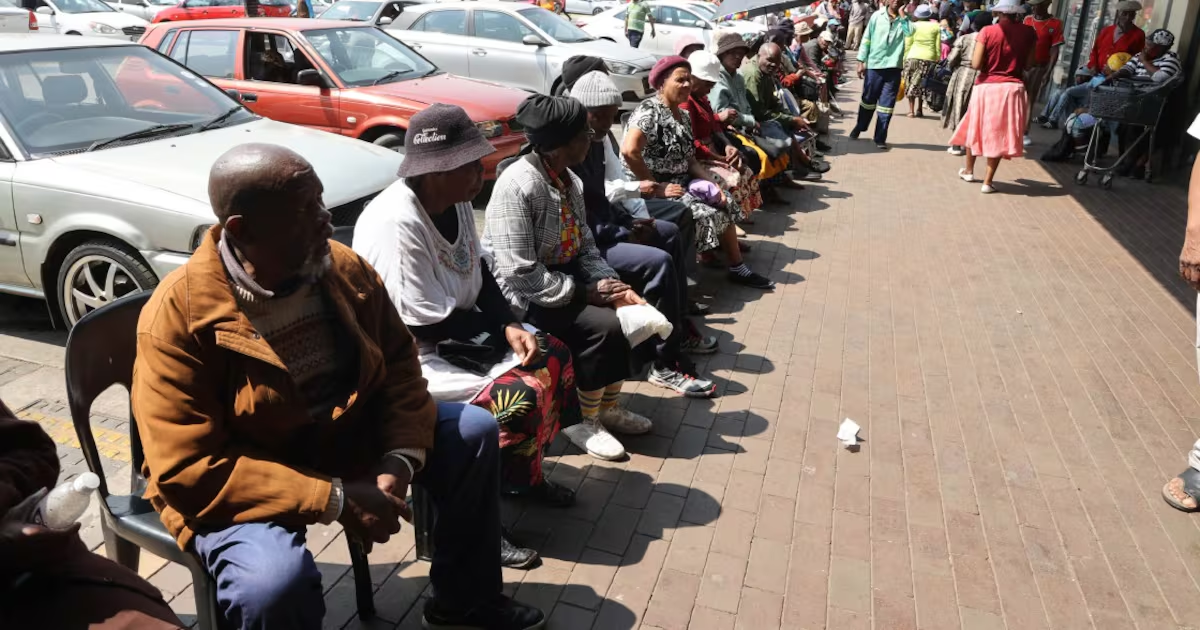
Parliament’s social services cluster chairs have raised concerns over the state’s ability to deliver services to vulnerable South Africans, warning that weak institutions, ageing health infrastructure, Sassa verification delays and slow digital modernisation are undermining access to social protection and health care.The briefing, held at parliament on Monday was addressed by portfolio committee on social development chair Bridget Masango, select committee on social services chair Desery Fienies and portfolio committee on science, technology & innovation chair Lusizo Makhubela. Masango said the Central Drug Authority (CDA), which is meant to monitor implementation of the National Drug Master Plan and advise the government on substance abuse and drug trafficking, was unable to fully carry out its mandate because of poor institutional support and lack of independence.She said SA faced serious challenges from the illegal drug market, with cannabis, tik, heroin and cocaine among the most prominent substances, while alcohol abuse and binge drinking continued to contribute to social harm.Despite the CDA’s mandate to co-ordinate the government’s response to substance abuse across national, provincial and local levels, Masango said it remained located inside the department of social development, with its secretariat embedded in departmental structures.“The CDA does not operate with an independent budget,” Masango said, adding that this had created “very serious accountability misalignment”.She said the authority had told the committee that expenditure attributed to it had been developed by the department without its involvement. The committee was particularly concerned about reported over-expenditure of 131% in one term and 857% in another.“It actually makes the Central Drug Authority an authority with no authority,” Masango said.She said the committee wanted urgent reforms to make the CDA an independent advisory body with its own dedicated budget, human resource capacity and strengthened secretariat.Masango also raised concerns about the National Development Agency (NDA), saying the entity had been weakened by leadership instability and underfunding despite its mandate to support civil society organisations working in poor communities.She said the NDA had not had a permanent CEO since 2021, while its board term ended in December 2025. It had also been operating under an acting chair after its permanent chair was removed in October 2025.The agency had been allocated R700m over the medium term, including R225m in 2026/27, but Masango said its capacity constraints had “seriously weakened” its performance.On Sassa, Masango said the committee supported efforts to remove fraud from the social grant system, including biometric registration, bank verification and life certification. She said Sassa had reported savings of at least R44m from these interventions.She said 420,000 social grants had been reviewed, with 243,000 completed, and some grants had lapsed as part of the clean-up process.However, Masango warned that legitimate beneficiaries were being caught in the verification process and left without income.“The committee supports any intervention implemented to rid the social grant payment system of fraud and corruption,” she said. “But this should not be done at the expense of eligible beneficiaries.”Masango said older persons were among those most affected, with some beneficiaries reporting that they had travelled to Sassa offices and queued from the early hours of the morning without being assisted. “One payment not being made just wreaks havoc in those families,” she said.Masango also said investigations linked to former social development minister Sisisi Tolashe would not fall away after her removal from office. She said the committee was due to be briefed on two investigations, including one involving the Public Service Commission and another forensic investigation into departmental appointments.“The leaving of the minister does not mean that the investigations are also gone with the minister. They stay,” Masango said.Fienies said the select committee on social services had identified persistent weaknesses in the health and social development sectors, particularly in infrastructure, maintenance, staffing and service delivery.The committee had conducted oversight visits in the Western Cape, Northern Cape, Eastern Cape, Free State and Gauteng after repeated complaints from communities about deteriorating health infrastructure, shortages of healthcare workers and poor services.She said the visits had revealed “a consistent pattern of challenges”, including ageing healthcare facilities, urgent refurbishment needs, maintenance backlogs, shortages of essential equipment and shortages of critical staff.“In other instances, infrastructure projects were under way but were taking too long or were abandoned before completion due to delays in paying contractors,” she said.She said these conditions forced ordinary citizens to wait longer for services, travel further for care and receive treatment in increasingly constrained conditions.The committee had called for accelerated investment in health infrastructure, improved maintenance planning, stronger budget oversight, better emergency medical services and closer co-ordination between national and provincial health departments.On the NHI, Fienies said the committee noted that aspects of the policy were before the courts and that it respected the independence of the judiciary.Fienies also addressed concerns about the hantavirus after cases linked to an international cruise ship. She said the health minister had briefed the committee that the identified strain was transmitted primarily through contact with infected rodents and was not present in SA rodent populations.She said human-to-human transmission was “extremely rare” and required very close contact. Contact tracing had been undertaken and the situation remained contained.“There is no cause for panic,” Fienies said. “The situation is under control and is being closely monitored.”Fienies welcomed the appointment of Sindisiwe Chikunga as acting social development minister, saying the leadership change was important for stability and continuity in social assistance and welfare services.Makhubela said research & development should be central to strengthening the state’s ability to deliver social protection. She said countries that failed to invest meaningfully in research & development did not merely fall behind, but lost the ability to shape technologies that would determine the future of work, health and security.Makhubela said digitalisation could transform social grant administration by improving identification, targeting, application processing, payments, fraud prevention and accountability.Institutions such as the Council for Scientific and Industrial Research could help the department of social development and Sassa build secure, real-time data systems linking databases such as Sassa, the Unemployment Insurance Fund, home affairs and Sars.This, she said, could reduce processing backlogs, verify income and citizenship status and help prevent identity theft and ghost beneficiaries.“Technology is there. Technology can be used to the advantage of citizens,” Makhubela said.She said the state should use artificial intelligence, biometrics and data science to improve grant verification, reduce queues and restore dignity to vulnerable beneficiaries, particularly older persons and people with disabilities.Makhubela also said the government needed to deliberately invest in historically disadvantaged institutions, grassroots innovators and young researchers so that larger and better-resourced institutions did not continue to dominate research & development opportunities.“Gone are the days when we think that we will be writing everything on paper,” Makhubela said.
Social grant delays leave vulnerable South Africans at risk
Calls for urgent reform as social grant recipients face obstacles and agency capacity wanes
1,102 words~5 min read