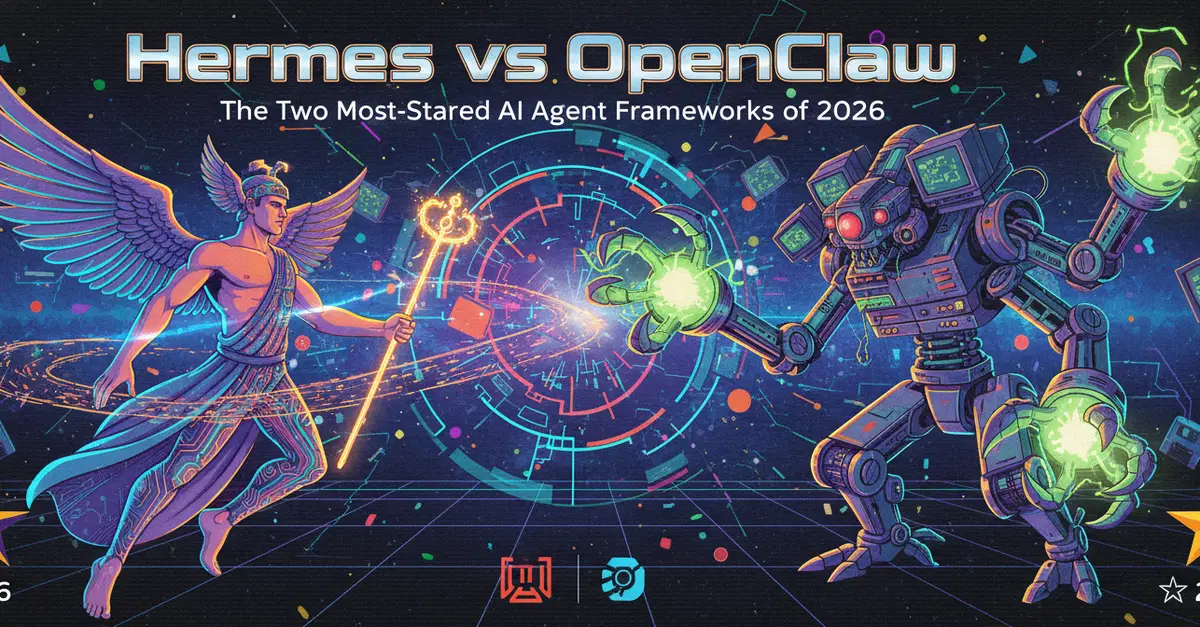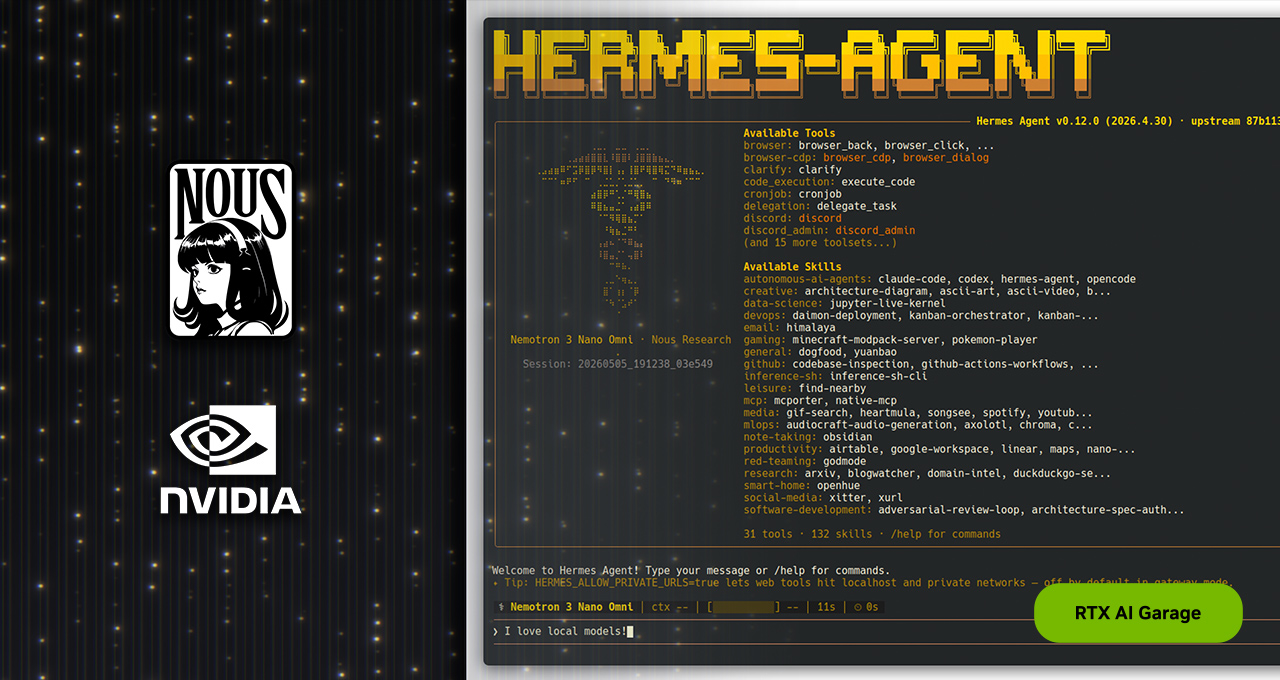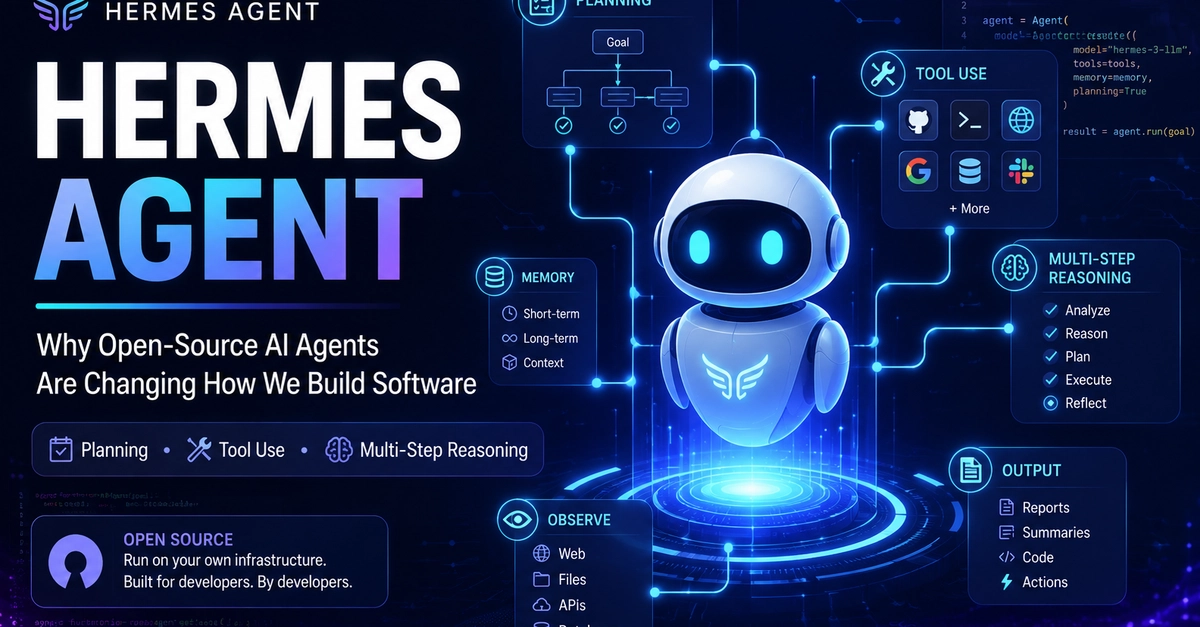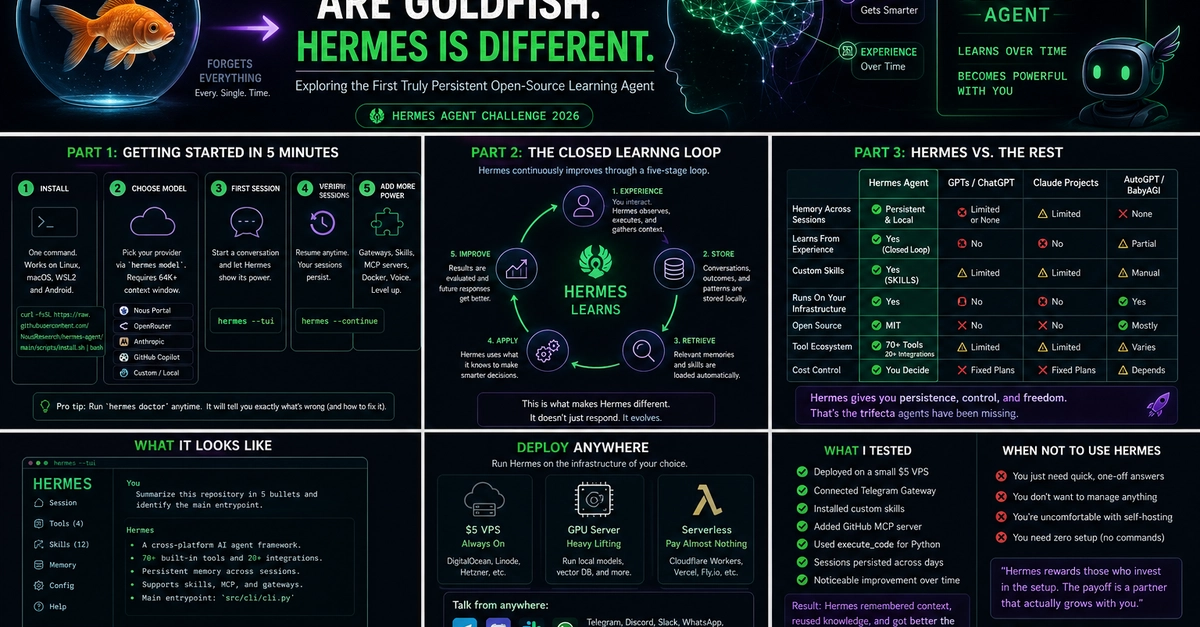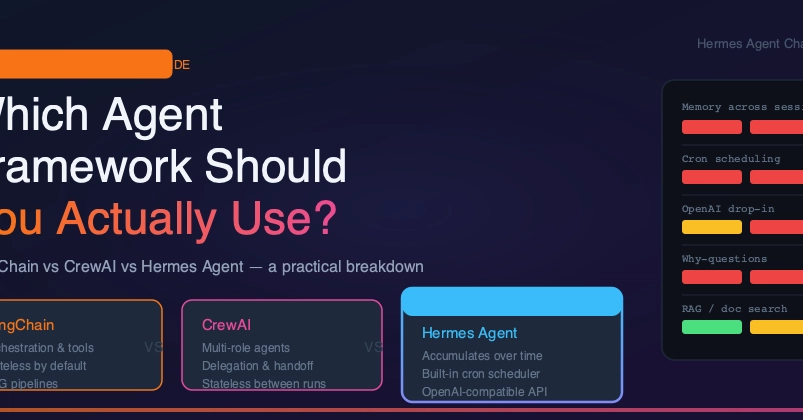
There's a new agentic AI platform other than OpenClaw. It's called Hermes. (Photo by Qin Zihang/VCG via Getty Images)VCG via Getty ImagesAgentic systems have left the experimental phase, and the numbers say so before any narrative does. Hermes Agent crossed 140,000 GitHub stars in under ninety days, which puts it among the fastest-growing developer projects anyone has tracked in recent memory. OpenRouter usage data already ranks it as the most used framework in its category, and the demand side is moving in step; Salesforce alone reports tens of thousands of enterprise deals now tied to automated workflows running in production.Before unpacking what changed, the two Agentic AI players at the center of this moment deserve a clear definition.OpenClaw is an open framework that wires models into real work. It went passed both Linux and React to become the fastest-growing open-source project in GitHub history, rocketing to over 250,000 stars in its first 60 days. The platform records roughly 38 million monthly website visitors and 3.2 million active users worldwide.Think of it as an execution layer, the connective tissue between systems, tools, and the workflows that carry tasks from idea to completion. Over the past year, it quietly became the default starting point for teams exploring this space. It was purchased by OpenAI.MORE FOR YOUPeople use the AI agent OpenClaw partially because it is an open-source AI agent. The hype around OpenClaw, launched by its Austrian creator in November 2025, reflects the broader interest in artificial intelligence. (Photo by Kevin Frayer/Getty Images)Getty ImagesHermes Agent took a different path. Its core idea is continuity, holding context across sessions, learning from prior work, and converting repeated actions into reusable capabilities. Where OpenClaw enabled execution, Hermes is built around accumulation, and that single design choice is driving a faster shift than most analysts expected.There is a polite version of how new technology spreads, the version that assumes time for evaluation, debate, and gradual rollout. That is not what happened here. In under ninety days, Hermes moved from release to dominance, and many enterprise teams were still mid-evaluation on OpenClaw when the market had already moved past them. This was a reset, not a transition.Here are the ten agentic shifts that matter now.1. Agentic timelines have collapsedEnterprise planning cycles typically assume a 12 to 24 month window for meaningful change; Hermes compressed that into a single quarter. The result is a mismatch between planning and reality. If your roadmap still assumes stability, it is already outdated, and the gap will widen with every cycle you let pass.In fact on their website, they claim that they can have your agent up and going within.On the Hermes Agent website, they claim that they can have the agent up and working in 60 seconds. Hermes Agent2. Agentic memory is now expectedEarlier systems demanded repetition. Teams had to restate workflows, preferences, and structures every time they sat down to work. Hermes builds continuity by design, capturing patterns and decisions as they happen and applying them in future work. Value now increases with use, which changes how performance gets measured in the first place.3. Agentic learning compounds over timeMost systems finish a task and stop there. Hermes reviews outcomes, extracts patterns, and stores them for reuse, so each task quietly improves the next one. What this builds inside the system is momentum, the kind that shows up in output later rather than all at once.4. Agentic skills are becoming assetsWhen Hermes solves a problem, it converts the approach into a structured skill, something searchable, shareable, and reusable. That introduces a new category of asset, one that sits apart from code and apart from data. It is repeatable execution, and the teams that recognize this early will end up with libraries of capability instead of just libraries of workflows.Every CIO should learn and lead their teams in working with agentic architecture. 5. The agentic stack is becoming clearerThe past year brought a lot of confusion about what this category actually requires, but a pattern is finally emerging. The stack needs to have three items:Identity to define who or what is acting. Access to enable connection to systems and resources. Skills to determine how work gets done. The organizations gaining traction are aligning around this three-layer structure, and the clarity is starting to compound.6. Agentic control is becoming a differentiatorHermes is designed to run inside infrastructure that companies already control, using their own models and their own data. That gives organizations ownership of how work is executed, all the way down. In a market where platforms are competing to capture workflows, control itself is becoming the strategic advantage.7. Agentic infrastructure decisions are backThis shift reaches beyond software. NVIDIA and others are positioning their systems as the foundation for continuous execution environments, and the question facing leaders is no longer just which system to use, it is where the system should run. That moves the conversation into full stack territory, with all the capital implications that come with it.Nvidia is betting that being a neutral place where any agent can run will be the success driver for companies. (Photo by Justin Sullivan/Getty Images)Getty Images8. Agentic oversight is evolvingRunning systems locally reduces certain risks, and it introduces new ones. When a system is learning, storing patterns, and acting across tools, visibility over time becomes its own discipline. Oversight is shifting from initial access control toward something more continuous, closer to ongoing accountability than a one-time approval.9. Agentic deployments generate leverageThese systems do more than finish tasks; they produce structured records of how work actually got done. Those records become the raw material for refining processes, improving performance, and testing new approaches. Every deployment contributes to future capability, which means the value curve bends upward with time rather than flattening.10. Agentic speed is now the strategyOpenClaw helped define the early market. Hermes changed the pace. It improved faster, adapted faster, and spread faster, and the market rewarded all of it. Speed itself has become the strategy, and that reframes how leadership teams should be thinking about adoption windows.If what you evaluate today will look outdated in ninety days, how do you plan with confidence? My read is that agentic change has moved past the monitoring phase. Leaders have to design around agentic AI now.
Hermes Agentic AI Overtakes OpenClaw, 10 Shifts Leaders Need To Know
Hermes Agent overtakes OpenClaw as agentic systems accelerate. Learn the 10 key agentic shifts reshaping enterprise strategy, speed, and execution today.
1,039 words~5 min read