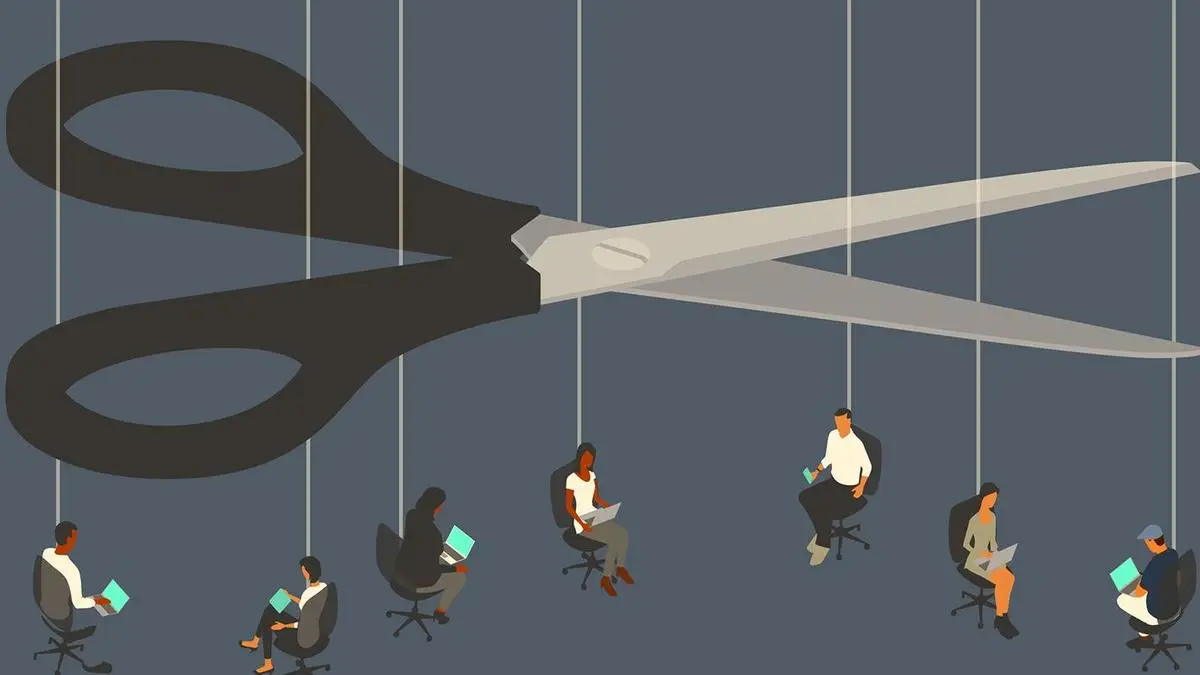
The ambiguity and constant change in today's workplace make emotional agility and resilience a career and leadership non-negotiableFuture Publishing via Getty ImagesAs thousands of Meta and tech employees opened layoff emails within the past few weeks, the disruption from organizational restructuring triggers a ripple of deep emotions across the industry:What if working in Big Tech is no longer safe? What feels secure anymore in modern work? How can the ones responsible for innovation and creating AI find themselves replaced by the very technology they've developed and implemented? Professionals found themselves anxiously anticipating the future, embedded in psychological unrest and uncertainty. At Workhuman Forum London, the renowned corporate psychologist and author Susan David told me that when there’s so much disruption happening internally in organizations, there’s one critical skill that both leaders and the professionals being laid off need to develop now.That skill is not more AI upskilling or technical proficiency.It is emotional agility.Why Emotional Agility Is The No.1 Skill For Leaders & Professionals Right NowOn the day of Meta’s layoffs (May 20), I sat with David backstage before her talk at the forum, for a 20-minute interview on how professionals can evolve psychologically while facing ambiguity and rapidly-moving workplaces. Our conversation was so insightful that it ran into 40 minutes. I asked her:“What would you say to professionals navigating the impact of layoffs right now, both from a leadership standpoint and a personal professional standpoint?”David described the emotional destabilization many workers experience during periods of restructuring and organizational upheaval by referring to what she and psychologist John Bowlby call a “secure base.”MORE FOR YOU“You know, when you go to a restaurant and you see a little child running away from its parents in the restaurant and it looks back to make sure that its parents are OK and still there? What is the child doing? What the child is doing is what John Bowlby, the psychologist, called the secure base. It’s the knowledge that the child has that if something goes wrong, ‘my parents or caregivers will be able to step in.’”Blending this metaphor into the realities of today’s workplace, she said, “It’s that knowledge that enables me to do the work of the child--to be curious, to fall and get up, to be courageous, to do all of those things. So think about this notion turned inwards. This is what I mean when I talk about self-compassion.”But the reality is that the nine-to-five no longer feels secure as it used to. Job tenure and longevity is being rocked from its very foundation, because of AI, layoffs blamed on AI, and a plethora of other market factors. “It’s hard to human right now,” David told me.Self-Blame And Shame After LayoffsAnd that’s precisely why she says that now more than ever, “Self-compassion is the antidote to shame.”I’ve spoken to workers who’ve developed feelings of self-blame, shame, and inadequacy, internalizing the experience even when layoffs are tied to larger organizational or economic transitions. David told me that emotional agility begins with resisting going down that downward spiral.It’s the idea of “I’ve got me,” she said, describing the importance of learning to psychologically support oneself and stay grounded and present even during periods of ambiguity and disruption.Leaders need to operate from a space of compassion—for themselves, and for their teamsgettyWhat Leaders Can Do To Build This Critical SkillFor leaders and managers who are left behind to deal with the aftermath, David warned against what she terms “cognitive narrowing,” where leaders and management begin avoiding difficult conversations, emotionally shutting down, or go into agenda-mode with care and empathy for their teams.Instead, she encouraged leaders to try a different approach as they build their own EQ and emotional agility:“Is this workable?”During periods of organizational restructuring, change, and instability, David explained, leaders should self-evaluate whether their actions are moving them closer to becoming “the leader and human being” they ultimately want to be.“If I keep avoiding this conversation time and time and time again,” she asked leaders to reflect, “does it get me closer to being the person I want to be?”As companies race to restructure around AI, efficiency, and shareholder pressures, the one workplace and career capability that will keep you grounded and enable your career to thrive is emotional agility Change is constant.You’re being asked to stabilize your career, the outcomes of an entire department, while dealing with uncertainty.Instead of allowing the overwhelm to define your career journey, take time to reflect, allow yourself to process mentally and embrace your current reality (yes, even the uncertainty), build courage and resilience to face what’s next, and deliberately choose to take actions today that the future you will be proud of.
After Meta Layoffs, Psychologist Names The No.1 Skill Workers Need Now
Meta laid off 8,000 employees and reassigned 7,000. In times of uncertainty and organizational upheaval, here's the one skill you need now, according to a psychologist.
775 words~4 min read