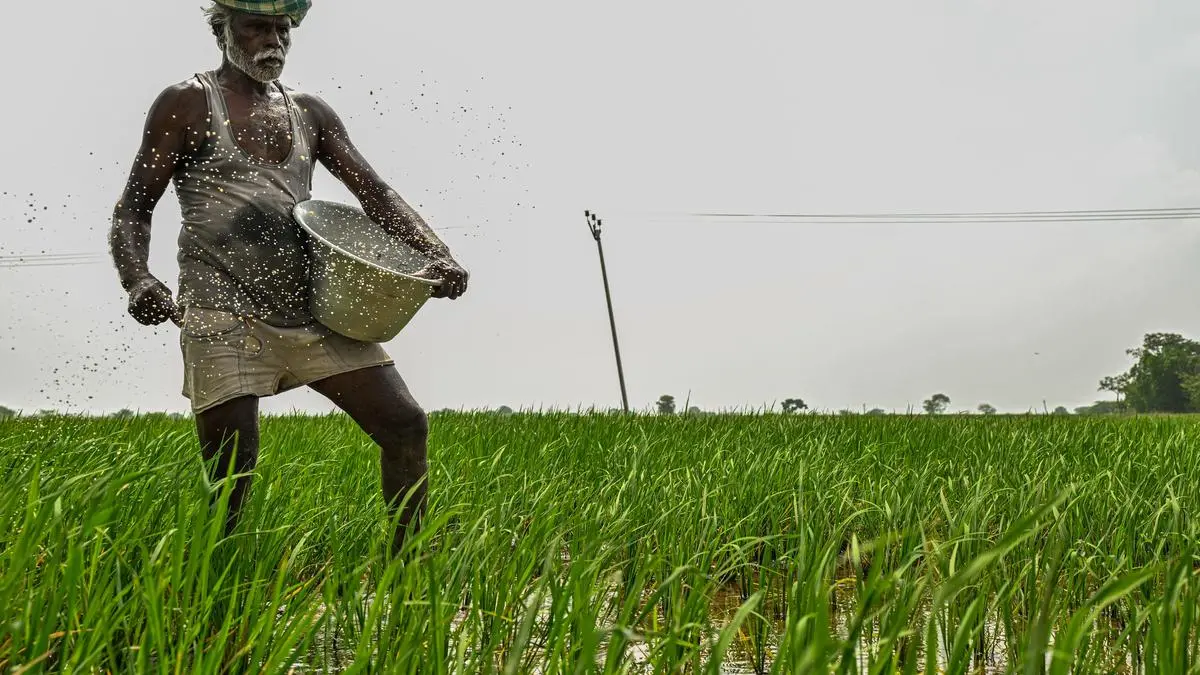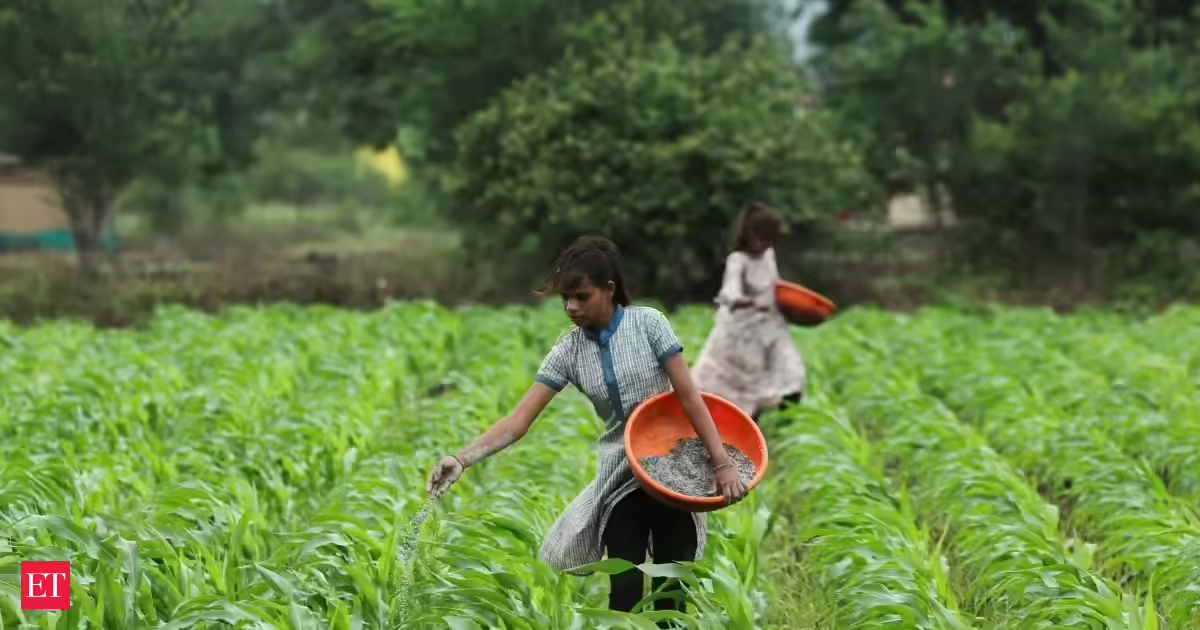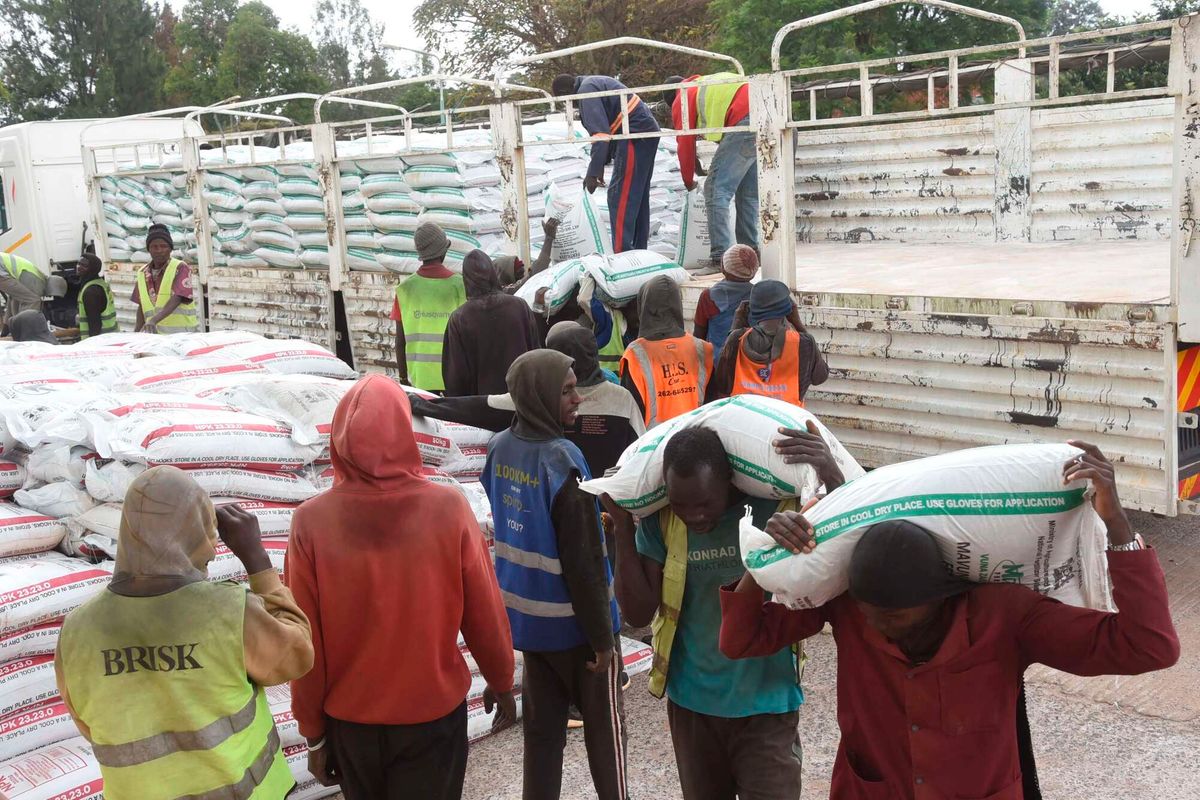
India’s fertiliser subsidy, meant to make crop nutrients available at cheaper rates to farmers so that the final agricultural produce remains within the limit of consumers’ reach, may exceed ₹3 lakh crore in the current fiscal against the Budgeted amount of ₹1.71 lakh crore because of current high global prices of raw materials as well as finished products, official sources told businessline.Asserting that the increased fertiliser subsidy is a burden on the government, a senior official said that pre-war estimate was below ₹2 lakh crore, but after the geopolitical tensions in West Asia, the subsidy will go up substantially. “Though there is no formal estimate, the larger realisation is that it may exceed ₹3 lakh crore if the problem persists till end of Kharif and it may even reach ₹3.5 lakh crore if the current situation, of high global prices and closure of Strait of Hormuz, continues during Rabi season,” the official said.In her 2026-27 Budget, finance minister Nirmala Sitharaman provided ₹1,70,944.53 crore of fertiliser subsidy that includes ₹1,16,805 crore for Urea sector (both domestic and imported) and ₹54,000 crore for phosphorus (P) and potash (K) sector. In 2025-26, the fertiliser subsidy was pegged at ₹1,86,630.63 crore (Revised Estimate), which has since gone up due to war-induced surge in global rates from March 1.According to a research paper released by ICRIER on Monday, farmers in India, the world’s second-largest producer and consumer of fertilisers after China, used 70.7 million tonnes (mt) of fertiliser products (in 2024–25), which is equivalent to about 33 mt in terms of nitrogen (N), phosphorus (P), and potash (K) nutrients. Out of which import was 20 per cent of total urea consumption, around 50 per cent of di-ammonium phosphate (DAP), and 100 per cent of muriate of potash (MOP).Once import dependencies on feedstocks and intermediates such as liquefied natural gas (LNG), ammonia, sulphur, rock phosphate, and phosphoric acid are accounted for, India’s effective external reliance where the Gulf region occupies a pivotal position, in the fertiliser sector is even higher at nearly 70 per cent (of sales), ICRIER said. “This makes India highly vulnerable to geopolitical tensions, disruptions in maritime trade routes, export restrictions by supplier nations, and volatility in global commodity and energy markets,” it said.Within a span of roughly 40 days during the recent crisis, global urea prices reportedly surged by nearly 65 per cent, rising from around $482 per tonne in late February 2026 to nearly $795 per tonne in early April. Recent Indian urea import tender (floated by IPL) found prices further jumping to USD 935–959 per tonne. In the case of LNG, the principal feedstock for urea production, prices have risen from nearly $10.4/MMBtu in late February to around $17.4/MMBtu by early-May, 2026 after peaking nearly $25.4/MMBtu during early-March.Moved by the high subsidy burden on the government, the Niti Aayog too has started discussions with experts within and outside the system to find ways to reduce it as much as possible without impacting crop production, sources said.Releasing a paper titled “Ensuring India’s Fertiliser Security Amid Rising Geopolitical Risks”, authored by ICRIER’s Ashok Gulati and others, Niti Aayog Member K V Raju termed the study as ‘macro’ perspective and asked the think tank to suggest an implementable actions plan, both at the national and state levels which can further trickle down to district level.“Do not come after 10-12 months saying we (the government) did not do this and that. Kharif sowing is about to start. Recommendations have to be for this year, current season,” Raju told ICRIER. The Niti Member also asked FAO’s south Asia representative to be specific with alternatives while pointing out the global body’s recommendation to explore other sources as a solution to the closure of Hormuz. “Crisis is now, treatment is required now,” he said and wondered if Russia, Canada, Australia or countries in Africa can replace the West Asian supply.He also asked the experts present there whether India can reduce use of chemical fertilizers at least by 15 per cent, if not more, by the end of 2026-27 fiscal. “We need to develop, with all your support, implementable action plan, both at the national level and also at the state level and then trickle down to the district level,” Raju said adding he already had a discussion with top scientists of Indian Council of Agricultural Research (ICAR) on this issue.The Niti Member also has suggestions on reducing chemical fertilisers but he elicited views from the stakeholders and researchers. Some alternatives, he suggested, could be crop diversification -- , to low fertilizer use crops from heavy fertilizer use crops. But he also reminded that any suggestion must keep in mind that farmers want more income per acre. “If you suggest alternative crops, which are those,” he asked.He further said Krishi Vigyan Kendras (KVKs), Agriculture Universities can adopt large-scale demos to show, it is possible. Raju said promotion of nutrient-based subsidy should be explored rather than a cash-based subsidy scheme while simultaneously working on raising the nutrient use efficiency of the crops.Published on May 25, 2026
Fertiliser subsidy expected to exceed ₹3 lakh crore in FY27 if geopolitical tensions continue
India's fertiliser subsidy may surpass ₹3 lakh crore by FY27 due to rising global prices and geopolitical tensions, burdening the government.
837 words~4 min read