What do we still need source code for?
It is an odd question to ask after spending forty years writing it, but it is the one that keeps pulling at my sleeve. Let me work backwards to explain why.
The first computers were one-trick ponies. Their behavior was baked into their wiring — change the task, change the machine. Useful, expensive, inflexible. Then the elegant idea emerged that part of the data a machine processed could also control how it processed the rest, and the stored-program computer was born. Hardware became a stage; software became the play.
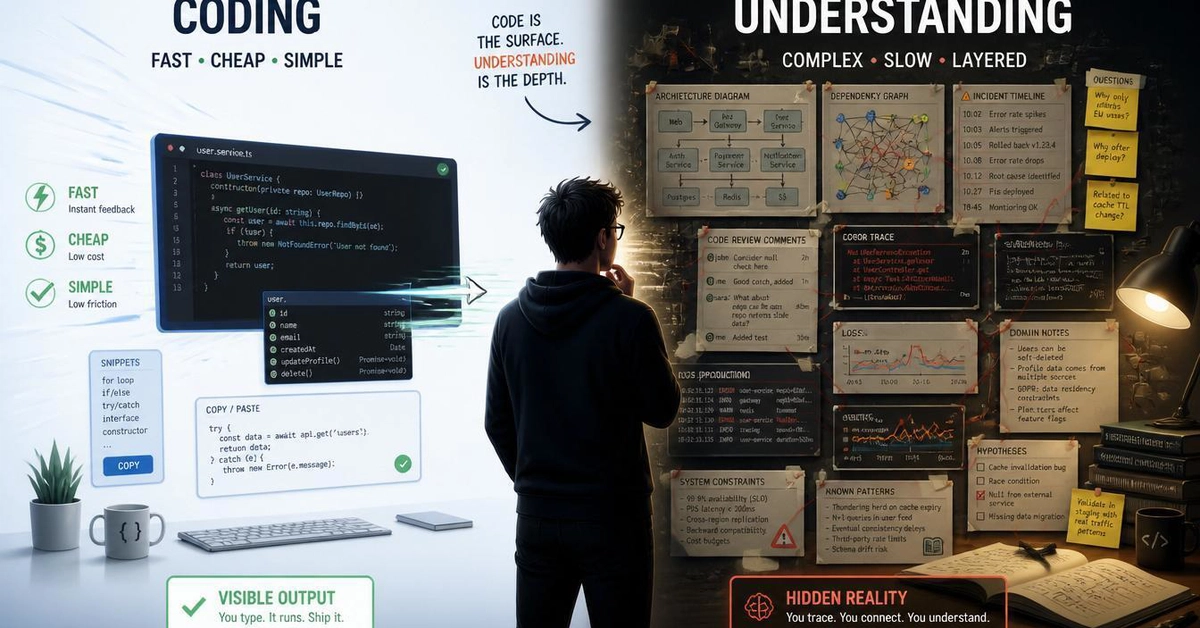
And with software came developers — a new profession whose first and hardest job was, and still is, to understand a process well enough that they could, in principle, perform it themselves. The encoding into source code was always the second step. We did it because humans, however well they understand a process, cannot match a machine for speed or reliability — and have an inconvenient need for sleep.
For decades that was the deal. A business owner understood a process; a developer understood the business owner; the source code was the byproduct of that understanding, painstakingly translated through several meetings, languages, frameworks, and rather more meetings on the way to silicon.