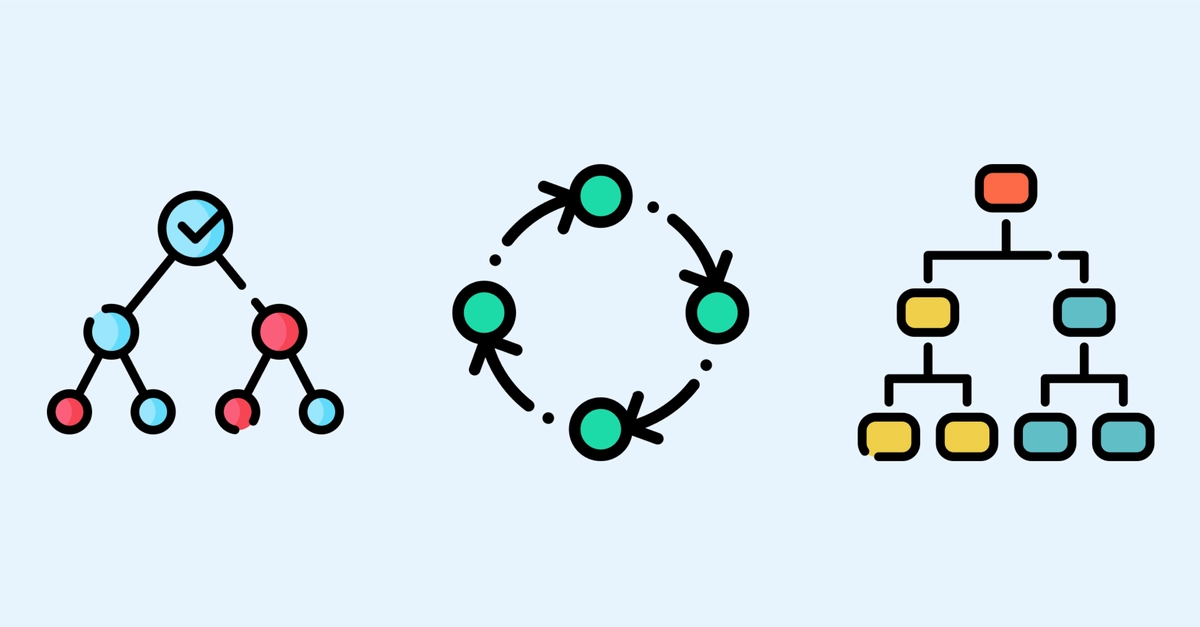
The default tree prep is sorting LeetCode's tree tag by acceptance rate, doing the top 40, and hoping the patterns transfer. They mostly don't. Tree problems feel unpredictable because the practice was organised by popularity, not by mechanism. Every binary tree interview problem is moving information through the tree in one of six ways, and once the six are visible, fifteen problems give more coverage than forty random ones.
TL;DR: Binary tree interview problems cluster around six traversal patterns: preorder, postorder, root to leaf, level order, lowest common ancestor, and simultaneous traversal. Two problems per pattern is enough for interview-grade coverage. The trick is to practice in pattern order, not difficulty order.
The six patterns that cover the binary tree interview space
Every tree problem is a question about how information has to move. Preorder pushes information down from parent to child. Postorder pushes it up from child to parent. Root to leaf accumulates state along a single path. Level order processes nodes layer by layer with a queue. Lowest common ancestor is about which subtrees contain which targets. Simultaneous traversal walks two trees in parallel to compare or merge structure.