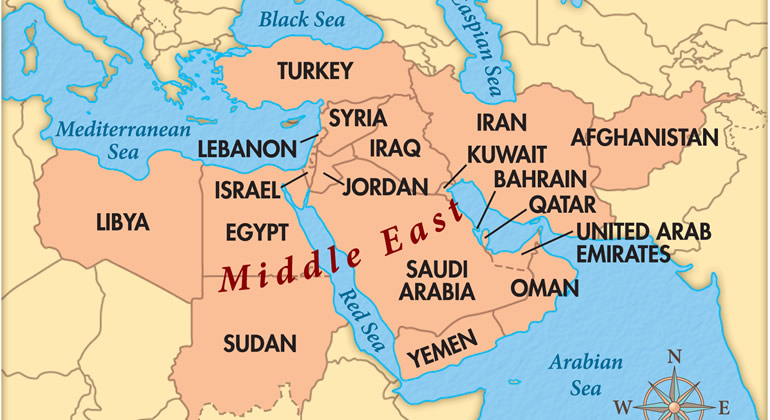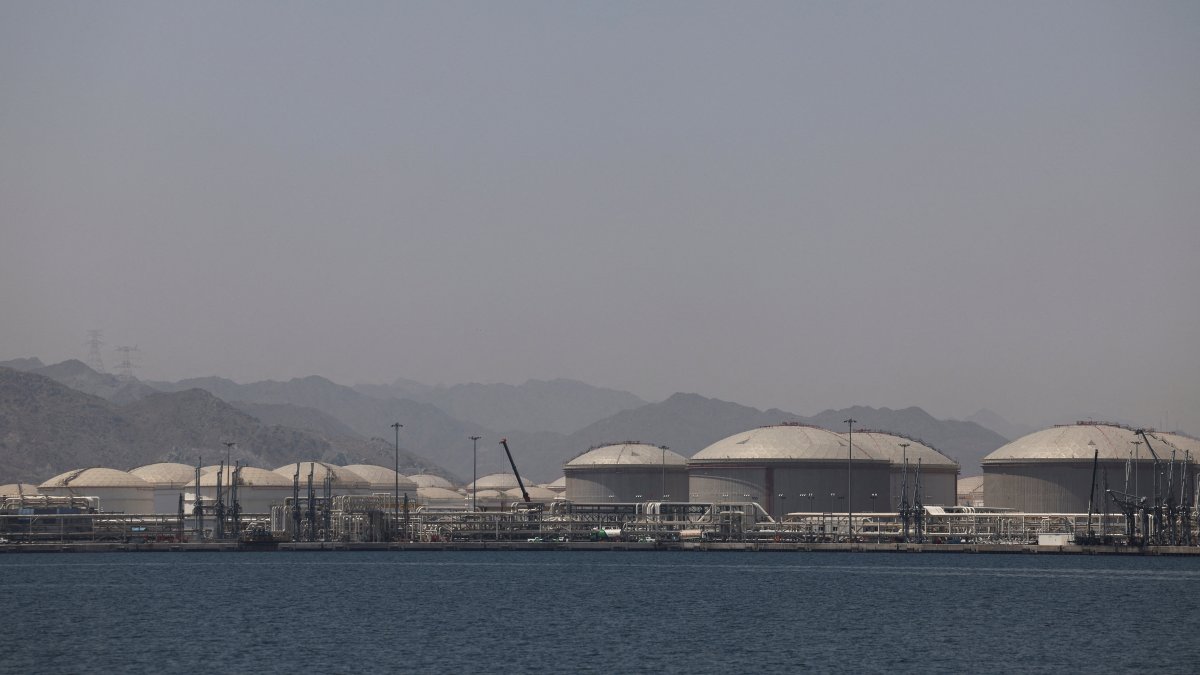
Oil prices have fallen below $100 a barrel and stock markets have risen on hopes that the US and Iran are inching closer to a peace deal.Brent crude futures, the global oil benchmark, were down 5.5% to just below $98 a barrel, the lowest levels in two weeks, with hopes that an agreement to end the US-Israeli war on Iran can be struck.However, the US and Iran remain at odds over key issues such as Iran’s blockade of the strait of Hormuz. The strait’s de facto closure sent energy prices soaring after the US and Israel first launched missile strikes on Tehran on 28 February.Warren Patterson, the head of commodities strategy at ING, told Reuters: “We’ve been at this stage before, only for talks to break down. Therefore, the market will likely be more cautious about overreacting.”Japan’s Nikkei rose nearly 3% and the pan-European Stoxx 600 index was up 0.8%. Several markets were closed on Monday for a public holiday, including in the US and the UK.The dollar dipped 0.25% against a basket of major currencies on Monday. The pound gained 0.5% to $1.3492, the highest since 14 May.Stephen Innes, an independent analyst, said: “Treasury futures rallied, gold climbed and equity futures pushed higher as investors started pricing the possibility that the world’s most dangerous energy choke point may soon reopen to something resembling normal flow.“The market response made perfect sense given how much inflation fear and hawkish rate pricing had been embedded into the curve during the recent energy shock.”Inflation fears have risen around the world because of the higher cost of oil, gas and many other materials including fertiliser, which is expected to drive food prices sharply higher in the coming months.As a result, expectations of interest rate cuts from central banks prior to the Iran war quickly gave way to predictions of rate increases. Markets expect the Bank of England to raise rates twice this year.
Oil prices fall below $100 a barrel on hopes of Iran peace deal
Brent crude futures down 5.5% to lowest level in two weeks and stock markets rise
319 words~1 min read