photography by p. lubas / Getty Images
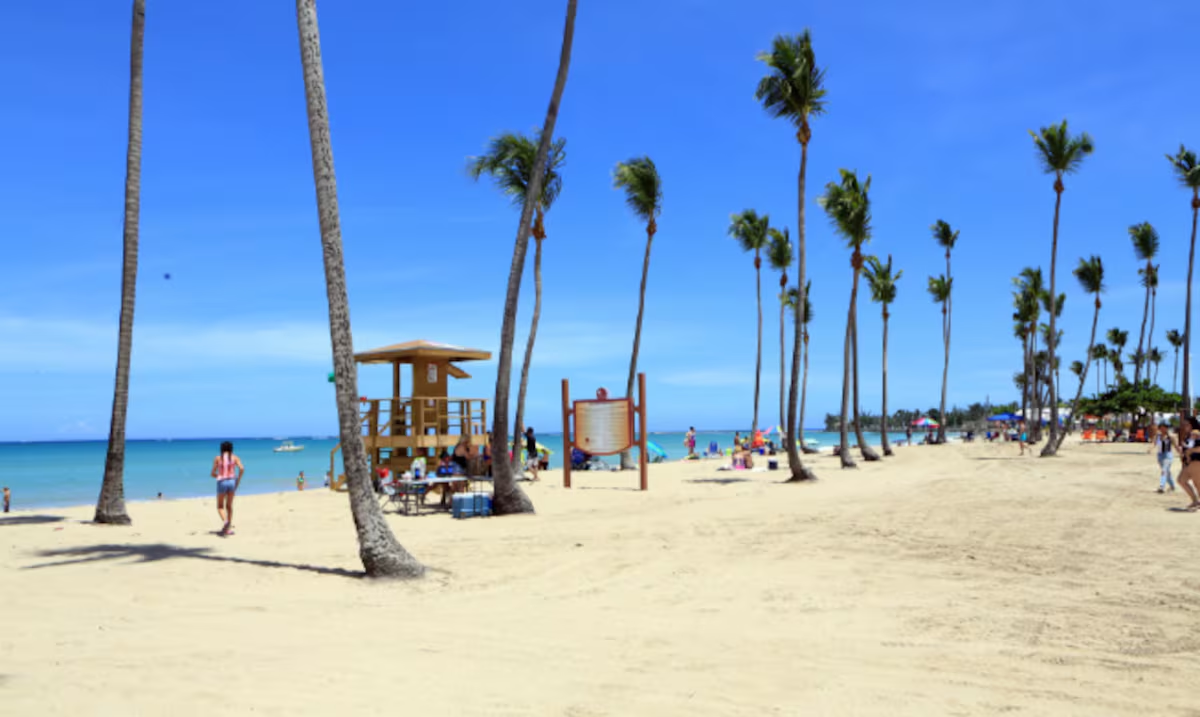
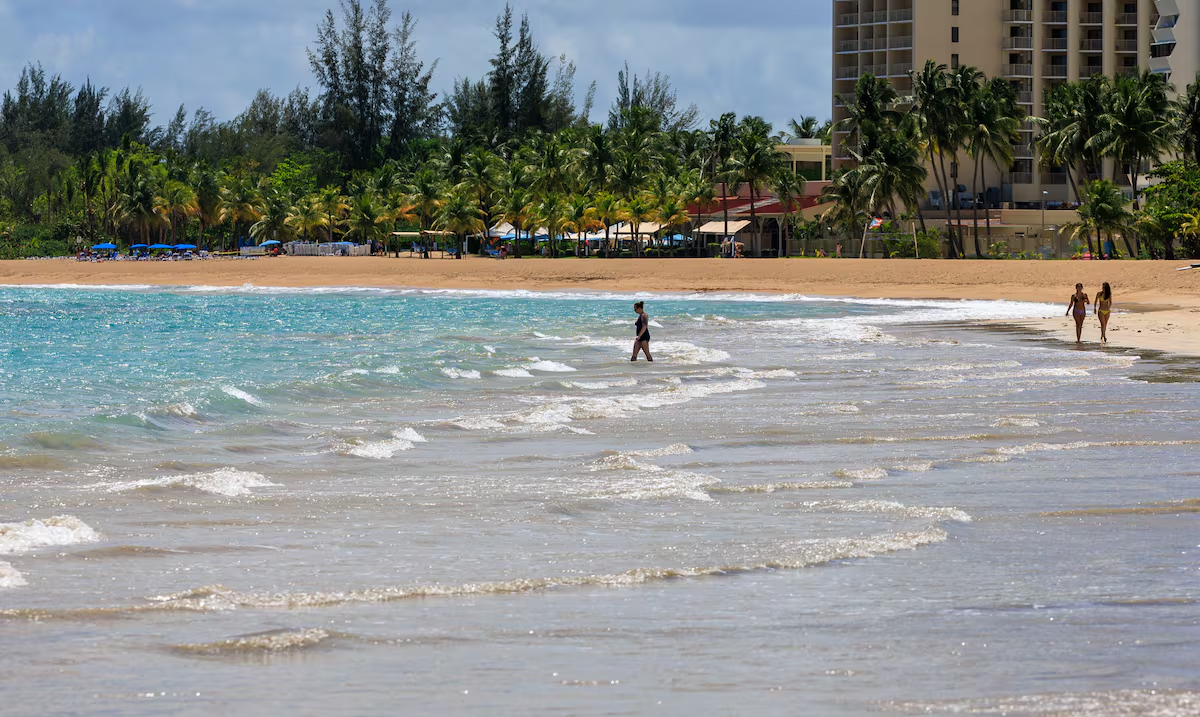
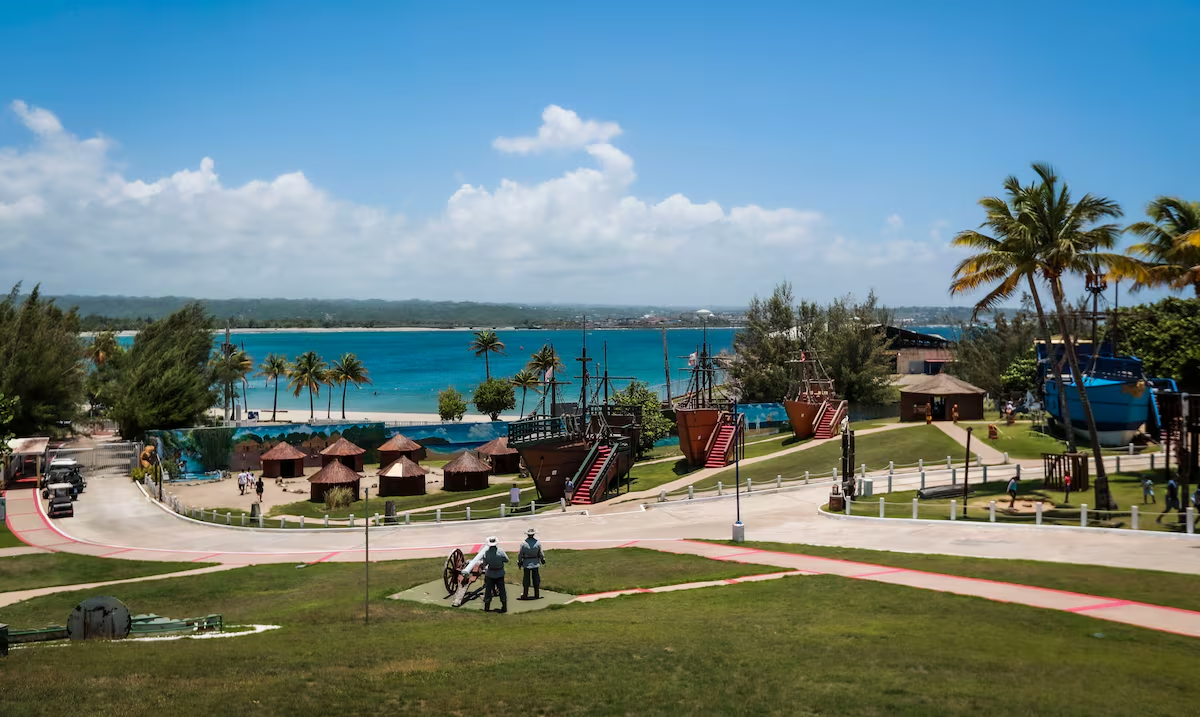
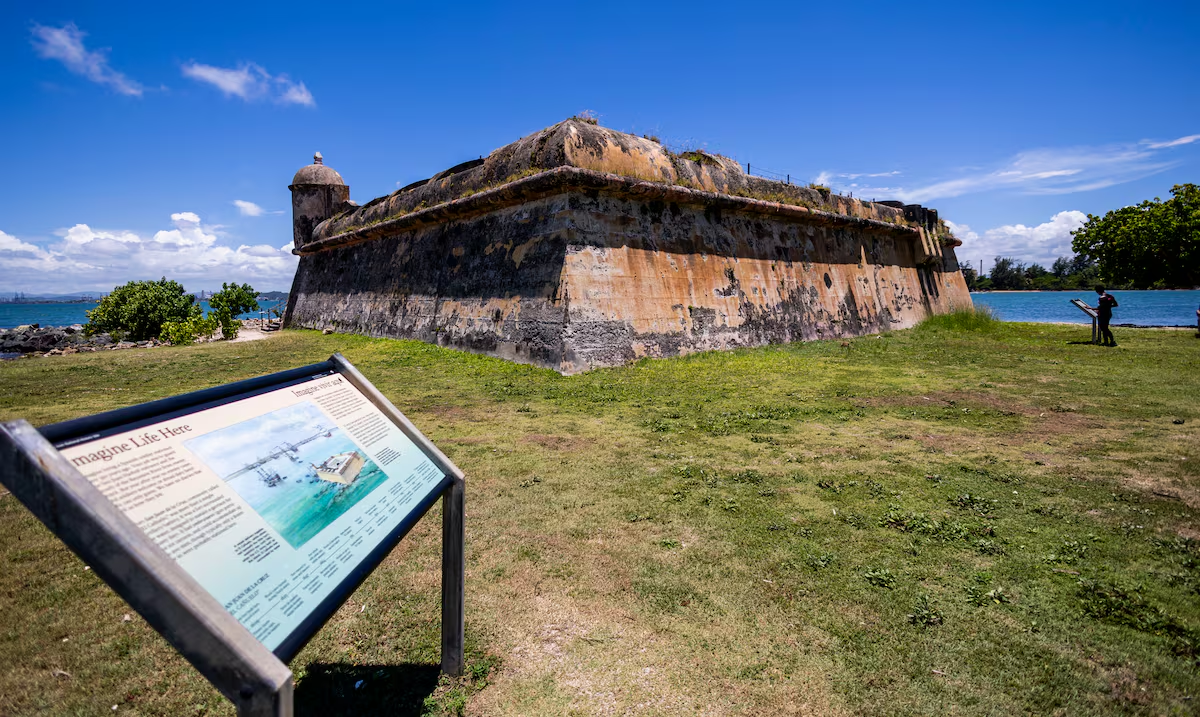
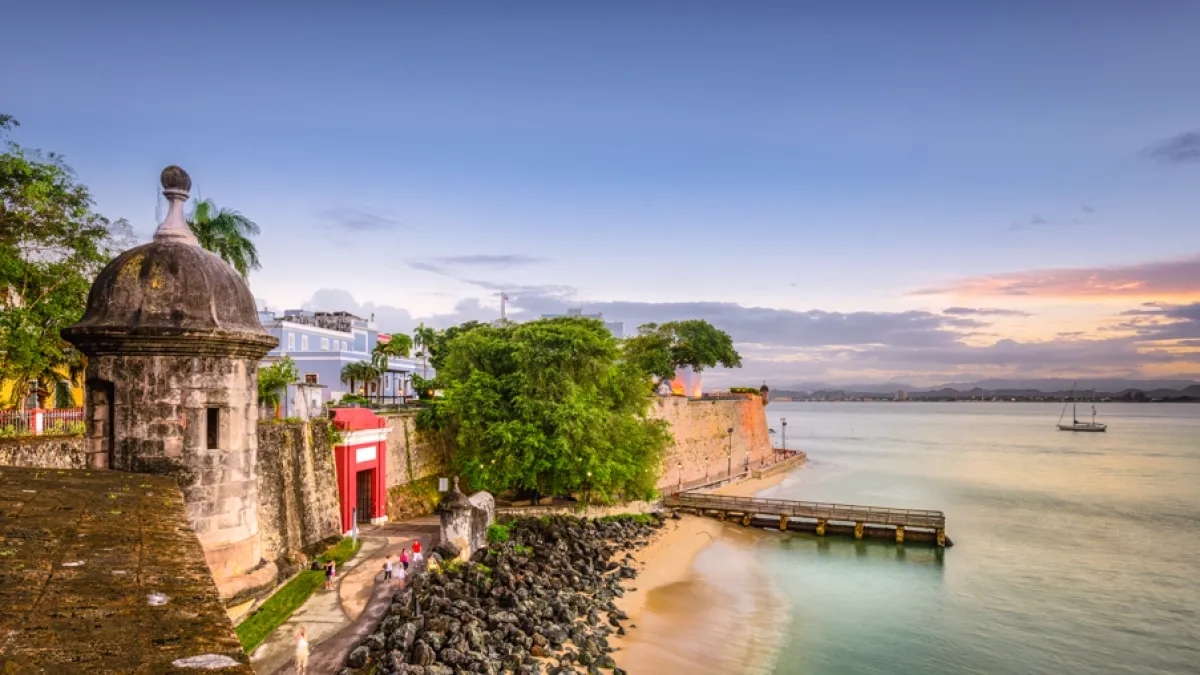
Puerto Rico offers a travel proposition that few Caribbean destinations can match. The island, technically an archipelago that encompasses smaller islands such as Vieques and Culebra, concentrates a remarkable density of distinct experiences within a geography compact enough to explore meaningfully in a single trip. Old colonial cities with Spanish fortifications, the only tropical rainforest within the U.S. national forest system, beaches that compete with the finest in the Caribbean, a world-record bioluminescent bay, and a mountain food culture built around slow-roasted pork are not merely coexisting attractions on this island but genuinely separate worlds, each requiring its own dedicated time. Puerto Rico rewards visitors who treat it as more than a single destination.
The logistics favor American travelers in a specific way that no other Caribbean island can replicate. U.S. citizens can visit Puerto Rico without a passport, without customs processing, and without currency conversion, which complicates travel elsewhere in the region. Domestic airline miles and points apply. Federal consumer protections extend to purchases made on the island. English is widely spoken alongside Spanish. Caribbean scenery paired with the logistical ease of domestic travel has made Puerto Rico one of the most visited island destinations among American travelers, and that visitor volume has supported a hospitality and dining infrastructure that punches well above the island’s geographic size. The challenge for any traveler is not whether Puerto Rico is worth visiting, but where within it to focus time.