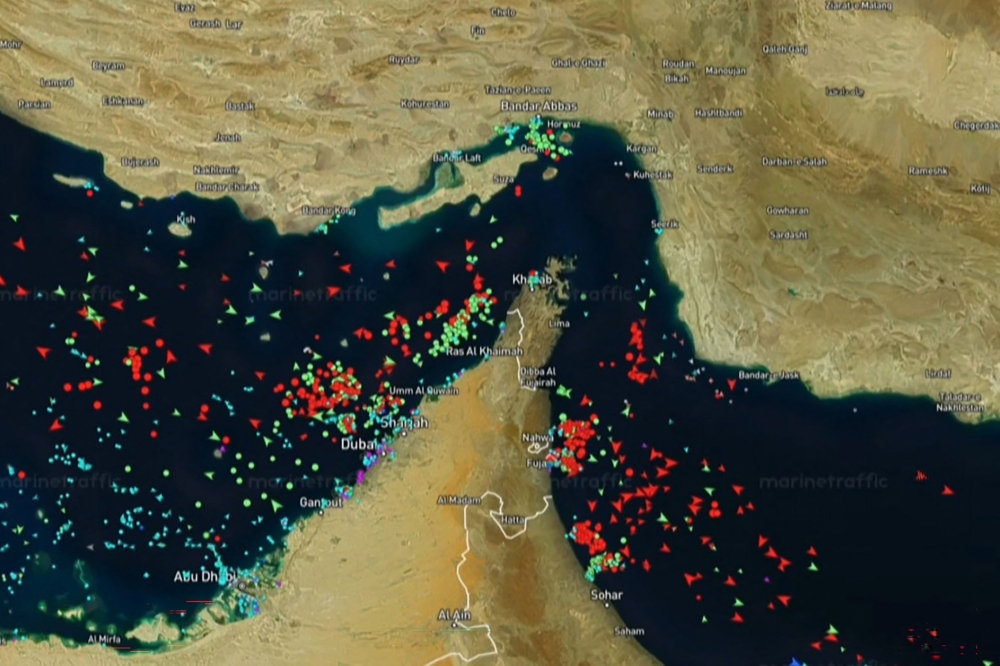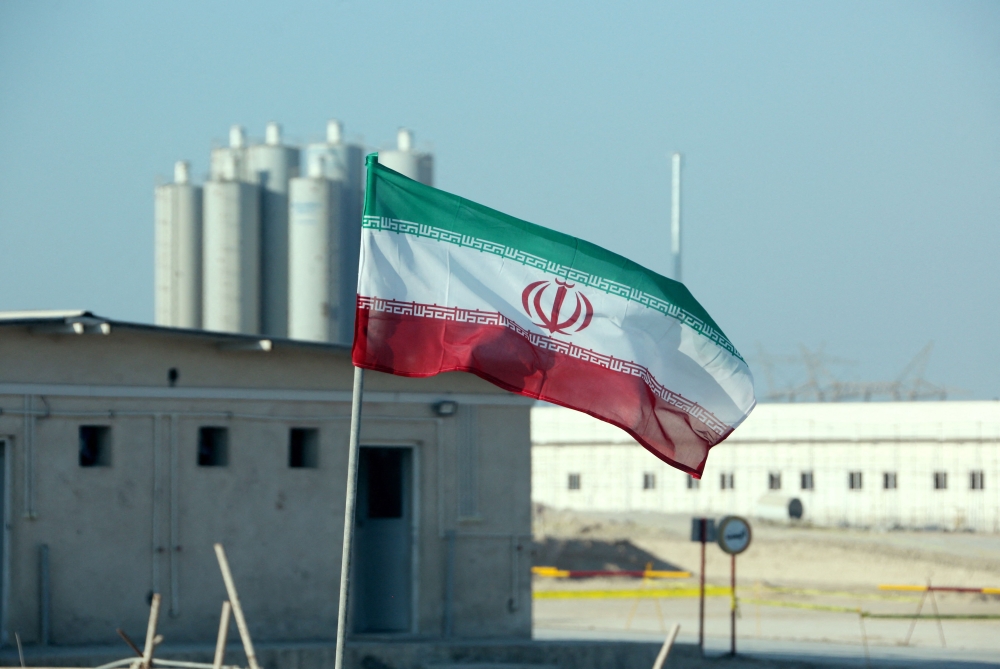
(New users only) It's tax relief season! Get up to RM300 when you save with Versa! Plus, enjoy an additional FREE RM10 when you sign up using code VERSAMM10 with a min. cash-in of RM100 today. T&Cs apply. MAY 25 — The February 28, 2026 joint assault by the US and Isreal on Iran, followed by Iran’s counter response to this strike had resulted in an energy crisis that has reverberated across the globe. Oil price had hiked from US$72 per barrel and escalated to USD$118 per barrel in April 2026, an increase of more than 60 per cent arising from the closure of the Strait of Hormuz which had disrupted about a fifth of global oil flows. The price of Brent crude, the international benchmark had escalated to almost US$118 per barrel in April 2026. The world’s addiction to fossil fuels that must move continuously through pipelines, shipping routes and other critical infrastructure has exposed its profound vulnerability to geo-political shocks. Presently the world is yet again witnessing and experiencing an energy crisis arising from oil shock, though not the first for the world but with results, impact and response that mirror that of the first oil shock of the 1970s when oil price had quadrupled from USD$3 to nearly USD$12. World’s first oil shock of 1970s sent shockwaves across the world’s energy markets The world’s first oil shock in the early 1970s was caused by the Yom Kippur war when Egyptian and Syrian forces launched an offensive against Israel, with six Arab members of the OPEC oil cartel declared an embargo on exports to countries supporting Israel, notably the US. Historical Crude Oil Price (in nominal dollars per barrel). Source: EIA Oil shocks accelerate atomic plans The oil crises of the 1970s which had severely impacted particularly countries heavily reliant of fossil fuels had exposed the vulnerability of these nations and governments worldwide sought to accelerate energy security as a key strategy.Recognising nuclear power as a clean reliable baseload electricity source with its s fuel less exposed to geo-political disruptions made it a compelling option for Government to launch and expand investments in nuclear power France were trailblazers in nuclear power investments after the first oil shock in 1970s France under the leadership of its visionary Prime Minister Pierre Messmer had made a swift and decisive plan to shift from the country’s heavy reliance on fossil fuel to investing in nuclear power. Sirenergies had highlighted that France’s oil bill had quadrupled in the space of two years from 1972 to 1974 in the aftermath of the oil crisis In response to the 1973 oil crisis, on March 6, 1974 Messmer announced what became known as the ‘Messmer Plan’, a hugely ambitious nuclear power programme, the construction of 13 nuclear reactors of 1000MW each, totalling 13000 MW of additional capacity for Électricité de France SA (EDF) aimed at generating most of France’s electricity from nuclear power as a key strategy for France to achieve its energy independence and enhance its energy security. EDF dovetailed that the strategy was to build quickly, on a large scale, while maintaining the highest technical standard with construction sites opened across the country and that within just a few years, a new pillar of the French electricity system was in place. CarbonCredits.com had reported that construction of the first three nuclear plants under the Messmer Plan started in December 1974 and were completed six years later. With nuclear power at the heart of energy strategy, the aim was to make France completely independent of the oil-rich nations. It was initially envisaged that 80 plants were to be built by 1985 with a further 110 plants in operation by 2000, based on electricity demand estimates doubling every 10 years. However, their demand forecasts fortunately did not come to fruition, and so actually there are currently only 58 commercially operated nuclear reactors situated within 20 nuclear power plants in France all operated by EDF accounting for 78 per cent of the total electricity generated in France during 2011. One of the major benefits of making the nuclear plants in relatively quick succession was that they were built to similar specification, which resulted in economies of scale during the manufacturing process, The Messmer Plan had reshaped France’s energy landscape and nuclear energy became a cornerstone of the country’s energy independence. A popular French riposte to the question of why they have so much nuclear energy is “no oil, no gas, no coal, no choice”. A file picture of the Bushehr nuclear power plant in Iran. — AFP pic The US response to the first oil shock The American Nuclear Society (ANS) has highlighted that as of December 31, 1973, there were 199 nuclear power plants operable, under construction, or contracted for in the United States President Richard Nixon, one of the administrators of President Eisenhower’s Atoms for Peace initiative, called into the public’s eye another path forward — the expanded use of nuclear energy to help America achieve energy independence, in response to the 1973 Oil crisis President Nixon called for the construction of new nuclear plants in the United States by the year 1980, complete with federal funding of new initiatives, public-private partnerships with major energy industries, and regulatory reforms and exemptions to expedite the process of construction. President Nixon asked the AEC to speed up licensing in November 1973, in order to prospectively shorten the overall construction time from the roughly ten years it was then taking to something like six years. The efforts of AEC and the industry to standardise were already underway, and were accelerated to meet this new request — a request made not just in response to nuclear issues but in broader sense to the OPEC fuel crisis and the perceived coming shortage of oil. Philippines, the first Asean country to invest in nuclear power after the world’s first oil shock In Asean, Philippines President Ferdinand Marcos Sr had taken a decision step for Philippines to go nuclear in response to the 1973 first world oil shock and had authorised the construction of the Bataan Nuclear Power Plant (BNPP), originally to be a twin unit of 600 MW Westinghouse nuclear reactor. However, World Nuclear Association (WNA) highlighted that by the time the contract was signed in February 1976, it was for a single 621 MWe Westinghouse unit at Napot Point in Bataan. WNA reported that construction work began in July 1976 and was completed in 1984 at a cost of $1.9 billion. However, due to financial issues and safety concerns related to earthquakes, the plant was never loaded with fuel or operated. Following the April 1986 Chernobyl accident, then newly elected President Corazon Aquino decided to mothball the plant. Note other sources had estimated the cost of Bataan NPP to be US$2.3 billion But there are current plans to restart the BNPP after review of its suitability for such a purpose. South Korea’s shift to nuclear power after the first oil shock When the 1973 oil price hike occurred, South Korea had no operational commercial nuclear power plants. In the aftermath of the oil crisis in the 1970s propelled South Korea to shift its energy policy from securing oil supply to diversifying energy sources and reducing reliance on oil import. President Park Jung Hee had promoted nuclear power as part of the nation’s energy policy linked to diversification and minimisation of dependence on fossil fuels. South Korea’s nuclear power industry was developed through nuclear technology procurement and South Korean nuclear power industry took an upward trajectory during the 70s, 80s, and 90s, with South Korea’s first commercial nuclear reactor, Kori-1, entered commercial operation in 1978, and nuclear power quickly grew to providing more than 50 per cent of the country’s electricity by 1987. South Korea’s nuclear power plans escalated after the 1973 oil shock. Source: EIA Malaysia’s response to the 1973 oil shock Malaysia had indicated interest to invest in nuclear power during the 1973 oil shock. However, following the discovery of petroleum in Terengganu in 1973, this was not pursued further and the government under then prime minister Tun Dr Mahathir Mohamad had decided to use fossil fuel as main source of fuel for Malaysia and this discovery led the government to establish Petroliam Nasional Bhd (Petronas) on August 17, 1974. Present oil shock and the fundamental importance of energy sovereignty Fast forward to the present geo political tension of February 28, which resulted in the choking off 20 per cent of the world’s oil supply overnight, and the oil price spike to US$118 end March 2026, the world is again turning to nuclear power as part of strategy to enhance energy security and this time around, energy sovereignty has taken centre stage in political, economics, business and social agenda. Case in point, in Europe at the recent March 2026 Nuclear Energy Summit French President had remarked: “We can see it in our current geopolitical context: when we are too dependent on hydrocarbons, they can become a tool of pressure, or even of destabilisation.” He further underscored that “Nuclear power is key to reconciling both independence — and thus energy sovereignty — with decarbonisation, and thus carbon neutrality.”In the Asean context, Behind Asia had spotlighted on 25 April 2026 that in March 2026, Philippines President Marcos Jr. had officially declared a national energy emergency. It further questioned “Why is the Philippines the first country in the world to declare an emergency over this? Because of an absolute failure in energy sovereignty. We import a staggering 98% of our crude oil from the Middle East.” Behind Asia further explained that when the supply line was severed, local diesel prices violently breached PHP130 per litre, and gasoline surpassed PHP100 and dovetailed that this isn’t just an inconvenience at the pump. This is the mathematical annihilation of the working-class logistics network. From the political perspective, ABS-CBN reported on April 16, 2026 that as prices soar amid the ongoing oil crisis, Pangasinan 2nd district representative Mark Cojuangco, also the chairman of the House special committee on nuclear energy pushed anew for the use of nuclear energy in the country. Cojuangco told a nuclear energy forum in Quezon City that nuclear energy is cheaper and cleaner. From the business perspective, Behind Asia highlighted that in 2026, the conversation surrounding the mothballed Bataan Nuclear Power Plant (BNPP) has officially moved from political rhetoric to active, technical feasibility testing and that in March 2026, a memorandum of understanding was signed involving Korea Hydro & Nuclear Power (KHNP) and the Manila Electric Company (Meralco) for KHNP to conduct a two-phase technical and economic feasibility study to assess the plant’s structural integrity and the exact cost of refurbishment. This push for nuclear power is fundamentally an attempt to secure long-term energy sovereignty. Additionally, Embassy of France to the Philippines and Micronesia had reported on April 9 that on April 3, Meralco signed a memorandum of cooperation with EDF, a global leader in energy, to explore the potential of implementing a nuclear energy program in the Philippines. Hot on the heels of the current oil crisis, on March 1, 2026, Singapore’s Energy Market Authority (EMA) and South Korea’s Korea Hydro & Nuclear Power (KHNP) signed a memorandum of understanding (MOU) on joint studies regarding the potential deployment of SMRs. The MoU was signed by KHNP Acting President and CEO Daewook Chun and EMA Chief Executive Puah Kok Keong during the Korea-Singapore Summit on March 1. Eco-business reported that under the agreement, KHNP and EMA will jointly assess the feasibility of deploying SMRs in Singapore, exchange technical information and regulatory best practices, and cooperate on training nuclear professionals. KHNP will also participate in EMA-led studies evaluating suitable SMR designs. Malaysia’s response to the current oil shock In a report dated March 27, 2026, the Malay Mail reported that the Malaysian government is exploring the potential of nuclear power as a strategic response to the global energy crisis sparked by the US-Israel war against Iran and the subsequent closure of the Straits of Hormuz Recommendations for the government of Malaysia and Asean member countries:In light of the current geo political crisis escalating into energy and possible economic crisis, the Government and businesses must progress from exploring the potential of nuclear to establishing partnerships at Government and business levels (including but not limited to utility-TNB and/or oil-Petronas) with selected international nuclear suppliers to secure expertise and experience to build the nation’s critical mass of nuclear experts and professionals and to study in detail the various nuclear reactor designs that would be suitable for Malaysia; proven Large reactors as well as yet to be proven SMRs Malaysia can consider establishing a Select or Special Committee on Nuclear Power in Parliament to engage more politicians to discuss and decide on this clean energy important to complement RE key to reaching net-zero in time In view of the growing recognition of nuclear power key to establish energy sovereignty, Malaysian leaders must invite international and national experts to share the benefits of nuclear power to enable a faster decision to be made, in view that Malaysia had started exploring nuclear power in the 1970s, almost half a century ago. The world will remain vulnerable if its addiction to fossil fuel persist and is it critical Malaysia reduce the nation’s vulnerability and in exchange enhance energy sovereignty for Malaysia * This is the personal opinion of the writer or publication and does not necessarily represent the views of Malay Mail.
The role of nuclear power — Sheriffah Noor Khamseah Al-Idid Syed Ahmad Idid
MAY 25 — The February 28, 2026 joint assault by the US and Isreal on Iran, followed by Iran’s counter response to this strike had resulted in an energy crisis that has...
2,242 words~10 min read