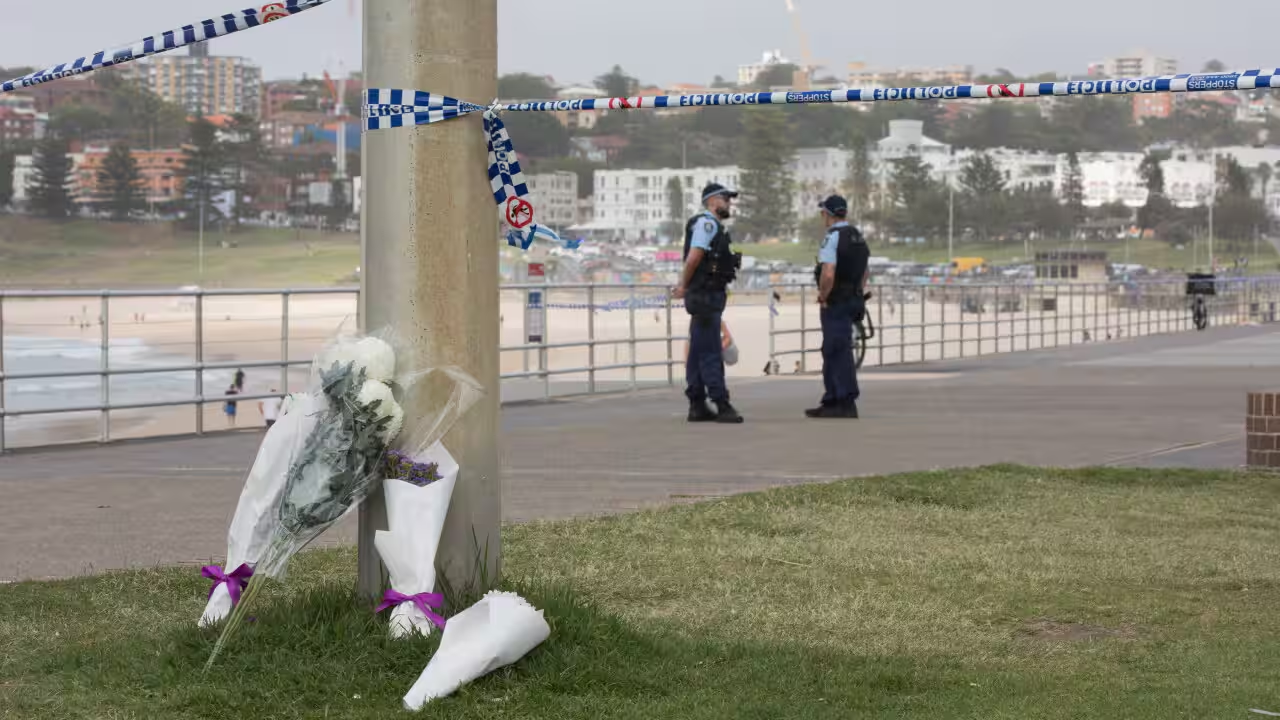
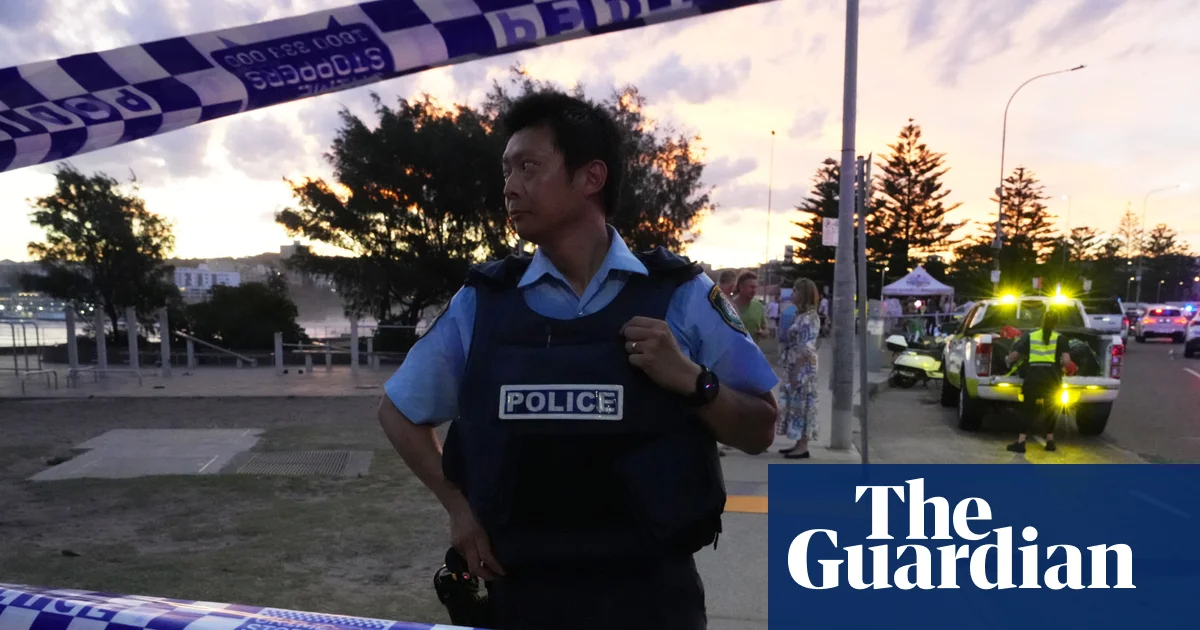
May 25, 2026 — 5:52pmNSW Police did no risk assessment of the Chanukah By The Sea festival and refused entreaties to post officers at Bondi Beach during the event, even after a Jewish security group warned an attack was “likely”, the royal commission on antisemitism has heard.The commission reopened for its second set of hearings on Monday, starting with ASIO director-general Mike Burgess before moving on to the Australian Federal Police, NSW Police and Community Security Group (CSG), which guards the Jewish community in Sydney.NSW Police walk toward Bondi Beach in February, three months after gunmen opened fire into a crowd of Jewish families from the footbridge.KATE GERAGHTYCSG’s chief operating officer, the final witness of the day, told the commission he had urged police to keep officers staged at Bondi Beach and a second Chanukah event in Dover Heights in mid-December last year.“Given the current threat environment our community was facing, the fact it was an open-air event, the fact that CSG could not be armed … and given the number of people expected to attend the event, we were requesting there be a static presence,” the CSG witness said on Monday.“[The officer’s] response was that ‘I do not believe a static presence is required’, based on the risk assessment they had undertaken internally.”The Royal Commission on Antisemitism and Social Cohesion has heard police instead sent one or two car crews to check in on the event at Bondi Beach intermittently. This is known as “mobile taskings” in police operations.ASIO boss Mike Burgess AM at the royal commission on Monday.“I said that there would be a lot of unease in the community not having a static police presence on the ground and I would have tried to convince him other than having mobile taskings,” the CSG witness said.The commission has heard there were four police on the ground – three general duties and one supervisor – when two alleged terrorists began firing into the crowd, killing 15 people and injuring dozens more.Within 29 seconds of the first shots ringing out, 11 people were hit with gunfire. Ten of those would die of their injuries.It took seven minutes and 41 seconds before the police were able to shoot dead Sajid Akram and wound his son, Naveed, who is facing charges of murder and terrorism.CSG had emailed NSW Police a week before the attack with their own risk assessment. They concluded an attack was “likely” and requested help to keep the 1000-strong crowd safe.The national terror rating was deemed “probable” and ASIO had raised fears of lone or small group actors carrying out attacks on crowded areas.Those fears were echoed in NSW Police internal documents from August 2024, the commission heard. Despite the concerns, NSW Police did not conduct a risk assessment of their own for Chanukah.“Threat assessments are completed for what we refer to as the major events across the calendar events of the year – New Year’s Eve, Australia Day, Anzac Day, Mardi Gras and Jewish high holy days,” Assistant Commissioner Leanne McCusker told the commission on Monday.NSW Police Assistant Commissioner Leanne McCusker giving evidence on Monday.Royal commission livestreamCounsel assisting Zelie Heger, SC, asked McCusker whether it would be a good idea to prepare threat assessments for Chanukah events in the future.“Yes, I see no reason why a threat assessment could not be completed … I think it ensures the current threat environment is provided for that particular event,” McCusker said.Counsel assisting Richard Lancaster, SC, said NSW Police treated events during Jewish high holy days as tier 3 events – the highest tier – while assessing for risks and resources.The Chanukah events in Bondi and Dover Heights are classed as tier one and are handled by the local police area command rather than the counter-terror squads.One senior police source, speaking on condition of anonymity, said there was “zero explanation why that risk assessment wasn’t done” in Monday’s hearing.“[Risk assessments] get done for shitty protests, street fairs, shopping centre openings etc. They did not do one for one of the most significant days in the Jewish calendar at the most prominent Australian location, in an area known for its intense concentration of Jewish people,” the source said.ASIO’s Burgess told the commission his agency had “pivoted” towards combating foreign interference and espionage following the decline of the Islamic State caliphate.“Every rock we lifted up, we found espionage or foreign interference that needed to be inquired and investigated,” he said.“At no time do I believe we had any serious inquiries that were left uninquired or investigated.”Burgess was not asked why his agency, which had been alerted to suspicions about Naveed Akram as part of a terrorism investigation into an IS cell in 2019, discounted him as a threat shortly thereafter.AFP Assistant Commissioner Stephen Nutt was also not asked about how the Joint Counter Terror Teams handled Akram, who had been placed on a watchlist following the ASIO investigation.Instead, both are expected to give evidence in closed-door hearings this week when sensitive and classified information can be ventilated away from the public.The hearings will resume on Tuesday.Start the day with a summary of the day’s most important and interesting stories, analysis and insights. Sign up for our Morning Edition newsletter.From our partners
Police did no risk assessment of Jewish festival before terror attack
NSW Police revealed they turned down a request for greater presence at the Chanukah event in Bondi Beach from a Jewish security group.
TL;DRAI
NSW Police ran no risk assessment for Bondi's Chanukah festival despite CSG flagging attack as 'likely'; 15 died when gunmen opened fire. Royal commission exposes a tier-classification failure that kept counter-terror protocols off a 'probable'-rated threat event.
868 words~4 min read