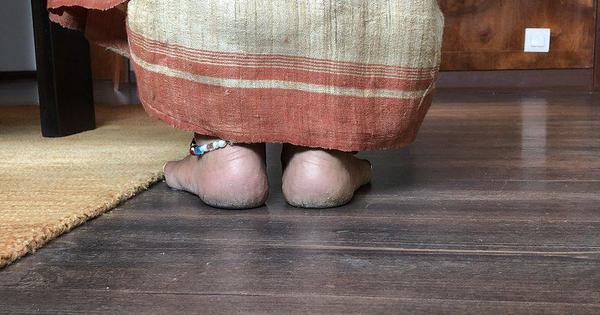
If a marketer is alert and looking for a gap, he or she will surely find many. Like Ceasefire, which was all about riding on a need which was real, there are many problems which continue to remain unaddressed waiting for a marketer to come and bridge the gap. Let us turn to one such story of an unfulfilled need. Cracked heels: A classic case of a felt need with no specific solutions yet. The genius of Paras Pharma was in not only identifying the need but coming out with a specific solution to address it, thus allowing the brand to hold a very strong position in the market. The challenge in launching such products is that oftentimes the customer is immune to her problem. She needs to be awakened and made aware. But once the brand resonates with her unstated need, it becomes a leader. This is the story of Krack Cream.Says Vispy, who worked with Darshan bhai on the research, “At times, the problem is not just obvious – it is so common that it is not even considered a problem to be solved.”Cracked heels fell in this category. And this is where Paras Pharma stepped in with Krack Cream – doing exactly what its name suggested, mending cracked heels.Simplistic as it sounds, there was no product specifically targeting a problem millions of customers, especially women in India, who endured cracked heels causing not just acute pain but also embarrassment.When a problem is universal, it is often ignored and accepted as reality. “The best place to hide something is in plain sight,” goes an old saying.On a sweltering June afternoon in 1992, Darshan Patel sat in a bustling Mumbai suburban railway station. The rains had ceased, but the heavy, humid air lingered. As thousands of commuters rushed past, Darshan bhai sat still – watching. Observing. His focus wasn’t on their faces or their hurried movements. He was staring at their feet.Women’s feet.He noticed the same thing, again and again – cracked heels. Women wore chappals and sandals, their feet exposed to the relentless heat, dust and hard surfaces. In contrast, men’s shoes protected their heels – shielding them from the elements, keeping their skin soft and supple. Women, barefoot at home, vulnerable outside, bore the brunt of a problem that no one had truly seen. Cracked heels weren’t just unsightly. When the cracks deepened, they became painful; so painful that even walking was agony. Sarees caught in those fissures amplified the discomfort.Darshan Patel saw what no one else had: A persistent, ignored problem. A need hiding in plain sight.His next step was clear. Research. Market surveys led by Vispy and team uncovered a startling truth – there was no dedicated solution for cracked heels. Women were resigned to temporary fixes: Oils, Vaseline, home remedies. They had settled for relief that didn’t last because no one had bothered to solve the root issue. Housewives, working women and domestic helpers alike shared the same complaint – the same pain.This was more than a market gap; it was an unspoken cry for help.Thus, Krack Cream was born. Not a generic moisturiser. Not a fleeting solution. But a product designed specifically for cracked heels – a problem so obvious, yet so overlooked. Darshan Patel didn’t just create a cream; he gave voice to a silent need, turning an invisible struggle into a focused solution.For the first time, women didn’t have to live with pain. Krack Cream didn’t just soothe cracked heels – it solved them.Says Darshan Patel, “No matter if your brand is new or old, you will find your path only through customer observation and research.”As with most other products from Paras Pharma’s stable, the name was simple, direct and communicated what it was meant for – cracks! There was no fancy, complicated or subtle messaging in the ads.The product was an instant success. Brilliance is often born from simplicity. And Krack Cream continues to be a leader even 30 years later.As with other products, the communication strategy was based on extensive market studies, talking to customers and understanding their problems.Check out old advertisements of Krack Cream and you see how the problems faced by women are addressed. In one ad, a lady, while showing off her expensive branded handbags and shoes is suddenly embarrassed when her friends who, while admiring her shoes, notice her cracked heels. She is very reluctant to show her feet and her friends taunt her saying, “Dikhao, dikhao!” This ad was born out of research, which showed that women considered cracked heels as acutely embarrassing, as opposed to their otherwise beautiful face and clothes. All their beauty was nullified with cracked heels.In another humorous ad, the police are trying to find a suspect who would possibly have muddy feet. When asked to show their feet, one of the house members, a lady, hesitates, thus placing suspicion on herself. It is later clarified that she was hesitant to show her cracked heels and everyone laughs at her. Finding the right chord with the customer’s emotions is a sure way to make a brand successful. The mother is reminded to take care of herself using Krack Cream when the daughter is not around. The story in the ad shows a mother coming back home after seeing off her daughter. She notices packs of Krack Cream kept in all the places she will see them with a note that says, “Ma, bhoolna nahi.” In another ad, the husband, who apparently doesn’t seem to be bothered about his wife’s cracked heels, makes a turnaround and hands a pack of Krack Cream to his wife though he is in a hurry to leave for his tour. In one more ad, the husband finds her beautiful face reminding him of a “rani”, in contrast to her cracked heels making her look like a “naukrani” or a domestic helper. It is hard-hitting, true to the emotions and instantly makes a connection with the consumer! In yet another ad, the blindfolded boyfriend is able to imagine the soft, feather-like touch of her skin but the moment she rubs her heels against his legs, he imagines a prickly cactus!“Krack Cream is about love and care” was the message. Research showed that while the customer was happy to find a solution, the messaging of love and care sealed the relationship.As is the case with products launched from Paras Pharma’s stable, the packaging is not unique. Rather, it is quite ordinary with the words “Krack Cream” written prominently inside an image of a foot, thus being noticed without fail. And the relentless communication ensured that it resonated with the customer, her emotions, and it made her feel that there was now a product which not only spoke to her but also recognised her problems. Krack Cream addressed her needs which always existed but had never been given importance. A product becomes a leader when the customer realises that the brand is speaking her language. And “understands” her.Krack Cream solved a simple, universal problem, which had been around forever but no one had cared to acknowledge it and find a solution for it. No wonder then that it commands a whopping 80 per cent market share.Darshan Patel and team acted on their observations and the end result was a blockbuster success. Krack Cream revolutionised foot care in India with its effective, affordable, and widely trusted healing formula.There are many lessons from the story of Krack Cream. By focusing on a specific need, Krack Cream carved out a niche for itself in the competitive skincare market. This targeted positioning helped the brand stand out in a crowded market of general skincare products. The brand effectively positioned itself as a remedy for an uncomfortable, yet common, problem. Its marketing highlighted both the discomfort caused by cracked feet and the relief that Krack Cream provided. Advertisements often focused on the real-life problem of cracked heels and the solution offered by the product, using relatable scenarios that resonated with consumers. Memorable, simple and relatable taglines such as “Goodbye cracked heels” made the product easy to remember and identified it directly with the solution to foot care issues.Excerpted with permission from Desi Disruptors: Timeless Lessons From Iconic Indian Brands, Vispy Doctor and Vikrant Pande, HarperCollins India.
Business case study: How Krack Cream ‘identified’ an everyday problem for women that no one else saw
An excerpt from ‘Desi Disruptors: Timeless Lessons From Iconic Indian Brands,’ by Vispy Doctor and Vikrant Pande.
1,381 words~6 min read