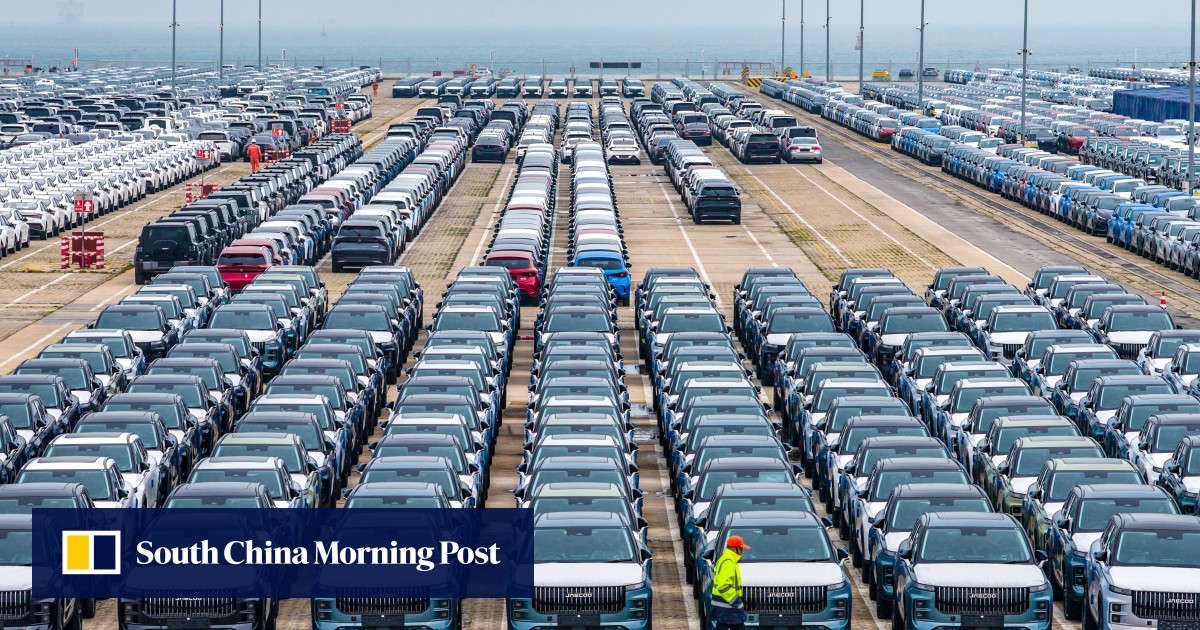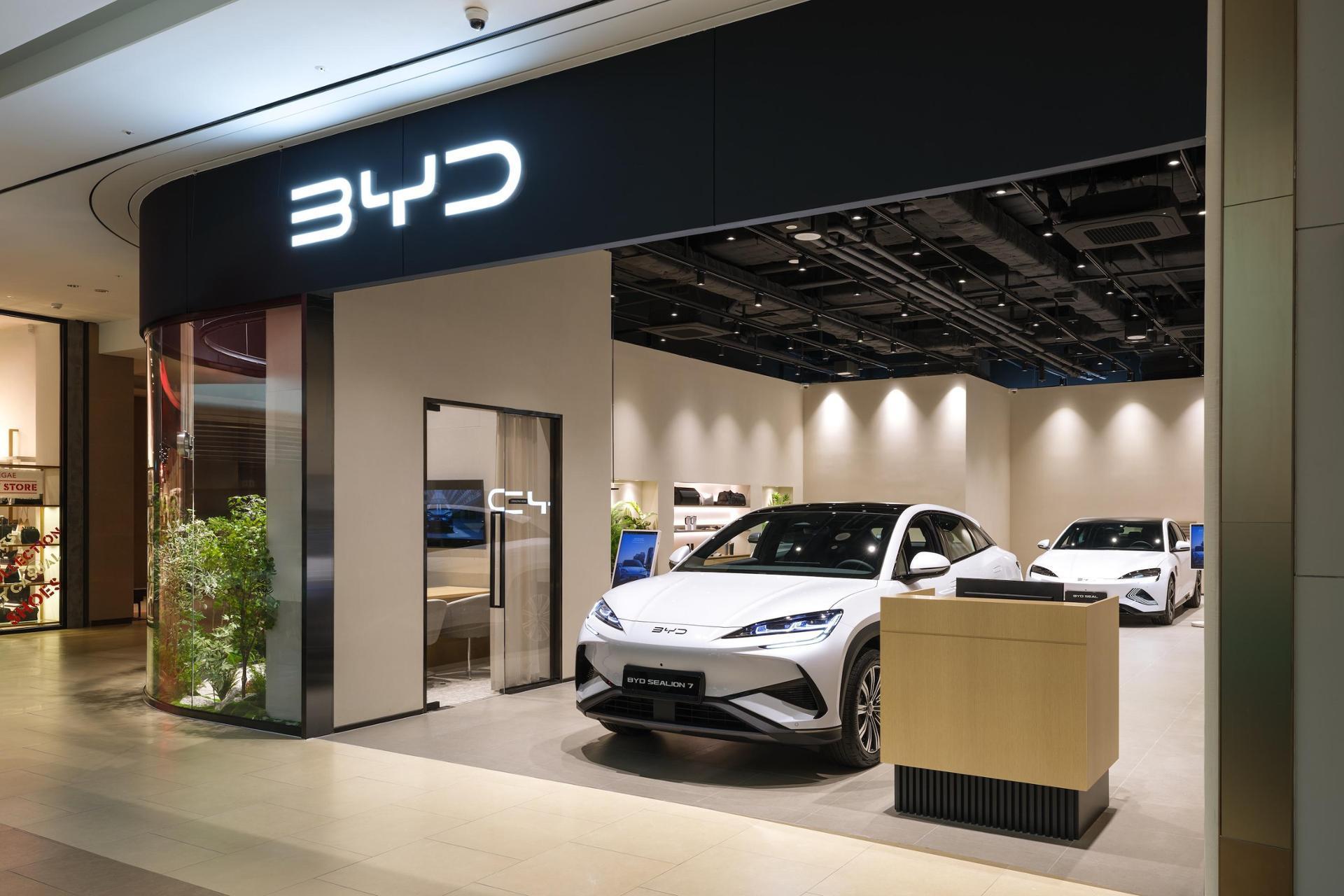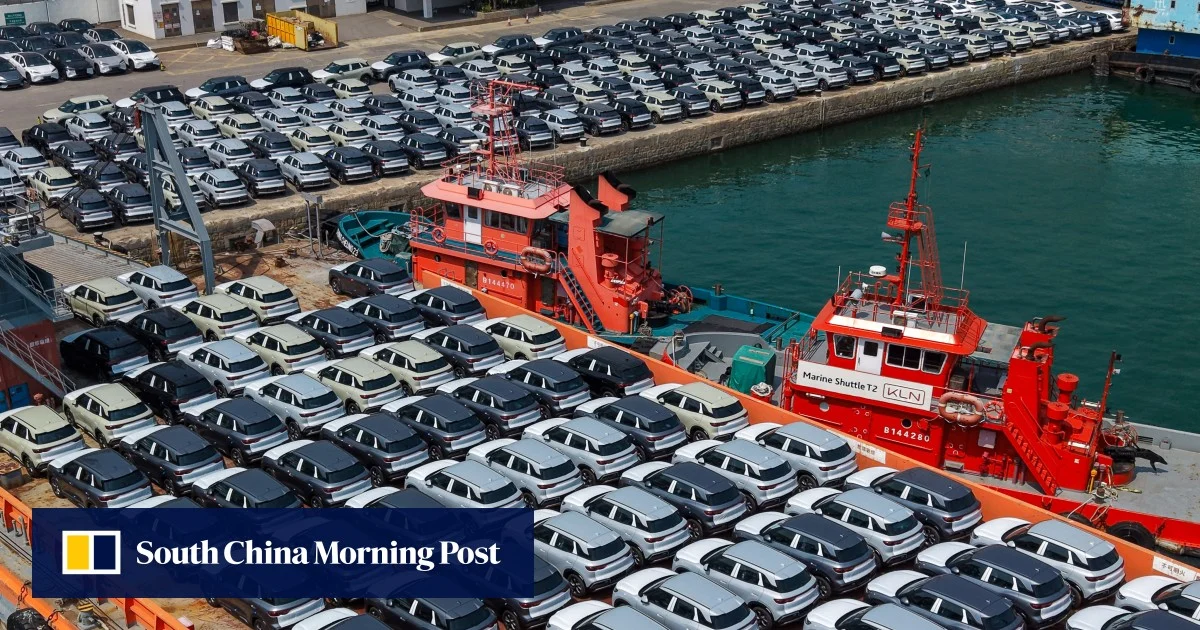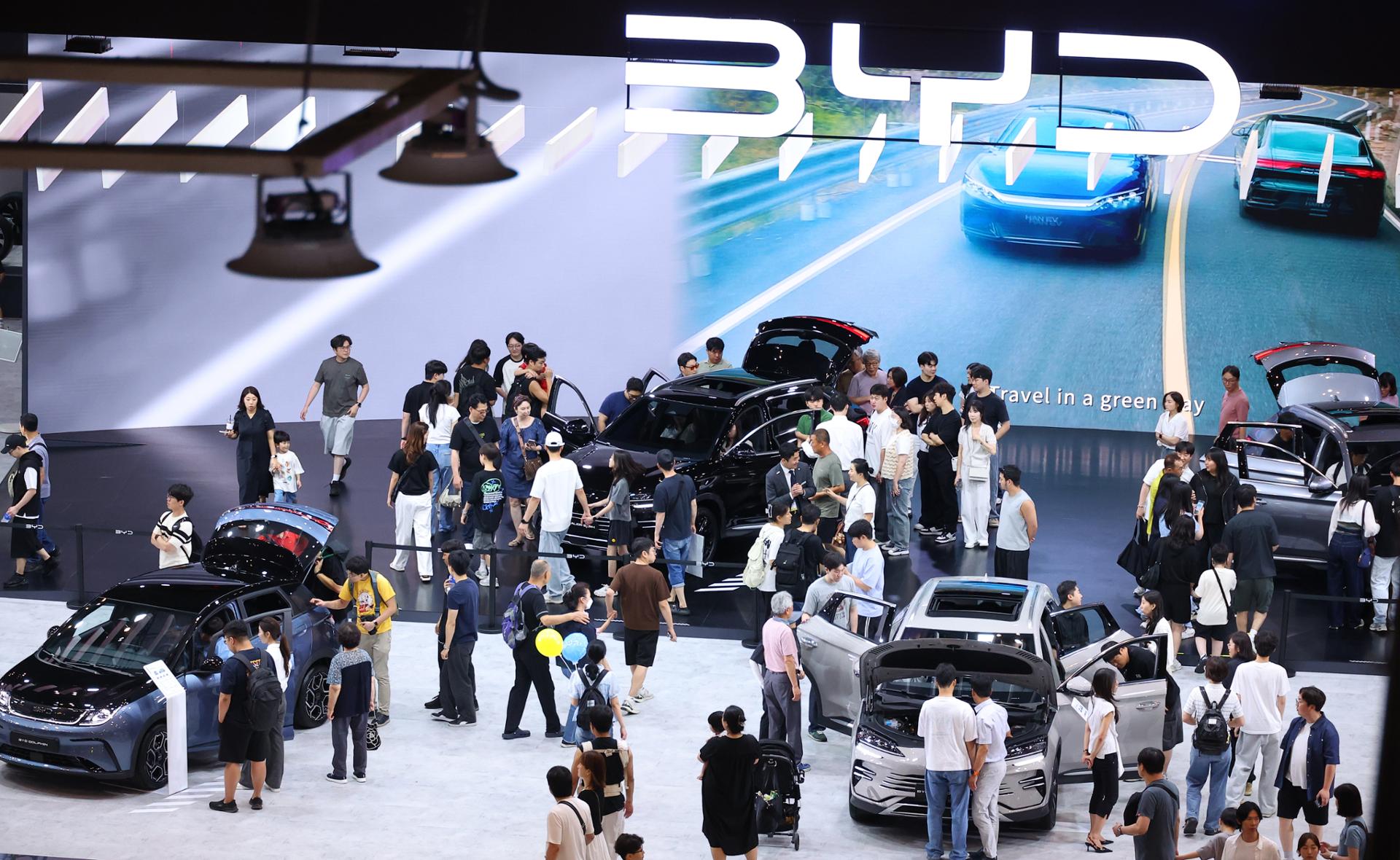
Ottawa’s import quotas slow BYD, Geely and Chery as Korean automaker gains room in high-margin SUV and hybrid market Hyundai and Kia vehicles are parked at the automobile terminal at Pyeongtaek Port in Pyeongtaek, Gyeonggi Province. (Newsis) Major Chinese electric vehicle makers, including BYD, Chery and Geely, are scaling back their expansion into Canada — a strategic entry point to North America beyond the US market, where intensifying anti-China trade policies have effectively shut out Chinese EVs.Experts indicate the shift could help Hyundai Motor Group to defend its ground in the profitable market, where demand for high-margin SUVs and eco-friendly vehicles remains strong.From tariffs to quotasAccording to a recent report by Automotive News Canada, BYD, Chery and Geely are revisiting their plans to enter the Canadian market, with launch timelines potentially being pushed back from this year to 2027.One of the key challenges is the Canadian government’s new quota system for China-made EV imports, which replaced the previous 100 percent tariff earlier this year. The system limits vehicle imports to 49,000 units in 2026, with the quota set to increase by 6.5 percent annually.The new policy, on the surface, had appeared more lenient than hefty tariffs. However, the limited import quota creates new uncertainties for Chinese brands, as they must compete for a share of that quota not only among themselves but also against Tesla, a major player in Canada’s EV market.Tesla imports entry-level models such as the Model 3 sedan from its Shanghai factory, with reports indicating that the company is expected to secure 24,500 vehicles or half of the total quota allocation.Lee Ho-geun, an automotive engineering professor at Daeduk University, noted that the quota system creates greater hurdles for Chinese EV makers than a 100 percent tariff.“Earlier this year, I visited China to study automotive production costs, and the findings suggested that some vehicles were being sold at roughly half the estimated production cost for Korean companies, meaning that Chinese companies significantly benefit from government subsidies,” he said.Lee explained that such support could enable Chinese companies to remain profitable even under steep tariffs by relying on high-volume sales. But once imports are restricted under a quota cap, the economic incentive for Chinese brands to aggressively expand into the Canadian market becomes much weaker.Strategic window for Hyundai?While its Chinese competitors scramble to recalibrate their strategies, Hyundai Motor Group may gain more room to expand its presence in Canada, North America’s second-largest car market.Unlike the volatile US tariff landscape or the lower-margin Mexican market centered on gas-powered, compact vehicles, Canada offers a relatively stable, FTA-protected market where high-priced SUVs and ecofriendly models can drive more profitable growth for the Korean automaker.In 2025, Hyundai and Kia sold a record 249,028 units in Canada, a 10.5 percent increase from the previous year. Its bestselling models include Hyundai’s Tucson SUV, Kona SUV and Kia’s Avante sedan, Sportage SUV and Seltos SUV.The Korean duo’s broad powertrain mix — spanning internal combustion engine vehicles, hybrids, plug-in hybrids and EVs — helped lift their market share last year, narrowing the gap with No. 3 automaker Toyota.Similar to the US, hybrids witnessed notable growth in Canada, capturing 17.2 percent in 2025, compared with 13.3 percent in 2024, data from S&P Global Mobility showed.Kim Pil-su, an automotive professor at Daelim University, said Canada could emerge as a strategic market for Hyundai and Kia, offering stronger profitability potential than many emerging markets such as Southeast Asia, India and Latin America, where sales are largely concentrated in lower-margin vehicles. While the group’s diversification into those regions helped boost overall sales volumes last year, it also weighed on operating profit.Lee echoed the view and said, “Like the US, Canada has relatively high income levels, reaching the average vehicle transaction price at around $50,000. This could create favorable conditions for Hyundai Motor Group to expand sales of SUVs, ecofriendly vehicles and premium Genesis brand models, strengthening both revenue and profitability.Ottawa’s deeper signalAccording to Lee, Canada is not engaging in the direct geopolitical rivalry with China as the US, but it is in a unique position to impose tougher measures, as it is primarily an auto consumption market rather than a major vehicle-exporting nation.“The main reason would be to counter China’s growing influence in its EV industry, but there could be more context,” Lee said, pointing to Canada’s growing interest in bolstering ties with Korea regarding its 60 trillion won ($39.8 billion) submarine bid. As part of the deal, Ottawa has been encouraging Korean automakers — namely Hyundai and Kia — to establish manufacturing facilities in Canada.Hyundai Motor Group has been cautious about investing in Canada due to the market’s relatively limited size. However, Canada’s decision to cap Chinese EV imports could leave meaningful room for other global automakers such as Hyundai to explore local production.“If North and South American trade blocs continue deepening free-trade frameworks that allow tariff-free vehicle movement across the region, Hyundai may have fewer reasons to avoid establishing production facilities there. The company will likely need to prepare for that possibility,” Lee said.
Chinese EV retreat opens window for Hyundai in Canada
Major Chinese electric vehicle makers, including BYD, Chery and Geely, are scaling back their expansion into Canada — a strategic entry point to North America b
835 words~4 min read