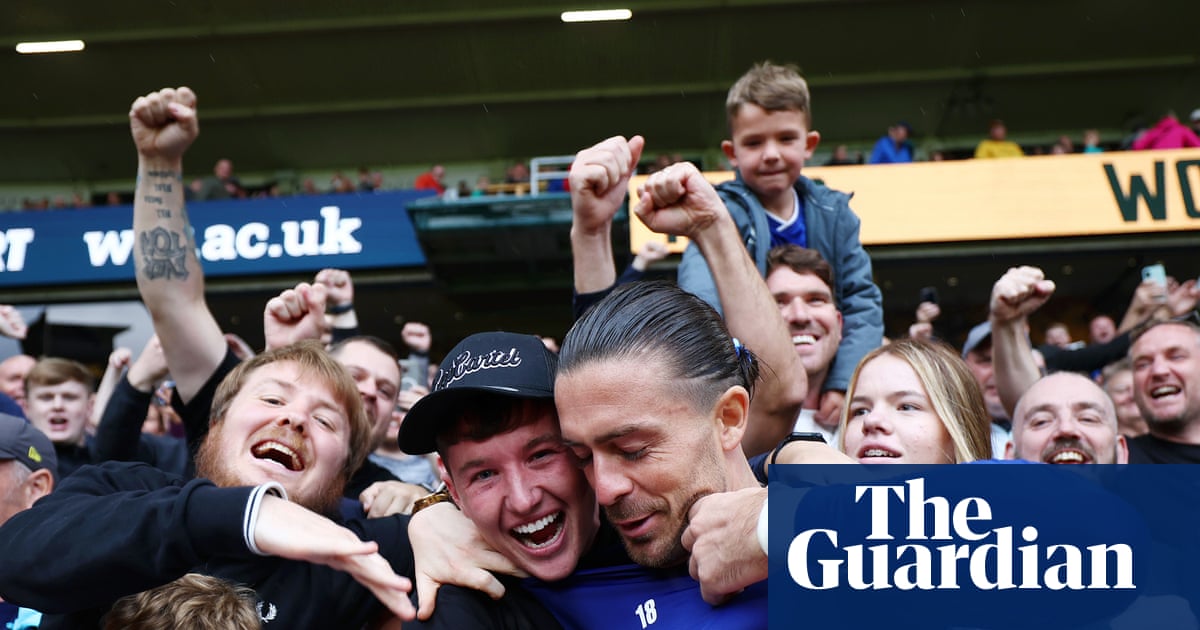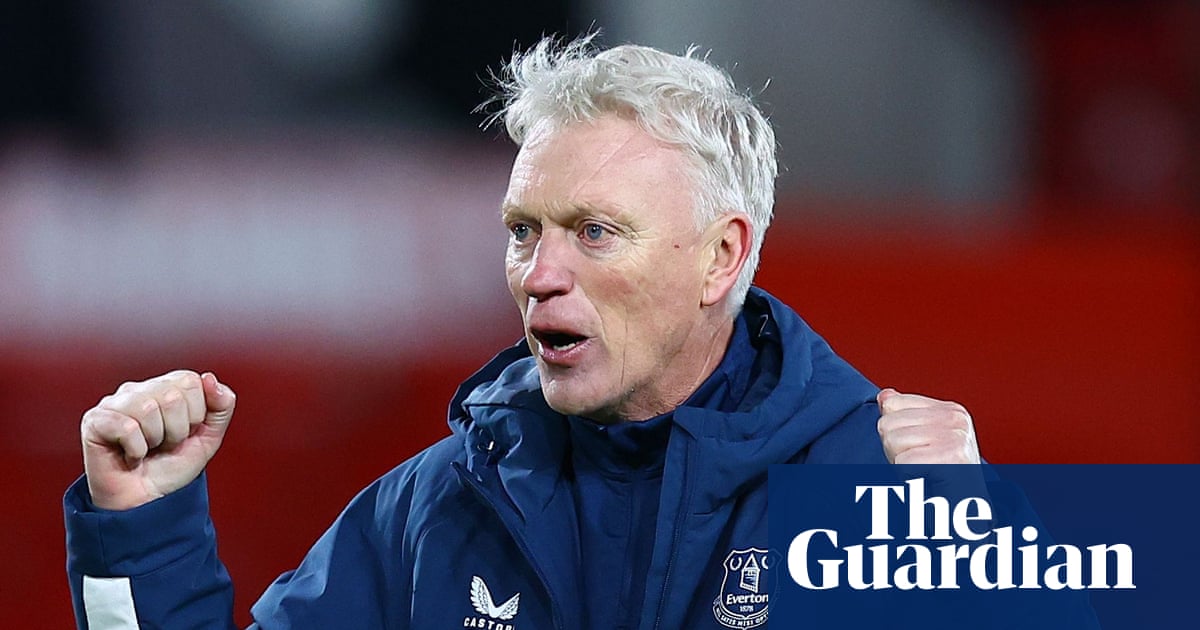
“Happily dissatisfied” was chief executive Angus Kinnear’s view on Everton’s season heading into their penultimate Premier League match against Sunderland.That much-talked-about line, which came in his programme notes, proved to be a fitting epigraph for the Merseyside club’s campaign.Everton believe tangible progress has been made this season — much of the campaign was spent talking about potential European contention rather than relegation, in contrast with the turbulence of the recent past.It was only 18 months ago that manager David Moyes returned with the immediate aim of securing their top-flight survival, and new owners The Friedkin Group (TFG) were commissioning studies into the potential impact of relegation.And yet, the current mood among the fanbase and even in the dressing room is one of deep frustration. Frustration at an opportunity missed, with Everton finishing March just two points off sixth and a potential Champions League place. There remains a sense, right up to the top, that they may not get a better chance to turbo-charge their development and break through that glass ceiling.After the resounding 3-0 win against Chelsea in late March, Everton had registered 46 points from 31 games. Moyes’ side would have only needed eight points from their final seven matches to achieve qualification for the Europa League and possibly seven (depending on goal difference) for the Conference League. They had not qualified for European competition since 2017.Had they kept pace with their points-per-game total (1.48) up to that point, a place in Europe would have been theirs. But instead they took a meagre three (at 0.43 ppg), conceding a series of debilitating late goals and faltering at just the wrong moment. Their eventual 13th-place finish feels like a disappointment, especially when you consider promoted Sunderland made the Europa League.Internally, there remained doubts over their suitability for a sustained charge at continental football and the squad’s ability to compete on numerous fronts next season. Everton were confident fringe players would be able to make an impact in the Conference League, but felt qualification for the Europa League would require considerable work on the squad.There will be much focus on Moyes’ future, with the Scot heading into the final year of his deal this summer. All the indications so far suggest that TFG admires the job the 63-year-old has done until now and believes him to be a steadying influence.The club will sit down to plot next steps, but there is a reluctance to do anything that would potentially jeopardise stability or throw them into what is expected to be a managerial merry-go-round across the industry this summer. There remains a desire to avoid emotional or impulsive decisions.The Friedkin Group admires the work David Moyes has done (Matt McNulty/Getty Images)In his programme notes, Kinnear called Moyes “the architect of the team spirit which has been at the heart of this season’s progress”.He added: “Whilst the media and other fanbases clamour for frequent managerial change, we value the stability David brings and the ability this gives the whole club to plan for the long term.”This is the story of Everton’s season, as viewed by many close to the action. It is the result of numerous conversations with sources with knowledge of the club’s internal workings, all of whom asked to remain anonymous to protect relationships.An unprecedented challenge for an established Premier League club.That was the view at Everton last summer, as they geared up for the first stage of a large squad rebuild. They started the summer with just 12 contracted players, and the window that followed was far from plain sailing.The immediate focus was on bringing in up to 10 new players while remaining competitive. But a succession of key targets, including midfielder Joao Palhinha, winger Francisco Conceicao and striker Liam Delap, moved elsewhere.Potential new signings viewed Everton not as a side set to challenge for Europe but as perennial relegation battlers. Targets were ambitious, often plumping for Champions League sides, but some in recruitment circles thought the bar had been set too high.By the mid-July pre-season tour of the United States, Moyes was openly calling for new signings. They ended up recruiting some players, such as Southampton’s Tyler Dibling, who had been lower down their list, and others, such as striker Thierno Barry from Villarreal, who were seen as being a work in progress.Critically, a new right-back eluded them following an early-summer U-turn from their top target, Fulham’s Kenny Tete, while Everton turned to Bayern Munich youngster Adam Aznou at left-back after deciding not to move for future Bournemouth player Adrien Truffert the previous January.A lack of quality at full-back regularly hampered Everton’s attacking play. But Moyes remains unconvinced that potential targets or replacements from within his squad would be better than Jake O’Brien in a makeshift right-back role. He places high value on the Republic of Ireland’s pace and physicality.Moyes challenged his squad to aim for Europe, but there was an acceptance that everything needed to fall into place for that to happen.It did not. Yet the main focus from TFG has been on incremental growth over time.Sources point to the loan signing of Jack Grealish from Manchester City last August as a key moment that brought belief and a sense of excitement inside the dressing room. Moyes had not sugarcoated his expectations during summer talks with the 39-cap England international, telling him he would first need to earn his place in the side.Jack Grealish’s loan signing brought a sense of excitement to Everton (Dan Istitene/Getty Images)Grealish’s desire to join Everton and buy into the set-up was also viewed as a big plus. His positive spirit lifted the mood and there is a belief that the 30-year-old’s arrival helped when it came to convincing new signings and key players such as Jarrad Branthwaite and goalkeeper Jordan Pickford to commit to new, long-term deals.Last summer’s arrivals have been a mixed bag so far. Grealish and ex-Chelsea midfielder Kiernan Dewsbury-Hall raised the quality of the side and allowed Everton to try to become more expansive in their play, before the former’s stress fracture in his foot in January. There is also a feeling Barry and Freiburg loanee Merlin Rohl — whose €20million ($23m; £17m) move will be made permanent this summer after the club avoided relegation — have shown enough to suggest they can contribute at Premier League level.But Dibling and Aznou have struggled for minutes, and the initial hope was that both would have been blooded more quickly. Moyes is notoriously quick to write off players if he does not feel they are ready and likes managing smaller squads.Retaining Michael Keane and Idrissa Gueye last summer was regularly cited as another key factor in their season. Keane’s form in the early part of the campaign, when Branthwaite was missing with a hamstring injury, was viewed as an unexpected bonus. The 33-year-old centre-back ended up making enough starts to trigger a mandatory one-year extension, but Everton bumped up his salary as a reward for his form.Moyes was credited for adding resilience, particularly on the road, where Everton beat Bournemouth, Manchester United, Newcastle United and Aston Villa, among others.But Everton struggled to adapt to their new Hill Dickinson home, often failing when they needed to dictate games. They had few opportunities to train on the new pitch, which is bigger than Goodison’s, before the start of the season and are still finding their feet there. Moyes has said that opponents may enjoy the plush new setting far more than Goodison.For much of the season, Everton were in the European conversation. After Chelsea, it was there for them. But a drop-off always felt inevitable.As the below shows, they regularly conceded better-quality chances than they created.For much of the season, they were indebted to Pickford’s shot-stopping. He was top of the league for the goals prevented metric but recently slumped to fifth. Even when challenging for Europe, Everton’s underlying numbers pitched them as a lower-mid-table side. They ended 14th for expected points.There has been considerable focus on strikers Barry and Beto. The latter had been expected to shoulder the burden in the early part of the campaign, allowing Barry to acclimatise to English football. But the 28-year-old’s form was a disappointment and Everton would have been open to sanctioning a January exit had they signed Youssef En-Nesyri or Callum Wilson. Barry did not score until December.Yet the pair provided a combined 17 Premier League goals (nine for Beto, eight for Barry), with Beto crediting his improvement to Moyes’ “tough love”, regular work after training on his finishing and ball receptions, along with analysis sessions with his own specialist team.The sustained absence of Branthwaite due to successive hamstring issues, viewed by many as the side’s most important player in front of Grealish, weighed heavily.The hope was that the defender would be fit to provide fresh impetus towards the end of the season, but he was ruled out for the remainder of the campaign after sustaining another hamstring injury in the crushing late home defeat to Liverpool in April. Well-placed sources suggest the nature of that Merseyside derby loss took the wind out of the squad’s sails, and they never really recovered.Sources say Everton never really recovered from their Merseyside derby loss (Gareth Copley/Getty Images)Everton dipped in winter while Gueye and Iliman Ndiaye were away with Senegal at the Africa Cup of Nations (AFCON) in Morocco. They were without the pair for almost a month longer than anticipated, with Gueye and Ndiaye also taking part in celebrations in their homeland after the tournament (the final result of which is still in dispute).Injuries and absences bit during a gruelling winter run, to the extent where at least one substitute named in the squad for the FA Cup third-round exit to Sunderland was too young to have the club’s betting sponsor Stake on the front of his shirt. Rules prevent those aged under 18 from wearing gambling logos.There was a sense Everton could have done with a boost in the January market, but the hierarchy wanted to keep their powder dry until summer, rather than risking expensive flops. The only signing was Tyrique George, the 20-year-old winger brought in on loan from Chelsea.Nobody could replicate Grealish’s influence. He finished as the squad’s second-top assists maker despite not playing since January, and some sources have cited the loss of his ability to keep hold of the ball as one of the reasons for Everton’s regular squandering of leads at the end of the season.
How Everton’s European hopes evaporated: Grealish missed, Hill Dickinson struggles but faith in Moyes
Everton's season promised much but ended with Moyes' side 'happily dissatisfied', as their chief executive put it
TL;DRAI
Everton ended 13th after earning just 3 points from their final 7 games, collapsing from 2 points off a Europa League spot in late March. The Friedkin Group is retaining Moyes through his final contract year, choosing stability over summer managerial churn.
2,117 words~10 min read