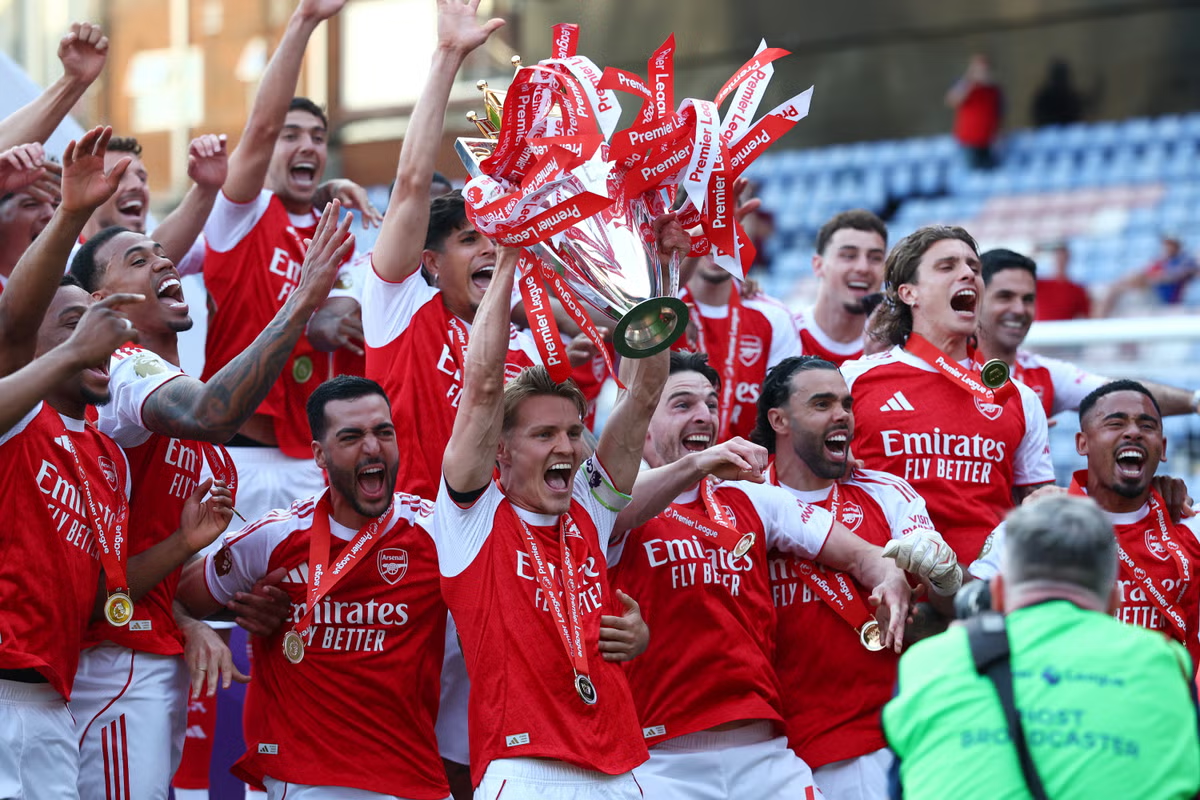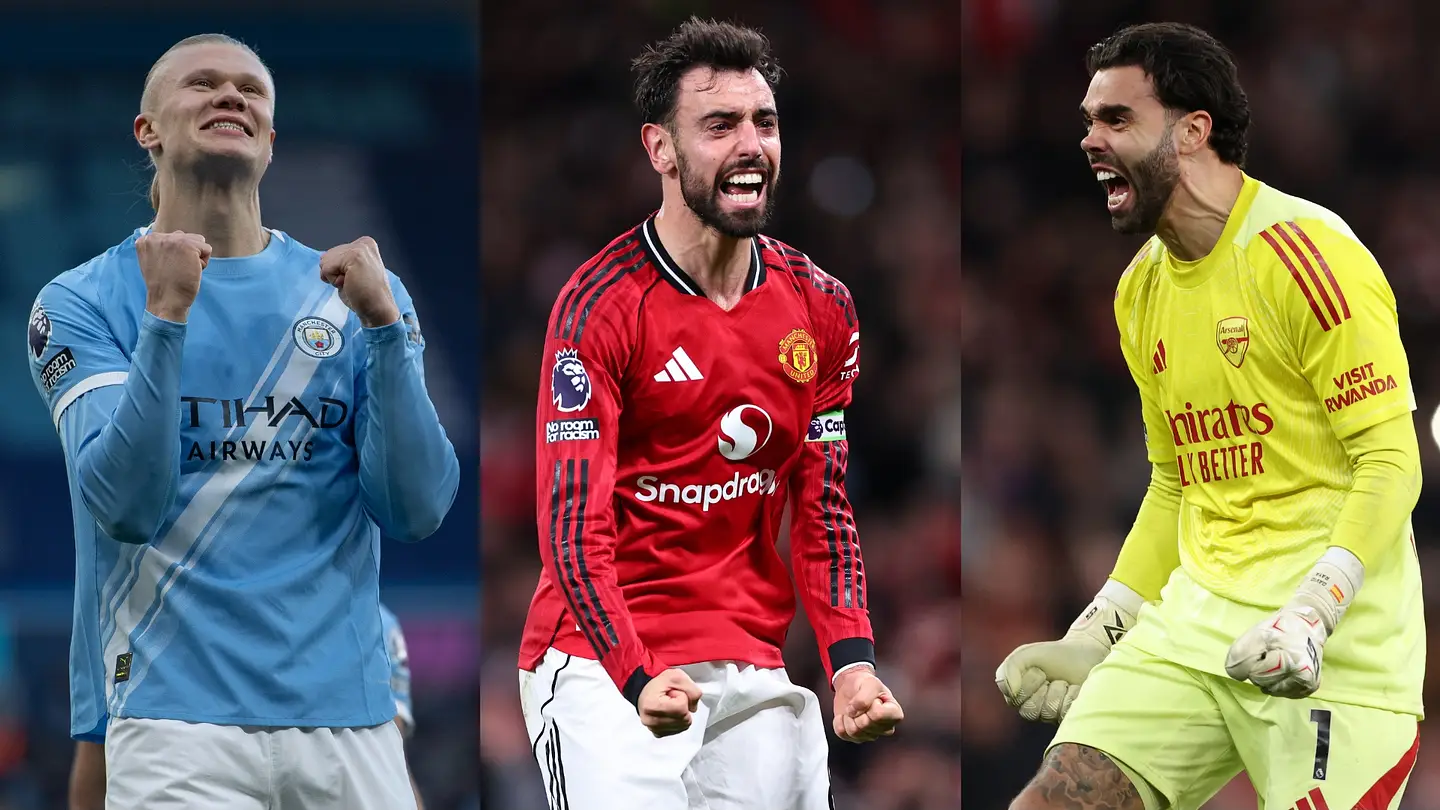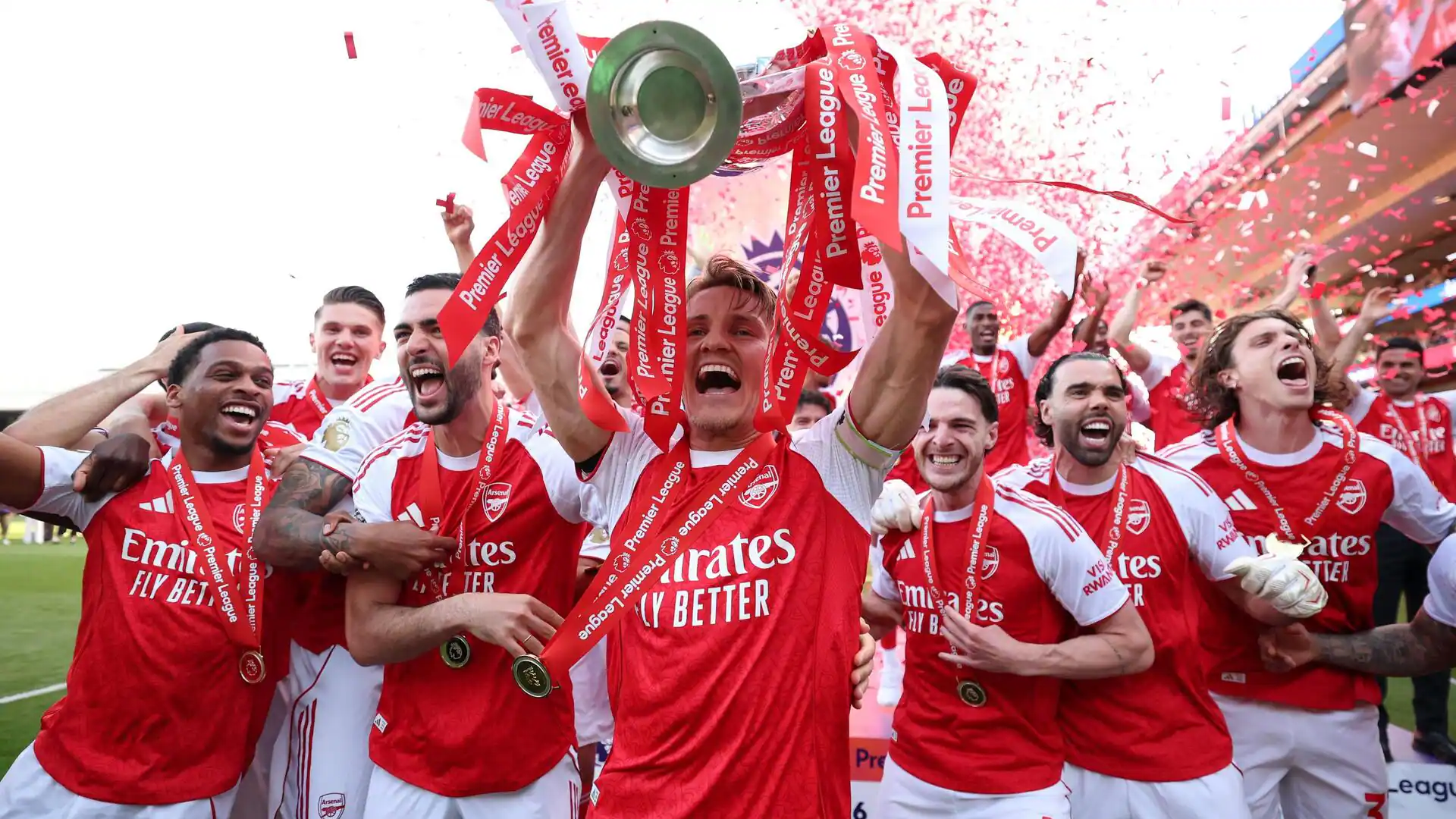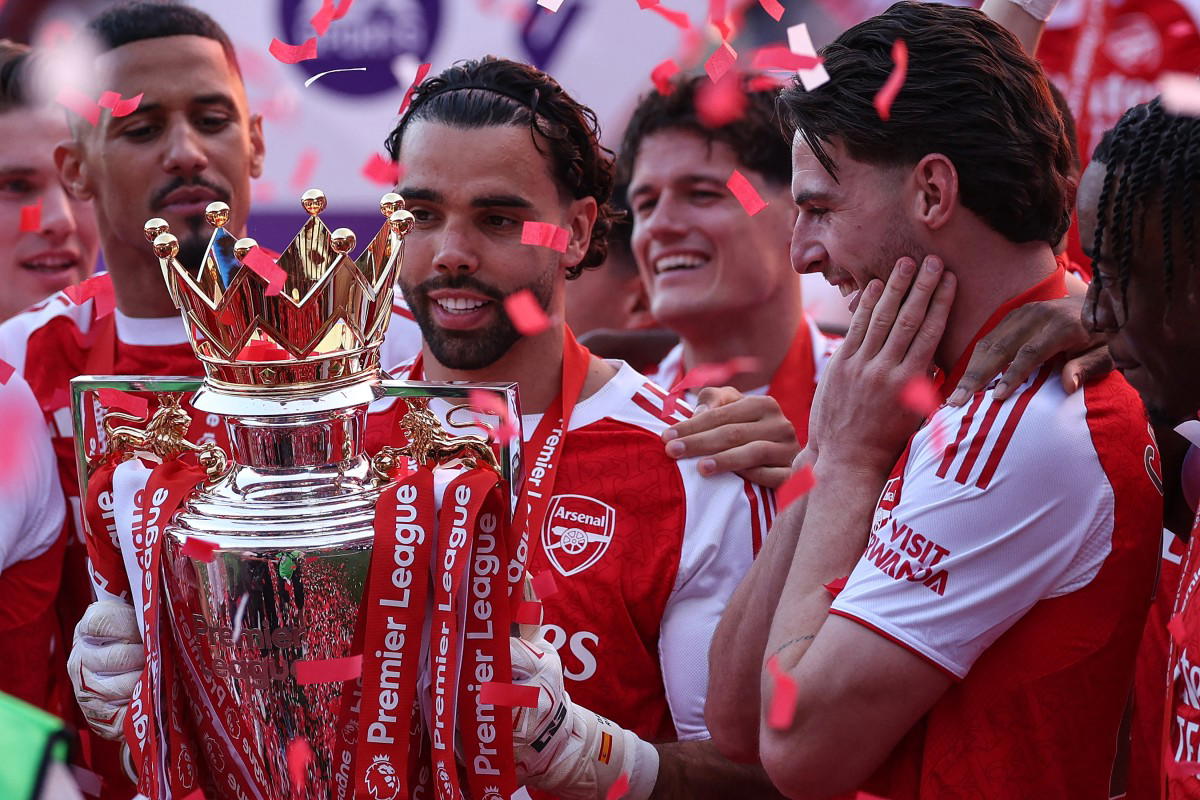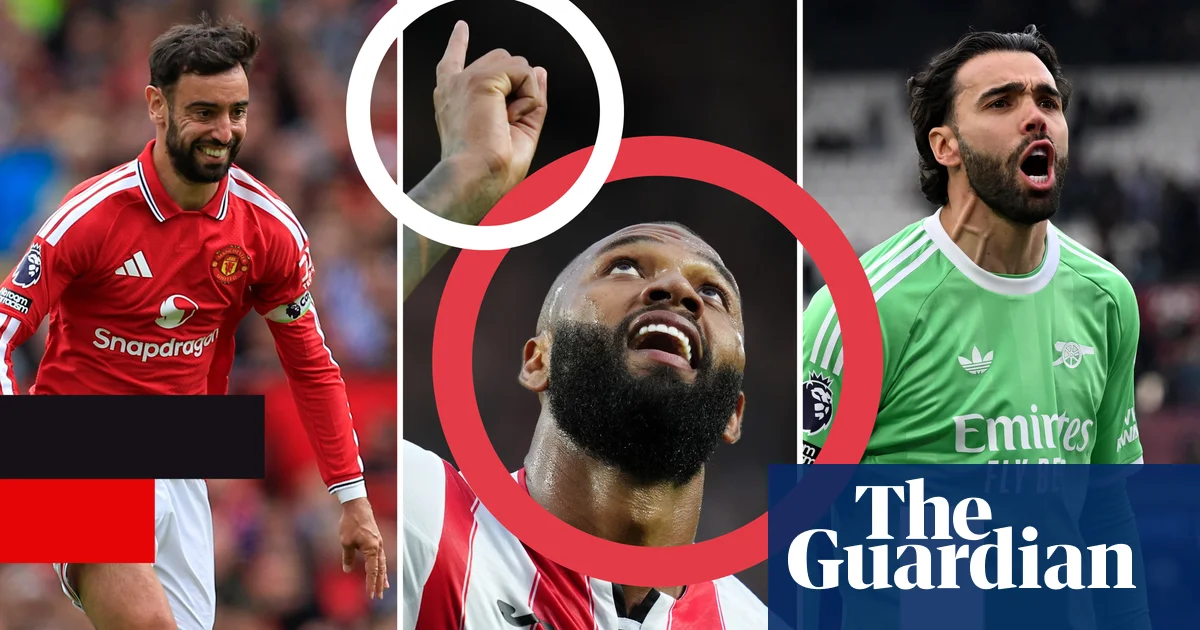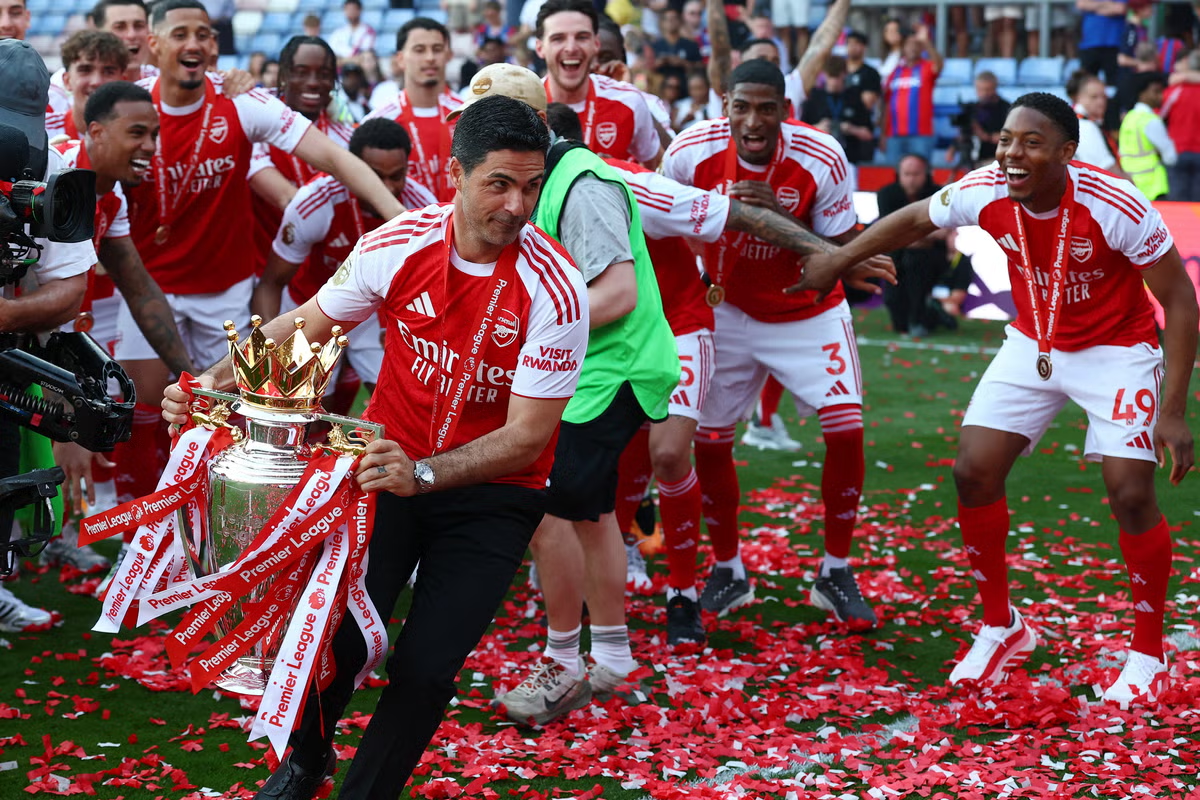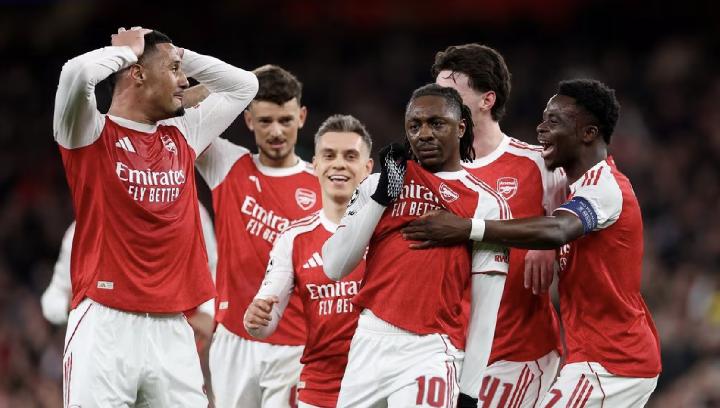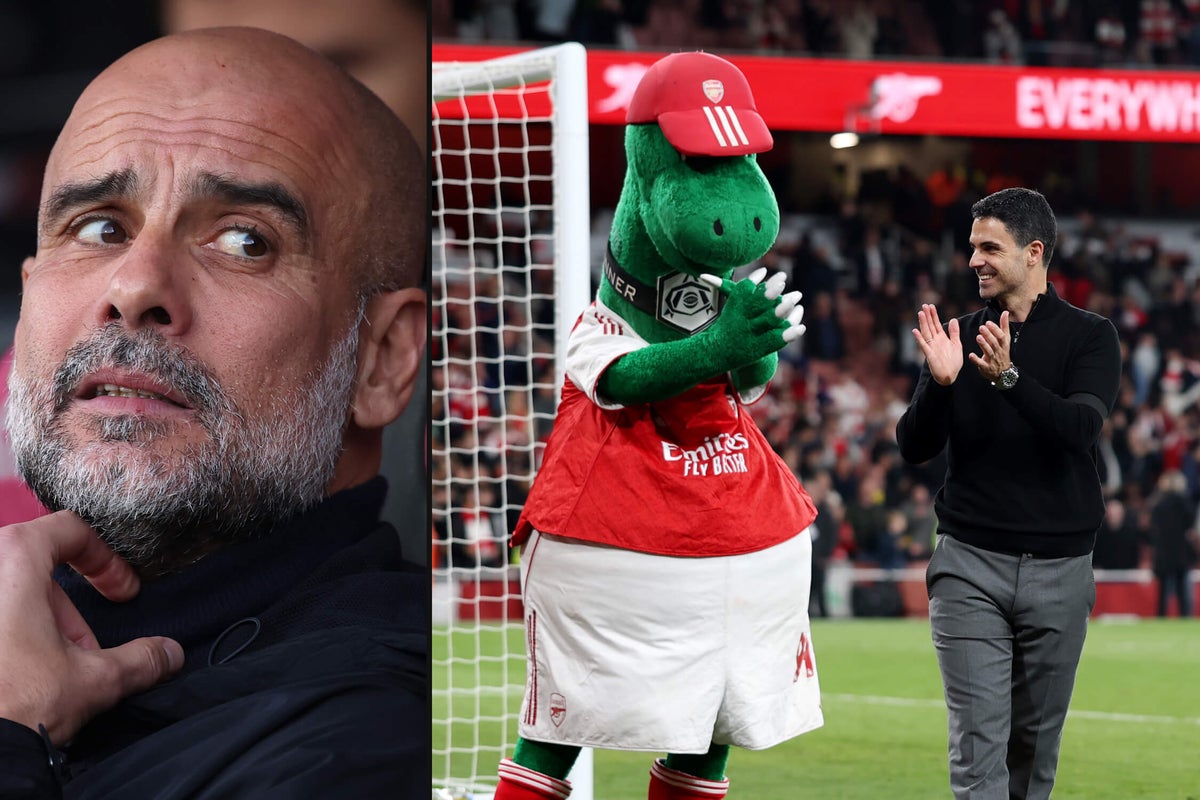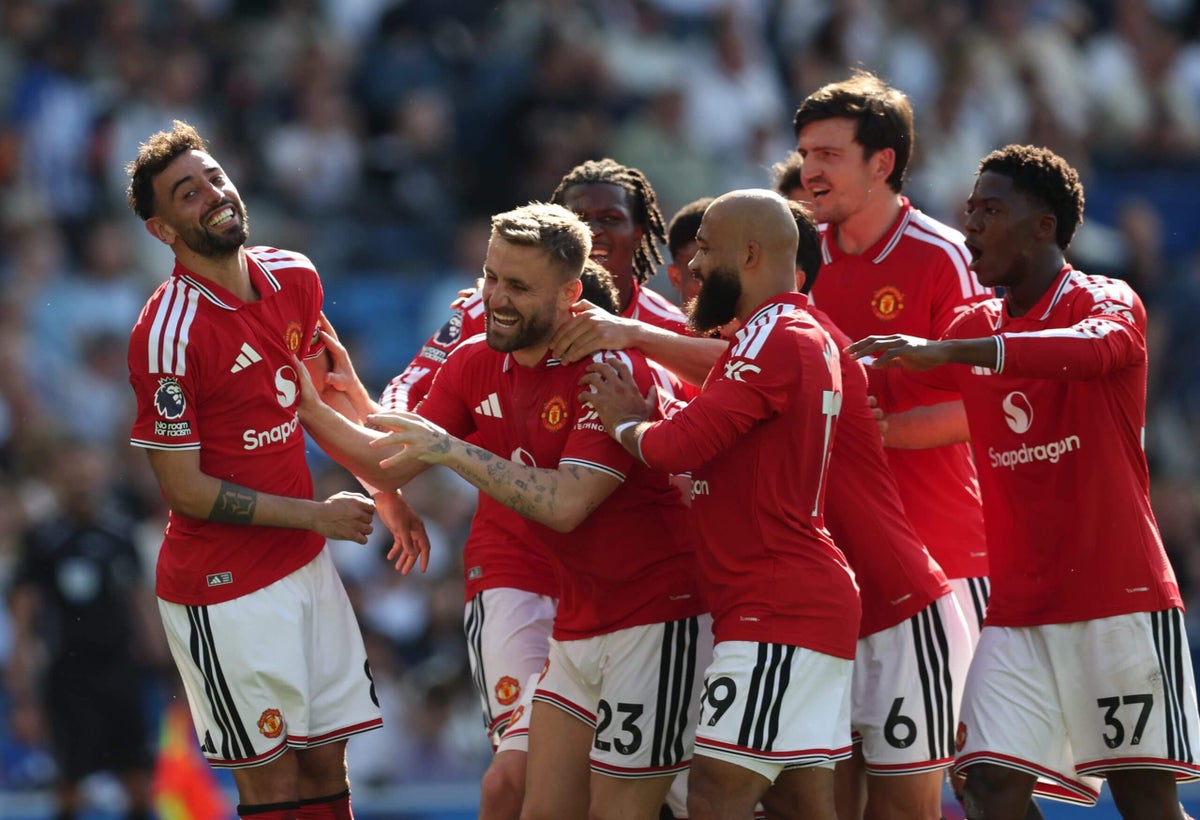
The silverware is being dished out, with Arsenal lifting the Premier League trophy for the first time in 22 years after pipping Manchester City to the title in the penultimate gameweek of the season. It is the first time that Pep Guardiola has gone two consecutive seasons without a league victory in his entire managerial career.Individually, Brentford’s Igor Thiago pushed Erling Haaland all the way, but the Norway international regained the Golden Boot award in 2025-26 as the Premier League’s top goalscorer with 27 goals — clinching the honour for the third time in his four years in England.Manchester United’s Bruno Fernandes was the runaway leader for the Playmaker award with a record-breaking 21 assists in a single campaign, with the Golden Glove going to Arsenal’s David Raya for the third consecutive year after recording 19 clean sheets for the title-winners.The main honours are out of the way, which allows us to pick out some fun, quirky statistics that are a little more off the wall. Stable squads, compact blocks, and the league’s most entertaining side are all up for grabs in this year’s edition.Welcome to the Alternative Premier League awards.Most improved team: Manchester UnitedIt is now tradition to begin by looking at which team has made the most improvement in their points tally compared with last season.Given their 15th-place finish in 2024-25, it was difficult for Manchester United to go anywhere but up the table, but the difference in their performance has been stark. Michael Carrick’s side are a full 29 points better off than their catastrophic campaign under Ruben Amorim — comfortably the biggest uptick of any side in the Premier League.Incidentally, United are the only team to improve by more than 12 points this season. By contrast, five teams have dropped their haul by more than 15 points, which highlights how much underperformance has rippled through the league.Newcastle (-17), Chelsea (-17), Nottingham Forest (-21), and Wolves (-22) all experienced notable drops in their final tally, but the biggest underperformers were reigning champions Liverpool.Arne Slot’s side posted one of the poorest title defences in Premier League history, scraping to a fifth-placed finish with 60 points — 24 points worse off than in 2024-25. There can be some mitigation in the drop in performance after the tragic loss of Diogo Jota last summer, but the entire season can be filed as forgettable for players and fans.Most points dropped from winning positions: Newcastle UnitedIt might not be an award that they will want to receive, but no team gave up more points from winning positions than Newcastle United’s 27 this season.Eddie Howe’s side were not able to sustain much consistency across the campaign as they fought on multiple fronts, with a drop in intensity meaning they were not able to protect their lead anywhere near as often as they would have liked.“Certainly, from my side, there’s no part of me that ever wants to take the lead and then to sit on a lead. The opposite — we want to go for more goals,” Howe said in March after Newcastle’s 2-1 loss to Sunderland.“But we haven’t been able to maintain that for whatever reason. We’ve become very passive and quite reactive, and we were again today, and it’s a huge disappointment.”Scoring first and protecting a lead was a hallmark of Nottingham Forest’s success last season, and they were equally as strong on the occasions they did go a goal ahead in 2025-26 — drawing five and never losing in those 16 occasions.It has been a chaotic campaign at Forest, with four permanent managers being utilised across the season, but Vitor Peirera can be encouraged that his side does not crumble when they do find themselves in a winning position. That is a strong platform for them to take into next season.For those wondering, Aston Villa scoop the (more positive) sister award to Newcastle’s points lost, with a league-high 23 points won from losing positions this season. It was a fitting end to their campaign after a much-changed Unai Emery side came back to beat Manchester City 2-1 after falling behind in the first half. A Europa League trophy and a spot in the Champions League next season show just how resilient Villa have been.Stoppage-time entertainers: LiverpoolNewcastle’s woes were not helped by the fact that they conceded eight goals in stoppage time, with no side conceding more after 90 minutes except Leeds United.Liverpool were the side that saw the most goals scored after regulation time this season — bagging 10 finishes while conceding seven. It was an early theme of their season as Slot’s side pushed until the very end to get a winner.Teenager Rio Ngumoha netted a notable 100th-minute winner against Newcastle in the opening weeks of the campaign, but sucker-punches soon followed at the other end — with goals from Eddie Nketiah (Crystal Palace), Estevao (Chelsea), Amine Adli (Bournemouth), Erling Haaland (Manchester City) and Andre (Wolves) all coming in stoppage time to consign Liverpool to defeat as they themselves chased victory.It would have been naive to take your eyes off Liverpool before the final whistle, but late drama was in lower supply at Aston Villa and Nottingham Forest. While the Europa League semi-finalists had contrasting fortunes in the league, they only saw 12 stoppage-time goals between them this season.Set piece dynamos: ArsenalSet pieces have dominated the Premier League season in 2025-26, with almost every team benefiting from the low-hanging fruit that such closed-skill routines can offer.The share of corners played as inswingers reached 70 per cent this campaign as teams fired the ball into the melee of bodies surrounding the goalkeeper — a significant increase from just 41 per cent in 2018-19.Accounting for the volume of opportunities in both boxes — by measuring output per 100 set pieces taken and conceded — we can see that Arsenal edge it as the strongest team in attack and defence. Who would have guessed it?It is worth noting that Manchester United had the strongest attacking numbers this season, with 8.2 goals scored per 100 set pieces. However, Arsenal’s superior defensive record (3.3 goals conceded per 100 opposition set pieces) means their overall goal difference (4.3 per 100 set pieces) tops the league.In truth, the graphic above shows a lot of bunching within the league, owing to just how much the teams have cancelled each other out from dead-ball situations.It has made for plenty of discussion and some agricultural football at times, but when the dominant set-piece side is also the title winners, it is hard to argue against.Box-throw bandits: Crystal PalaceLong throw-ins were an interesting subplot of the set-piece debate, as the copycat behaviour rippled through the league.Treated as an opportunity to maximise the opportunity as a set-play, more teams elected to launch the ball into the penalty area after winning a throw-in in the final third — and the results were seismic.Crystal Palace: love a long throw (Glyn KIRK / AFP via Getty Images)A total of 43 goals were scored after an attacking throw this season, more than double last season (20) and more than 2023-24 (nine), 2022-23 (nine) and 2021-22 (seven) combined. Brentford have long been the advocates for a hurled ball into the box, but Crystal Palace edge them out as the side who utilise this approach more when given the opportunity.With the direct throws from Chris Richards and Jefferson Lerma, 73 per cent of Palace’s attacking-third throws end up in the penalty area — edging out Brentford, plus newly-promoted Leeds and Sunderland.Despite their inclination, Palace have not maximised their throwing opportunities as much as others — with 22 shots from attacking throw-ins being half that of the league leaders Brentford (47).Six goals scored from long throws is also the best in the division by Keith Andrews’ side, but credit must also go to Sunderland and Leeds, who have been intelligent in their set-piece approach since arriving from the Championship, netting five and three goals respectively from launched balls into the box.Skewed crossers: Spurs and BournemouthSpeaking of getting it in the mixer, we can explore which teams rely on a specific flank when crossing the ball into the box.By this measure, Tottenham Hotspur leaned to the right side most often (59 per cent), with right-back Pedro Porro delivering the most open-play crosses of any player in the Premier League this season (155). Second to him in the Spurs’ squad was Mohammed Kudus, who was struck down by injury in January — but it highlights just how much their right wing was a focus from which to channel their attack.The next highest open-play crosser was Adrien Truffert (139), which explains why Bournemouth’s crosses skew as 60 per cent to the left flank. Bournemouth have arguably upgraded at left-back since the departure of Milos Kerkez, with Truffert’s energy to overlap and underlap providing the foundation to get himself into excellent positions to deliver a ball into the box.Unpredictability from each flank has also been productive, with Aston Villa being the only side with a 50-50 split in their crossing tendencies.The most stable squad: EvertonInjuries, fixture schedule and team form can influence how stable a manager’s squad selection is each week.Here, The Athletic have calculated a “squad stability rating” that measures how reliably each club distributes their minutes across starting players and substitutes within a season. A higher figure indicates a more settled side, while a lower one suggests a manager is chopping and changing his players more frequently.Everton clinch the award by this measure, with David Moyes making the fewest weekly changes to their starting line-up (1.5 per game), averaging the fewest substitutions (3.4 per game) and averaging the latest substitutions made (76th minute).Moyes has often taken this approach across his career, trusting the core players he has while being uncompromising in saying when others need to step up. When he has looked to the bench, strikers Beto and Thierno Barry have been the men Moyes has looked to the most — with the pair swapping out for each other more than any other starter-substitution combination in the Premier League this season.At the other end, the instability swirling around Chelsea is reflected in the distribution of player minutes on the pitch. An average of 3.2 line-up changes per game point to the inflated squad and disruption in the dugout as two permanent managers — and one interim — looked to pick their best XI.As an extra nugget, the departing Pep Guardiola named an unchanged line-up on seven occasions at Manchester City this season, which is more than the previous five seasons combined. Where his unpredictable line-up selections were previously termed “Pep roulette”, City’s boss has elected to stick more often than twist this year.Most time spent in a low block: SunderlandLow blocks have been another theme of the season, with certain head coaches lamenting their opponents for having the audacity to sit in a compact shape when out of possession.If you did want the poster boys for that phase, the winners would be Sunderland, who have been excellent upon their return to the Premier League. They might not have the most potent attack, but their success has been built on a foundation of defensive strength — shifting between a back four and a back five, resulting in an undefeated home record lasting until February.Using data from SkillCorner, Sunderland spent 28 per cent of their time in a low block out of possession, which was the highest in the league, but the compactness of that block was also the smallest of any side, per square metres.Regis Le Bris’s side stuttered a little more in the second half of the season, but their defensive solidity will give them great encouragement for another campaign in the top division next year.Most entertainment value: BournemouthBournemouth secured European football for the first time in their history after an incredible undefeated run in the second half of the season, and Andoni Iraola’s side scoop this award by proxy, with two specific metrics at its core.Perhaps the reason we have all enjoyed watching Brighton, Brentford, and Bournemouth play is that there is a degree of peril to their style. Whether it is pressing high or hurling balls forwards in behind the opposition, each of their games are frenetic — but all three have an attacking edge that has helped them fight for European spots this season.That is borne out in the numbers, with the trio averaging the most possessions per game — i.e., how often the ball changes hands between teams. Despite this, Bournemouth retain their attacking potency with an above-average share of those possessions entering the opposition penalty area.Combine the two, and you can see why Iraola’s side have been such a great watch this season.As shown by Arsenal’s placement on the graphic above, careful, low-risk football has its merits in reducing variance within a game. Still, for the neutral, you are more likely to get a greater unpredictability on the south coast than in North London.That gives us enough time to rattle through some individual awards, starting with…Possession retained under pressure: Ezri KonsaIn a season where man-for-man pressing was commonplace for a team out of possession, looking after the ball has taken on a qualitative difference.Central defenders and defensive midfielders must be even more comfortable retaining possession when a player is breathing down their neck, but who is the best at doing so? That prize goes to Aston Villa’s Ezri Konsa, with a 94 per cent pass completion when under pressure.Plenty of Manchester City players make up the top 20 list — which points to their wider team structure as much as their individual quality — so it is unsurprising to see Rodri, Nico Gonzalez, Bernardo Silva and friends high up on this measure.Most two-footed player: Rayan CherkiGiven such greater focus on one-v-one battles, a player who can wriggle out of danger off either foot is worth their weight in gold. Using data from Gradient Sports, we can measure the share of touches a player has made on both feet — with those closer to 50 per cent shown to be the most ambipedal.Manchester City’s Rayan Cherki is the most two-footed in the league, with 57 per cent of his touches taken with his left and 43 per cent with his right. Cherki’s new team-mate, Antoine Semenyo, is the closest to him by this measure, with a 65 per cent (right) and 35 per cent (left) ratio. Mapping the pair together highlights just how much they stand out from the rest of the league.With the ability to drop a shoulder and be equally comfortable on either side of their body, it is little wonder why the pair both recorded one of the strongest attacking seasons of their respective careers.Most active line breaker: Adam WhartonFootball really is a simple game. The more you get the ball beyond the opposition, the greater chance you have of scoring a goal.Using new Opta Vision data, we can see which players are particularly good at that skill by looking at the volume of defensive lines broken by their passes. Here, we have removed goalkeepers and defenders from the dataset to hone in on those crafty midfielders who deftly punch the ball through an opponent’s shape to find a team-mate ahead of them.By this measure, Crystal Palace’s Adam Wharton scoops our final award with 17.8 defensive lines broken per 100 attempted passes. That is made all the more impressive when you look at the list of peers he beat to the title, ahead of Bruno Fernandes, Rodri, Casemiro and Martin Odegaard.Wharton might be operating from a deeper position on the pitch than some others on the list, but the frequency with which he looks to find others ahead of him is a key part of his skillset.“I always say if there’s a forward pass, then I’ll try and make it, because this is what helps the team score goals, create chances and get in good positions,” Wharton said in March.“I don’t really overthink it. If I take a touch and someone’s running in behind, I’ll try and play them in so we can score goals.”A deserving winner to cap off our ceremony. See you again this time, next year.
The Athletic’s 2025-26 Alternative Premier League Awards
Mark Carey rifles through the numbers to pick out some of the more underappreciated performers from the 2025-26 campaign
TL;DRAI
Arsenal won the Premier League for the first time in 22 years; Manchester United posted the season's biggest swing (+29 points under Carrick), while Liverpool's title defense collapsed by 24 points to a 5th-place finish. Squad depth and set-piece efficiency — not transfer spend — proved the clearest differentiators between contenders and pretenders across the 2025-26 table.
2,686 words~12 min read