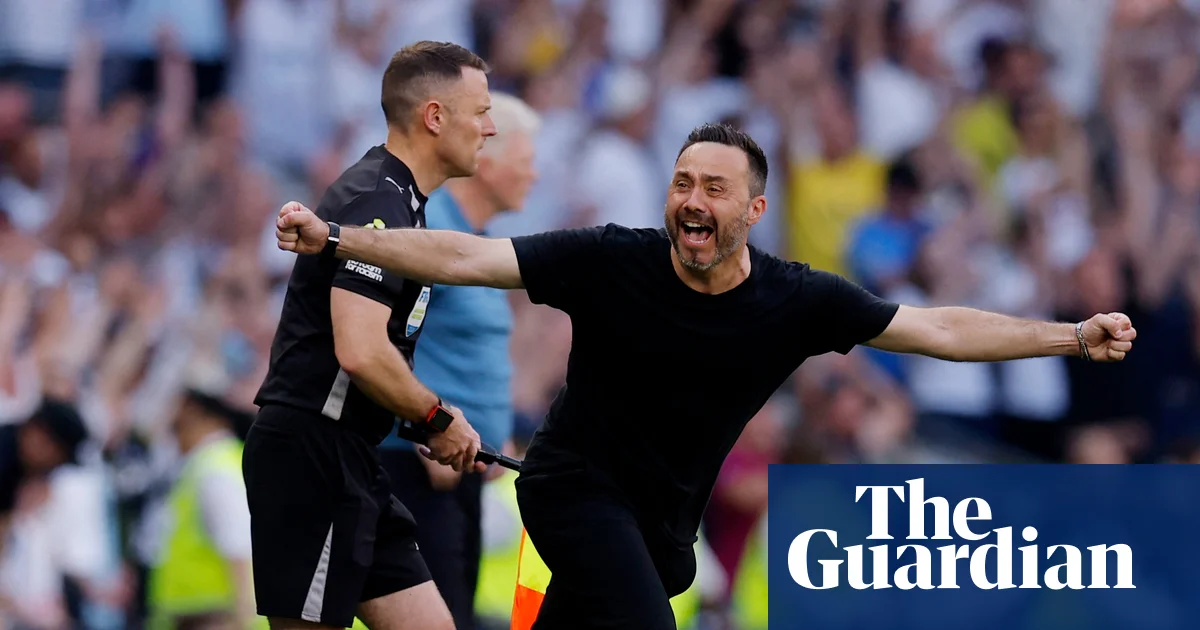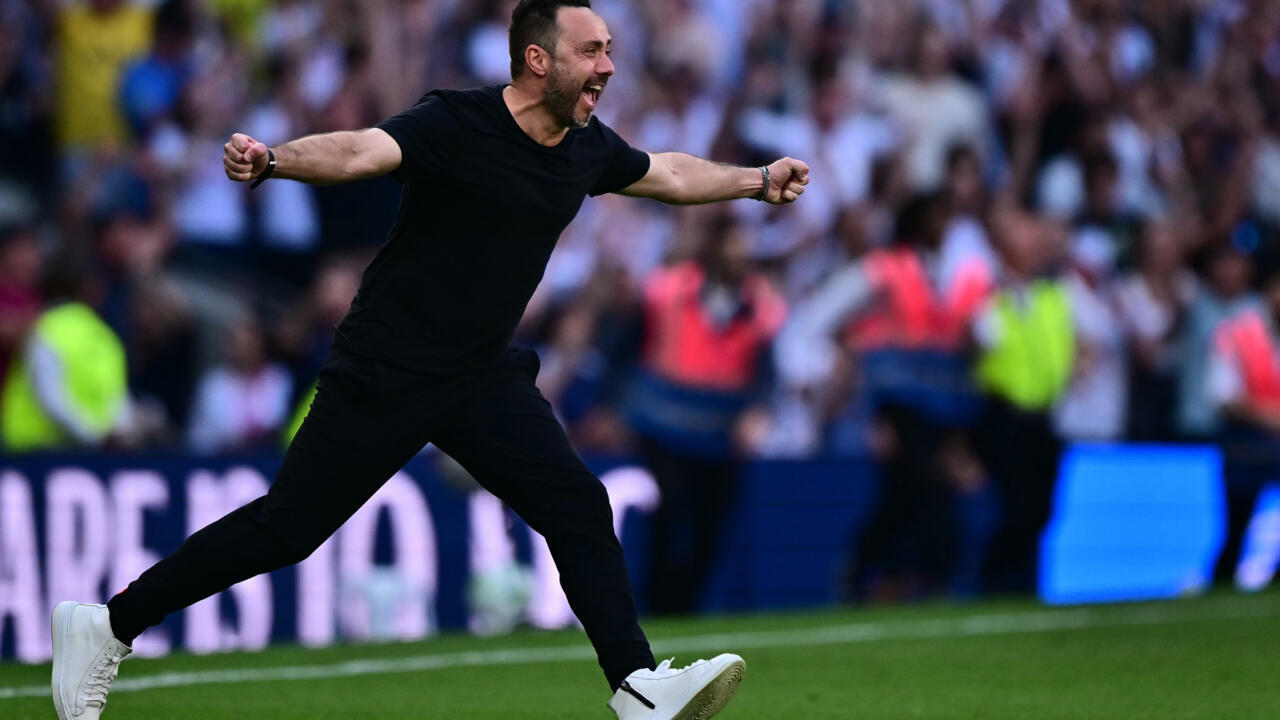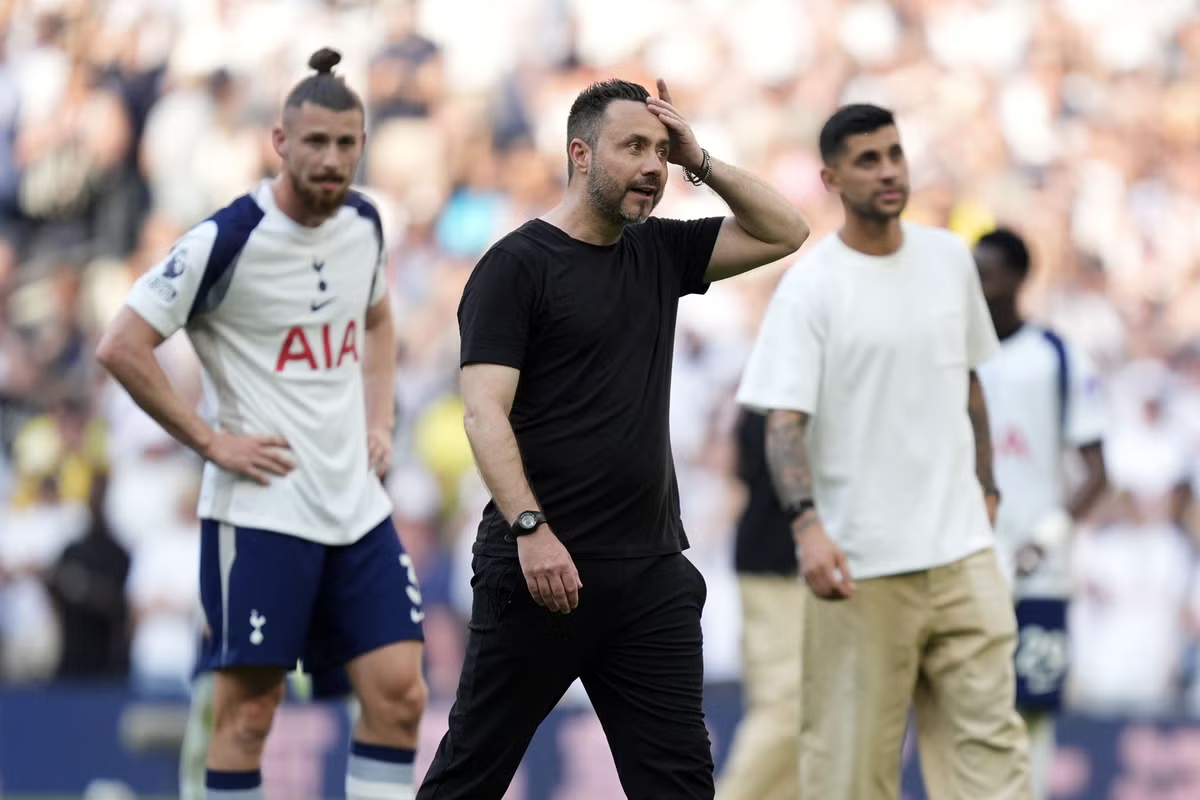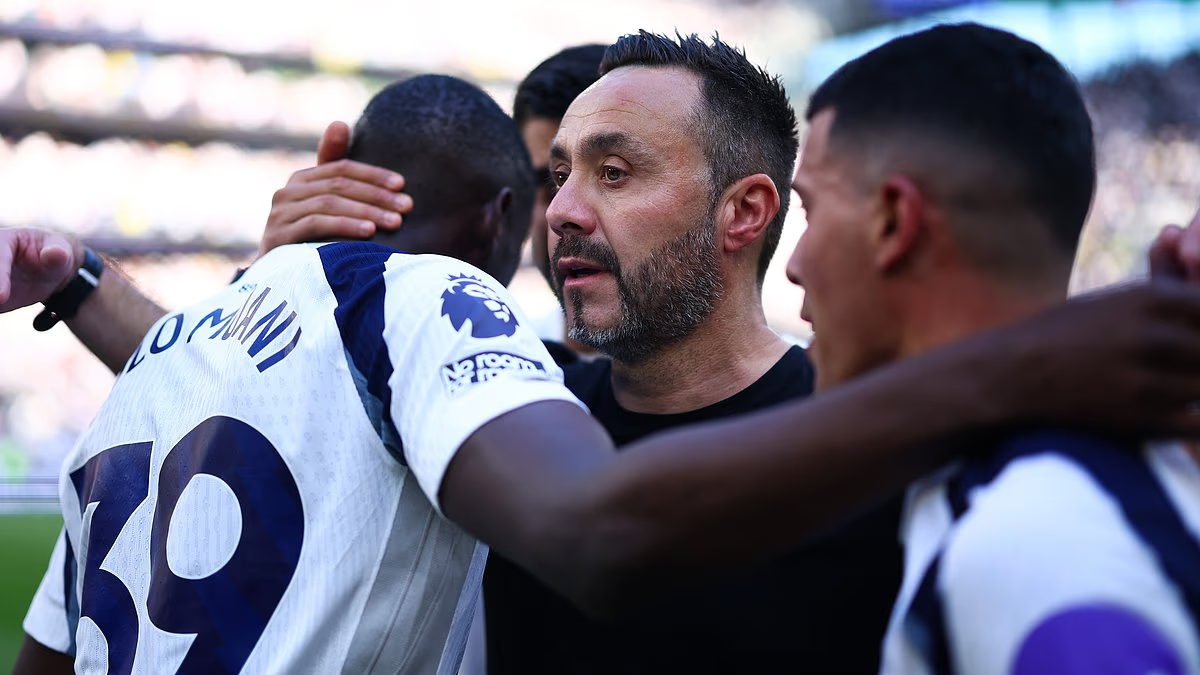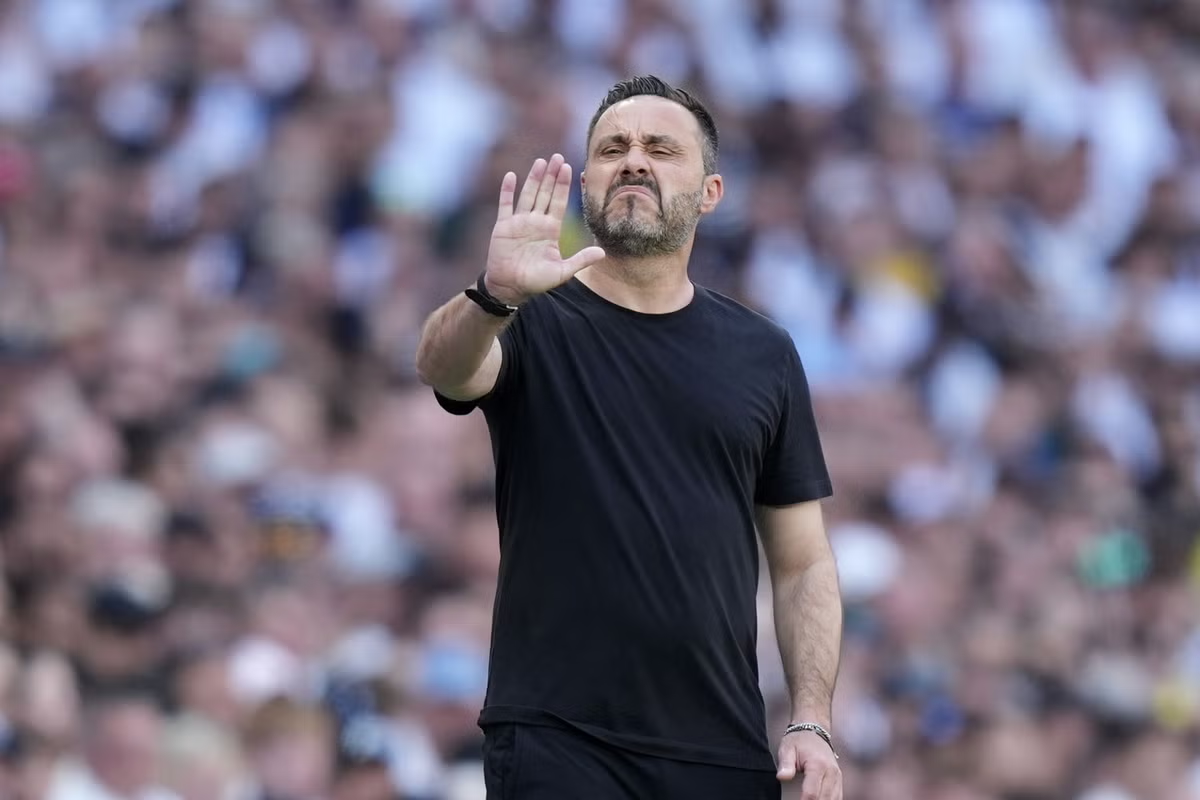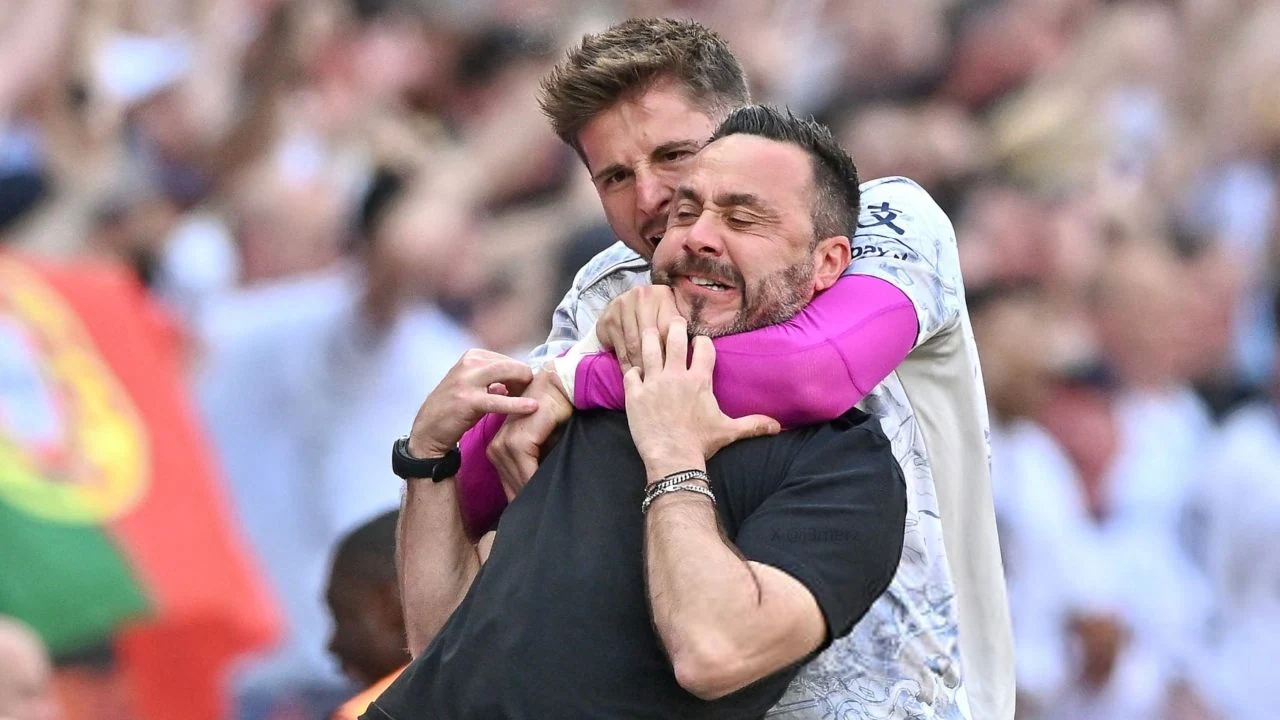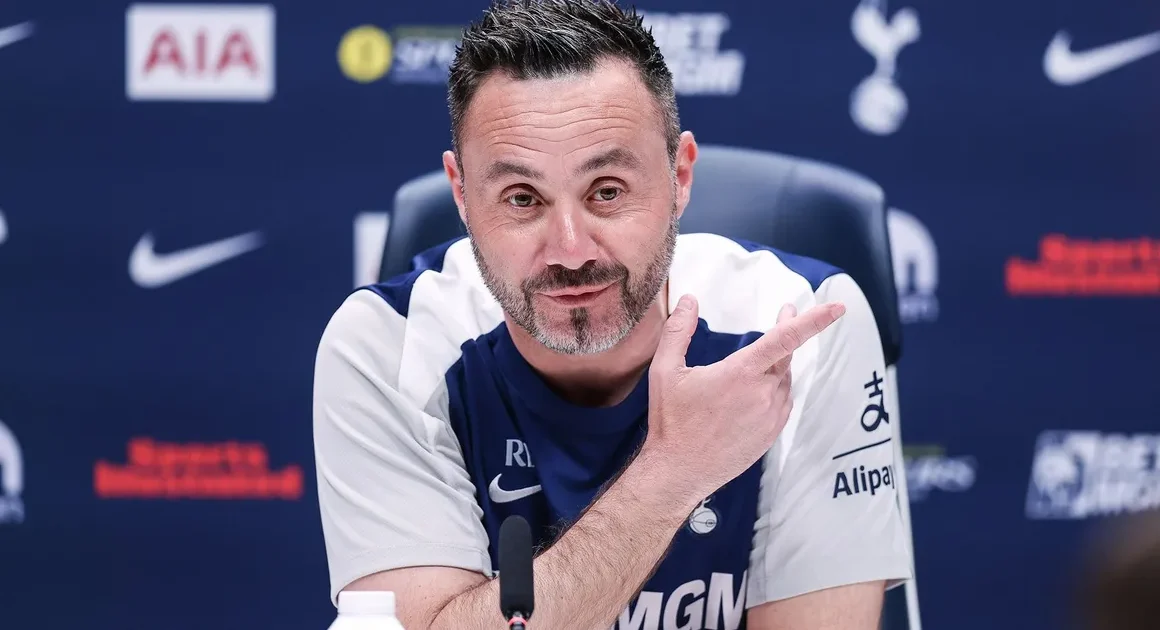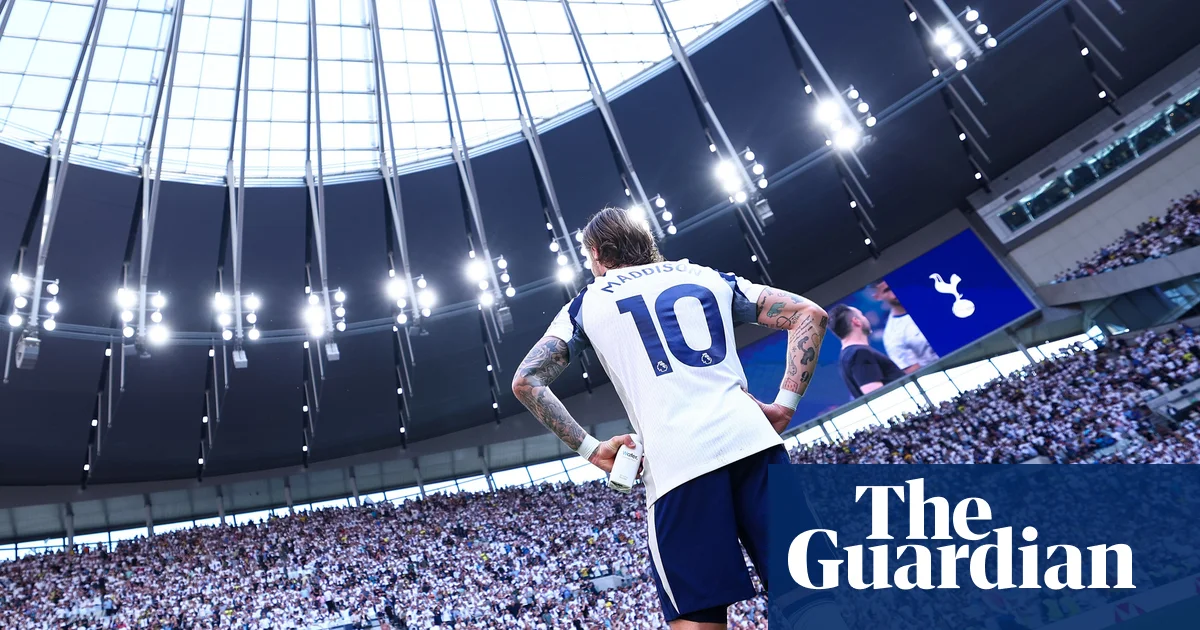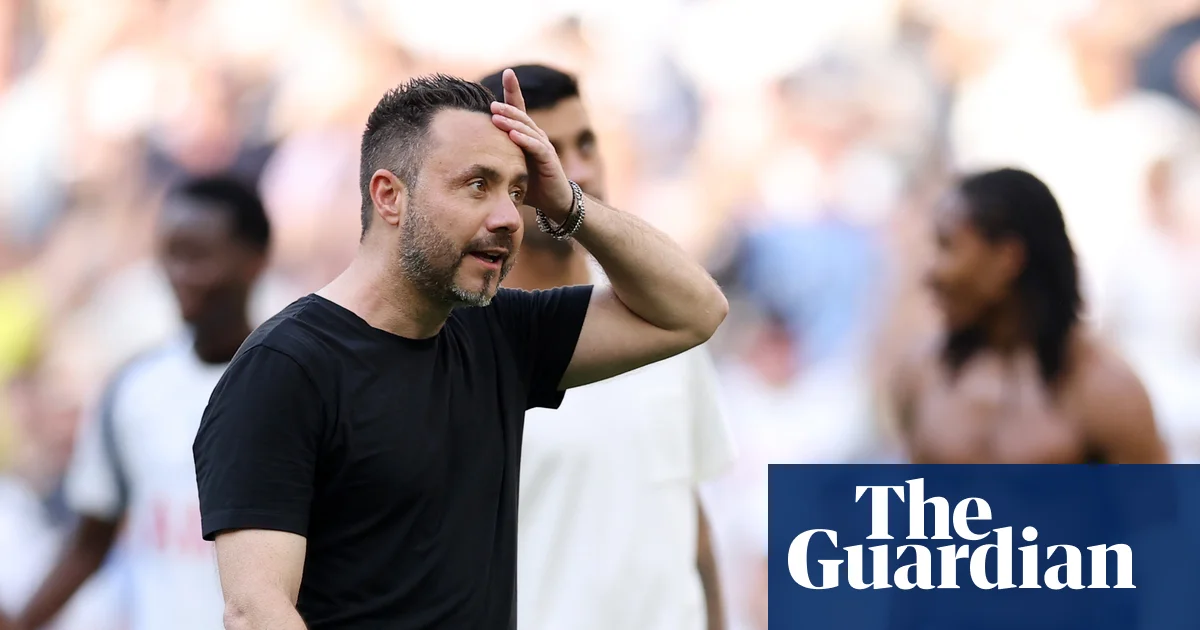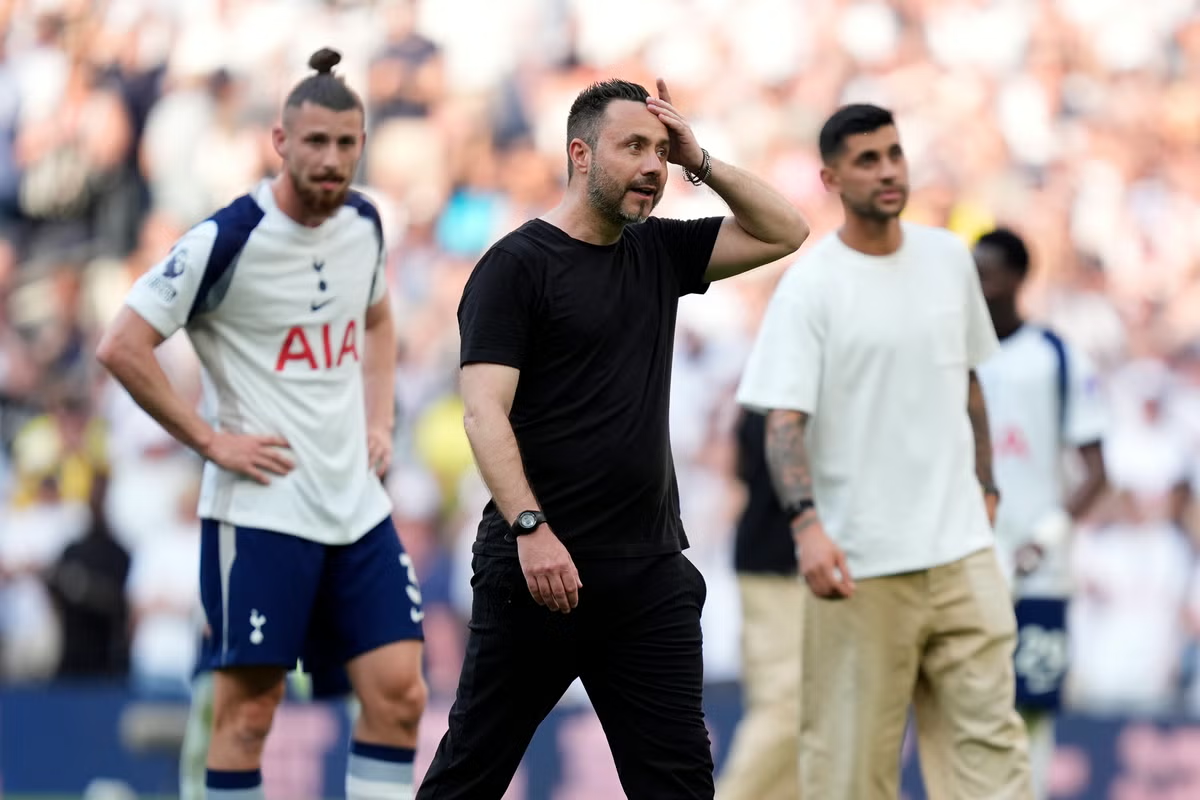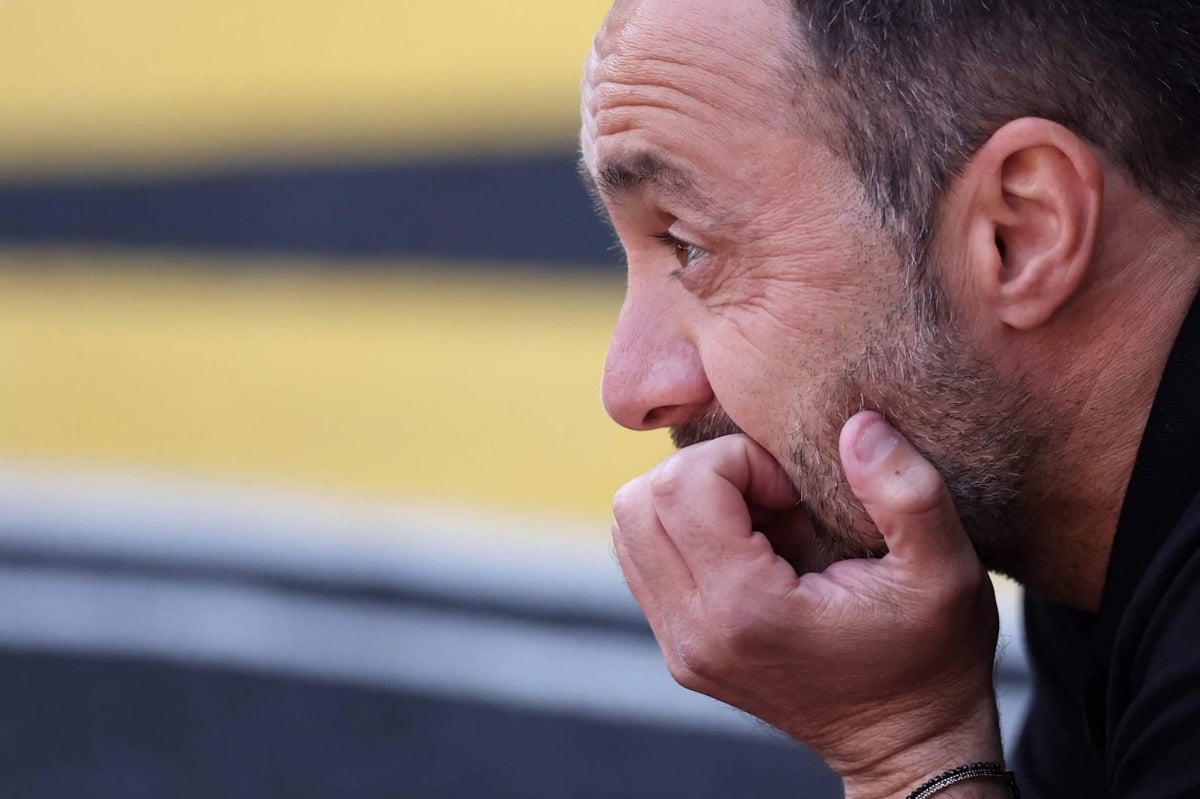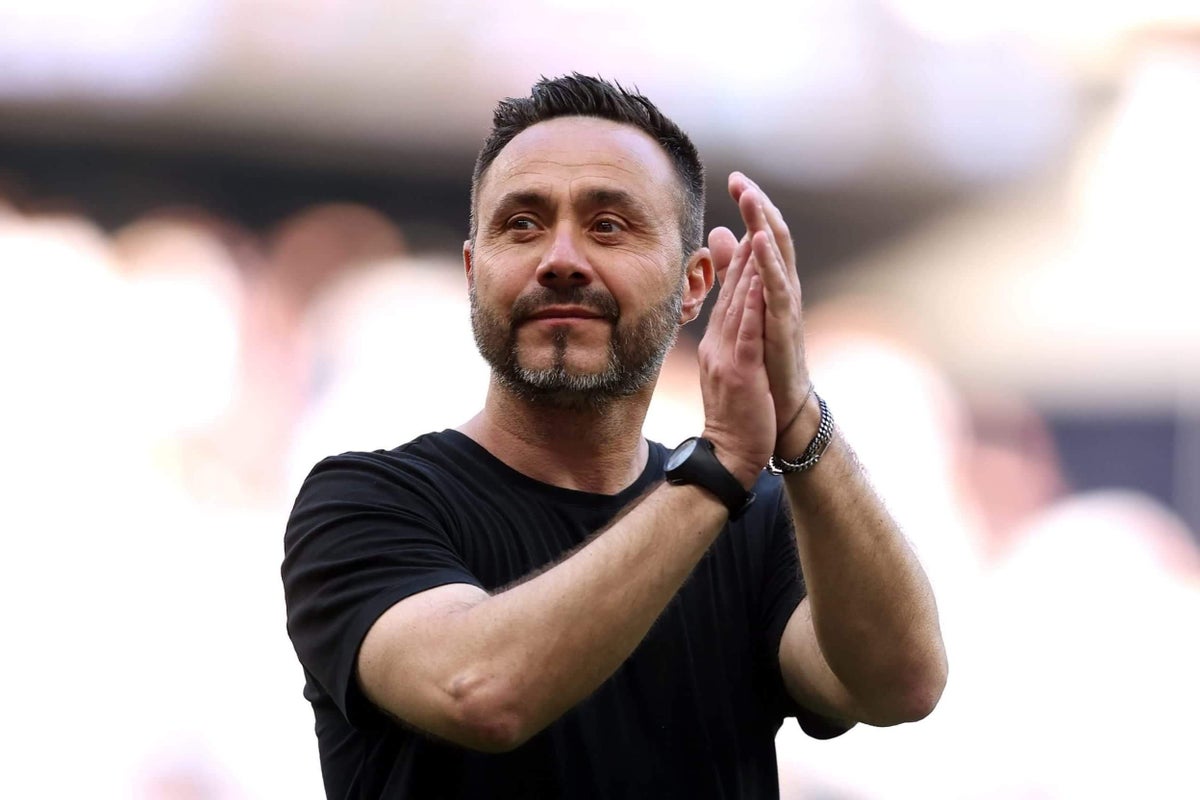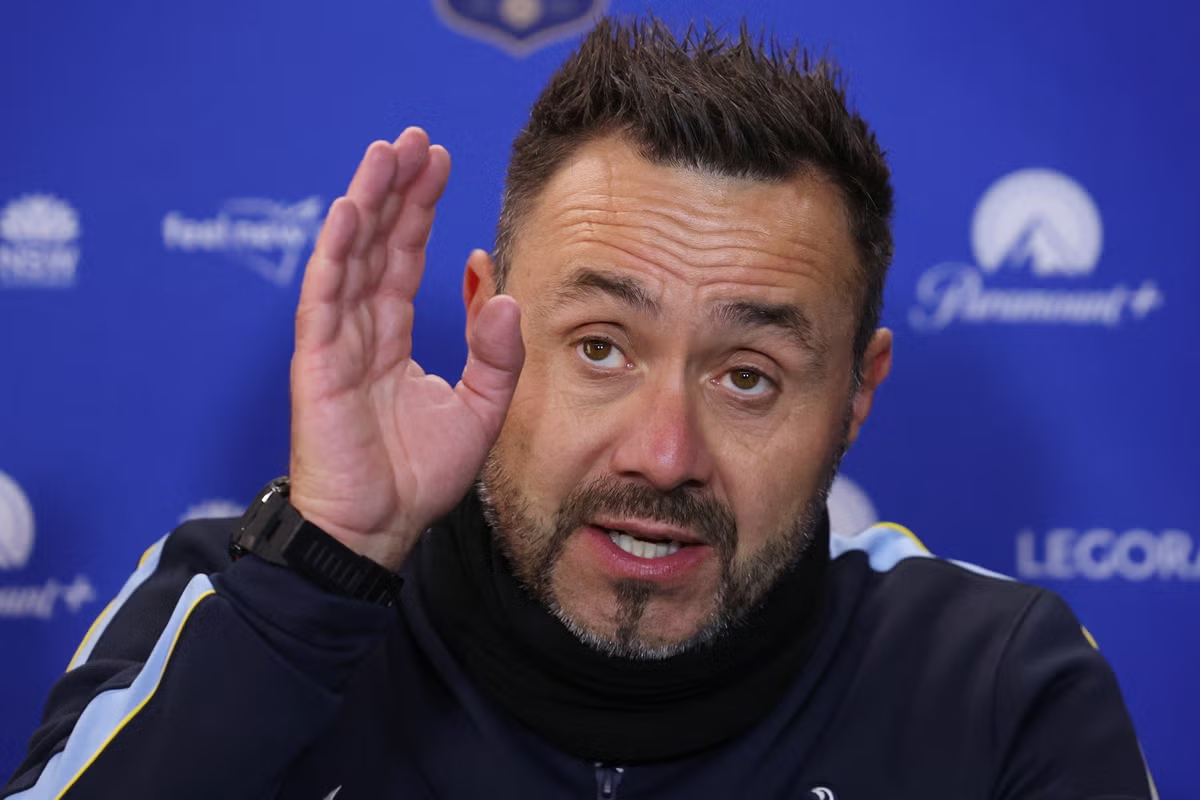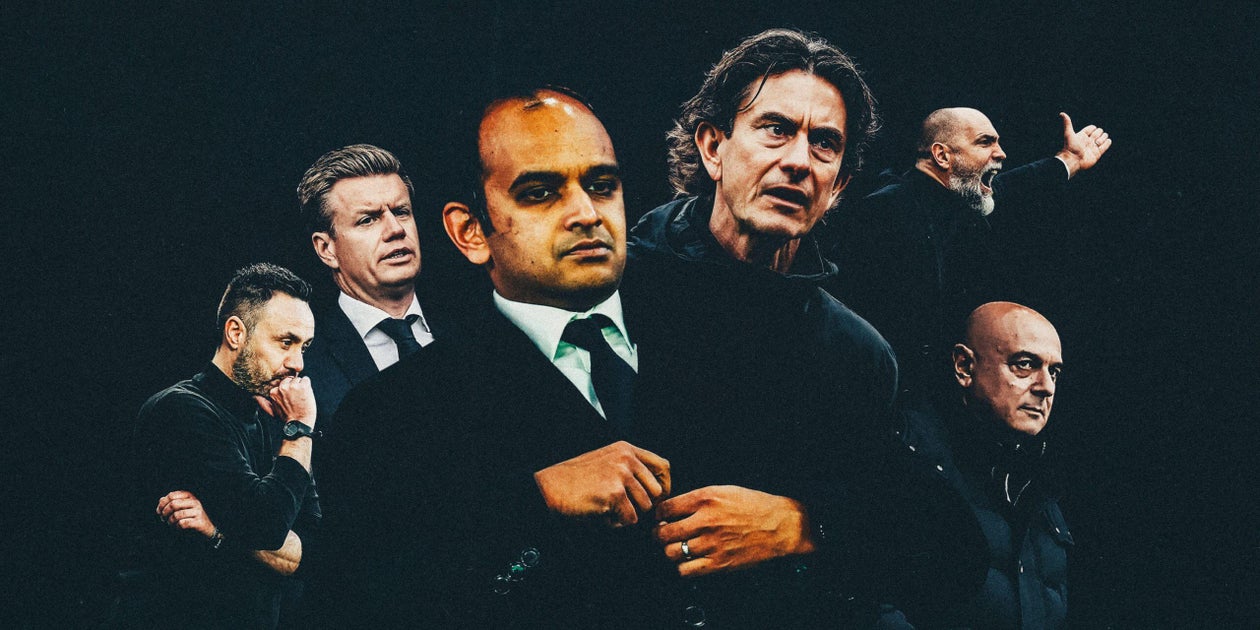
The most remarkable thing about Sunday at the Tottenham Hotspur Stadium is how much it felt like this time last year.There was no open-top bus parade, but just after 2pm there were thousands of Spurs fans climbing lamp posts and bus stops, letting off blue and white smoke, children on their fathers’ shoulders, desperate to give the team the most encouraging welcome they could.There was no trophy on the pitch at the end, but every Spurs fan stayed in the stands to cheer and sing after the final whistle. Manager, staff and players were moved to tears by their achievement and by the communal love from the crowd.There have not been many moments since this stadium opened in 2019 when it has been as happy, positive and unified as this. The fans reserved their loudest cheers for the manager, Roberto De Zerbi, who looked almost overwhelmed as he stood in front of the South Stand, a sea of white, and the waves of love came down towards him. He is the positive face of this club now, the indispensable man as they plan for next season.(Alex Pantling/Getty Images)Because everyone here knows that it is De Zerbi who saved Tottenham from relegation. Taking 11 points from their last six games, given the issues of confidence and injuries, is nothing short of a managerial triumph. He is the man who has brought this club back together, through the strength of his personality, his ideas, and his radical optimism when things were at their bleakest. And who has permitted Tottenham, for the first time all year, to come together and look forward again. He said on Sunday night it was the best achievement of his managerial career.You could power the floodlights here for next season on the strength of the feeling of relief. The great existential crisis has been avoided. For months, everyone associated with Tottenham would wake up in the middle of the night thinking about relegation. About the damage to club finances, about player sales, about trips to Lincoln, Preston and Wrexham next season. But above all about the abject humiliation that relegation would have represented. When De Zerbi said earlier this week that the club’s “dignity” was at risk, it was a stark warning of the stakes, and how shaming it would have been for this club to wake up in the second tier.Tottenham won the Europa League last year. They finished fifth in the Premier League the year before that. They had Harry Kane until 2023. They finished fourth in 2021-22. They reached the Champions League final in 2019. According to a UEFA report released in February, they have the fifth-biggest revenues in England and the ninth-biggest in all of Europe. They play in the best new stadium in Europe. For Tottenham to get relegated would have been a stain on the careers of everyone associated with it.(Visionhaus/Getty Images)That particular fear is over now. Tottenham will still be playing Premier League football next season. Things that have been taken for granted for a generation — north London derbies, the chance to qualify for Europe, being on Match of the Day — will be part of Spurs’ season in 2026-27. The worry about the devastating impact relegation would have on broadcast, ticketing and commercial revenue can be filed away for now.But there should be no question about it: this was still a disastrous season for Spurs. Being in a relegation fight in the middle of May is a terrible situation. Relying on West Ham United losing three of their last four to stay up is profoundly embarrassing. Losing 17 league games for the second season in a row makes another mockery of Tottenham’s resources and traditions. Playing in that stadium, charging those prices, and winning just three home league games is nothing short of a joke.Because this was still a season when years of mismanagement and drift caught up with Spurs. This was still a season when the ownership upended the running of the club and had to desperately piece it all back together again. This was still a season when every constituent part of the club — ownership, board, managers, players, fans — at times felt at odds with the other. It was still a season when the club did not get the positive leadership it needed until the arrival of De Zerbi at the end of March. It was still a season when the club too often looked like it was falling apart.The irony of the scenes at the end on Sunday is that this was, in fact, meant to be the season when everything was different.Even though Tottenham won the Europa League last season, the theme of the summer was regeneration. The club embarked on another reset, another relaunch. Their aim was to make sure that the 17th-place finish of last May was not repeated. (Who could have imagined that repeating that finish would be such cause for celebration in May?) Ange Postecoglou was out, replaced by Brentford’s Thomas Frank, a coach whose pragmatism and flexibility were seen as the perfect antidote to his predecessor’s brittle ideology.The logic was that by appointing a safety-first head coach, Spurs would become defensively sound and hard to beat, just like Frank’s Brentford were. The problem was that by turning away from Postecoglou’s positive football, an idea that the players all believed in, they removed the binding identity of the whole club. It was to be the last and worst of all of Daniel Levy’s managerial appointments.Spurs won just seven of Thomas Frank’s 26 Premier League matches in charge (Robbie Jay Barratt/Getty Images)There were even more profound changes away from the pitch.The Lewis family knew that Tottenham had been underperforming in recent years, on and off the pitch. They had commissioned management consultants Gibb River to come in and review operations earlier in 2025. This led to the appointment of the first CEO since ENIC, the investment group the Lewises own 70 per cent of, took control of the club in 2001 — Vinai Venkatesham. He arrived at the start of the summer, hoping to bring some transparency, optimism and positivity to Spurs.At the start, it all felt very unified. Levy and Venkatesham recorded a video for the club’s YouTube channel, in which the new CEO said he and the chairman were “joined at the hip”. Venkatesham and Frank also spoke the same language, talking about culture and communication. The mood swings of the past few years would be replaced by something more patient and process-led. It felt as if Venkatesham, Frank and technical director Johan Lange were all cut from the same cloth, all three of them routinely described by insiders as some of the nicest people in football.But changing the culture at Spurs was hard. Brentford are one of the most culture-led clubs in the country. Everyone in the building pulls in the same direction. The Tottenham squad Frank inherited was very different. It contained some challenging personalities, players who thought that if they performed on the pitch, their lax attitude to training would be excused. Discipline and lateness were significant issues. And if Frank was to succeed, he would need to get the players to buy into his standards. Which he was fatally unable to do.The other issue with the squad was that it was simply not very good. Kane left after the 2022-23 season and Son Heung-min departed last summer. Spurs had no world-class players left. The squad had deteriorated after years of under-investment. No club in the top four divisions spent a smaller proportion of their revenues on wages than Tottenham, with a ratio for last season of just 45 per cent. Yes, they had started to spend more on fees, but had seen very little return for it. Knee operations for long-term casualties Dejan Kulusevski in May and James Maddison in August left them even shorter on attacking quality. The pressure for big signings was immense.Levy pushed for Antoine Semenyo, Morgan Gibbs-White and Eberechi Eze, but could not secure any of them. Tottenham were forced to look further down their lists. They bought Mohammed Kudus from West Ham United and Xavi Simons from RB Leipzig. Joao Palhinha joined on loan from Bayern Munich.
De Zerbi saved Tottenham from total humiliation. This season was a disaster and must not happen again
De Zerbi alone deserves the credit for keeping Spurs in the Premier League. Too often this season the club looked like it was falling apart
TL;DRAI
De Zerbi saved Tottenham from relegation, taking 11 points in their last 6 games; predecessor Thomas Frank had managed just 7 wins in 26. One of Europe's top-10-revenue clubs nearly dropping tiers shows how ownership drift and a single failed coaching appointment can erase institutional value regardless of financial resources.
3,723 words~17 min read