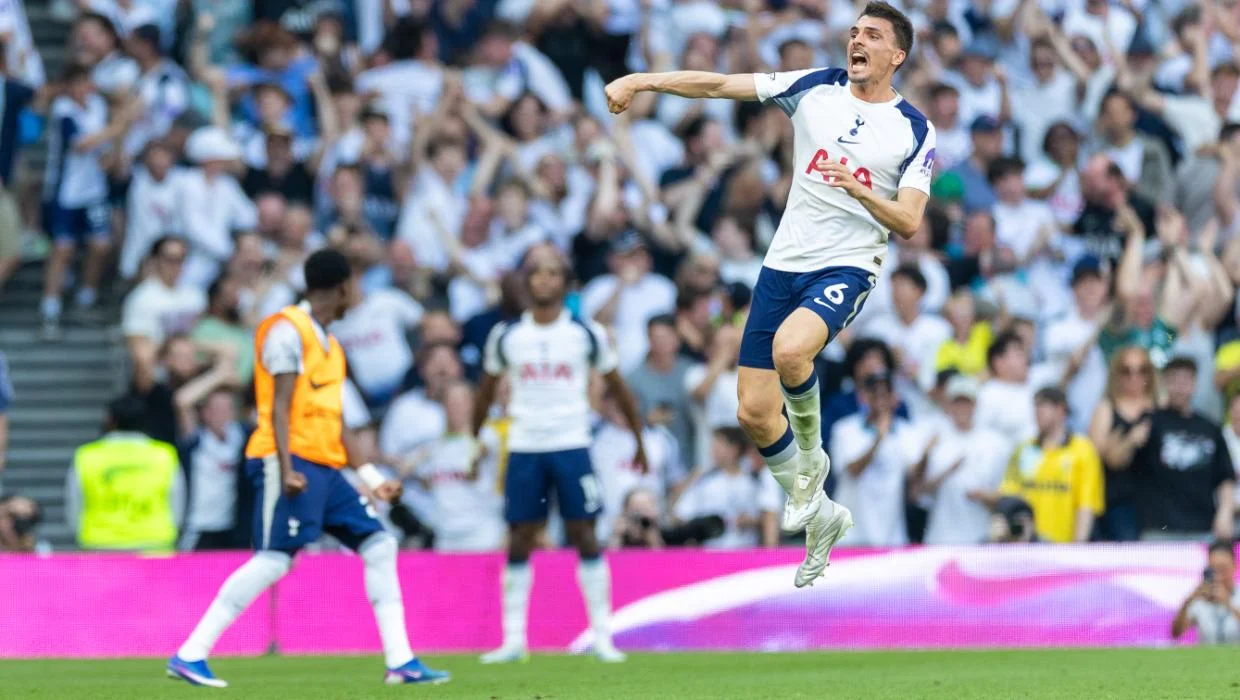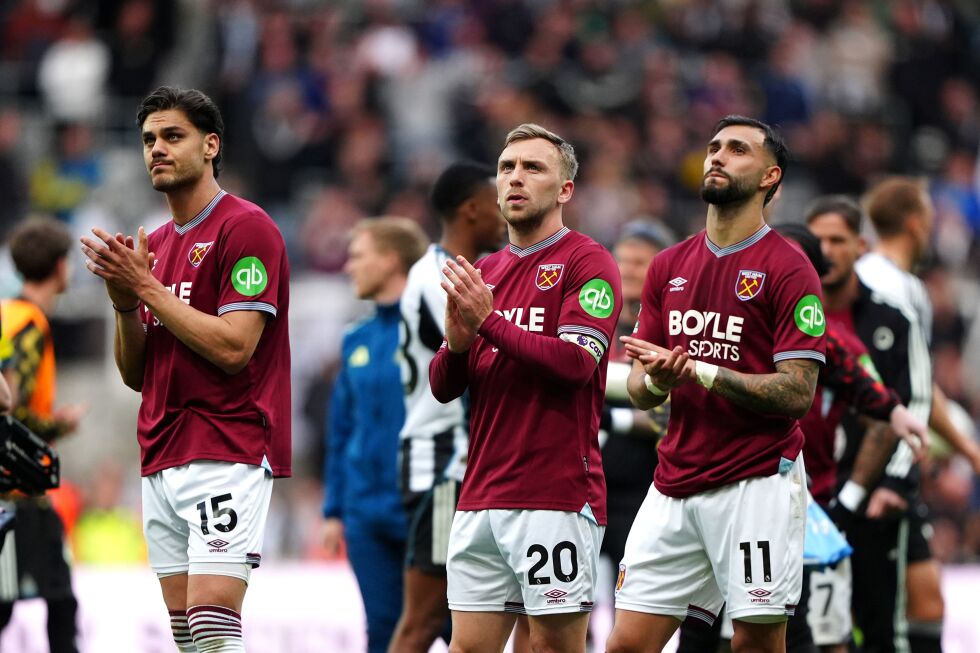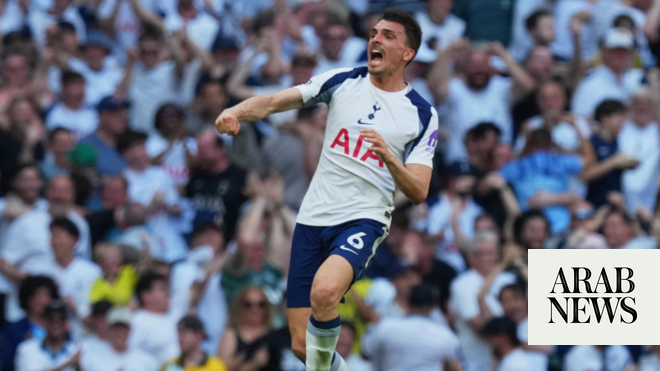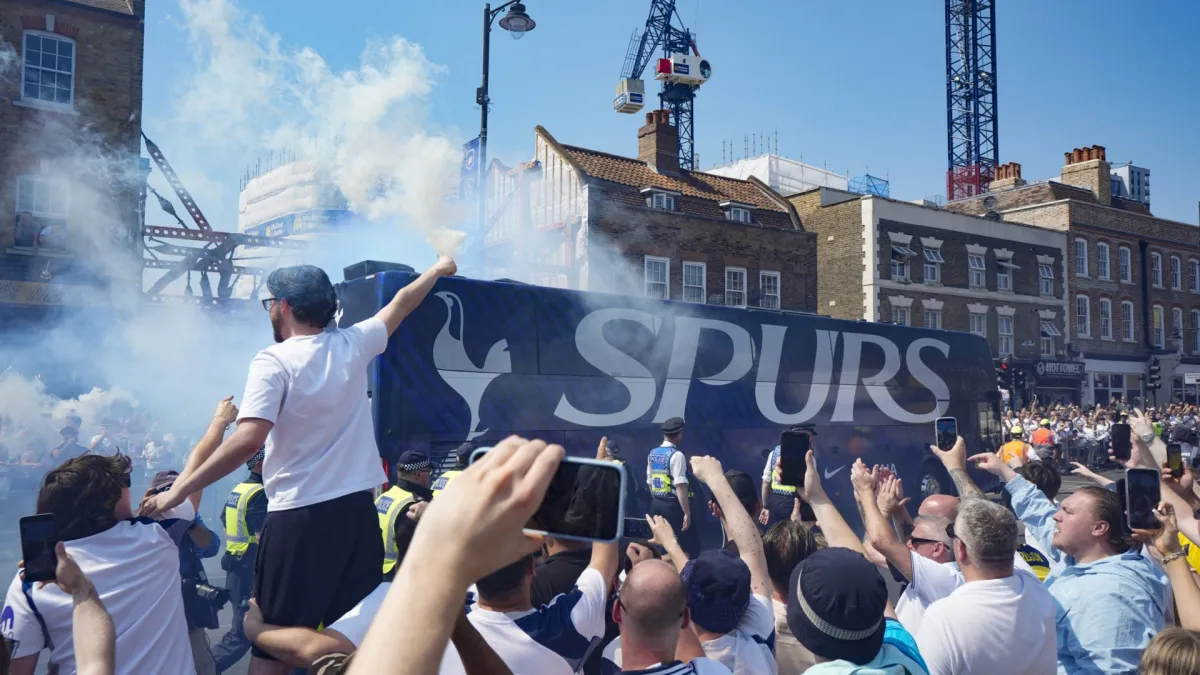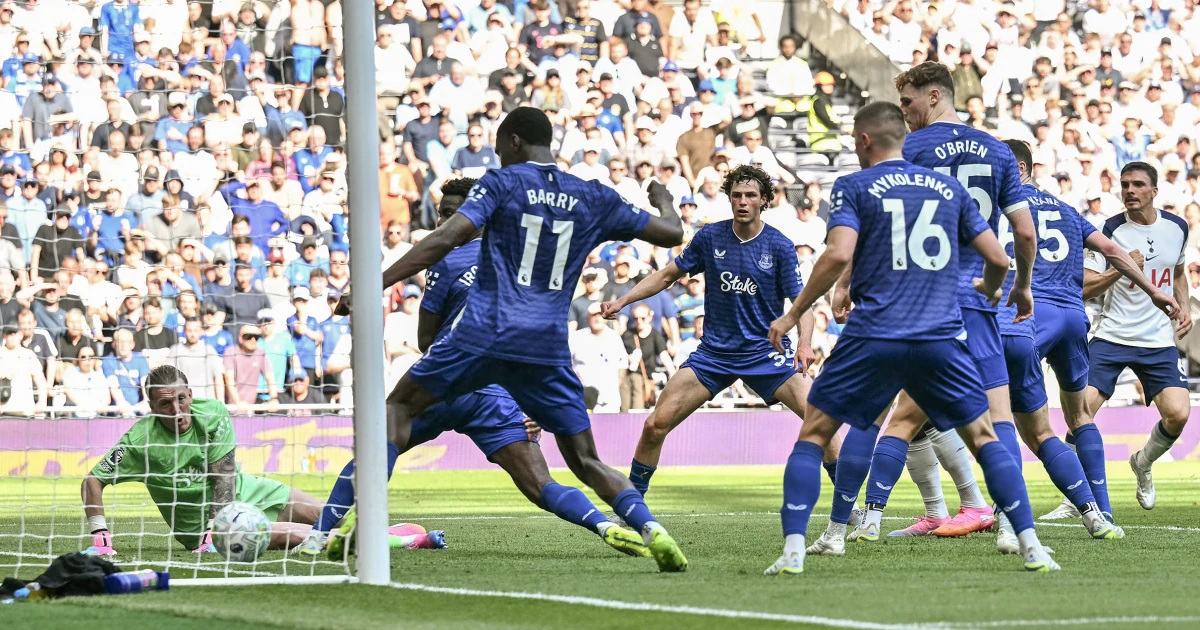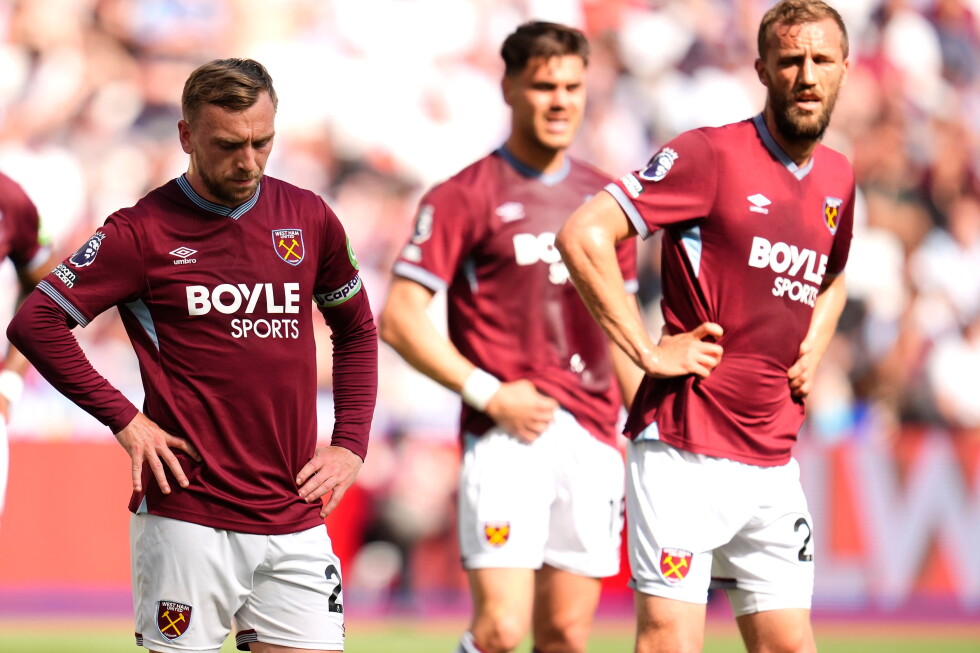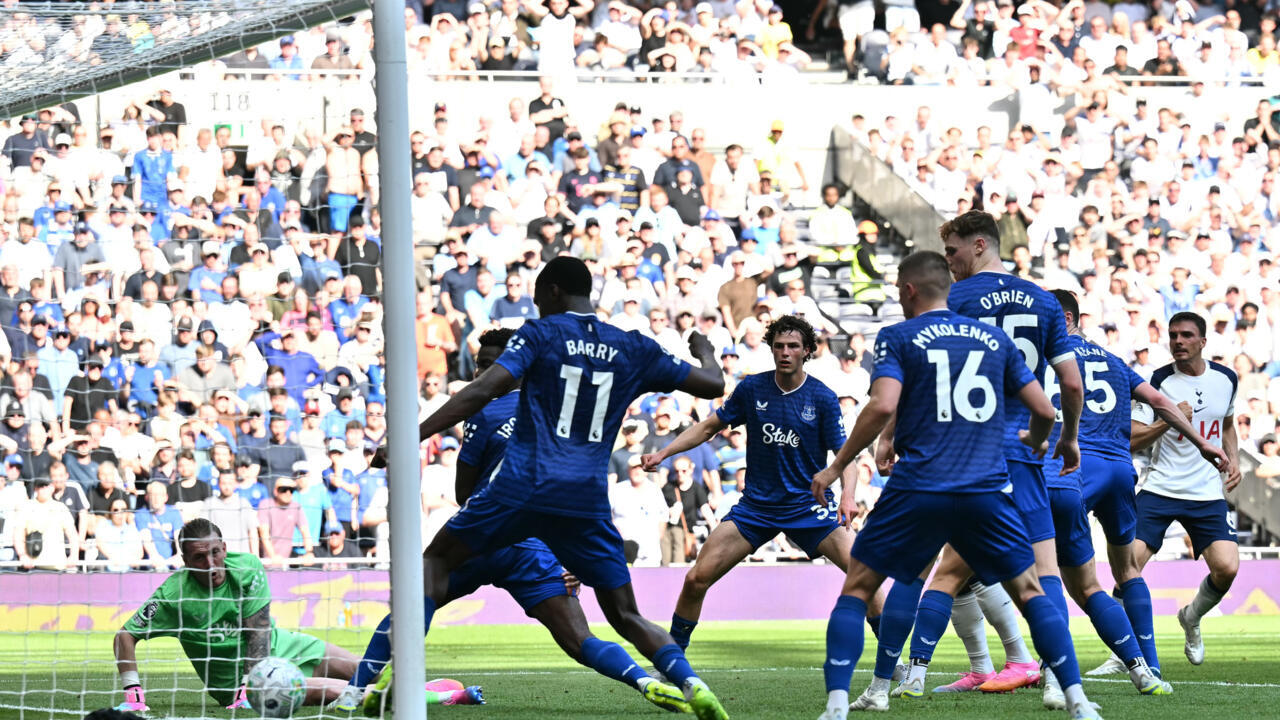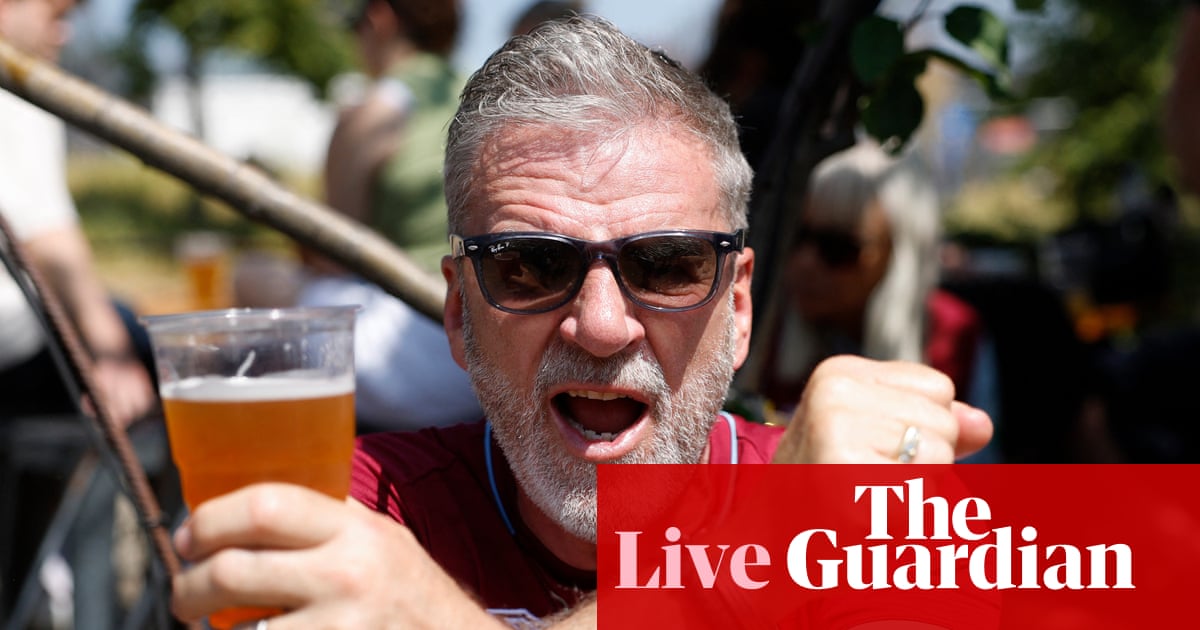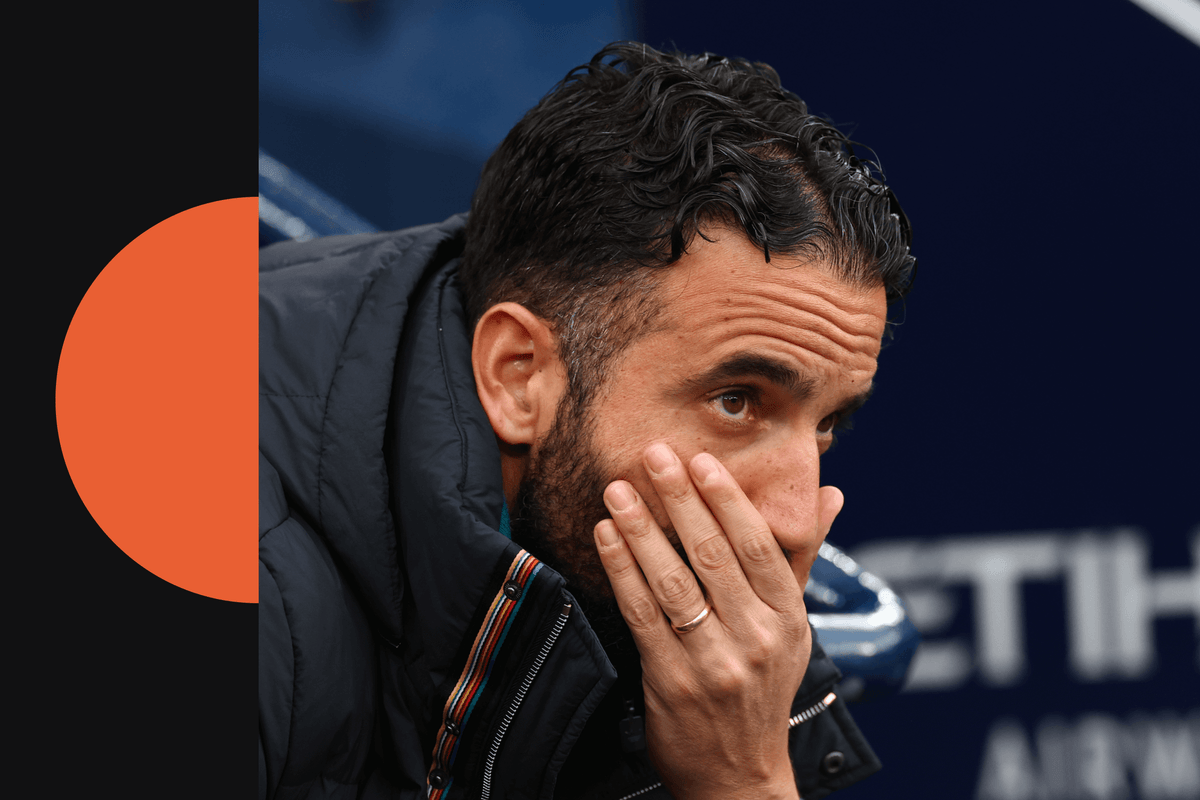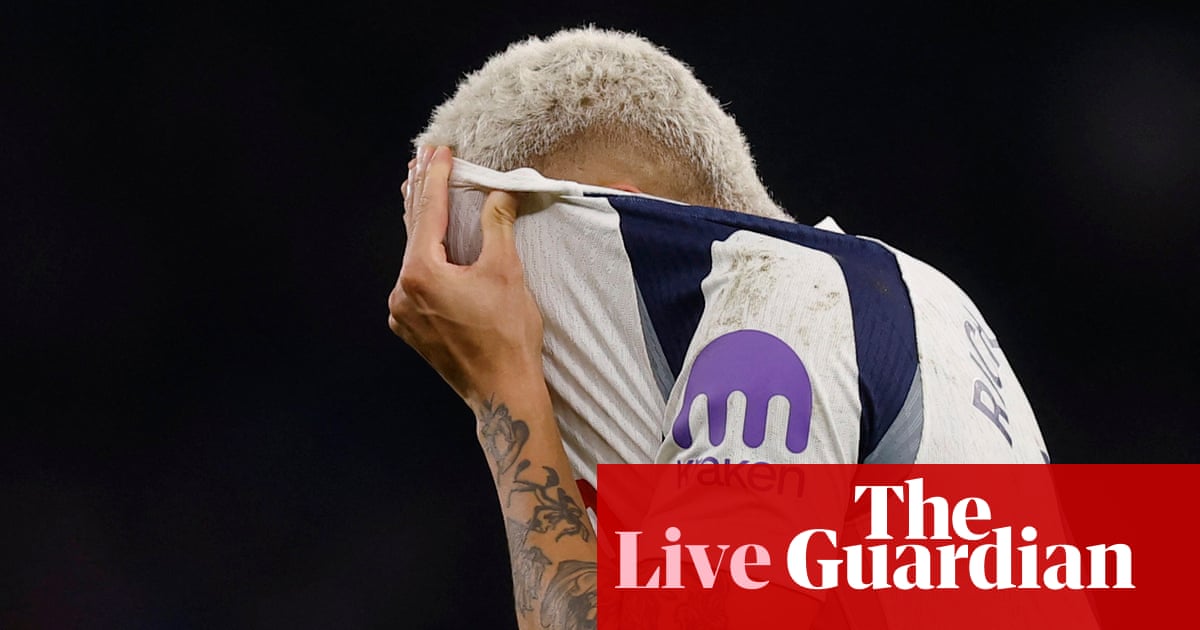
Welcome to The Briefing, where every Monday this season, The Athletic has discussed the biggest issues from the weekend’s football.So, for one last time in 2025-26, a look back at the Premier League.Tottenham survived, but what does that really mean? West Ham are down, but not just because of their form this season. And what of the tears around the country? At the Stadium of Light, where Sunderland qualified for Europe after half a century away. At Selhurst Park, where Mikel Arteta and Arsenal finally lifted the Premier League trophy after 22 years. And at Anfield, where Mohamed Salah took his curtain call, as he said farewell to Liverpool.What next for Tottenham?Survival was all that mattered on Sunday. Tottenham produced the performance they needed and remained resolute in spite of the pressure. Conor Gallagher gave an outstanding performance. So did Rodrigo Bentancur and Joao Palhinha, who scrambled the game’s only goal. Antonin Kinsky made a splendid save in stoppage time, continuing his redemption following that terrible night suffered in Madrid.Roberto De Zerbi has done a fine job. He inherited a squad with all sorts of deficiencies and barely any confidence to speak of, but managed to alter the atmosphere around them just enough to see them survive. For the sake of a metaphor, De Zerbi was parachuted onto a sinking ship and managed to steer it to shore.Now what?The celebrations belong to the players and fans only. Spurs’ owners and decision-makers made an almighty mess this season and are incredibly fortunate that it has not ended in disaster. As the various protest banners displayed at full time suggested, survival will do nothing to quell the anger or to soothe a mutinous atmosphere.Spurs’ season has not just been about bad luck. Rather, the extensive injuries and controversial refereeing decisions conspired to make a very bad situation, years in the making, much, much worse. They have recruited poorly. They have made myopic, often contradictory coaching decisions, resulting in ideological U-turns, drags on performance and misuse of resources.And those are not new flaws. Many of them can be traced at least as far back as the opening of their new stadium, which has unwittingly become an emblem of what seem like muddled objectives.Yes, the ground’s capacity and versatility may have diversified and grown Tottenham’s revenue streams since it opened in 2019, but it has also drawn attention away from the football team. In the years since, Spurs have resembled an events company with a football department, rather than a modern sporting organisation aimed primarily at being successful on the pitch.At different times, this season, with its looming threat of relegation, appeared to be the consequence of that wandering focus.ENIC, the owners, would say that this year has been uniquely challenging, with the upheaval that followed Daniel Levy’s departure as chairman. He was a load-bearing figure at the club, meaning that replacing him was always likely to create short-term difficulties. But they made that decision themselves and can hardly use the resulting chaos as a form of mitigation.The hard truth is that it was handled poorly and such bracing honesty is part of the way forward.The decision to appoint Thomas Frank was a poor one. So was the failure to allow his reign to last so long. The relative inertia in the January transfer market was very nearly a cataclysmic mistake, as was the installation of Igor Tudor.Tottenham Hotspur fans hold up a protest banner after the final game of the season (Photo: Change for Tottenham)Errors in judgment happen all the time in football. But while this season has often dealt in extremes, these problems — bad timing, under-investment, slow, misguided recruitment — are broadly characteristic of the way the club has operated for a long time.That will need to change. And it will not be easy. Neither Vinai Venkateshem, the CEO, nor Johan Lange, the sporting director, have much credibility left with supporters. At full time, a banner hung in the south stand demanding that both be dismissed and that the Lewis family sell the club.Clearly, it will take a lot of investment and a lot of good decisions for the atmosphere to even soften.What are West Ham?Sunday ended in a very different way for West Ham. They won well, dispatching Leeds United with one of their best performances in some time, but the players could then only watch as, with their game finished, their Premier League life drained away.Ultimately, their relegation was confirmed almost exactly 10 years after the club played their last game at Upton Park. That will escape nobody’s notice, because that move still — even now — feels pertinent to West Ham’s issues.It was in 2013 that Karren Brady, then vice chairwoman, promised supporters “a world-class team in a world-class stadium”. West Ham delivered neither and while stadium moves are always accompanied by bold (and often empty) rhetoric, the difference between expectation and reality in this instance has become a cautionary tale.West Ham chased greater commercial revenues. They pursued the perception of grandiosity, hoping that it would provide access to a new level of the game.Many, many teams have done the same thing, but few have given up so much in return.It has not been 10 years of failure. Beyond the Europa Conference League win in 2023, West Ham have finished in the top half of the Premier League three times during that period, which is a fine return. But those upswings have always seemed temporary. Momentum has been scarce and has never lasted, often perishing by way of strange decisions or muddled ideology.Partly, that can be explained by just how vague the concept of West Ham has become. People sneer whenever diminishing culture is mentioned here, particularly on social media, but when a club stands for something, that allows it to have standards and processes and, in turn, layers of accountability that force it to operate at a high level.West Ham do not seem to work that way. Roshane Thomas has written this outstanding analysis of a season which, really, has been coming for some time.Did Sunday’s tears show what football can mean?Mikel Arteta has spent the season at the centre of a culture war, as an avatar for a type of football that has been relentlessly attacked. Arteta and Arsenal have also had to withstand almighty pressure and a media that have feasted on every one of their stumbles.That’s not unique to Arsenal — that’s the nature of how football is covered today — but it must have been incredibly wearing at times, and his tears on the pitch at Selhurst Park, after lifting the Premier League trophy, told their own tale of nine months at the eye of the storm.Sunderland’s suffering has been a lot longer. Their seventh place qualifies them for the Europa League and next season they will play in a major continental competition for the first time since 1974 — 52 years. Given where the club has been over the past few decades, down as low as League One and frequently an object of mirth — the most notorious moments of Sunderland Til I Die are still on heavy social media rotation now — the tears in the sun following the 2-1 win over Chelsea were highly affecting. As were the celebrations from teenagers not old enough to have watched Niall Quinn and Kevin Phillips play together, or to have seen Status Quo open the Stadium of Light.The only tears at Sunderland were those of joy (Photo: Stu Forster/Getty Images)It’s good to see the humanity in the game. The relief at Spurs, the despair at West Ham, the heartfelt gratitude at Anfield and the Emirates. Or even the quiet satisfaction that Andoni Iraola felt as he signed off at Bournemouth.“I feel so, so happy,” he said in his press conference, after the 1-1 draw with Nottingham Forest. “So happy, because I cannot ask for much more.”Coaches so rarely get to leave on their own terms, to the sound of unanimous praise. Bournemouth are not a pauper club any more, but the performance this season has still be remarkable. Remember, they sold four members of their first team last summer. Iraola has done something that should be spoken of for a long time.Pep Guardiola’s season at Manchester City has not been remarkable. He leaves having won an FA Cup and League Cup double and it’s a measure of his own standards that it feels underwhelming; how ugly to lose 2-1 at home to Aston Villa in his last game.Guardiola sheds a tear during his final game in charge of City (Photo: Dan Mullan/Getty Images)In time, of course, that will not matter at all. It even seemed irrelevant by the time Guardiola took to the pitch to say his own tearful goodbye. Such was the emotion at the Etihad that his departing captain, Bernardo Silva, was in tears in the tunnel before the game began. Has any coach in Premier League history been as imitated or as influential? Guardiola departs having rewritten — at a guess — half a dozen of English football’s orthodoxies.When he arrived, the best place a centre-back could put a clearance was the roof of the stand. OK, perhaps that’s not quite true, but there are now League Two goalkeepers baiting the press.How does Salah compare to other Premier League greats?Mohamed Salah took his curtain call at Anfield following the 1-1 draw with Brentford.What is Salah’s place in Liverpool’s history? Simon Hughes wrote a truly excellent piece on his impact on the pitch and beyond, and it comes highly recommended. Rarely has a player been that good and had such broad and diverse appeal, and then managed to command that affection for such a long time. What a rare player.What is his place in Premier League history? That’s a broader, harder question, partly because there are so many ways of answering it. By trophies, by goals… by what?Salah applauds Liverpool’s supporters on his final appearance (Peter Byrne/PA Images via Getty Images)A different, more abstract measure: rewatch a compilation of his goals in England and notice how many of the outstanding ones you have forgotten. There are the famous moments, like that Puskas Award winner against Everton at Anfield, or the missile he unleashed against Chelsea in front of the Kop, but there are all sorts of others that have blended into the background.Lobs, volleys, curlers, headers. With great precision, or unfathomable power.That’s greatness. When there’s too much quality for most of us to recall, that really says something.Where does he rank among the rest and what measures do we privilege to create and order that list? Does it matter? Salah was special for a very, very long time, and created moments that — because there were so many of them — will remain fresh and original for even longer. What a gift to the game. There are four, maybe five players like that in Premier League history. Order them however you want, but there are very few of them.Watch the compilation. And then read Simon’s article.
Where next for Spurs? What are West Ham? Why all the last-day tears? How does Salah compare?
Analysing the key talking points from the final Premier League weekend of the season
1,835 words~8 min read