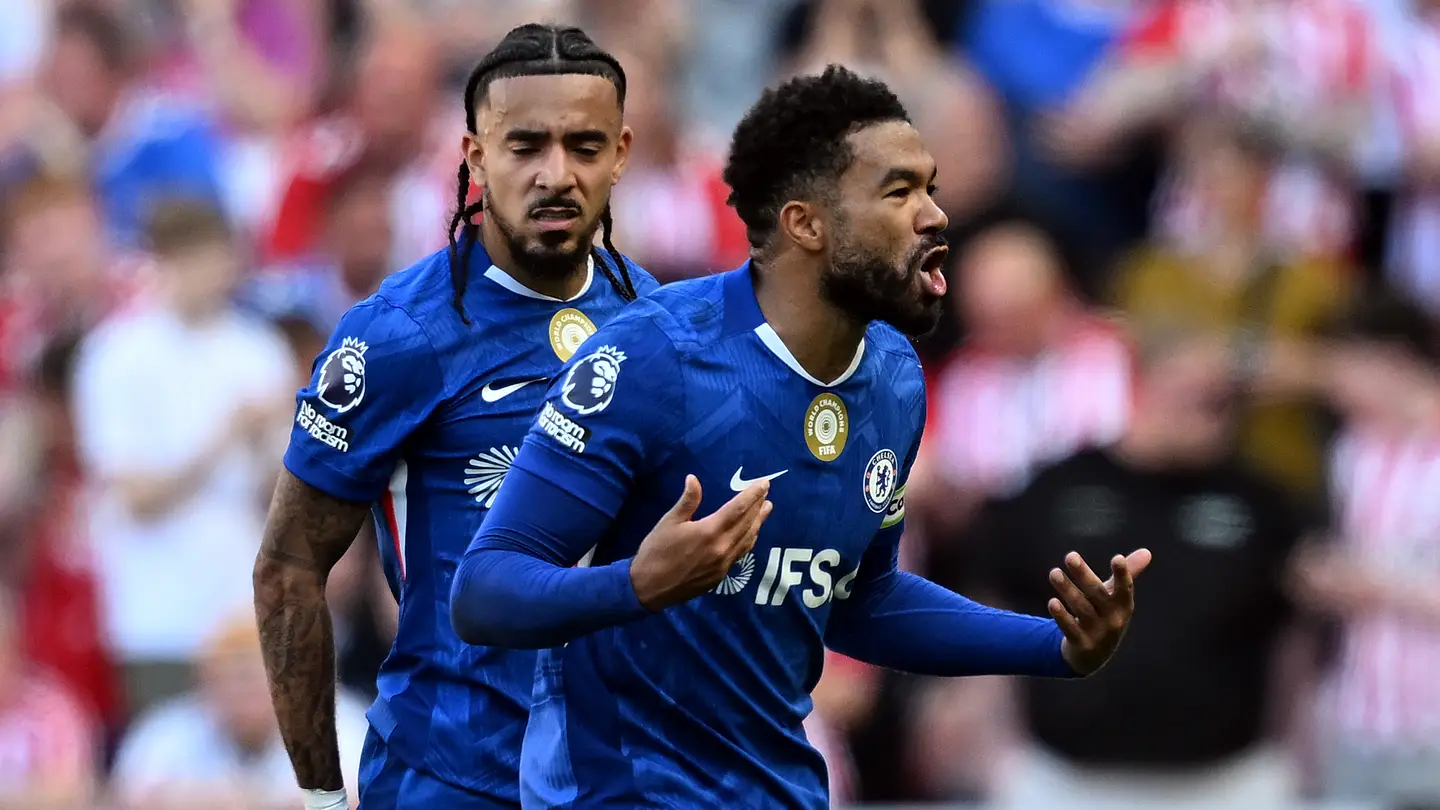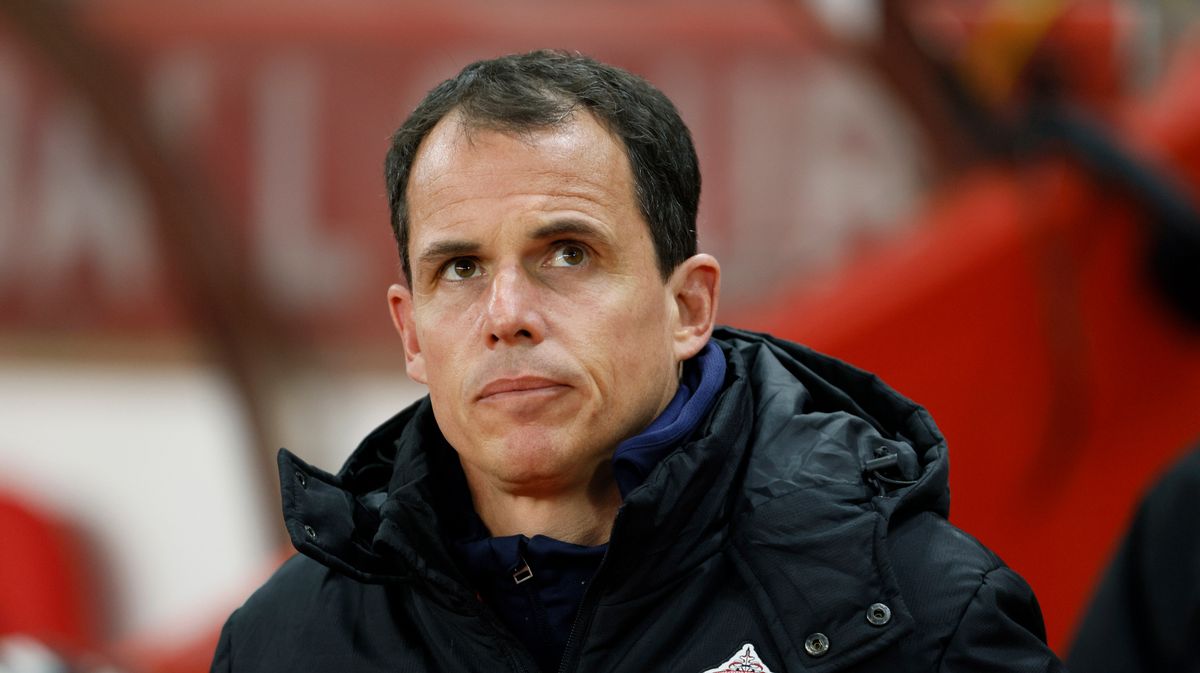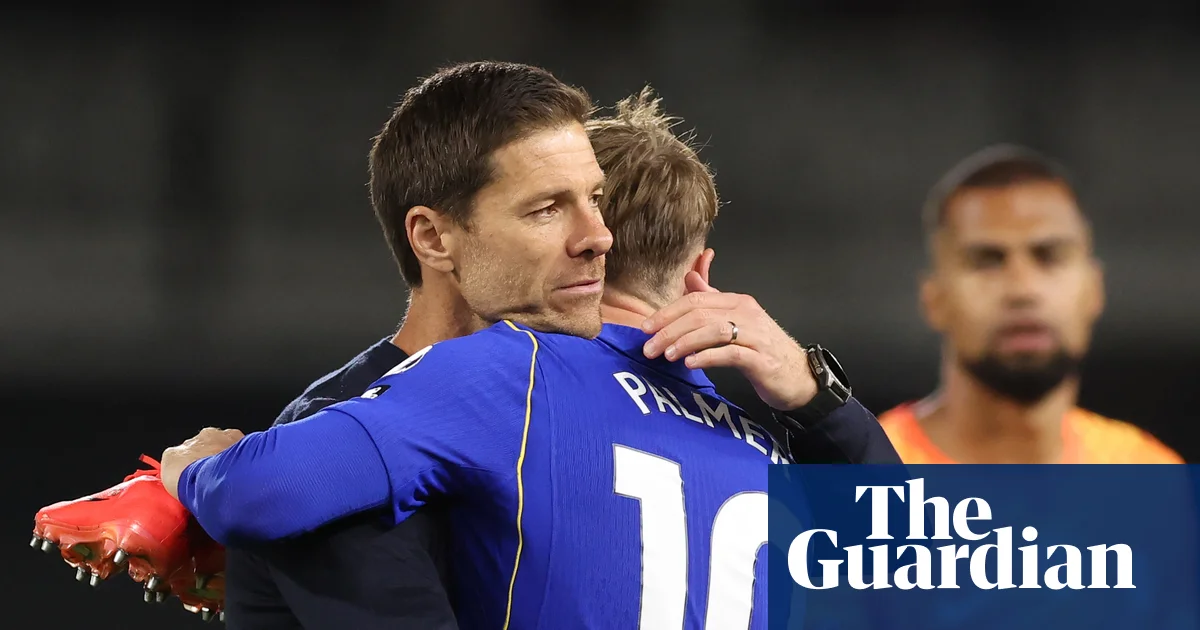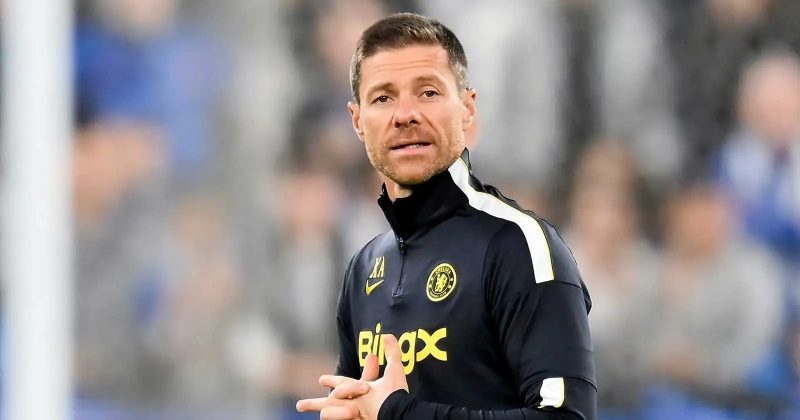
It was apparent from the early minutes that Chelsea were not going to beat Sunderland, but it wasn’t clear until Wesley Fofana was shown his second yellow card by referee Chris Kavanagh in the 62nd minute that they were going to end their miserable Premier League season playing all of the hits at Stadium of Light.A passive start in a loud, intimidating away ground? Check. Being physically bullied all over the pitch? Check. Falling behind to a startlingly simple move? Check. Pedro Neto getting involved in an unnecessary, petulant altercation? Check. Stabilising in possession before being undone by a farcical lapse in defensive concentration? Check.Doing just enough to give supporters faint hope of a comeback? Check. An entirely avoidable red card, followed by a creditable but ultimately pointless rally with 10 men? Check. Ostentatious player apologies at full time towards a nearly empty away section? Check.Chelsea have finished the 2025-26 season — year four of the BlueCo project — 10th in the Premier League. The only reason why the atmosphere among supporters is anything less than mutinous right now is that the club’s ownership and sporting leadership, represented at Sunderland by Paul Winstanley and Sam Jewell, have headed off calls for more sweeping change with the genuinely intriguing and exciting appointment of Xabi Alonso as manager.Alonso, as detailed in The Athletic’s inside story of his appointment, told Chelsea he wants to build a team of “mentality monsters” at Stamford Bridge, borrowing one of Jurgen Klopp’s most famous phrases. That notion feels comically absurd on days like this, and there have been far too many days like this one since the turn of the year.This is the Chelsea team that lost five league matches in a row without scoring a goal for the first time since November 1912. It is also the Chelsea team that lost four consecutive league games at home for only the second time in the club’s history, the first coming in 1978. In the 19 matches played since the turn of the year, Chelsea are 15th in the form table.No team can be so bad for so long and realistically hope to be involved in European competition next season, let alone the regular Champions League participation that Chelsea’s modern history and BlueCo’s business model demands. Six points from their final nine matches would have been enough for Chelsea to secure Europa League qualification after beating Aston Villa 4-1 at Villa Park on March 4. They collected just four.The only area in which this group of players has excelled is indiscipline; 10 red cards across all competitions (11 if you include Enzo Maresca’s dismissal against Liverpool in October) is a club record, while 118 cards in the Premier League is six clear of nearest rivals Tottenham.Chelsea can reasonably argue that Maresca’s departure on New Year’s Day derailed their campaign, and the knowledge of his expected coronation as Pep Guardiola’s successor at Manchester City casts that argument in a slightly more sympathetic light. But just as this season stands as a brutal rebuke to the idea that last summer’s FIFA Club World Cup triumph represented a genuine arrival on the elite stage, it would be dangerous to assume that simply sprinkling some much-needed stardust in the manager’s office will be enough to arrest the slide.Alonso has a big job on his hands (Florencia Tan Jun/Getty Images)Alonso will need substantial support to build the level of team that can meet Chelsea’s sporting expectations, and that extends beyond smart signings this summer. His judgement on players — the ones he wants in his squad and the ones he does not — must be heeded at the highest levels, even where it comes at the cost of spreadsheet value. The man who has excelled in elite environments for virtually all of his adult life must be empowered to build one at Cobham.If he wants Joao Pedro to stay, Chelsea’s firm stance in the face of Barcelona’s interest must hold. If Enzo Fernandez wants to leave and Alonso is happy to let him go, then a swift resolution would be hugely preferable to a lengthy saga that dominates the summer. If he feels a specific profile of player — in terms of age, personality, position, skill or all of the above — is needed to elevate this squad, simply saying that it does not fit the club’s model will not suffice.This summer is already shaping up to be the polar opposite of the last, when Chelsea exerted themselves deep into July to become Club World Cup winners. Cole Palmer, Joao Pedro, Levi Colwill and Estevao will all get a full summer to recover their minds and bodies and enjoy the benefits of something resembling a proper pre-season, fuelled by the additional motivation of their World Cup snubs.Alonso’s high-intensity pressing requires energetic legs. He will get all the time he needs to condition his players on Chelsea’s tour of Australia and Asia, and plenty of scope to embed his tactical principles with and without the ball. To succeed at the top end of an increasingly aggressive, man-to-man Premier League, his football may also need a level of physicality not currently present in this squad.A season out of Europe entirely is a humiliation but it could also be a golden opportunity. Chelsea’s glaring lack of impactful squad depth may not matter quite so much with free midweeks, and Alonso may be able to tailor his game plans more intricately towards exploiting the specific weaknesses of Premier League opponents.These are all reasons to be optimistic about the Alonso era and, by extension, Chelsea’s future. That is just as well, because the present does not bear thinking about.May 25, 2026Connections: Sports EditionSpot the pattern. Connect the termsFind the hidden link between sports terms
Chelsea played all the hits of a bleak season in Sunderland loss – Xabi Alonso has a big job ahead
Alonso will need substantial support to build the level of team that can meet Chelsea’s sporting expectations, as Sunday showed
TL;DRAI
Chelsea ended 2025-26 in 10th place — year four of BlueCo — posting a club-record 10 red cards and five straight scoreless league losses, a run unseen since 1912. Xabi Alonso faces a full squad rebuild; a European-free season gives him pre-season continuity, but only if ownership backs his transfer calls without override.
956 words~4 min read