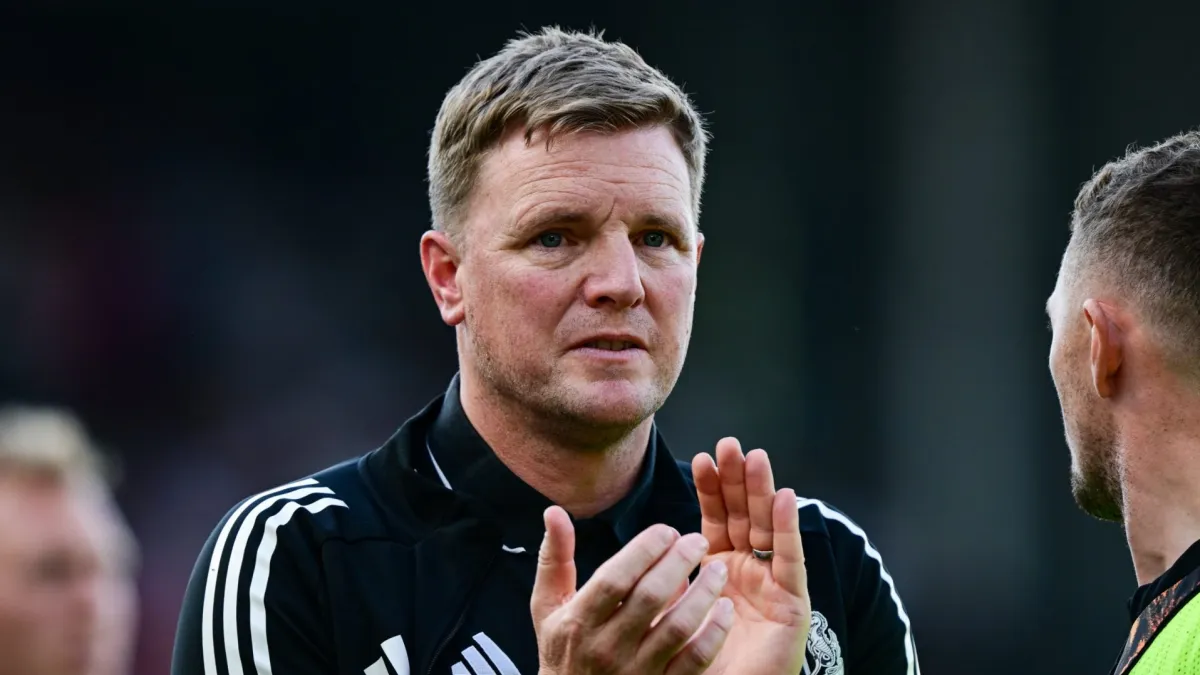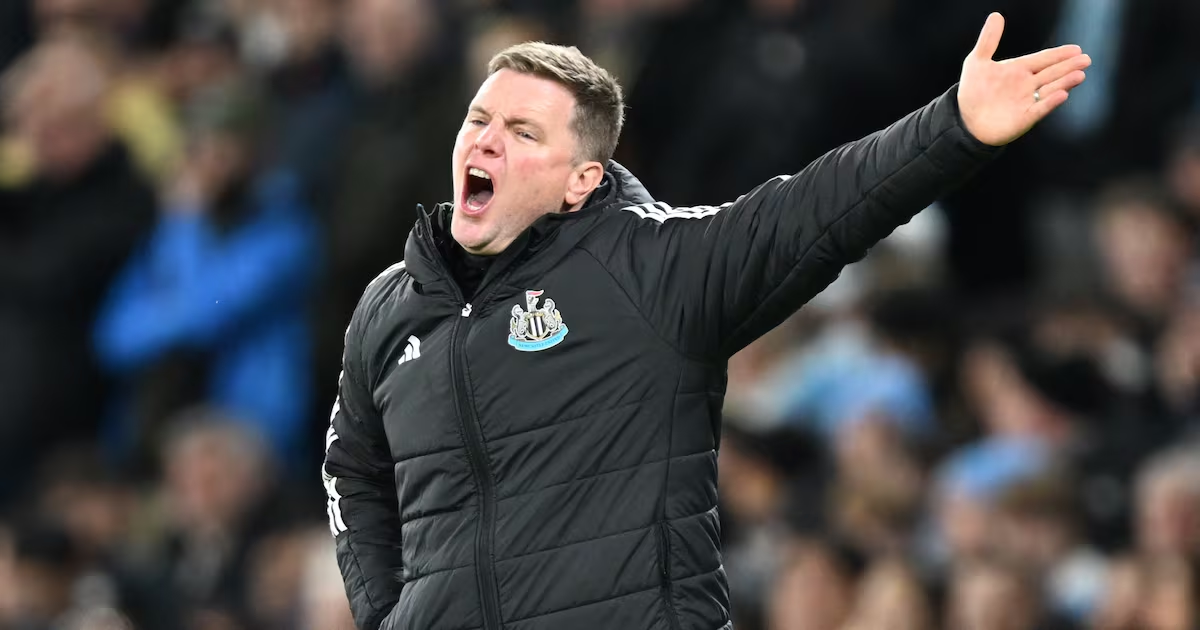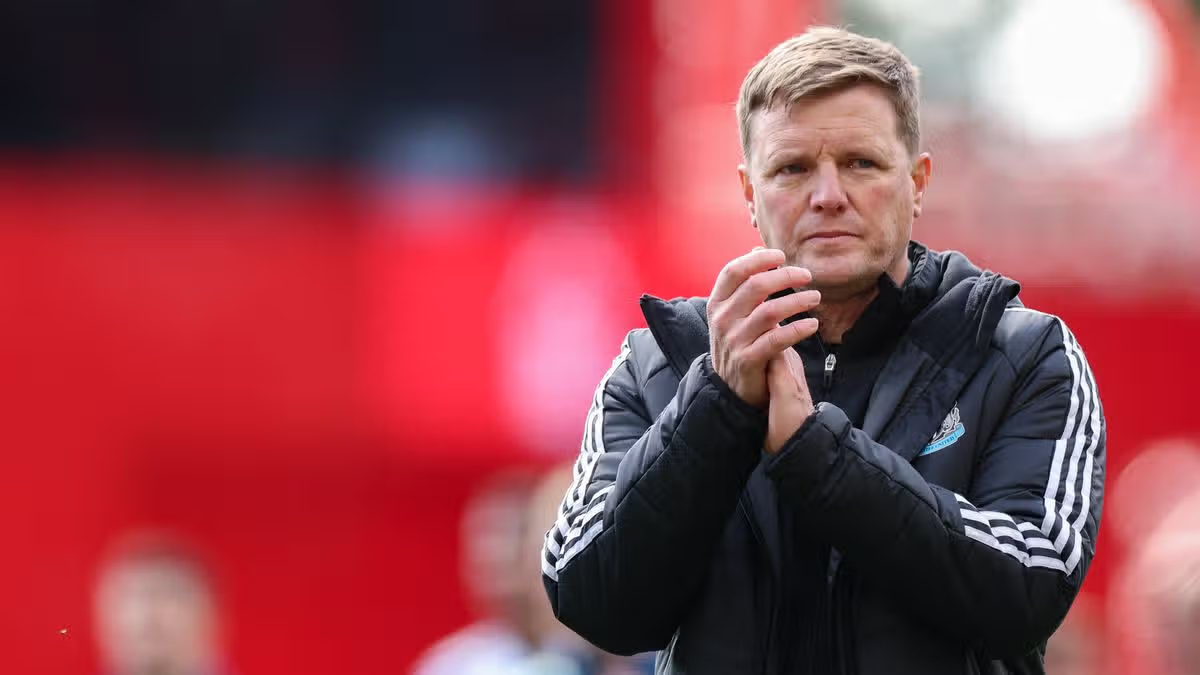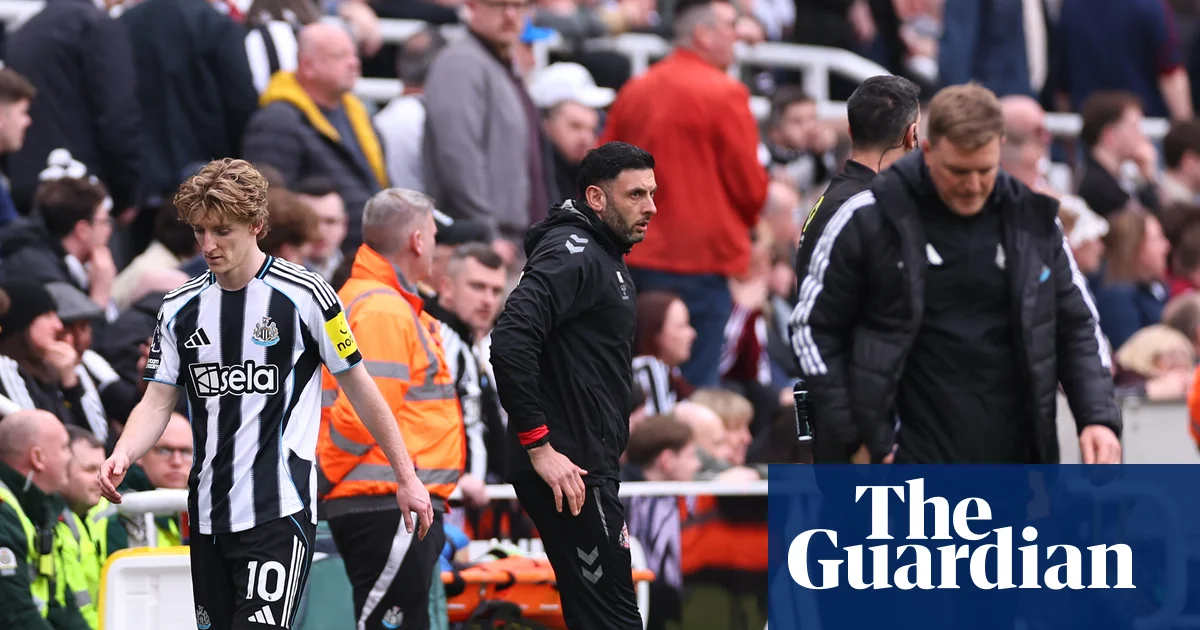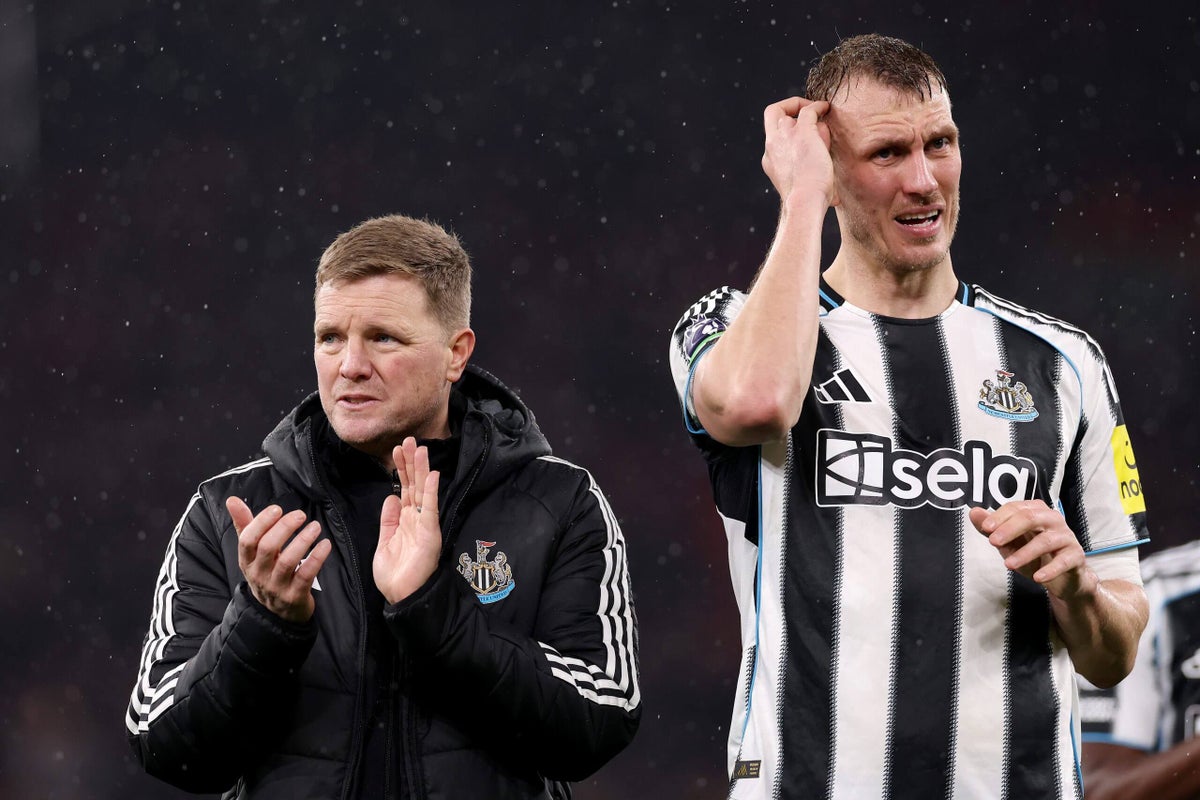
The flight home from London was solemn to the point of funereal. After three weeks without a game — 21 days to stew, to stiffen resolve and go again — Newcastle United’s response to their damaging derby defeat to Sunderland was a case of rinse and repeat, their 2-1 loss at Crystal Palace on April 12 featuring a corrosive selection of the season’s biggest failings.Eddie Howe’s players took the lead and then tossed it away. The defending was awful. They conceded late. Worse was the lack of intensity or discernible pattern. “It was our chance to save the season and instead we threw dirt on the coffin,” a senior figure at the club told The Athletic, speaking anonymously to protect relationships. They traveled home in glum silence.Newcastle were fraying; it felt like knife-edge territory.In the wake of the Sunderland debacle, Newcastle’s hierarchy had rallied around Howe. There was the misstep of David Hopkinson’s public comments about the head coach, when the chief executive said, “I don’t have a stance on his future,” in a media briefing on the club’s annual financial results, which prompted a ripple of speculation. Yet behind the scenes, the club’s leadership made it clear that their starting point for next season was Howe remaining in charge.To get to that starting point meant a different journey, one which everybody had to buy into. Newcastle needed Howe to re-commit himself — did a transformative manager still believe in the project, was he still all-in? — and Howe needed to feel wanted, by those above him, by the players in his dressing-room and by supporters in the stands. Everybody needed positive results.Eddie Howe addresses his players during the final day defeat to Fulham (Peter Nicholls/Getty Images)Howe was in reflective mood after Sunderland. A relentlessly self-analytical man, he knew he had stayed at Bournemouth, his previous club, for a season too long. They were relegated. He asked himself a question: after leading Newcastle to their first domestic trophy for 70 years, could he do more? Yes, he decided. He was more determined not less. He told the club he wanted to drive their summer reset.Palace did not provide fertile ground for renewal. Instead, it was a wasteland of old stories and what Howe said to reporters afterwards sparked some concern. “That’s not the tactical instruction we give the players,” he said. “We don’t want to go 1-0 up and change to a mentality of defending, but we’ve done it.” He also admitted he couldn’t “really put my finger on,” why Newcastle kept giving up the lead.It suggested that players were not listening to him, that he did not have the answers or both.Bournemouth at home the following week was no better. St James’ Park during the Howe era has been a fortress, but there were boos at half-time and the final whistle, less angry than resigned. When Newcastle lost at Arsenal seven days later, there was an uptick in performance, but their run of defeats in the Premier League was nine from 12 matches and Howe was being asked about looking over his shoulder and relegation.Like all sensible, forward-thinking clubs, Newcastle keep a database of potential managerial targets in case the worst happens, yet during a moment of trepidation, no approaches were made or feelers put out. Internally, there were long conversations about the team’s direction of travel, but with the prospect of qualifying for European football now receding, there was little cause for urgency.This was about the future. It was about learning lessons from an epic and draining 10 months and having a plan to avoid similar pitfalls. Yet it was also about now, because you cannot lay foundations if the ground is on fire.With the club’s Saudi Arabian owners congregating on Tyneside for their annual get-together ahead of the home match against Brighton & Hove Albion on May 2, Newcastle continued to project a sense of calm, of being rational, of business as usual, but all that came with a caveat, one which everybody had been referencing and repeating for weeks, whether in private or in public, Howe included.Newcastle needed wins and wins had been elusive.Six games on from Palace, Newcastle were back in London for the final fixture of a 58-game season, their busiest schedule in the Premier League era. As is now the tradition before visits to Craven Cottage, supporters colonised a flotilla of boats to take them up the Thames. The sun was ferocious, but the atmosphere was fun and boozy, at least until the football started.Newcastle’s 2-0 defeat was their 17th of the league season. They kept one clean sheet in their final 24 matches in all competitions. They finish 12th in the table, which is not a travesty, but with Sunderland qualifying for the Europa League in their first season back in the Premier League, it meant a late dose of irritation. They managed two shots on target at Fulham and little else. Convincing it was not. But familiar? Oh yes. There were jeers from the away end.“Not the way we wanted to end the season, that’s for sure,” Howe said. “There was a disjointed view about the team. We can’t be happy with the number of defeats; we’re not deluded. We know that’s not good enough by the standards we’ve set historically. There’s an incredible amount of work to do with the team.”Newcastle just about hauled themselves back from the precipice, but this has been a faith-shaker of a season and, at times, grumpiness has set in. Crucially, when Howe delivered his presentation to representatives of Saudi’s Public Investment Fund (PIF), including Yasir Al-Rumayyan, the club’s chairman, he was not met with anger, people with knowledge of the situation say, but with empathy and support. He came away heartened.Howe had never been told that his job was either safe or in jeopardy, but then Newcastle beat Brighton, they drew 1-1 at Nottingham Forest and then beat West Ham United 3-1. With time on the training pitch, he had found a formula and unearthed a bit of confidence. They had won and there was no decision to take. They — and he — will go again, yet the final day felt appropriately discordant. What a struggle it has been.Ultimately, it all traces back to last summer, when Newcastle effectively entered the transfer window without a sporting director following Paul Mitchell’s hasty departure and left it with Alexander Isak moving to Liverpool on the day it closed. A few months earlier, Darren Eales, the chief executive — who was by now on sick leave — told journalists it would be “crazy” for the club to sell their best players and a collective madness did appear to take hold.They were rudderless. Lifting the Carabao Cup, coupled with surging back into the Champions League, should have been a springboard but instead it was akin to a trapdoor teetering beneath them. Big clubs — serious clubs — do not behave this way.Isak had gone on strike to force his way out; all summer long, Newcastle insisted he was not for sale, but then they buckled; Howe always feared what message that would send to his other aspirational players. The club were rejected by a string of their leading targets and, by the end, they were flailing. With their options dwindling, in came Yoane Wissa from Brentford for £55million and Nick Woltemade from Stuttgart for a club-record £64m.Signed as a plug-and-play forward, Wissa was injured on international duty with DR Congo before kicking a ball for his new club and Newcastle were immediately on the back foot. Woltemade played and scored goals, including with his first six shots on target, but his profile was so different to Isak’s — with a lovely touch, but less able to lead Howe’s press — that the team struggled to function. Other new signings laboured for form.Nick Woltemade started strongly but lost form and struggled to lead the press (George Wood/Getty Images)There was collateral damage. A narrative emerged that Howe had forced Mitchell out, that he was too focused on buying Premier League players, that the temporary promotion of Andy Howe, his nephew, as de facto sporting director was based on nepotism rather than ability and that his fingerprints were all over a disastrous summer.Sources close to Howe, speaking anonymously because they are not authorised to comment publicly, dispute all of this, insisting that for all the tensions in his relationship with Mitchell, there was no desire for him to go when he did. Suddenly, Newcastle were playing catch-up, the European market was deemed difficult, other clubs were unsure of who to negotiate with, Andy Howe was “given the biggest hospital pass ever,” and the head coach did not make the decision to promote him but was merely informed of the call.Whatever your perspective, none of it looked great.At Villa Park on the opening day, Newcastle’s first action of the campaign was Sandro Tonali pinging the ball into touch, a deliberate ploy to gain on-field territory, modelled on a tactic which Atletico Madrid had deployed against them in pre-season, but it felt jarring. It was a premonition of discomfort.It was not all bad. Newcastle made inroads in the knockout competitions, reaching the Champions League round of 16 for the first time, where they lost 8-3 on aggregate to Barcelona. There were some big occasions and great trips. They defended the Carabao Cup up to the semi-finals and were then swatted away by Manchester City.Newcastle’s impressive Champions League run was ended by Barcelona (Alex Caparros/Getty Images)The Premier League was different. Away from home, they were miserable. They could not keep clean sheets. An ageing team which had not been upgraded for too long had lost its cutting edge. Amid a glut of games, they were no longer nasty. They were meek.Newcastle’s home form collapsed. Their second-halves were often poor. Europe had sustained them and without it, they appeared to lack motivation. Howe would rail against the notion that his team was tactically predictable but he acknowledged that as soon as one or two players dropped off it could look tired. They did and it did.Dan Burn told The Athletic recently he has found it “mentally draining,” to compete across four competitions in which Newcastle were rarely presented with a gimme game. “It’s not the physical load, it’s the mental bit of going home and not being able to just be with your family. I feel I’ve not been present for seven months. It’s been, ‘Who have we got next?’”In January, Howe had pushed to sign Rayan, the young Brazilian forward, but the club demurred and instead the player left Vasco da Gama for Bournemouth. It meant another window closed with Newcastle failing to upgrade their team. Bruno Guimaraes, their captain and heartbeat, got injured. Howe’s experienced players flagged, but without them they lacked leadership. They were a jigsaw with pieces missing.On February 7, Newcastle capitulated to Brentford, losing 3-2 in front of their own supporters. Howe was in agonised, soul-searching mode afterwards. “I’ve got to work better, I’ve got to do more, I’ve got to take full responsibility for what happens out on the pitch and I’ve got to work out solutions,” he said in a self-lacerating post-match press conference. He was “annoyed with myself, angry with myself, blaming myself,” and, “obviously not doing my job well enough”.If Howe had lost his players the game would be up, but they responded, briefly. After beating Qarabag 6-1 in the first leg of their Champions League play-off, Howe’s team selection in the second match at St James’ was strong, prompting confusion. Was this not a clear opportunity to rest and rotate? An unconvincing 3-2 victory had the feeling of a miscalculation, especially when Newcastle succumbed late again the following weekend by losing 3-2 at home to Everton.Howe had a lot of credit in the bank, but this was slowly chipped away. Two deflating defeats to Sunderland, their local rivals, were particularly galling; it felt as though Newcastle had not turned up, the most basic requirement of all. Fissures appeared in the fanbase.Anthony Gordon seems likely to leave this summer (Stu Forster/Getty Images)Howe appeared powerless to stop the dropping of points from winning positions (a Premier League-high of 27), no matter what he did to his team, with Woltemade pushed back into midfield and Anthony Gordon fielded as a makeshift No 9, where he had begun the season. It ended with Gordon, who is expected to leave this summer, marooned on the substitutes’ bench and with Will Osula, who began as fourth-choice striker, playing.In goal, Nick Pope and Aaron Ramsdale were rotated and jettisoned and reprieved, meaning that at each end of the pitch, Newcastle had a dearth of continuity and reliability. For any team, this would be a recipe for implosion.It is often said that managers live or die by their recruitment and, for so long under Howe, Newcastle have thrived. Kieran Trippier, Burn, Guimaraes, Tonali, Lewis Hall and Isak all arrived on Howe’s watch — wonderful players — but last summer was destabilising and, in terms of league position, it has brought decline.As Burn said, “One of our targets this season was to be the first Newcastle team to have back-to-back Champions League campaigns,” and they have not come close. It may not be Howe’s fault — not all of it, anyway — but it is his responsibility.There has been a dichotomy at Newcastle since the first day post-takeover when Amanda Staveley, then a co-owner, spoke about competing for football’s biggest prizes within five to 10 years. It was October 2021 and the team, which had failed to win a single game that season, were marooned in the bottom-three. It was quite a statement.Howe and his players raced ahead of a club whose commercial and marketing departments had been stripped back to the quick under Mike Ashley’s ownership and whose infrastructure — stadium and training ground — was creaking. This became an issue during sticky moments on the pitch; Howe was unable to reassure players they were operating in a select environment or soon would be, because they were not. Nor could they pay the biggest salaries.For a while, Howe masked this divergence between reality and expectations. Two Champions League campaigns, two Wembley finals and silverware gave the impression that Newcastle were an elite team, an elite club, but there were moments when Howe was paddling furiously beneath the surface. Even in their trophy-winning season, there were frequent resets and whispers from the training ground that big players wanted out. Each time, he brought them round.Isak’s defection gave another perspective on Newcastle’s status: they could not get near the wages Liverpool offered him. Nor could they compete for other leading targets like Bryan Mbeumo, Joao Pedro, Hugo Ekitike — the one striker on the market Howe believed had a higher potential ceiling than Isak — Benjamin Sesko or Liam Delap, all of whom joined legacy “big-six” clubs.Sandro Tonali’s performances have attracted the interest of other clubs (Stu Forster/Getty Images)After the strains of the Mitchell interregnum, Ross Wilson’s appointment as sporting director in October this season was welcome; he and Howe knew each other and got on. Hopkinson was dynamic and communicative; after a long, draining summer Newcastle needed a jolt of adrenaline. Relationships have been solid.Yet that dichotomy has never quite disappeared. Hopkinson’s initial 100-day review resulted in a renewal of ambition and a target for Newcastle to be “in the debate about being the top club in the world,” by 2030, as he told reporters. In one sense, this was not new because it fitted Staveley’s original timeline and it put everybody on Tyneside on alert. They had to push, be aggressive and optimistic.From the start, Howe had urged players and fans to think big. He has said “impossible is not in my vocabulary,” yet he is also a realist. At the training ground, he and his staff get a glimpse of the future; their eyes and their data telling them when legs are going or minds are wandering. It told them that a fine Newcastle team was waning and that some players were unsettled. For too long, quality reinforcements had not been signed.Isak is long gone, Trippier is going, Newcastle’s strikers are a conundrum, huge question marks hang over influential players like Gordon, Tonali and others, and a rejigged recruitment model which will focus more on youth offers no guarantee of immediate success. Osula’s recent prominence is a case in point; it has taken the best part of two years for him to resemble a Premier League player.This has also been a season where Newcastle have been forced to wrestle with themselves and perhaps this existential element was always inevitable at a club where winning something was the holy grail. Burn, a Newcastle fan from birth, expressed it well. “I’d lived that moment every day so when it actually happened, it was such a strange feeling,” he said. “I was just numb. It was like, ‘OK, so what do we do now?’”Everybody knows where Newcastle want to get to, but how they get there is the thing and it is here where their messaging feels important. The news that PIF are open to selling a minority stake in the club to help fund those vital infrastructure projects is both telling and a useful reminder; outspending their rivals is not an option, so the challenge is to outsmart them, to be innovative and different.Squaring that circle will not be easy. In comments to journalists after the West Ham game, Trippier talked about Howe being “an unbelievable guy and an unbelievable manager,” but he also spoke about Newcastle as “an absolute powerhouse,” where supporters have had “a taste of success, so they want more. The pressure is only going to get more intense”.An awkward, taxing season came to a close in an awkward, taxing manner and now everybody needs a break. But then they have to get the summer right. And then they have to win.
Newcastle United season review: A chaotic summer led to frustration and failure… but Eddie Howe commits to reset
The sale of Alexander Isak last season, and the hurry to replace him, set the tone for a season in which Newcastle have badly underperformed
TL;DRAI
Newcastle finished 12th with 17 league defeats in a 58-game season; Eddie Howe commits to the summer reset with Saudi PIF backing after a meeting with chairman Al-Rumayyan. One clean sheet in the final 24 matches defines the rebuild agenda: defensive stability is the prerequisite for a return to European football.
2,992 words~14 min read