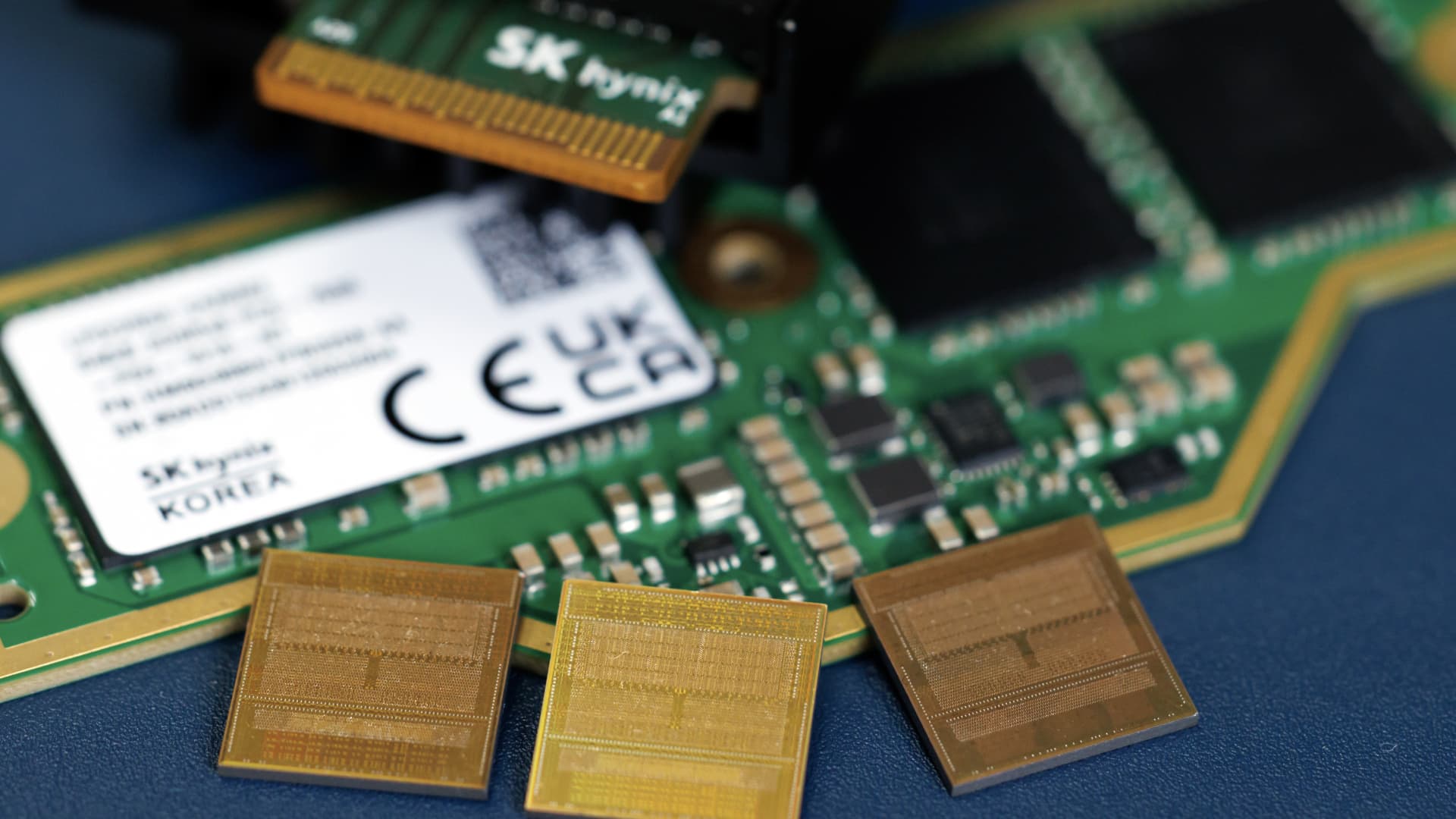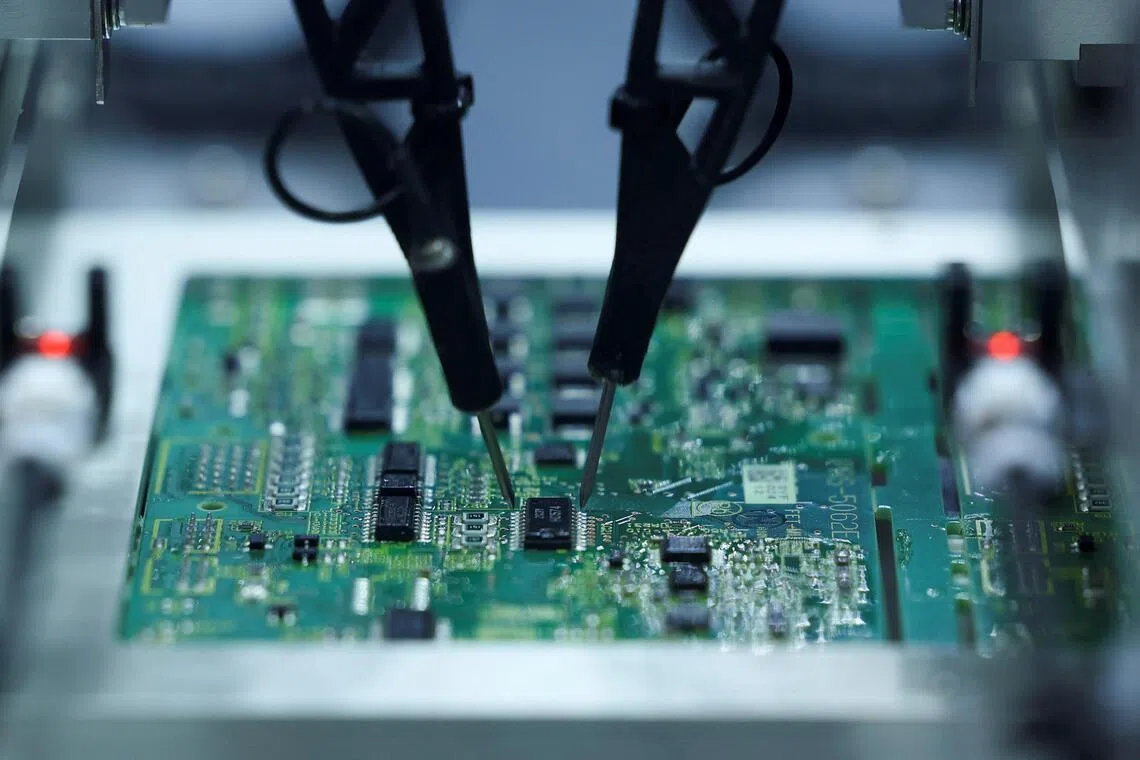
SINGAPORE - Higher electricity prices and supply chain disruptions due to the Iran war can push up the operating costs and squeeze profit margins of energy-intensive electronics producers and data centres in Singapore, said the Ministry of Trade and Industry.In an article in the Economic Survey of Singapore released on May 25, MTI noted that: “As the Middle East is a key supplier of critical semiconductor inputs such as helium, bromine and sulphur, the conflict also poses supply chain risks to the electronics cluster.”“Specifically, there is a risk of a slowdown in semiconductor production in Singapore if the conflict is protracted and manufacturers start to face supply constraints in these critical inputs,” said MTI. The article was authored by Dr Christopher Saw, lead economist of its economics division.MTI said that while hyperscalers - major providers of cloud services - and technology companies have yet to signal a cutback in their AI-related capital expenditure (capex), a protracted conflict could delay the development of new data centres due to their high-energy requirements.A capex pullback could potentially weaken future demand for AI-related electronics exports from Singapore.For now, Bloomberg Intelligence estimates that hyperscaler capex globally is expected to exceed US$800 billion (S$1.02 trillion) in 2026, up from around US$290 billion in 2024.The robust growth in AI-related capex has led to an increase in demand for new data centres and supporting infrastructure, including high-speed networking equipment and specialised server hardware, benefitting Singapore and other Asian economies.MTI said this reflects the interconnected nature of the semiconductors value chain across the region, where different economies specialise in different stages of production and assembly.For example, Taiwan is a key producer of cutting-edge graphics processing units that power data centres, while South Korea and Singapore produce memory chips that are essential for AI computations.On the other hand, Malaysia plays a key role in semiconductor assembly and testing services, as well as the production of electronic components and printed circuit boards required for AI infrastructure.The surge in global AI-related demand is reflected in the strong electronics exports performance of these regional economies.Singapore’s electronics domestic exports expanded by 12.7 per cent in 2025, reflecting the scale of AI-related demand for memory chips produced here.So far, the positive impact of the AI boom has continued into 2026, with exceptionally strong year-on-year growth in electronics exports from Asia, including Singapore.Growth momentum in the electronics cluster remained strong in the first quarter of 2026, coming in at 26.1 per cent year-on-year in real terms, largely driven by higer output in infocomms and consumer electronics and semiconductors, MTI said.The AI-driven export boom has powered Singapore’s overall economic growth as well. The economy in the first quarter of 2026 grew 6 per cent year on year, topping the 5.7 per cent expansion in the previous quarter.That is not surprising given the electronics cluster is the largest within Singapore’s manufacturing sector, accounting for 43.2 per cent of the sector’s nominal value-add (VA) and 8 per cent of Singapore’s overall nominal VA in 2025.The impact is magnified by the semiconductor manufacturing segment.MTI said from 2000 to 2025, the chipmaking segment grew by 7.3 per cent per annum in nominal terms, compared to 4.9 per cent for the entire electronics cluster. Reflecting this strong growth, the semiconductors segment’s nominal VA share within the cluster climbed from 45.6 per cent in 2000 to 80.2 per cent in 2025.However, should there be a sudden pullback in global AI-related capex due to other factors such as financial markets’ concerns over the returns to such investments, there would be a knock-on impact on the growth of Singapore’s electronics cluster.But barring the materialisation of all these downside risks, Singapore’s electronics industry is poised for continued strong growth in 2026, supported by rising AI adoption across industries and sustained capex by hyperscalers and technology companies globally.“Over the longer term, the growth prospects for Singapore’s electronics cluster remain bright, with continued expansions in capacity putting it in a strong position to ride the global AI investment boom,” said MTI.Ovais Subhani is senior business correspondent at The Straits Times. He writes stories that demystify the latest economics, trade and finance news.
Singapore is riding the global AI investment boom but here are the risks, says MTI
Risk of slowdown in chip production if Iran war is protracted and manufacturers start to face supply constraints. Read more at straitstimes.com. Read more at straitstimes.com.
684 words~3 min read