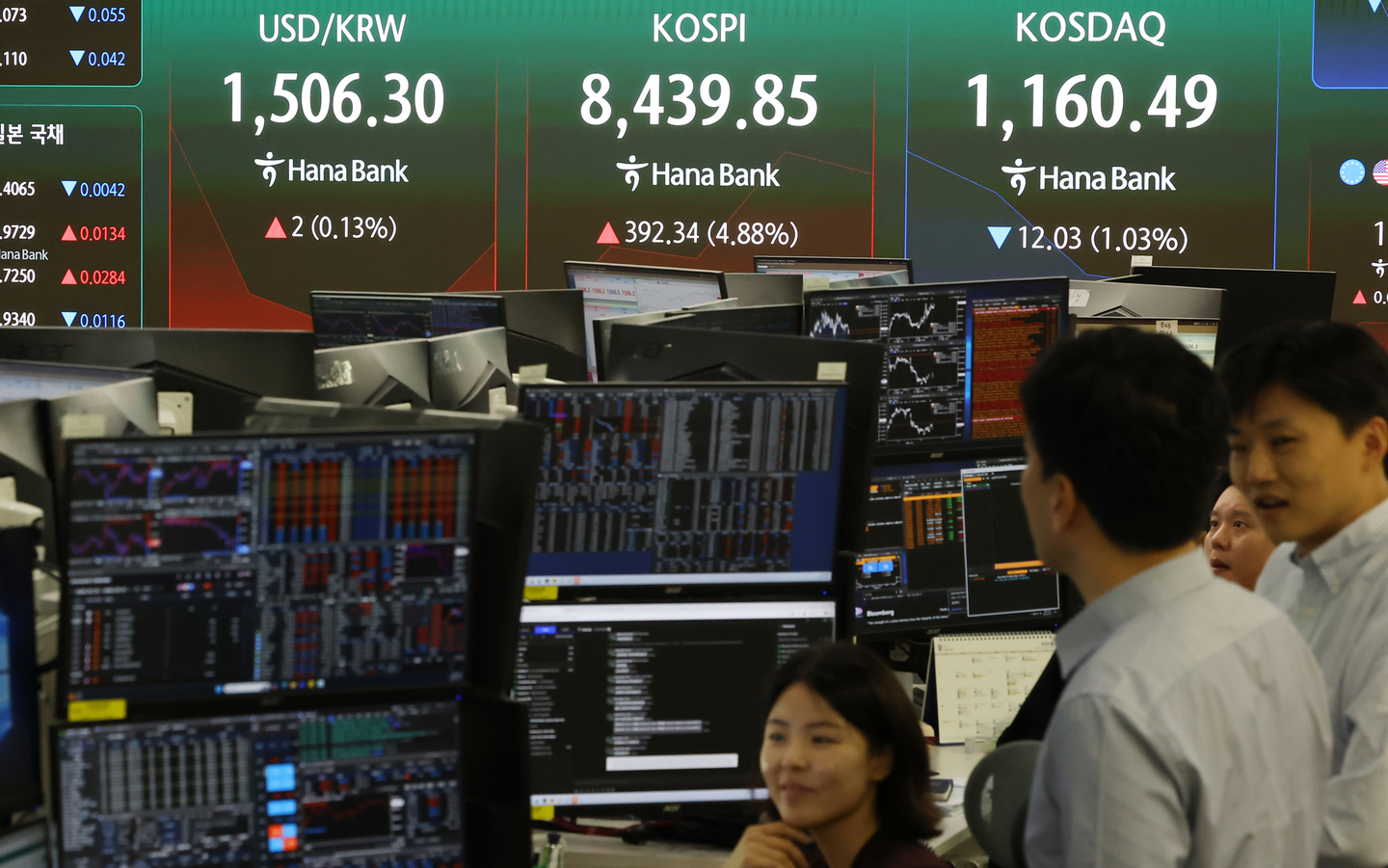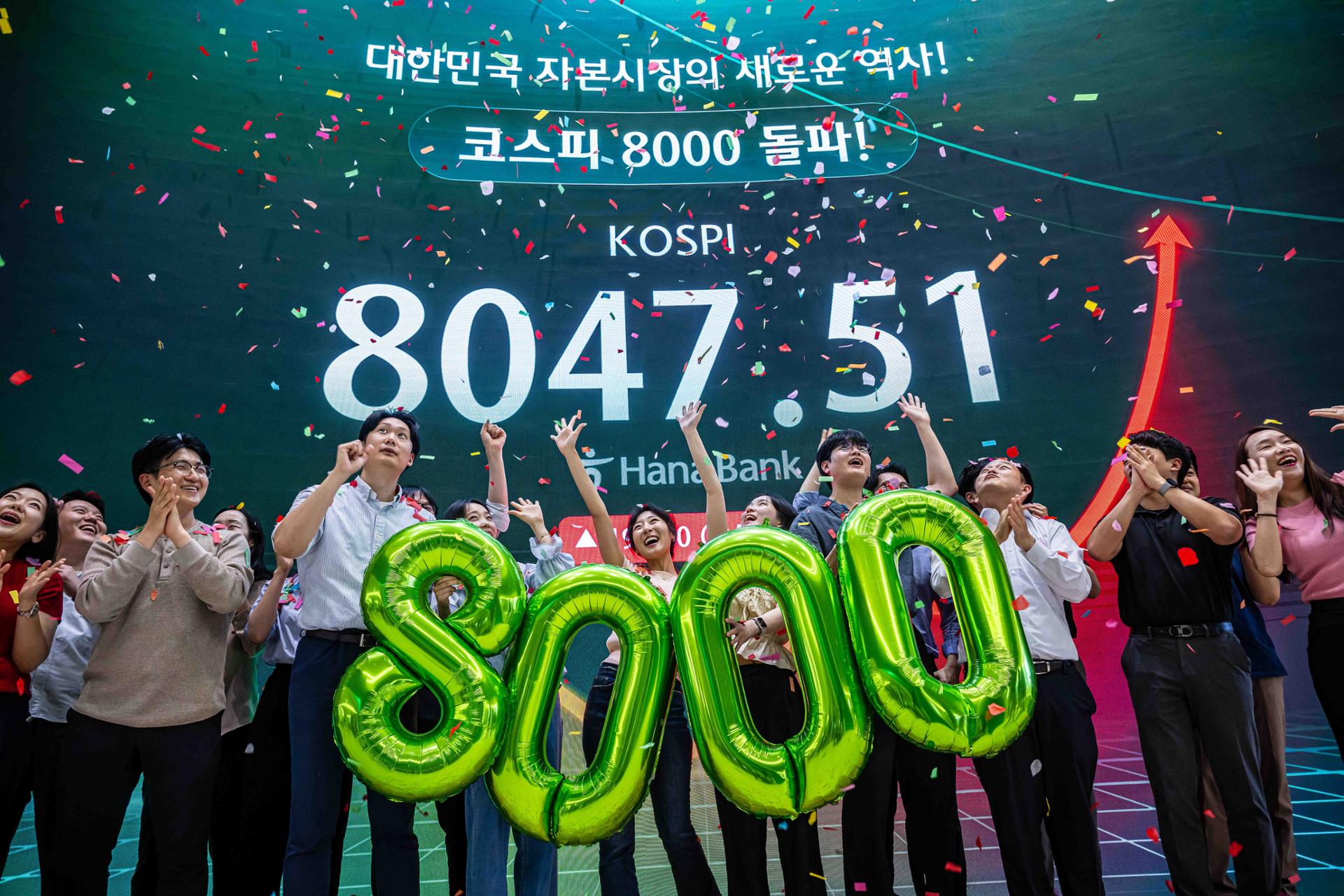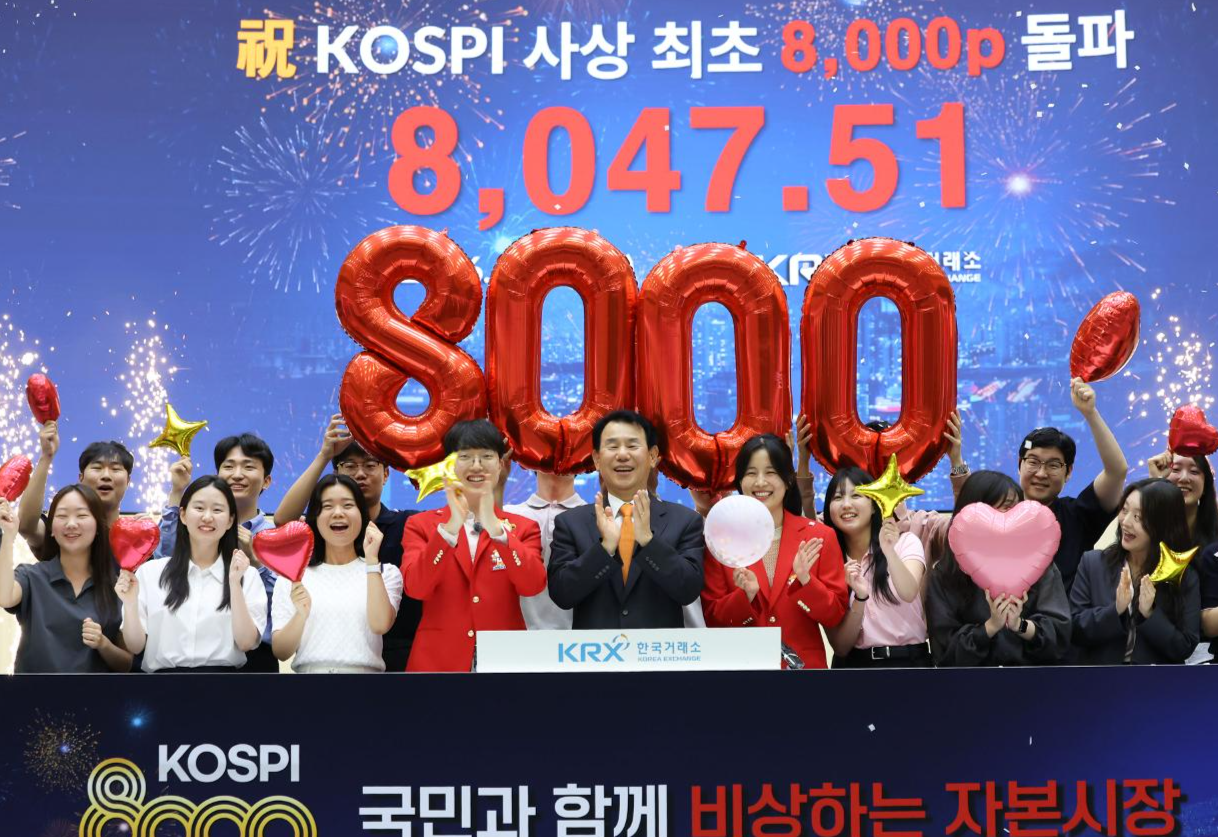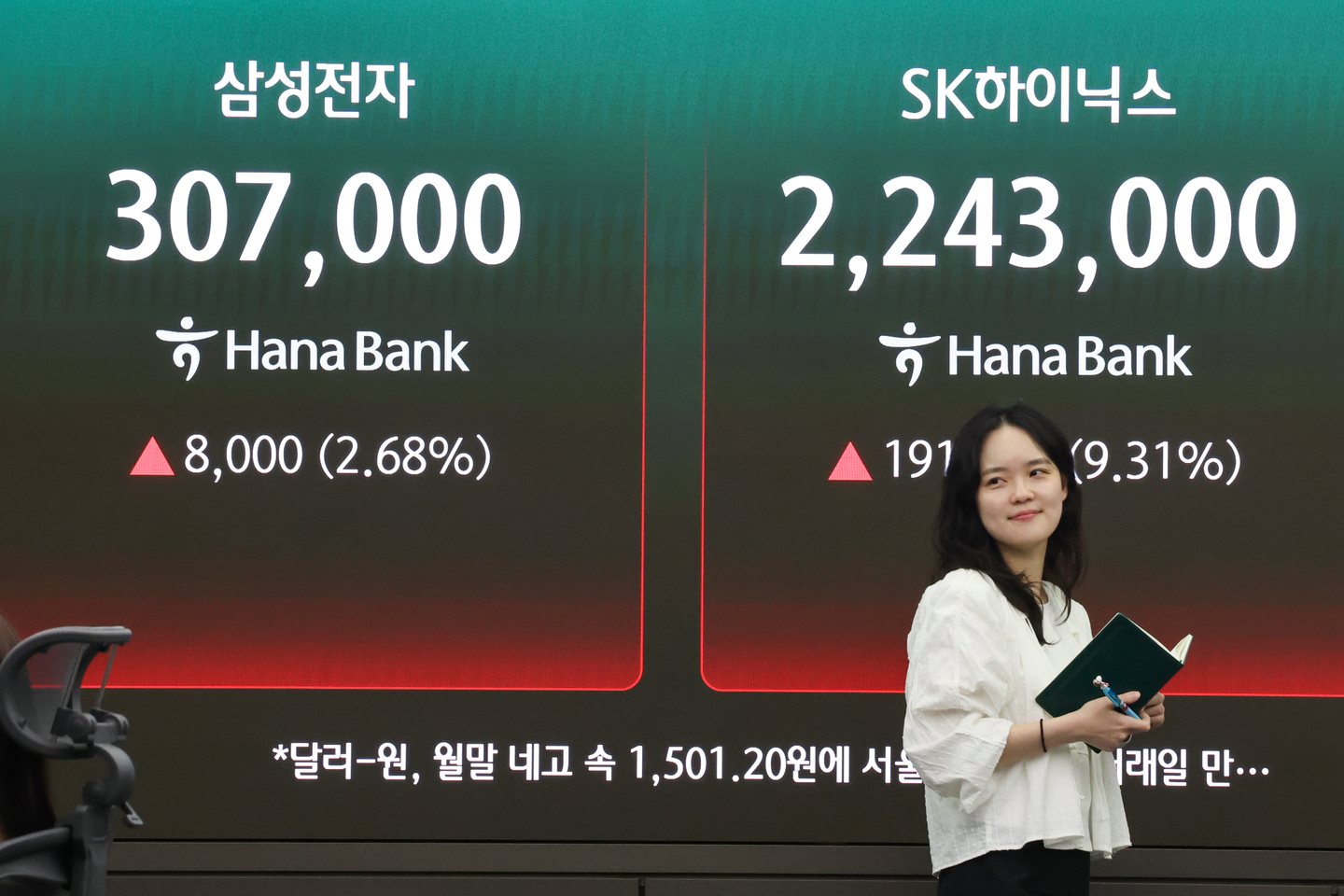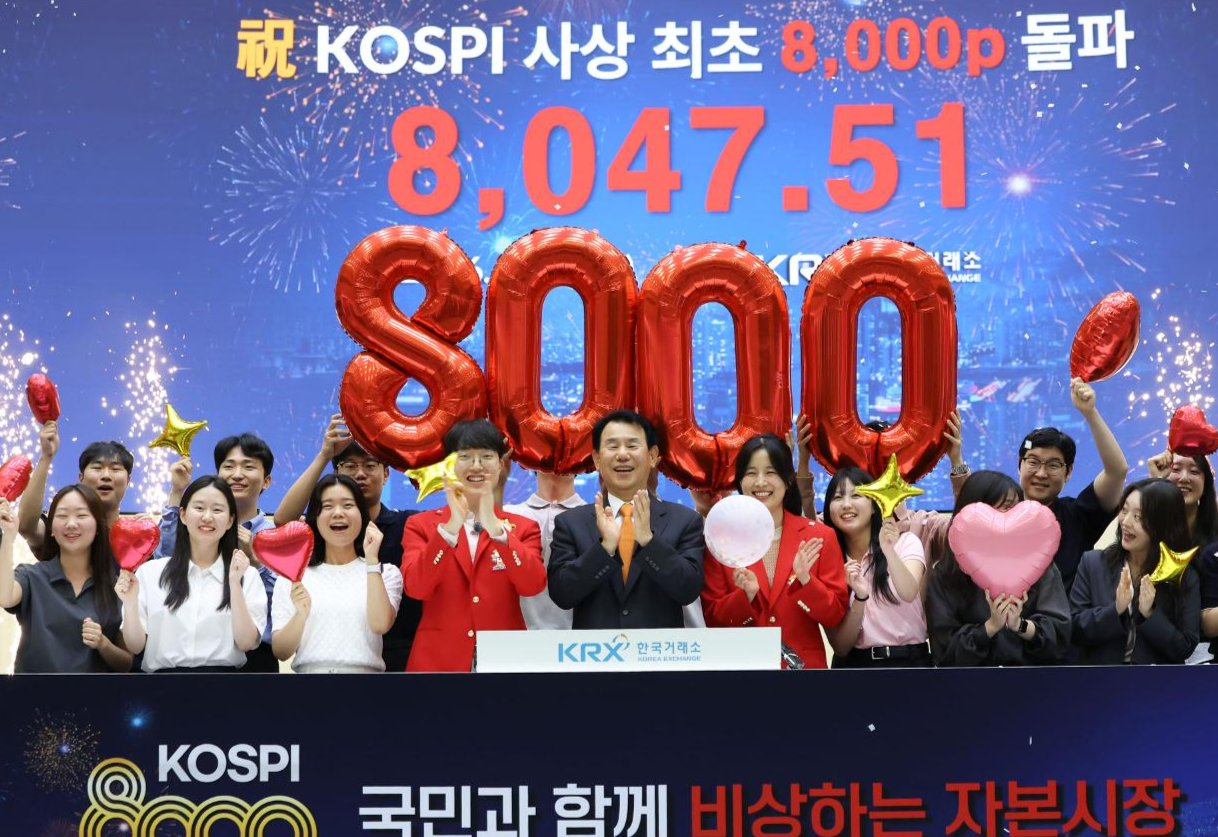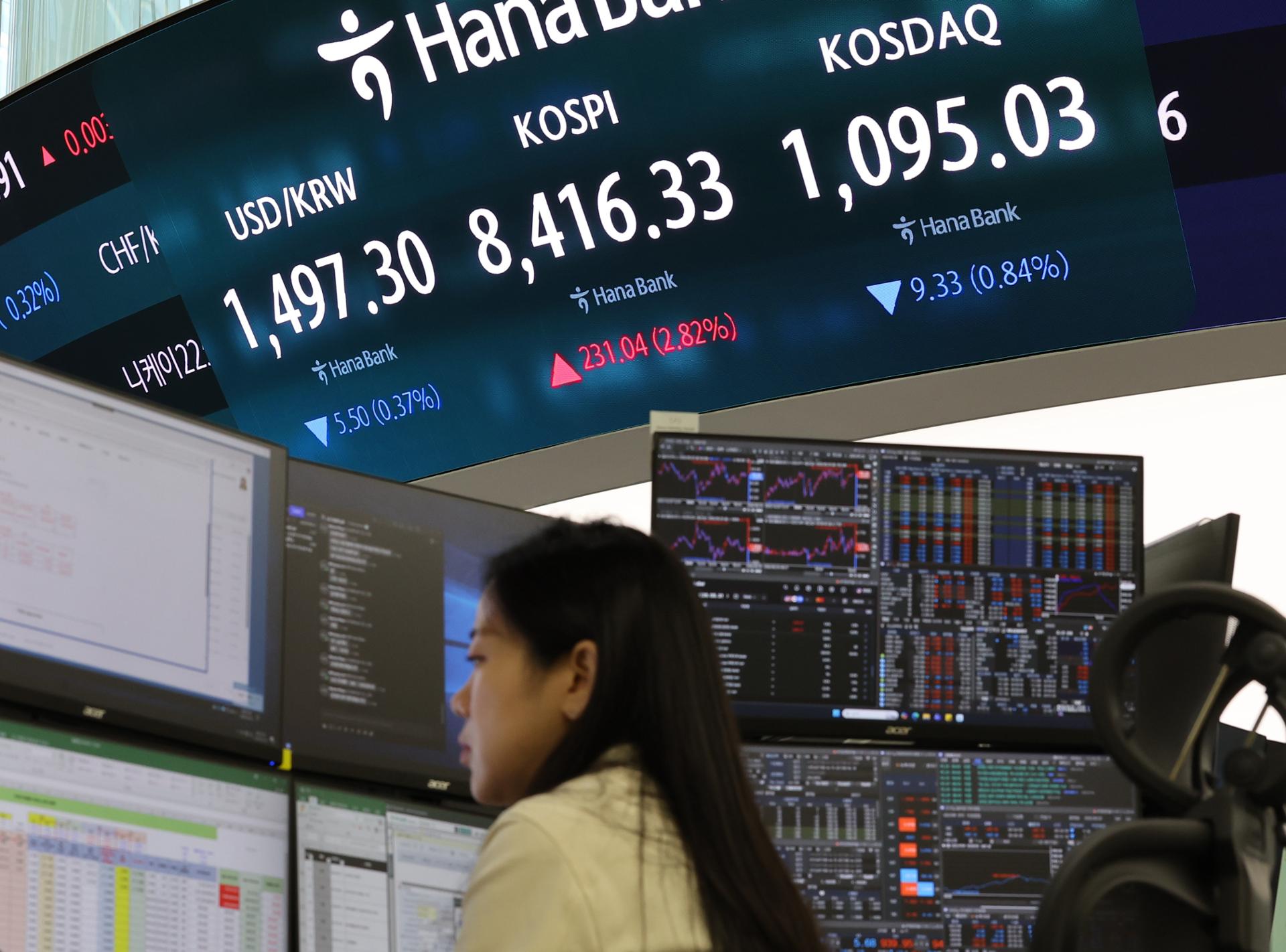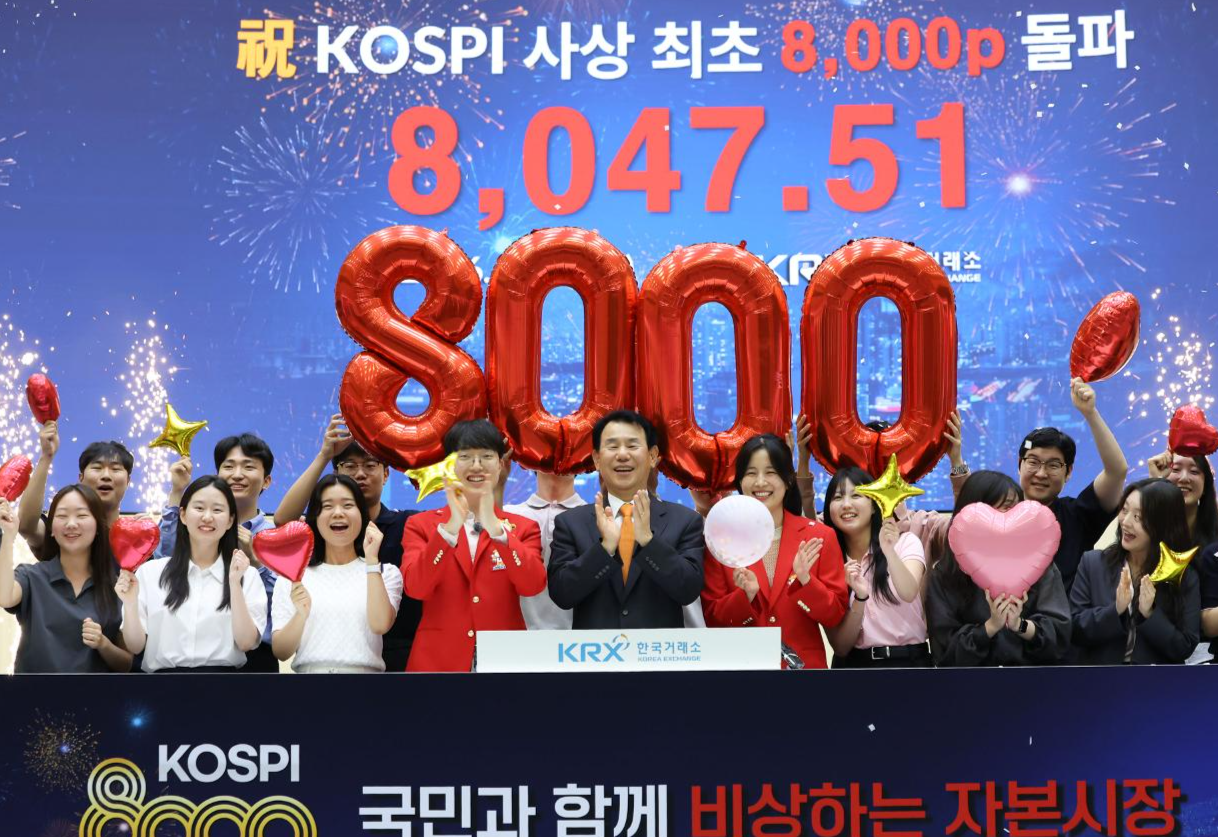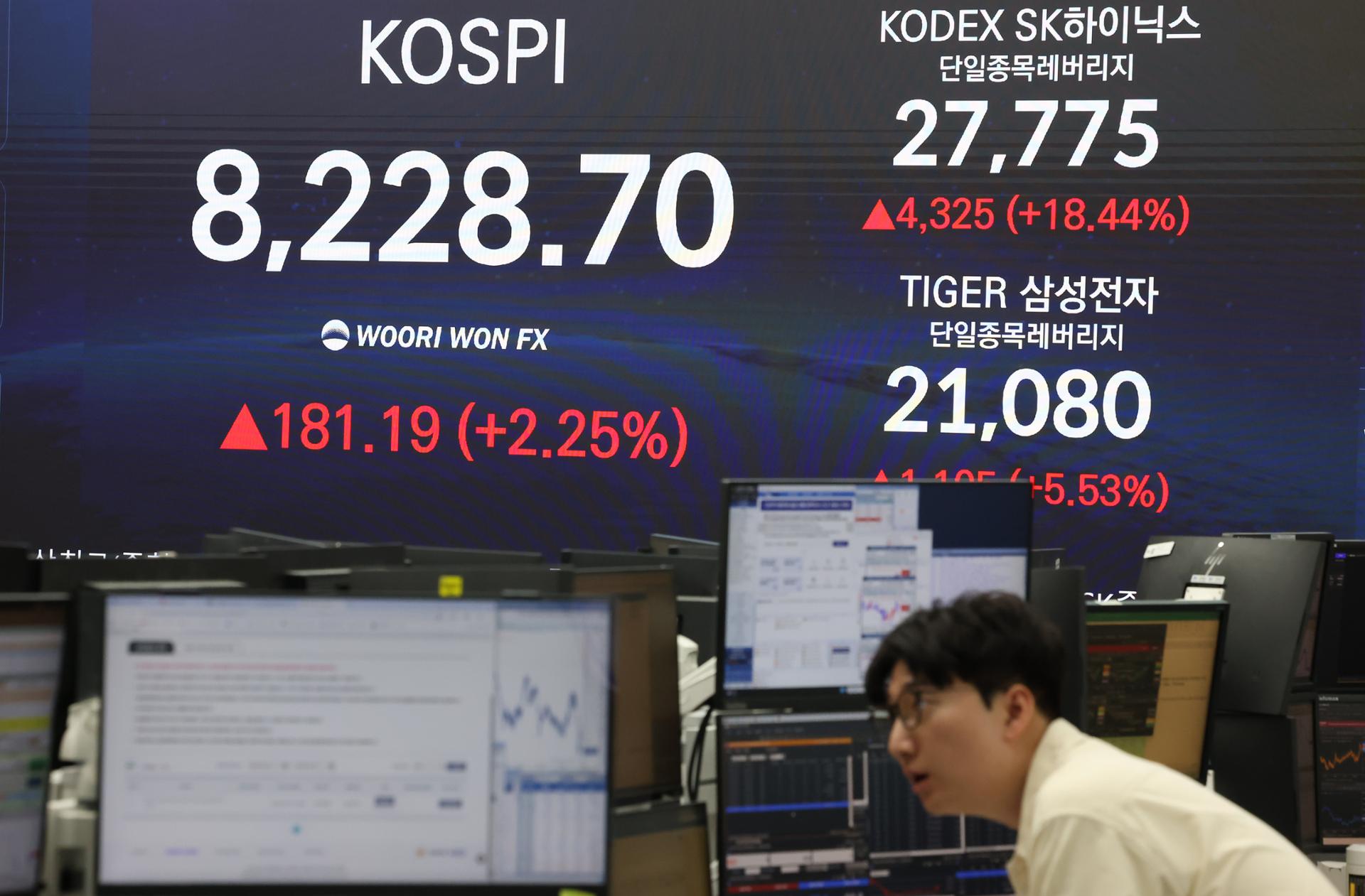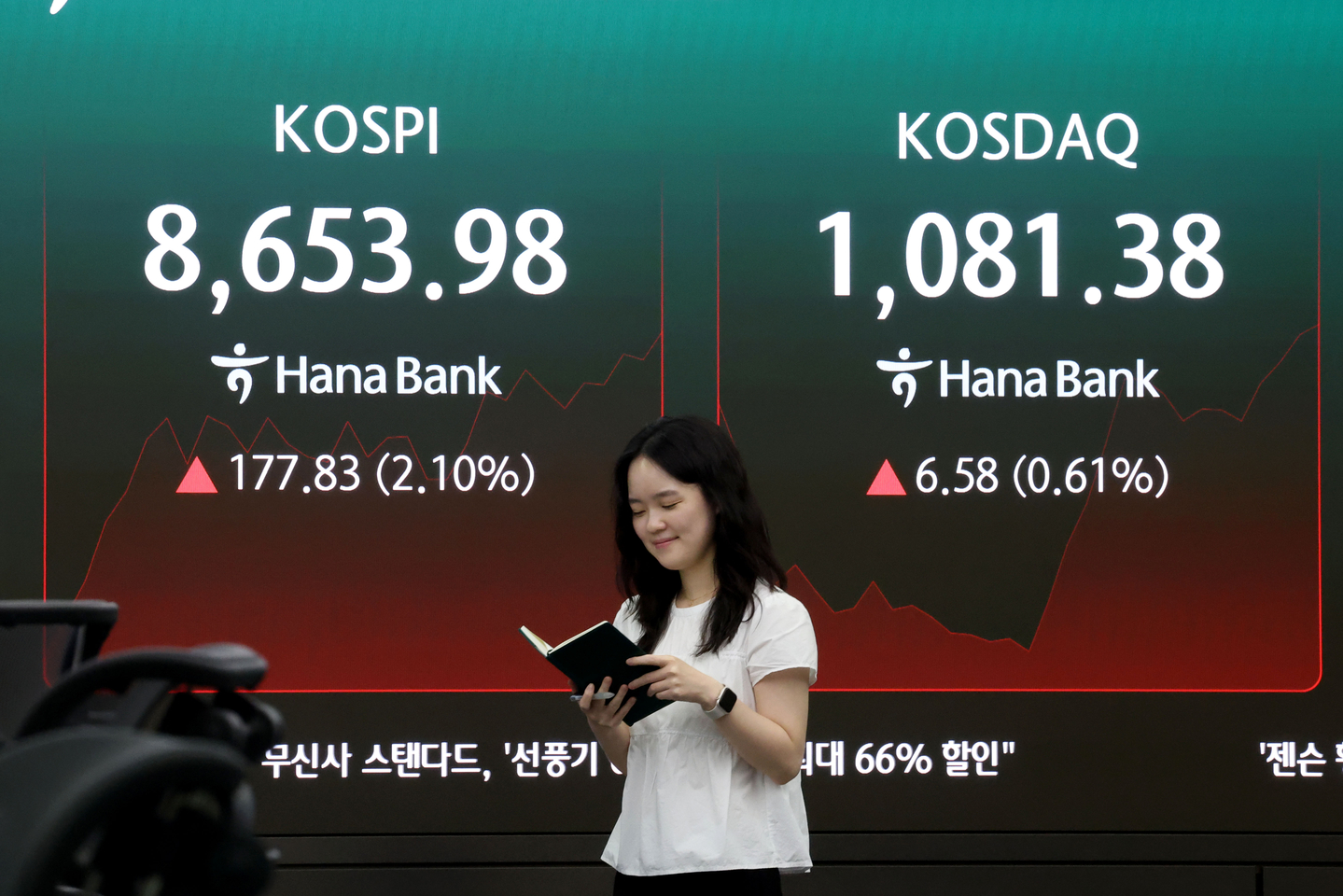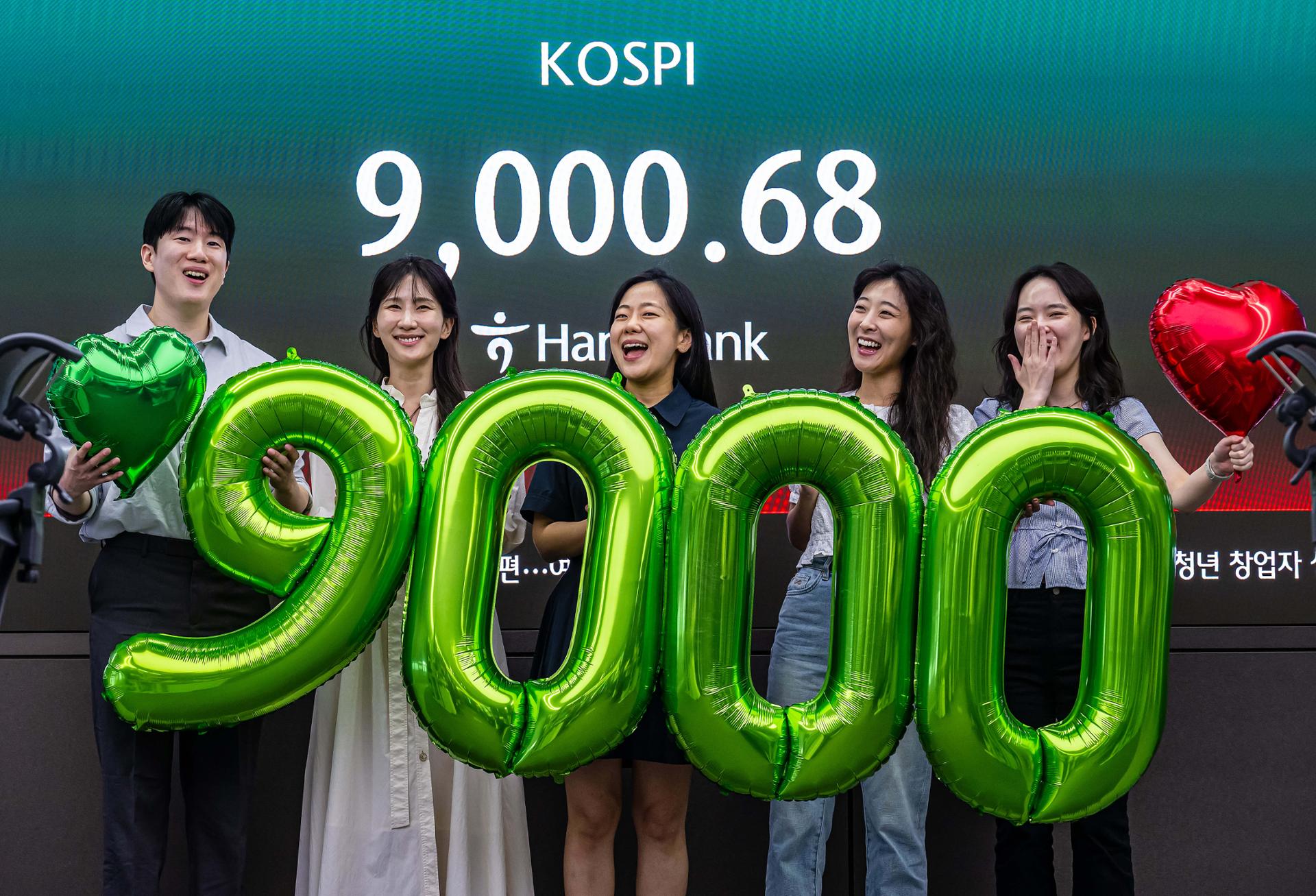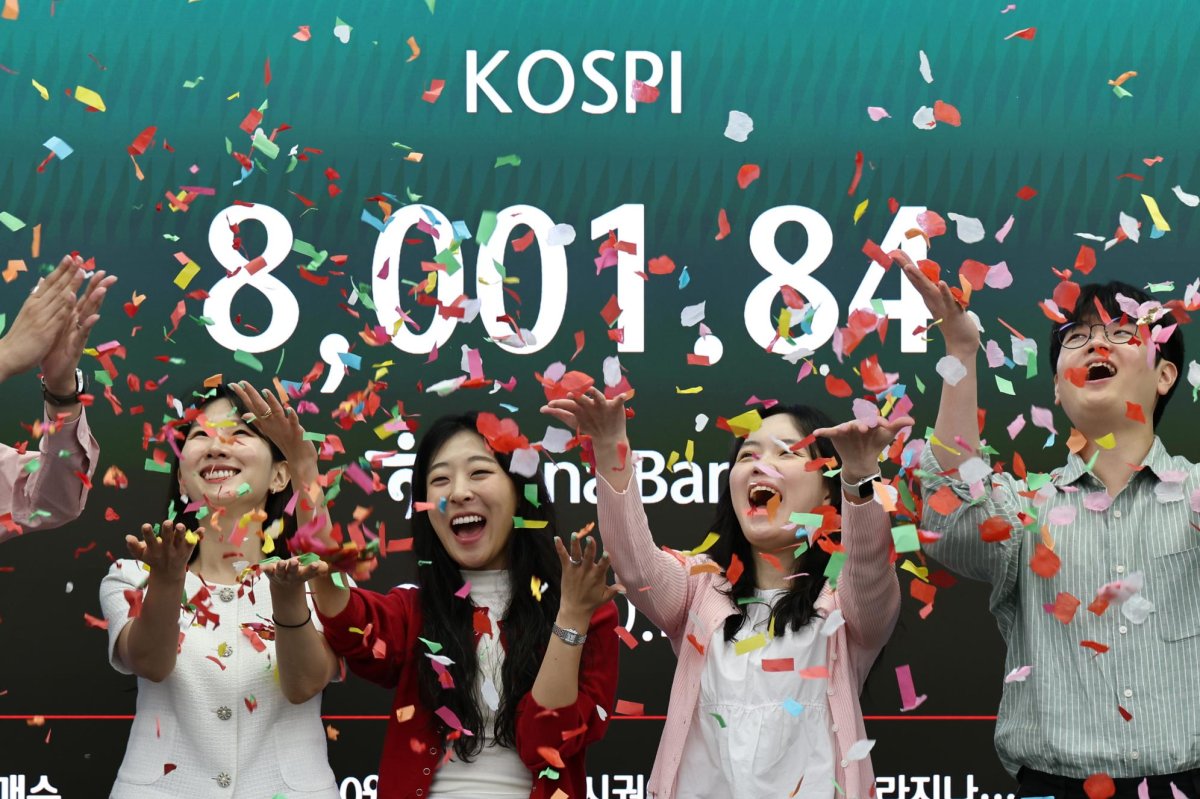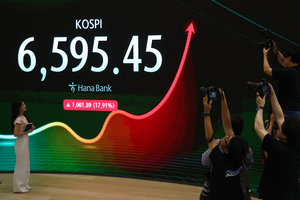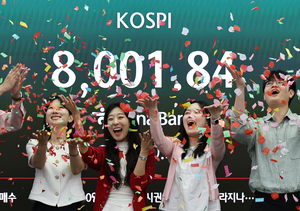
Employees take part in a ceremony at the dealing room of Hana Bank in Seoul on May 15 to celebrate the benchmark Korea Composite Stock Price Index having risen over the 8,000-point mark for the first time. (Yonhap) Average daily transactions in South Korea's benchmark index surpassed 40 trillion won ($26.4 billion) for the first time this month amid a record-breaking market rally, bourse data showed Monday.The daily turnover of the Korea Composite Stock Price Index averaged 48.05 trillion won during the first 22 days of May, according to the data from the Korea Exchange.The figure marked the highest monthly average on record, surpassing the previous high of 32.23 trillion won set in February.The increase came as the Kospi extended its rally to record highs this month.The index topped the 7,000-point mark for the first time on May 6 and briefly surpassed 8,000 during intraday trading on May 15. After volatile trading, the Kospi closed at 7,847.71 on Friday, up 19 percent from the end of April.Heavy buying of market bellwethers, including Samsung Electronics Co. and SK hynix Inc., drove the surge in turnover.Combined daily trading value for Samsung Electronics and SK hynix averaged 20.57 trillion won over the cited period, accounting for 43 percent of the Kospi's total daily turnover."Despite concerns over an economic slowdown, investors are concentrating capital on artificial intelligence-related industries where growth prospects remain strong," said Kang Dae-seung, an analyst at SK Securities. "This concentration has intensified since 2023, when the AI investment rally began." (Yonhap)
Kospi's daily turnover tops W40tr for 1st time amid stock rally
Average daily transactions in South Korea's benchmark index surpassed 40 trillion won ($26.4 billion) for the first time this month amid a record-breaking marke
TL;DRAI
The Kospi's average daily turnover hit a record 48.05 trillion won ($31.8B) in May, with Samsung Electronics and SK hynix alone accounting for 43% of total volume as the index surged past 8,000 points for the first time. The concentration of capital on AI-adjacent semiconductor plays — driven by structural demand, not macro sentiment — signals that tech budget holders and institutional allocators are treating memory and foundry exposure as a core AI infrastructure bet, not a cyclical trade.
250 words~1 min read