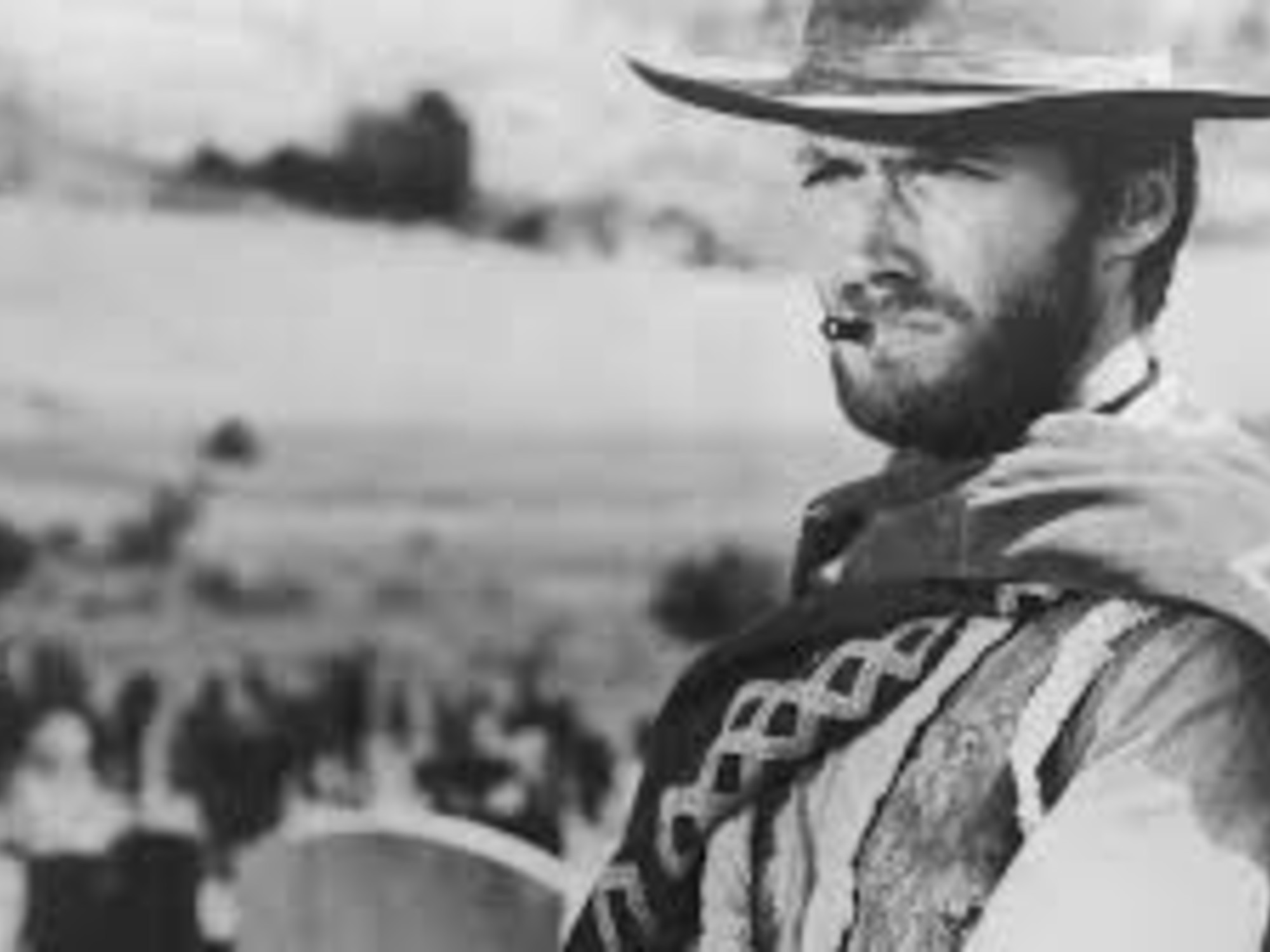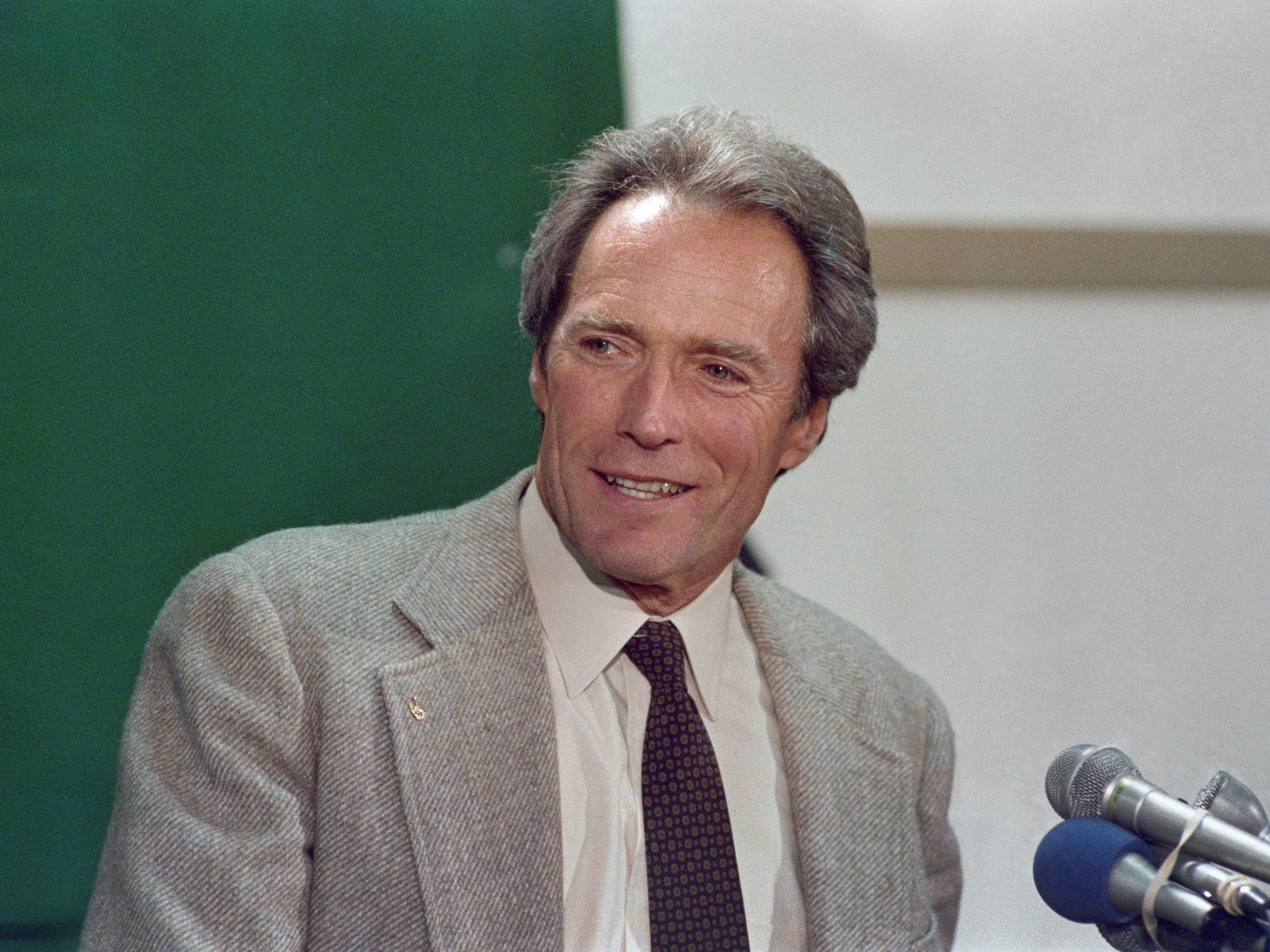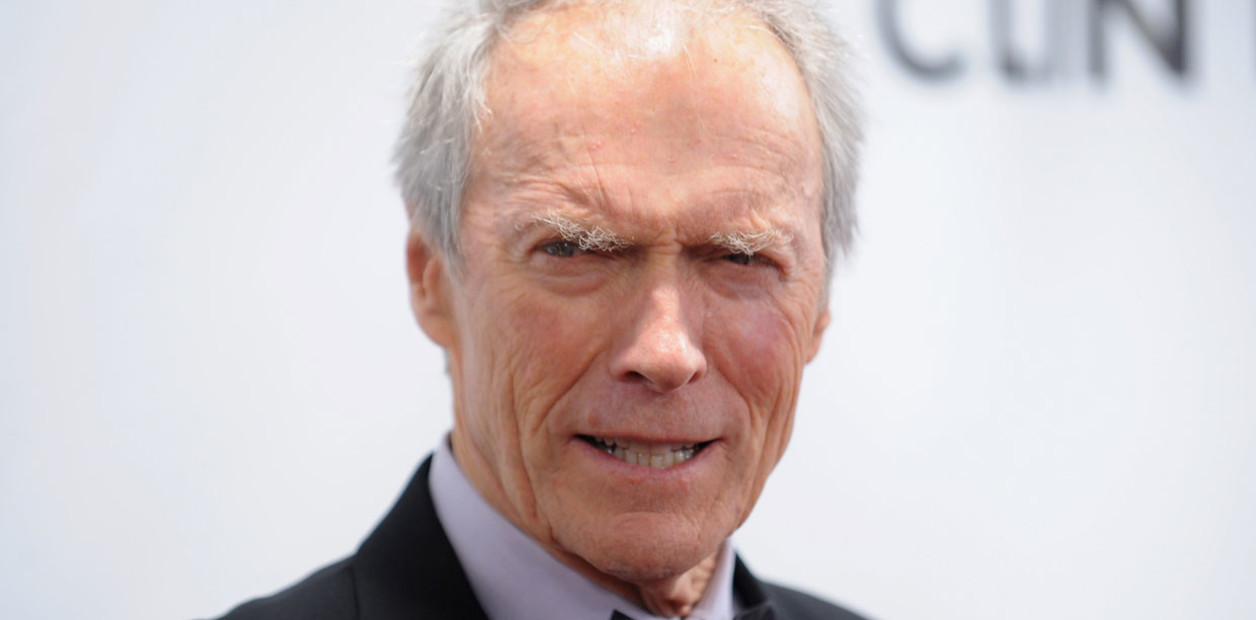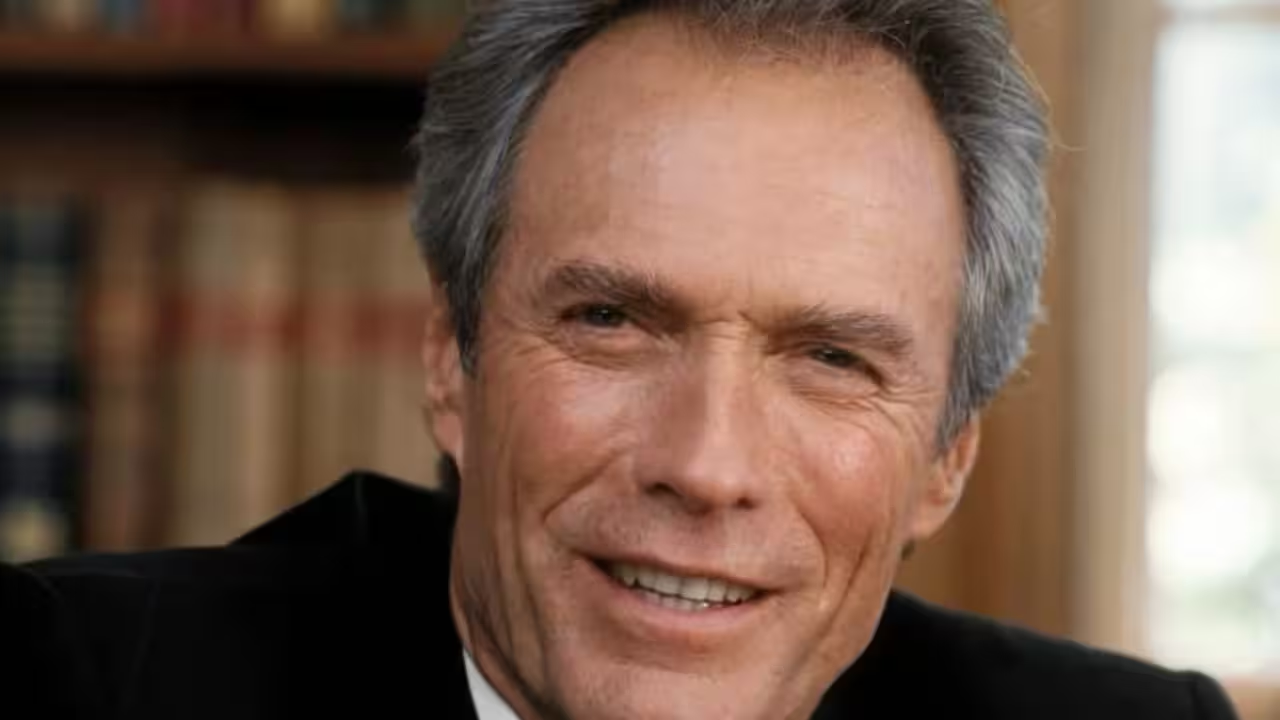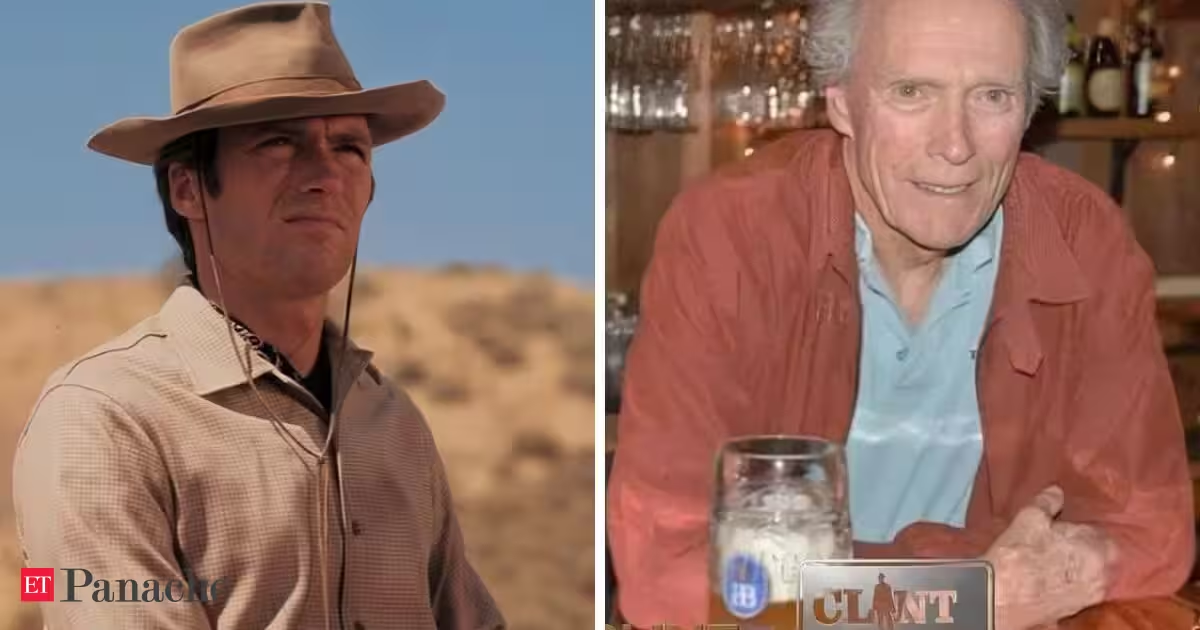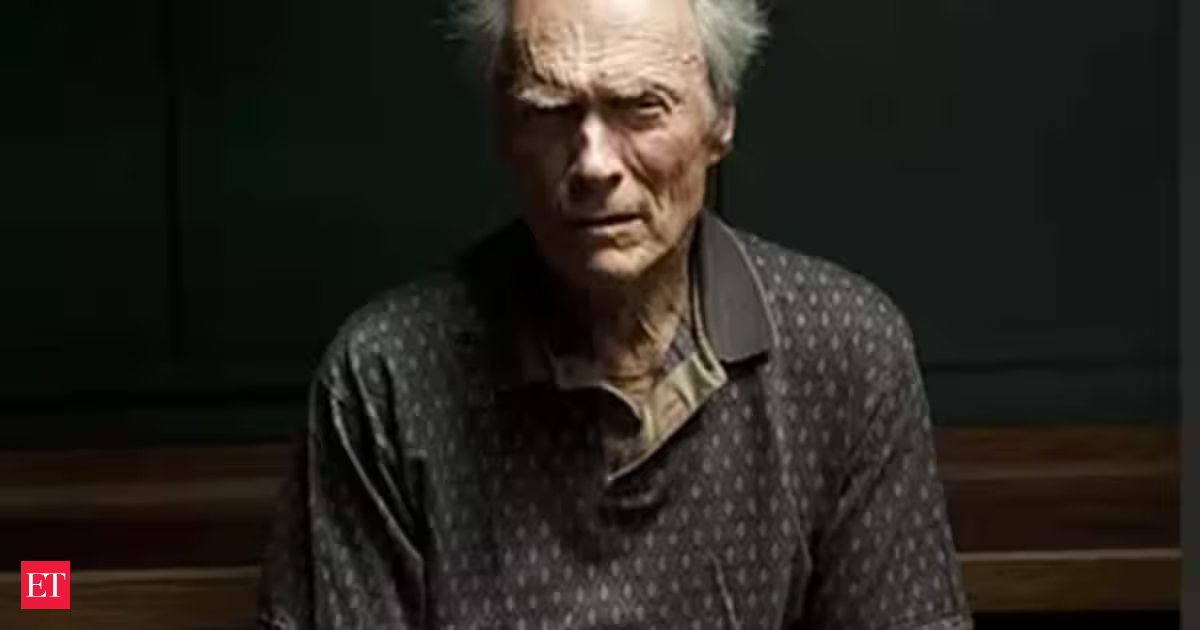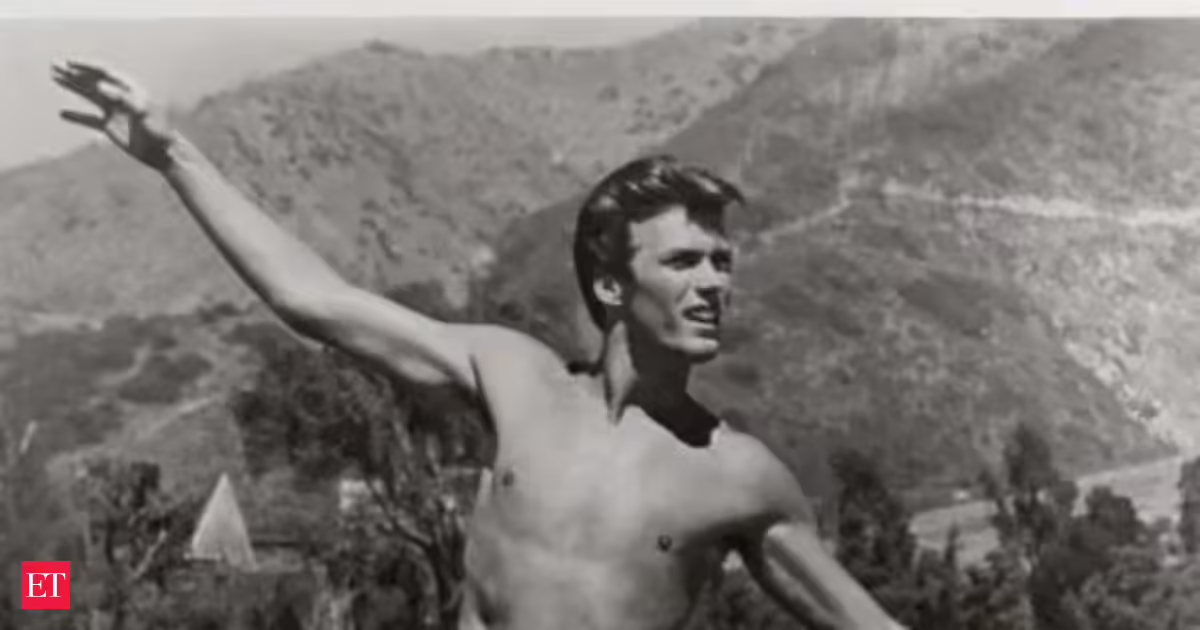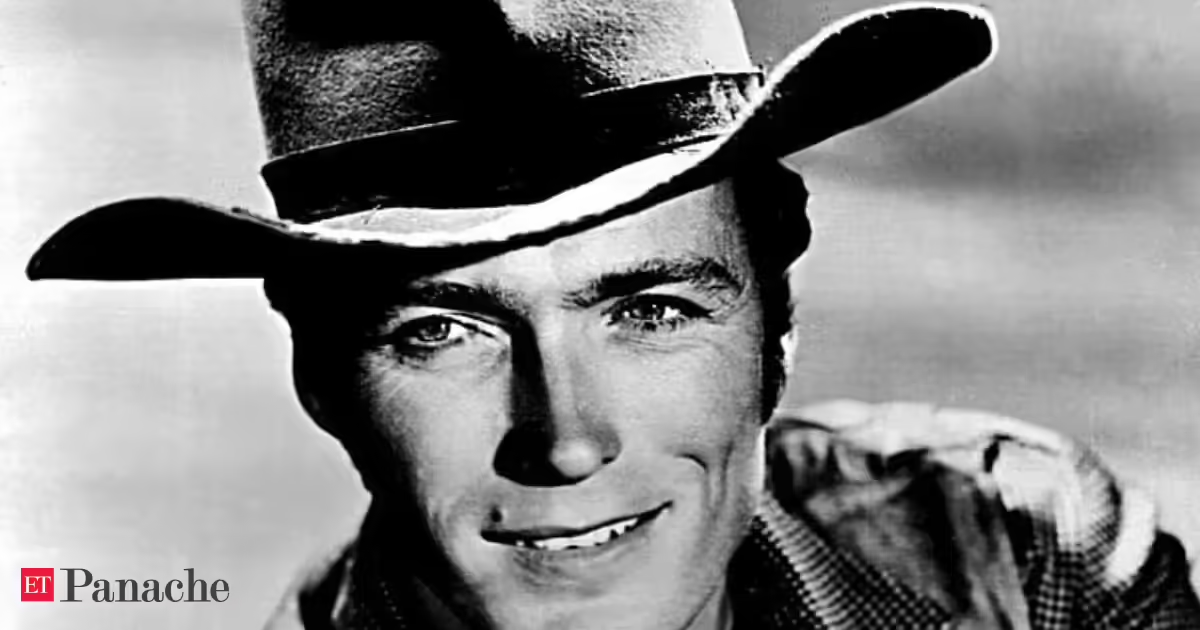
For decades, Clint Eastwood has been known as one of Hollywood’s most recognizable stars, both for his films and for the straightforward way he speaks in interviews and public appearances. Over the years, many of his comments about life, work, relationships, and aging have stayed in public memory because they sound simple but carry a deeper meaning underneath. One of the widely shared quotes linked to Eastwood is about marriage.The quote of the day by Clint Eastwood goes: “There’s only one way to have a happy marriage and as soon as I learn what it is, I’ll get married again.”The quote is often remembered because it mixes humor with experience. On the surface, it sounds like a joke about marriage, but it also reflects the idea that relationships are never easy to fully understand. Eastwood’s words suggest that there is no fixed formula for a perfect marriage, no matter how much experience a person may have. That feeling is something many people connect with because relationships often involve compromise, patience, misunderstandings, and constant adjustment over time.Another reason the quote still works today is because it avoids sounding overly dramatic or philosophical. It feels more like a casual observation from someone who has spent years watching life closely. Eastwood never tries to present himself as someone with all the answers. Instead, the line carries a sense of realism. Many people see it as a reminder that happiness in relationships cannot simply be explained in one sentence or achieved through one perfect method.Clint Eastwood’s early life before Hollywood fameClint Eastwood was born as Clinton Eastwood Jr. on May 31, 1930, in San Francisco, California. During the years of the Great Depression, his family moved several times before eventually settling in Piedmont, California. His father worked different jobs while trying to support the family, and those difficult years reportedly shaped Eastwood’s work ethic and practical attitude toward life.You Might Also Like:As a student, Eastwood was interested in music and mechanics, though he was not especially focused on academics. After graduating from high school in 1949, he spent time doing different kinds of work, including logging jobs in Oregon and summer work as a lifeguard in Washington. Later, he returned to California and served at Fort Ord during the Korean War period before briefly attending Los Angeles City College. Eventually, he decided to pursue acting instead.The struggle before successEastwood’s path into films was far from smooth. In the 1950s he appeared in very small and mostly uncredited parts in films like Revenge of the Creature and Tarantula. During that period he also worked regular jobs, including digging swimming pools and driving a garbage truck, to support himself financially while trying to build a career in Hollywood.His first major break came through the television western Rawhide, where he played Rowdy Yates. The series ran for several years and slowly made him recognizable to television audiences across America. Even then, few expected him to become one of the biggest film stars in the industry.You Might Also Like:The films that changed Clint Eastwood’s careerEastwood’s international breakthrough arrived when he worked with Italian director Sergio Leone in the famous spaghetti western trilogy, A Fistful of Dollars, For a Few Dollars More, and The Good, the Bad and the Ugly. Playing the quiet and dangerous “Man with No Name,” Eastwood developed the screen image that would define much of his career.The films became major successes after reaching American audiences in the late 1960s. Suddenly, Eastwood transformed from a television actor into a major movie star. Soon afterward, he appeared in films like Hang ’Em High, Coogan’s Bluff, and Kelly’s Heroes, building a reputation as a tough and calm leading man.In 1971, Eastwood played Inspector Harry Callahan in Dirty Harry. The role became one of the defining performances of his career. The character’s no-nonsense personality and memorable dialogue turned the film into a cultural phenomenon and helped create the “loose cannon cop” style that many later movies copied.The success of Dirty Harry led to multiple sequels and strengthened Eastwood’s place as one of Hollywood’s top stars. Around the same time, he also began directing films himself. His directorial debut came with Play Misty for Me, showing that he wanted to do more than simply act in front of the camera.Clint Eastwood’s success as a directorWhile many actors struggle to move behind the camera, Eastwood built a second career as a respected filmmaker. Throughout the 1970s, 1980s, and 1990s, he directed films including High Plains Drifter, The Outlaw Josey Wales, and Pale Rider. Critics gradually began recognizing his skill as a filmmaker who could balance emotional storytelling with strong visuals.His biggest critical success arrived with Unforgiven in 1992. The western earned Eastwood Academy Awards for Best Director and Best Picture. Years later, he repeated that success with Million Dollar Baby, which also won major Oscars and became one of the most respected films of his career.Eastwood later directed films such as Mystic River, Letters from Iwo Jima, Gran Torino, American Sniper, Sully, and Richard Jewell. Even in his later years, he continued working regularly and remained active in filmmaking when many of his contemporaries had already retired.What makes Clint Eastwood’s career unusual is how long it has continued. He successfully moved from television westerns to global film stardom, then from acting into award-winning directing and producing. Few people in Hollywood have remained relevant across so many decades.Outside films, Eastwood also became known for his love of jazz music, golf, and public service. He served as mayor of Carmel, California, in the 1980s and has often described himself as someone who prefers a quieter life away from Hollywood attention.
Quote of the day by Clint Eastwood: 'There's only one way to have a happy marriage and as soon as I learn what it is I'll get married again...' - A life lesson on why there is no perfect formula for marriage explained by the Hollywood legend
Clint Eastwoods quote about marriage combines humor with honesty, reflecting the idea that relationships are complicated and cannot be explained through one perfect formula. Over the decades, Eastwood built a legendary Hollywood career through films like the “Dirty Harry” series and Sergio Leones westerns, while also earning acclaim as an award-winning director with movies such as Unforgiven and Million Dollar Baby.
937 words~4 min read