Show Caption
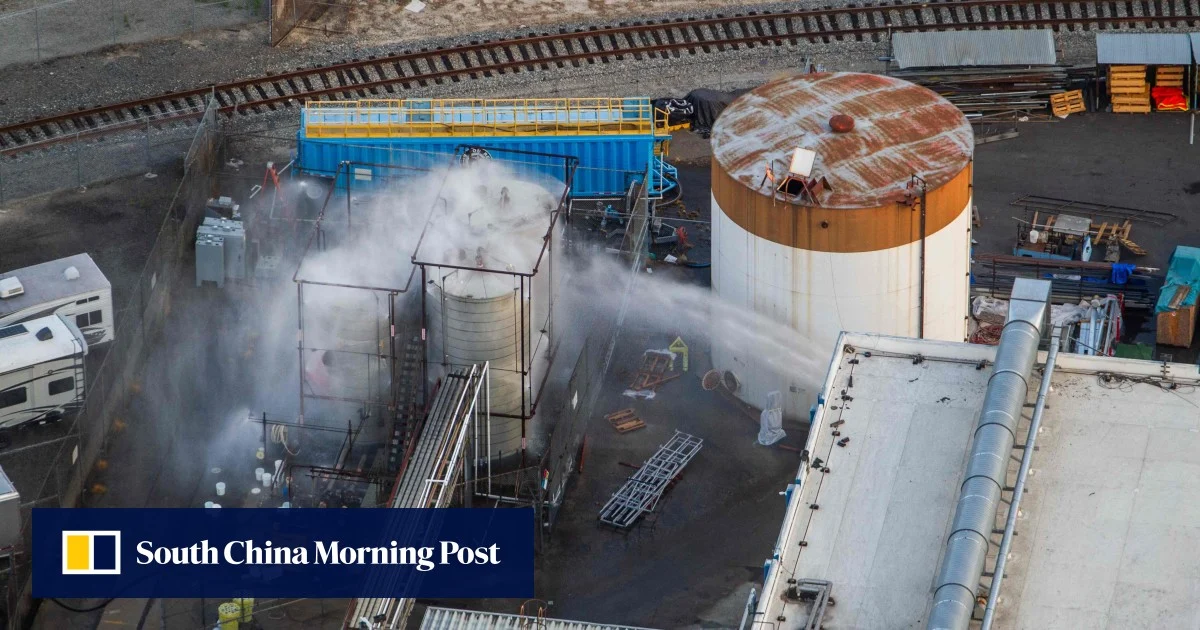
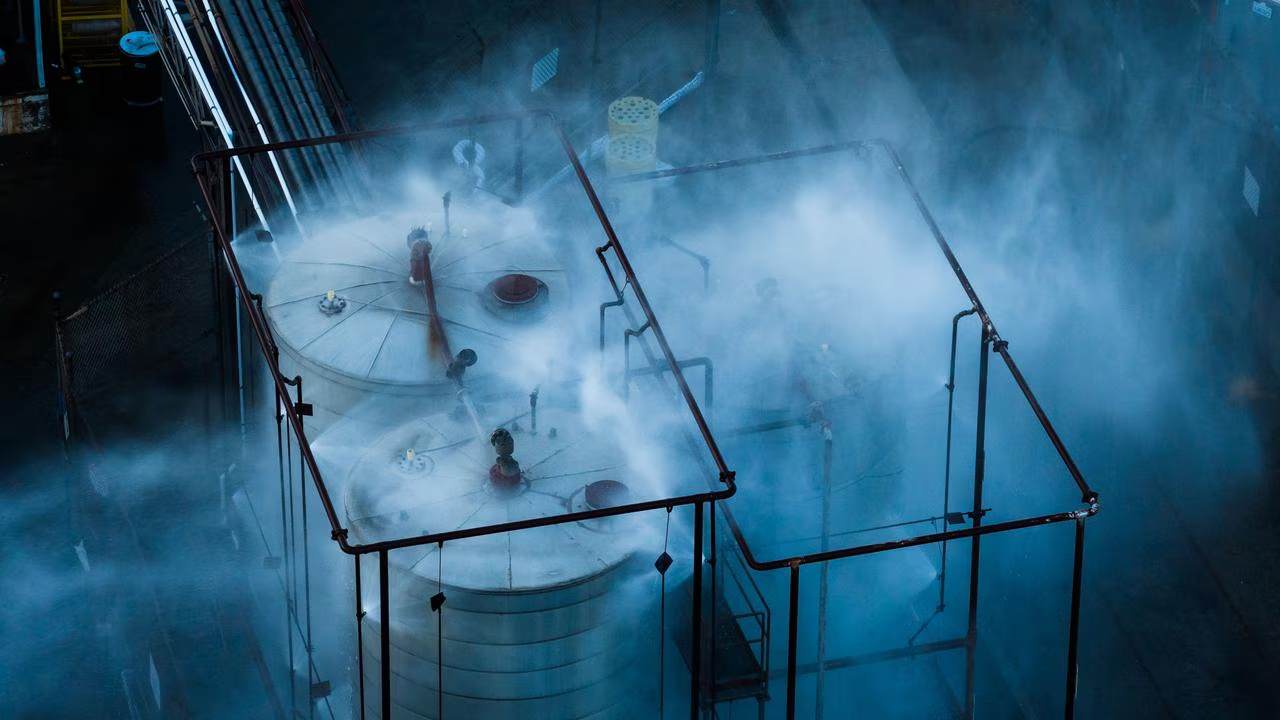
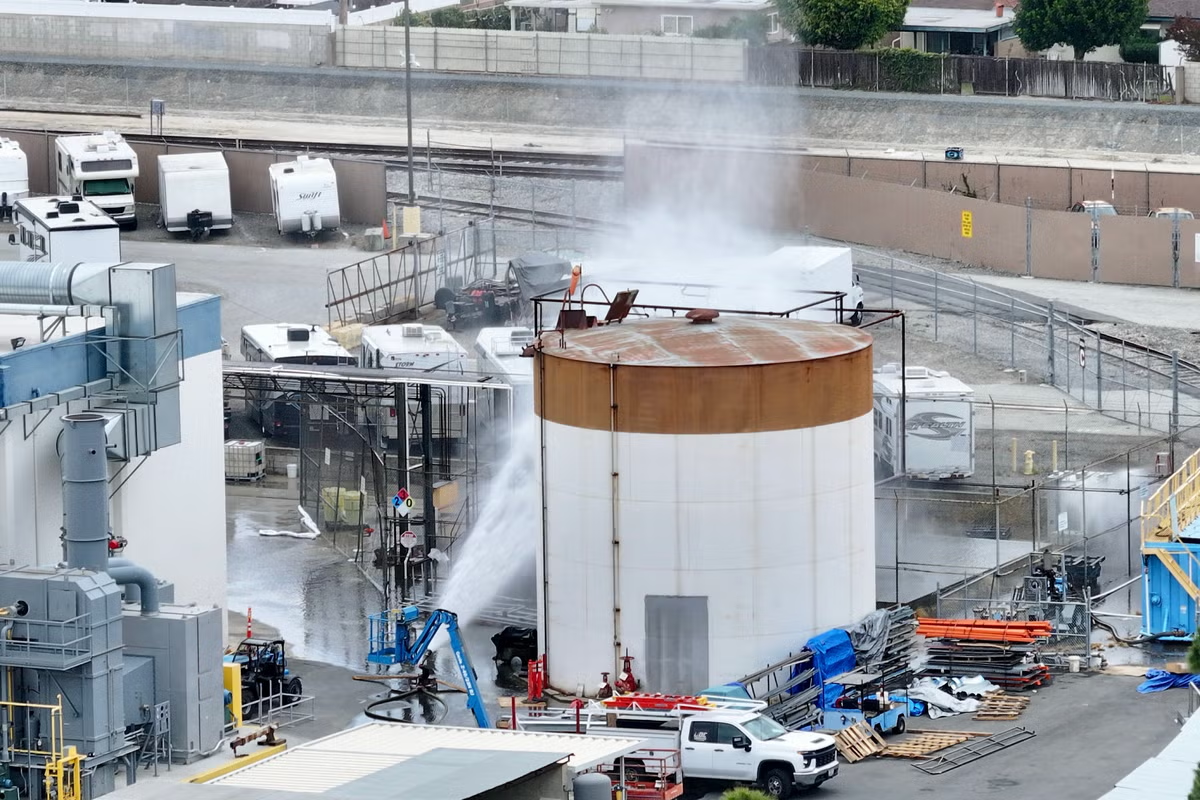
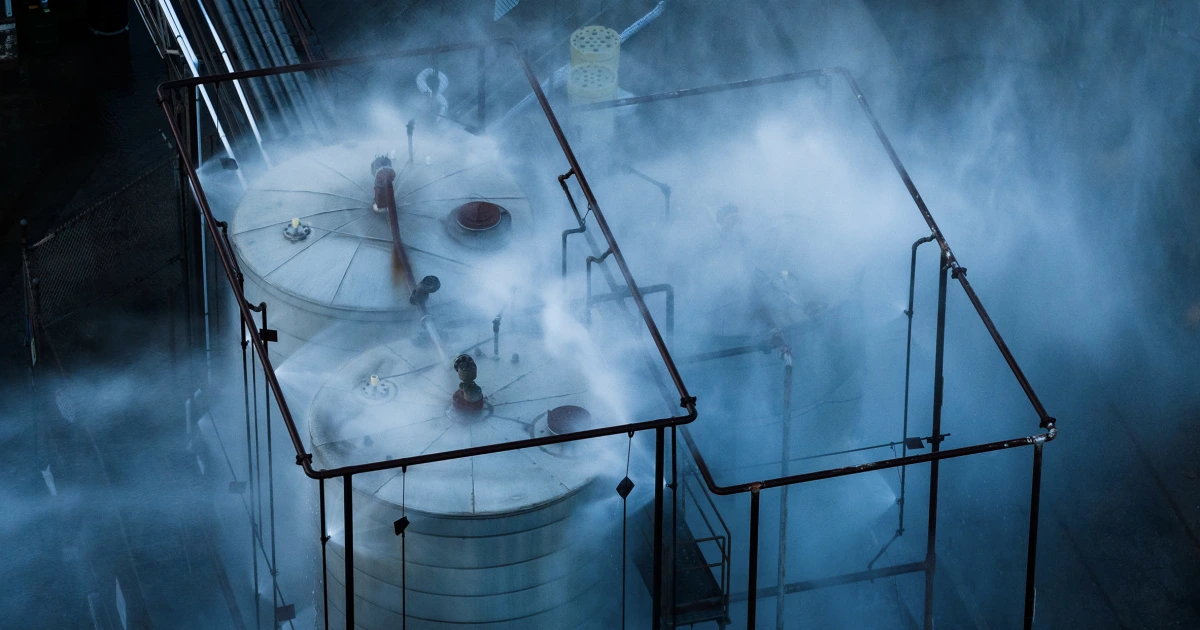
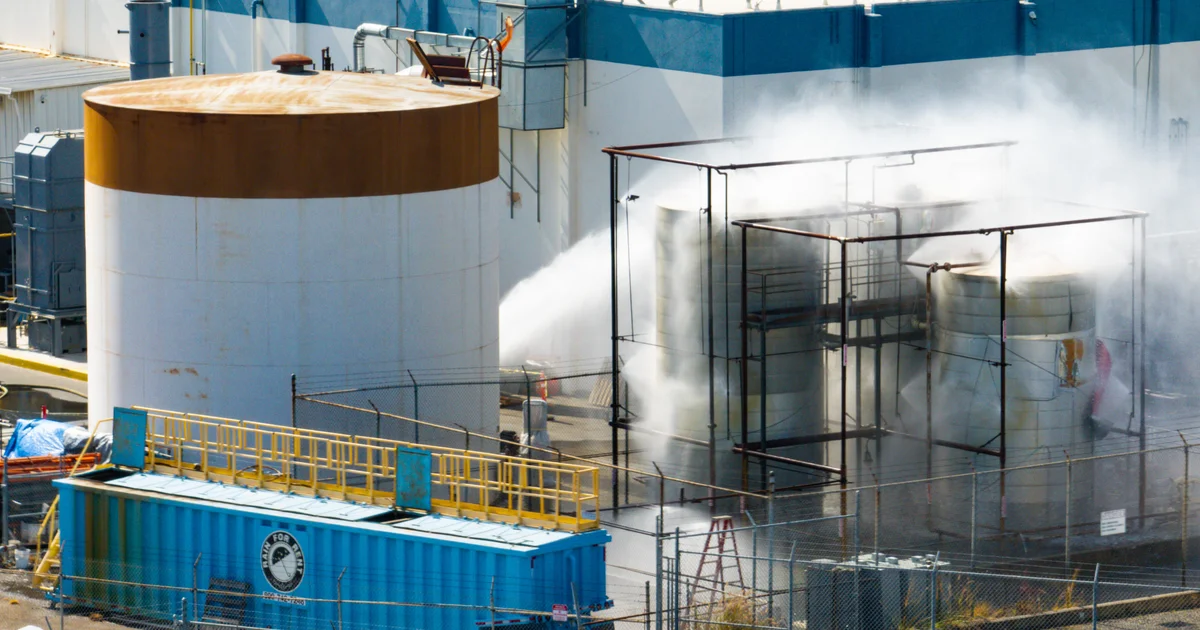
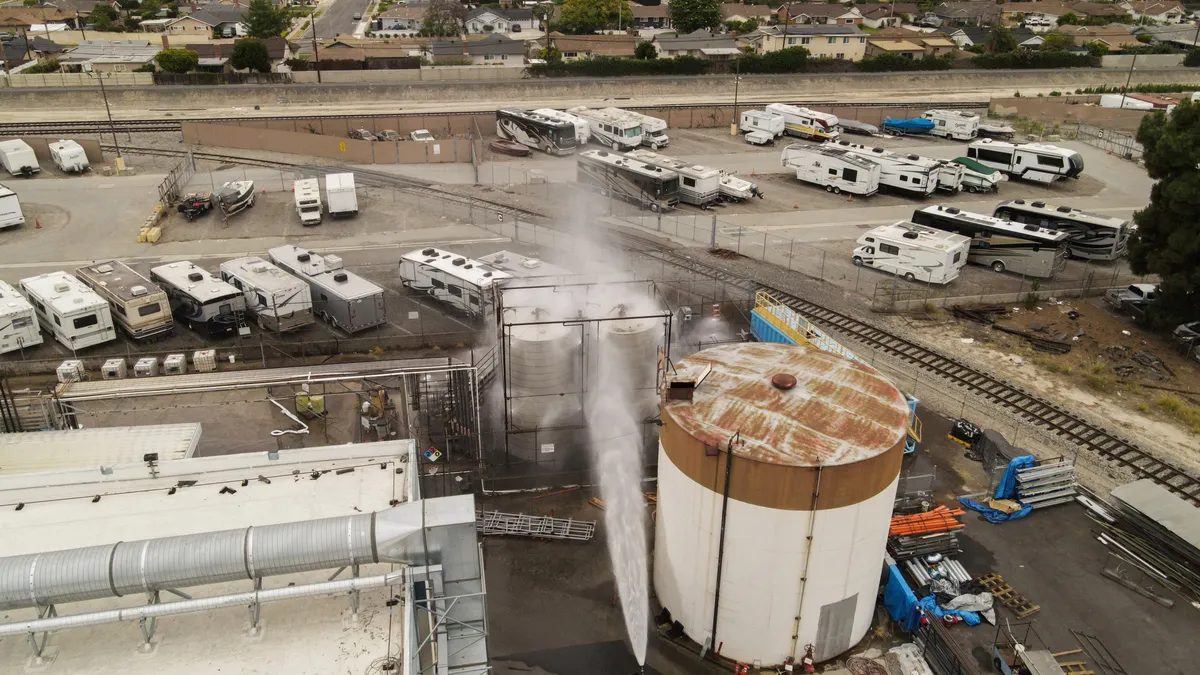
After sending in a specialized team of firefighters overnight to examine a chemical tank at risk of leaking or exploding, California emergency officials said they could be changing their strategy as they race to resolve an "unprecedented situation."The Orange County Fire Authority is working with subject matter experts, state and federal officials in an attempt to cool down the tank storing methyl methacrylate in Garden Grove, California, which forced evacuation orders for more than 40,000 residents.During the overnight operation, firefighters were able to "visualize the tank" and found a potential crack that could be relieving some of the pressure, said Interim Fire Chief T.J. McGovern in an update on X on May 24.The new information may help authorities make "educated decisions" that "could change our trajectory and our strategy," McGovern explained.Residents who live in the area around the GKN Aerospace facility in Garden Grove, south of Los Angeles, were ordered to evacuate after officials announced on May 21 that the large tank had overheated, causing it to begin venting vapors."Your protection, your life safety is our paramount responsibility right now," McGovern said in the May 24 update. "We know you're out of your homes. We want to get you back, but we cannot do that until it's deemed safe."The fire authority had previously warned the tank could rupture and split or explode. Despite initial efforts to cool the tank and its contents, incident commander Craig Covey said on May 23 the internal temperature of the tank had increased to 90 degrees, rising about a degree an hour. Covey stated officials were talking with experts to find solutions, he said, adding, "letting this thing just fail and blow up is unacceptable to us."Have there been changes in pollution levels at or near the site?In an update late on May 23, Harry Allen, an onsite coordinator with the Environmental Protection Agency, said they had deployed 24 stationary air monitors to operate around the clock until the scene is "secure," and the stations had not reported any contaminants.He added the team had installed specialty equipment to "ensure that no gas is released from the tank at the source of the incident."Jason Low, an executive officer with the South Coast Air Quality Management District, also reported normal levels from its mobile air quality monitoring efforts in the evacuation zone.What's the latest on efforts to cool the chemical tank?On May 24, EPA Administrator Lee Zeldin posted on X that his agency is "working closely with all levels" of government responding to the release. "The tank will fail, but much work is being done to mitigate the danger and protect the health of residents and responders in the area," Zeldin shared.On May 23:Gov. Gavin Newsom issued a state of emergency for Orange County. The procedural step unlocks additional authority to address emergencies, such as state resources for sheltering locations.GKN Aerospace apologized to the community for the disruption and said its employees were "fully focused" on working with emergency services, specialized hazardous materials teams and local authorities to resolve the situation in a timely manner.Media outlets reported two law firms had filed a class action lawsuit against GKN Aerospace on behalf of two residents under evacuation order.What is the evacuation zone?On May 23, Nick Freeman, a fire authority division chief, displayed a map in a post on X showing rings of a "blast zone" around the facility where homes could be damaged and residents could be injured. The map also outlined plumes to the north of the facility where residents could be exposed to vapors from the tank.The evacuation zone has been roughly defined by the city of Garden Grove as south of Ball Road, north of Trask Avenue, east of Valley View Street and west of Dale Street.What is methyl methacrylate? What's the risk to residents?Methyl methacrylate, a colorless, volatile, flammable liquid, is used in the manufacture of resins and plastics, according to the EPA. The product has a "sharp, fruity smell," according to a California Department of Public Health advisory. Breathing its vapors can irritate the skin, eyes and mucous membranes in humans, and may cause allergic reactions.As long as evacuation orders are followed, no exposure to the product is expected, according to California health officials. Those exposed may or may not develop health effects.In previous cases, humans exposed to the product have reported both short and long-term respiratory effects. The EPA classifies the material as non-carcinogenic.Short‑term exposure to the product can occur when breathing in vapors near a spill or release. Skin contact is also possible. Pregnant people should take special care to avoid breathing in fumes.The product is widely used to manufacture a range of shatter-resistant acrylic materials such as Plexiglas, as well as resins, coatings and adhesives. Dentists use it to make crowns and fillings, and it has also been used to make bone cement for orthopedic procedures.What is GKN Aerospace?GKN Aerospace, headquartered in the United Kingdom, manufactures components for civilian and defense aerospace industries, including windows, engines and fuselages. The company reports 32 manufacturing locations in 12 countries.Contributing: Paris Barraza, Kate Franco and Kristin Scharkey, USA TODAY and USA TODAY Network.Dinah Voyles Pulver, a national correspondent for USA TODAY, covers climate change, weather, the environment and other news. Reach her at dpulver@usatoday.com or @dinahvp on Bluesky or X or dinahvp.77 on Signal.