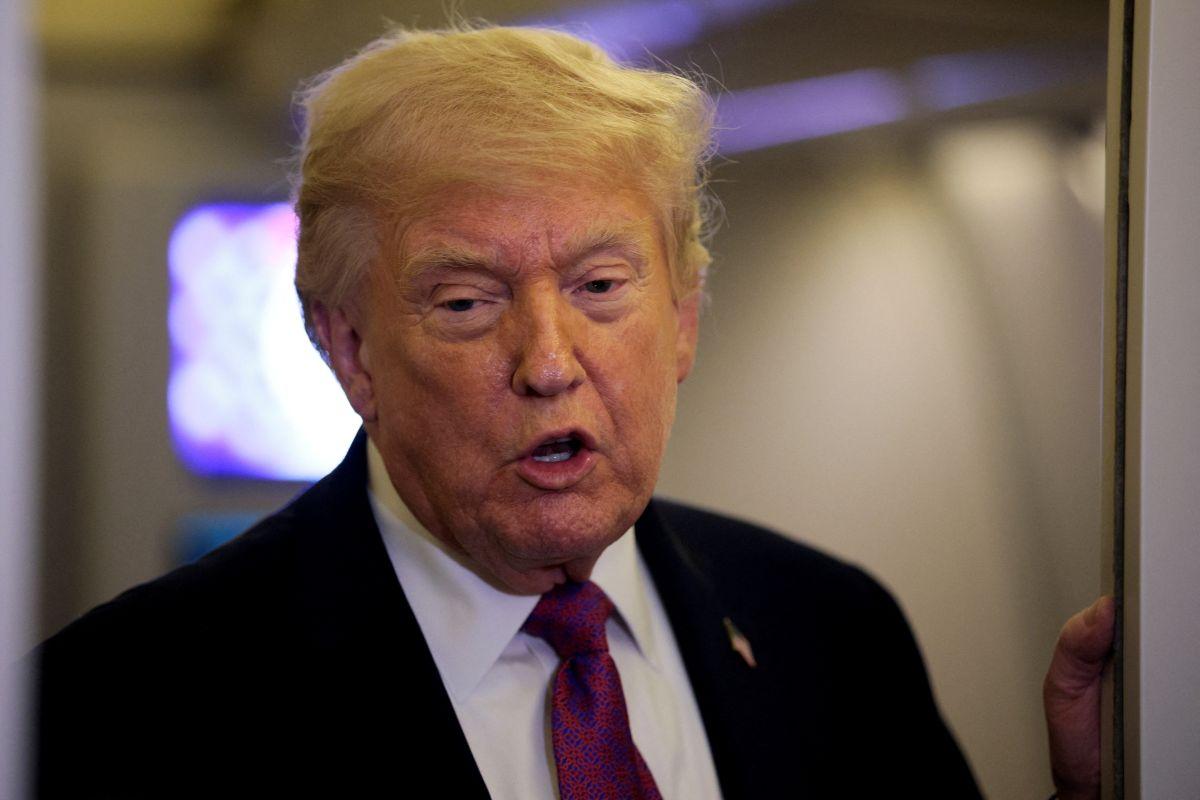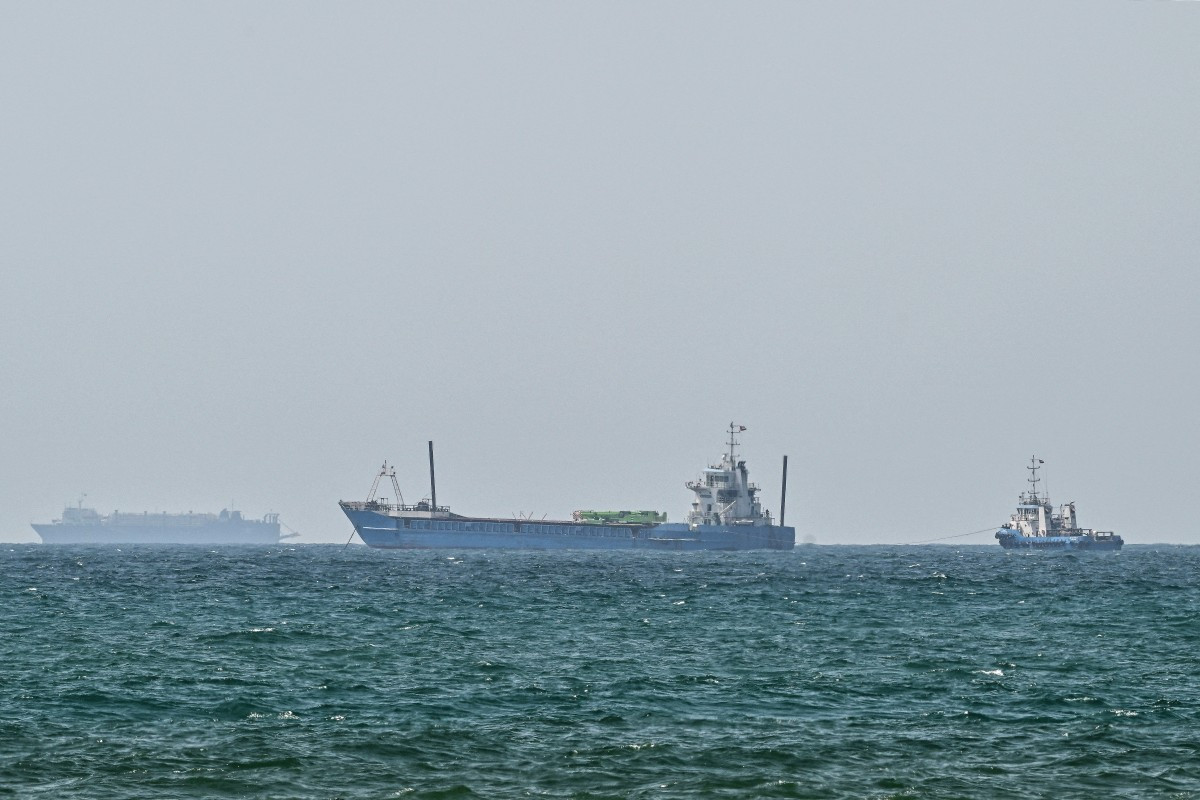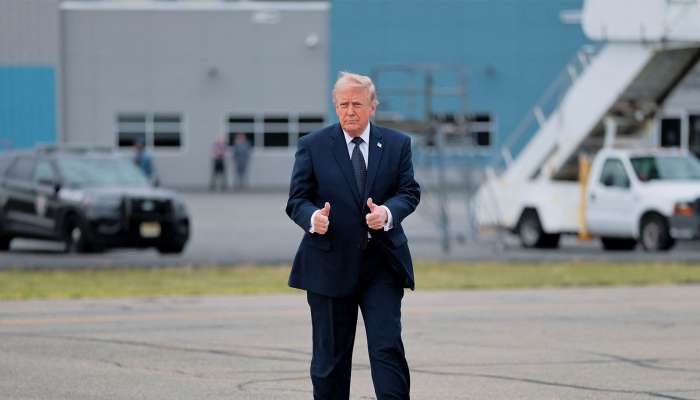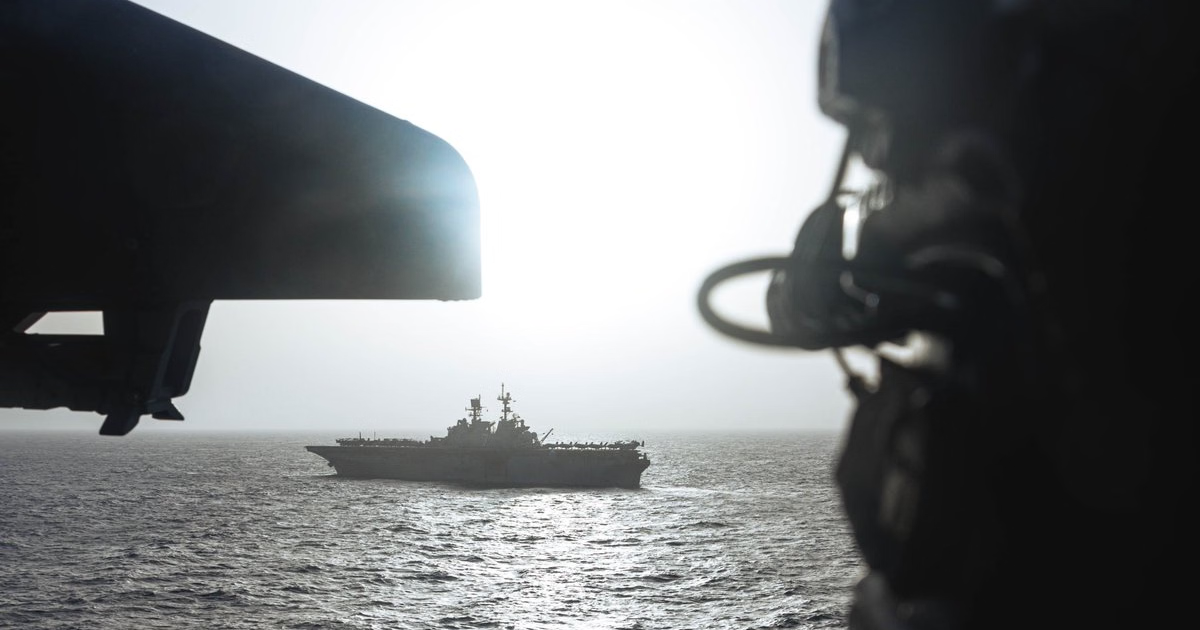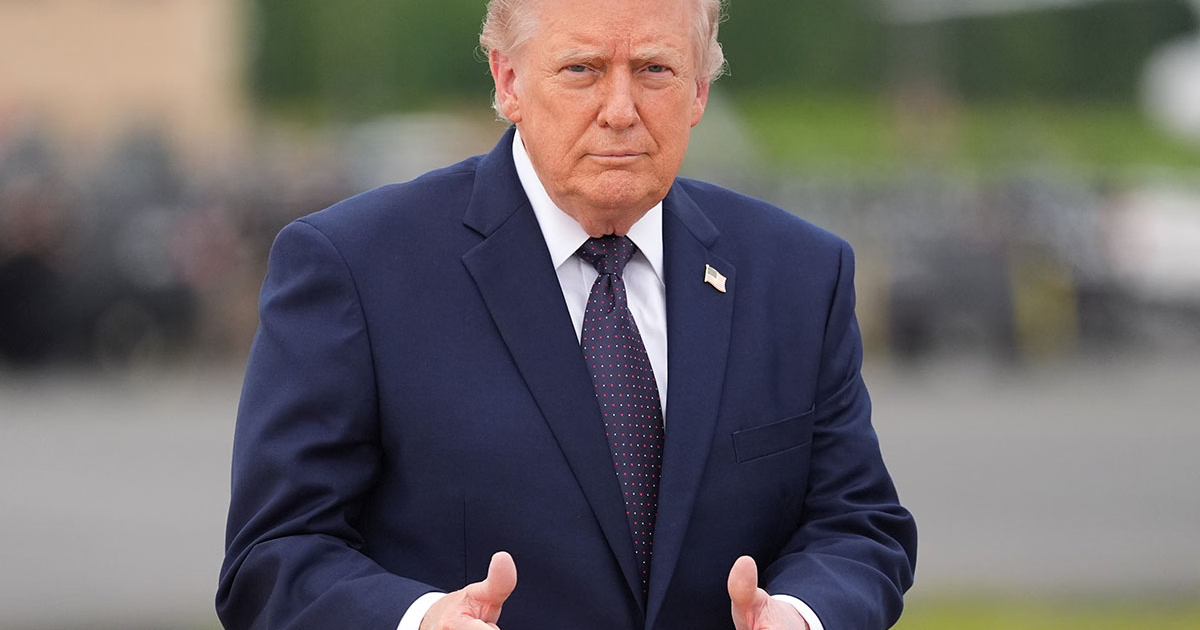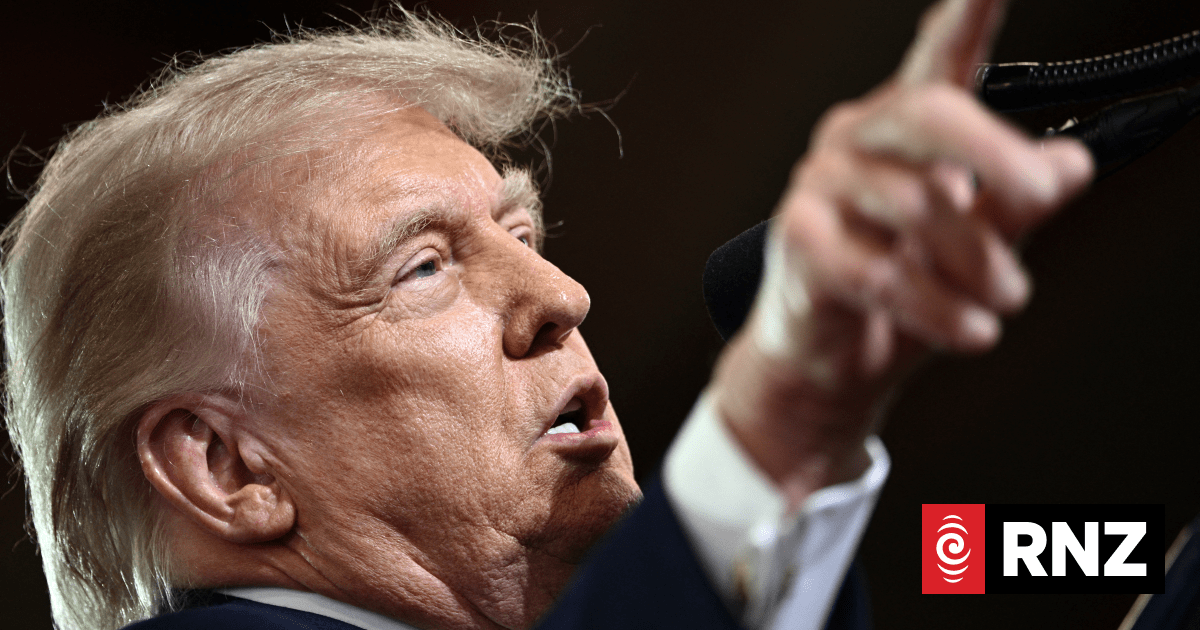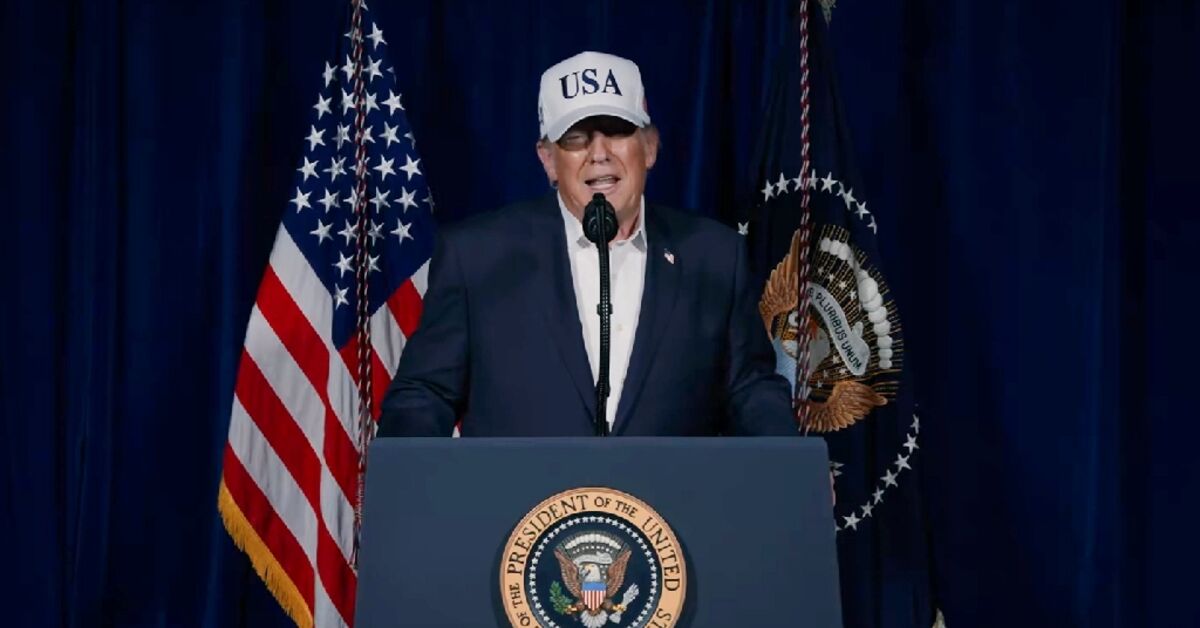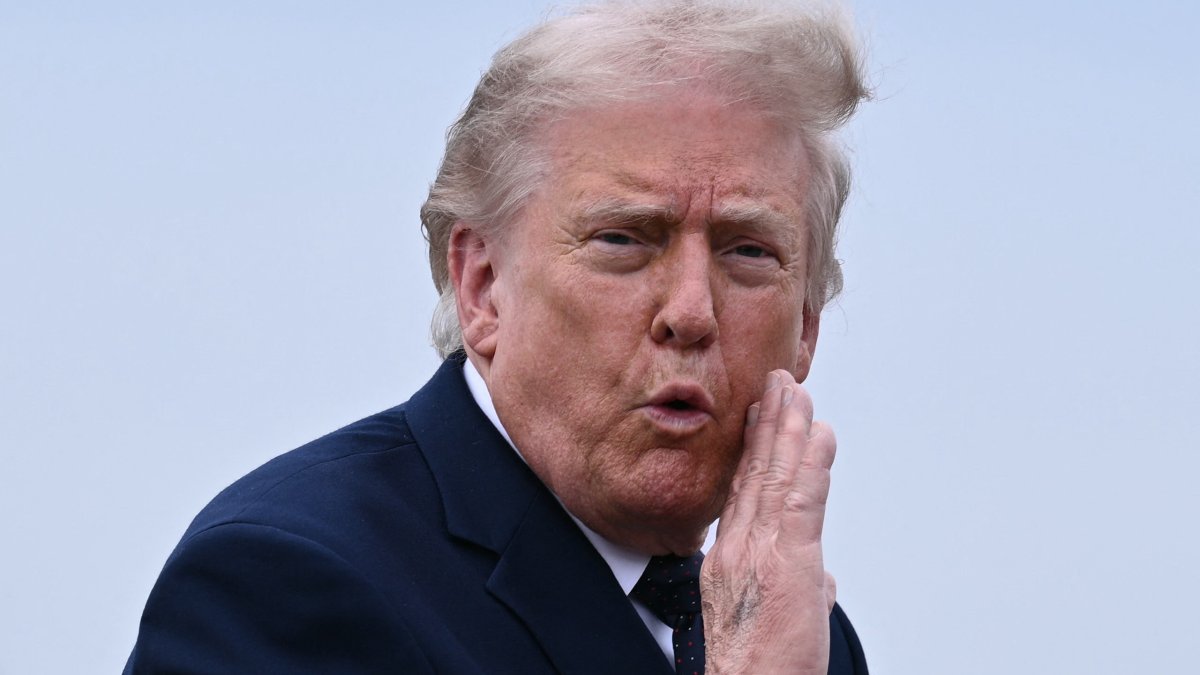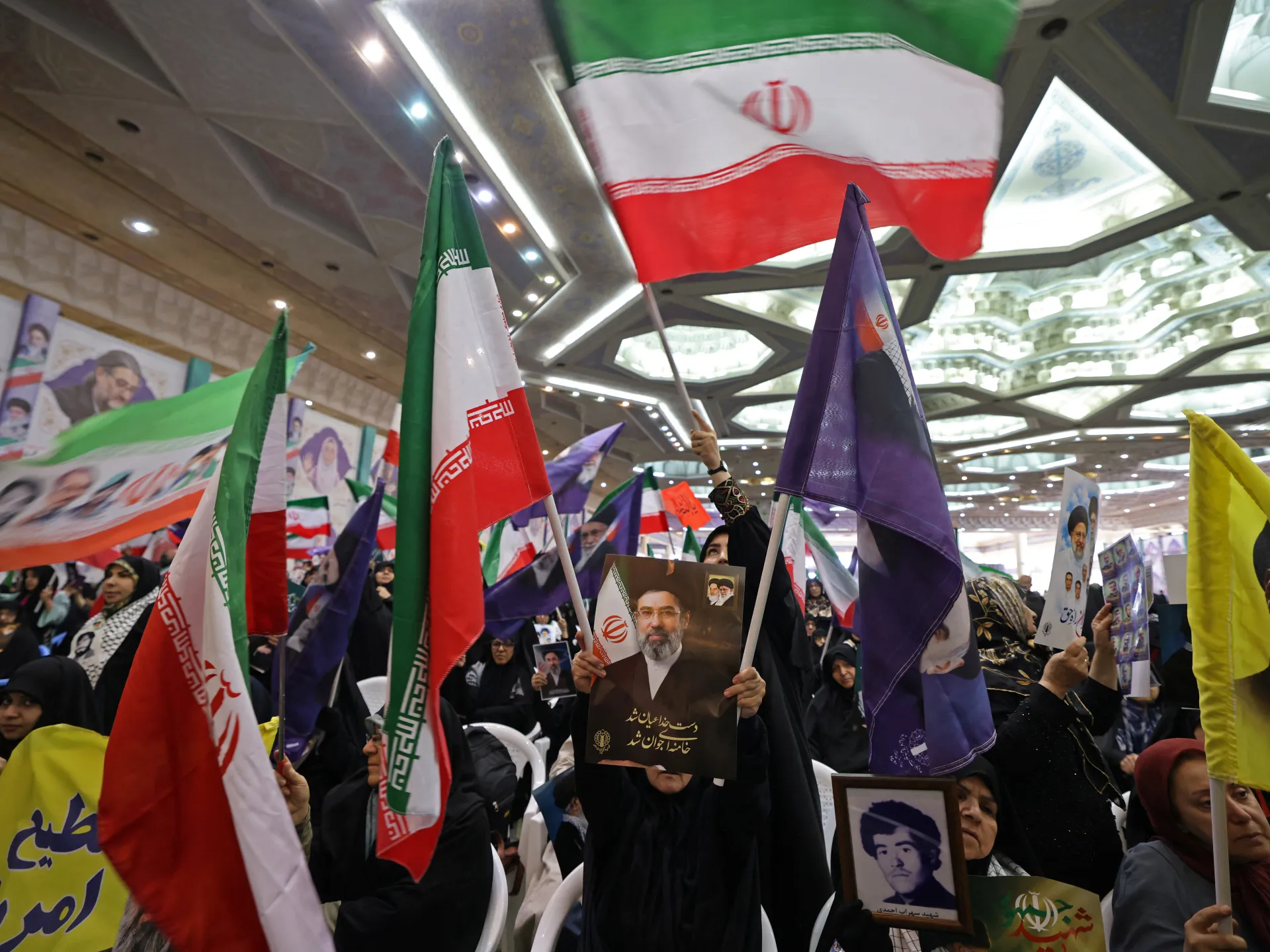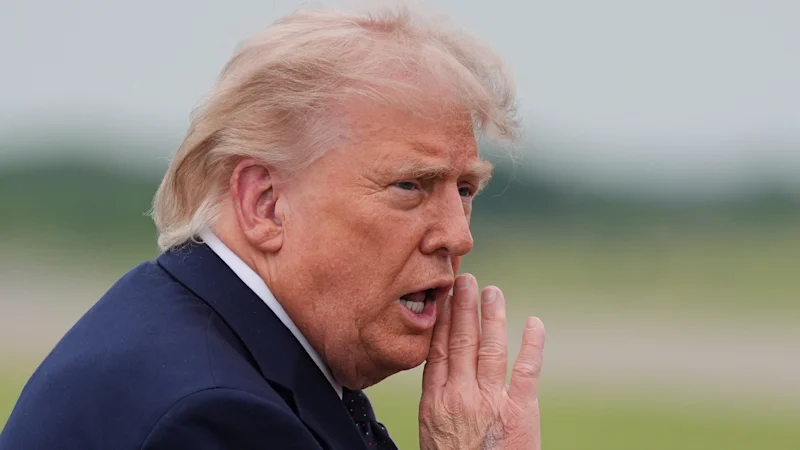
Humeyra Pamuk and Asif ShahzadMay 25, 2026 — 5:59amWashington/islamabad: US President Donald Trump said he had told his representatives not to rush into any deal with Iran, as his administration played down hopes of an imminent breakthrough in the three-month-old war that had been raised a day earlier.The US blockade on Iranian ships in the Strait of Hormuz would “remain in full force and effect until an agreement is reached, certified, and signed”, Trump wrote on Truth Social on Sunday (US time). “Both sides must take their time and get it right,” he added.US President Donald Trump walks to board Air Force One in New Jersey on Friday.AP Photo/Alex BrandonThere was no immediate response from Iran’s government. But Tasnim news agency, which is linked to Iran’s Revolutionary Guards, said the US was still obstructing parts of a potential deal, including Tehran’s demand for the release of frozen funds.A day earlier, Trump said Washington and Iran had “largely negotiated” a memorandum of understanding on a peace deal that would reopen the Strait of Hormuz, which before the conflict carried one-fifth of global oil and liquefied natural gas shipments.Trump, whose approval ratings have been hit by the war’s impact on US energy prices, has repeatedly played up the prospect of an agreement to end the conflict that the US and Israel started on February 28. A tenuous ceasefire has been in place since early April.The two sides remain at odds on several difficult issues, such as Iran’s nuclear ambitions, Israel’s war in Lebanon with the Iranian-backed Hezbollah militia and Tehran’s demands for the lifting of sanctions and the release of tens of billions of dollars of Iranian oil revenues frozen in foreign banks.Trump wrote on social media it was important “not to rush into a deal”.@realDonaldTrumpA senior Trump administration official told reporters that an agreement would not be signed on Sunday, saying the Iranian system did not move fast enough.But he outlined what he said were the latest contours of what was being negotiated.The official, speaking on the condition of anonymity, said Iran had agreed “in principle” to open the Strait of Hormuz, in exchange for the US lifting its naval blockade, and to dispose of Tehran’s highly enriched uranium.He said the US understood Iran’s Supreme Leader Ayatollah Mojtaba Khamenei had endorsed the broad template of the deal.There was no immediate confirmation from Iran or elaboration on what an “in principle” agreement meant.Reports of the deal have been drawing heavy criticism from some fellow Republicans who favour a harder line against the government in Tehran. A range of lawmakers, former Cabinet members and conservative analysts have been wondering aloud whether the terms as currently known will render the conflict all “for naught”.But Trump, who has said he only makes good deals and detests being seen as not having the upper hand in any negotiation, dismissed objections to a deal that he said was not “even fully negotiated yet.”“So don’t listen to the losers, who are critical about something they know nothing about,” he said on TruthSocial.Secretary of State Marco Rubio also pushed back on Sunday, telling reporters that no president had been stronger against Iran than Trump.“His commitment to that principle that they’ll never have a nuclear weapon shouldn’t be questioned by anybody,” Rubio said. “And the idea that somehow this president, given everything he’s already proven he’s willing to do, is going to somehow agree to a deal that ultimately winds up putting Iran in a stronger position when it comes to nuclear ambitions is absurd. That’s just not going to happen.”The US official said Washington envisioned first re-opening the strait and lifting the US naval blockade.That would “take that economic pressure out of the world economy, and then you negotiate the mechanism by which they will give up various parts of the nuclear programme, and yes, of course, we would contemplate some time limit,” the official said.Negotiating the details of the nuclear measures would take more time, he said.He pushed back on suggestions that Iran has not accepted disposing of its stockpiled enriched uranium. “It’s a question about how,” the official said, adding “there are a number of practical considerations”.Iranian sources had told Reuters that in future stages, “feasible formulas” could be found to resolve the dispute over its highly enriched uranium stockpile, including diluting the material under the supervision of the U.N. nuclear watchdog.Iran has long denied US and Israeli accusations that it is pursuing nuclear weapons and says it has a right to enrich uranium for civilian purposes, although the purity it has achieved far exceeds that needed for power generation.In another potential stumbling block, an Iranian military adviser to Khamenei said Tehran had the legal right to manage the Strait of Hormuz, though it was not clear if that meant continuing to decide which ships can go through.People wave flags and hold portraits of the dead at the Imam Khomeini Mosalla Mosque in Tehran, Iran, on the weekend to commemorate those killed in the current US-Israeli war as well as previous conflicts.Getty ImagesIran’s Revolutionary Guards said 33 vessels had passed through the strait over the past 24 hours after getting permission from Tehran, still far short of the 140 on a typical day before the war.Any deal reinforcing the current fragile ceasefire would bring relief to markets but not immediately quell a global energy crisis, which has driven up costs of fuel, fertiliser and food.Even if the war ends now, full flows through the strait will not return before the first or second quarter of 2027, the head of the Abu Dhabi National Oil Company said last week.The US-Israeli bombing of Iran killed thousands of people in Iran before it was suspended in early April.Israel has also killed thousands more and driven hundreds of thousands from their homes in Lebanon, which it invaded in pursuit of Hezbollah. Iranian strikes on Israel and neighbouring Gulf states have killed dozens.Reuters, APGet a note directly from our foreign correspondents on what’s making headlines around the world. Sign up for our weekly What in the World newsletter.From our partners
‘Don’t listen to the losers’: Trump says there is no rush on Iran deal as details start to emerge
The president said the US blockade on Iranian ships in the Strait of Hormuz would “remain in full force and effect until an agreement is reached, certified, and signed”.
TL;DRAI
Trump said there is no rush on an Iran deal, with the Strait of Hormuz blockade remaining until an agreement is signed. Iran agreed "in principle" to reopen the strait, but key issues on nuclear weapons and sanctions remain unresolved.
1,008 words~5 min read