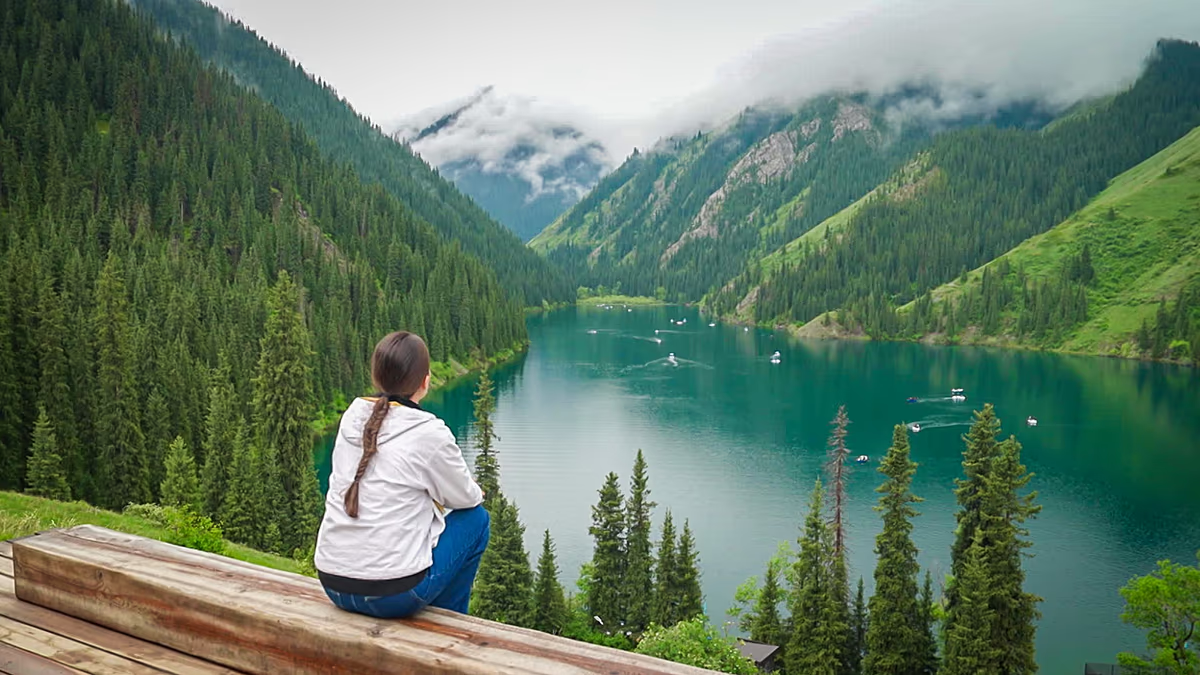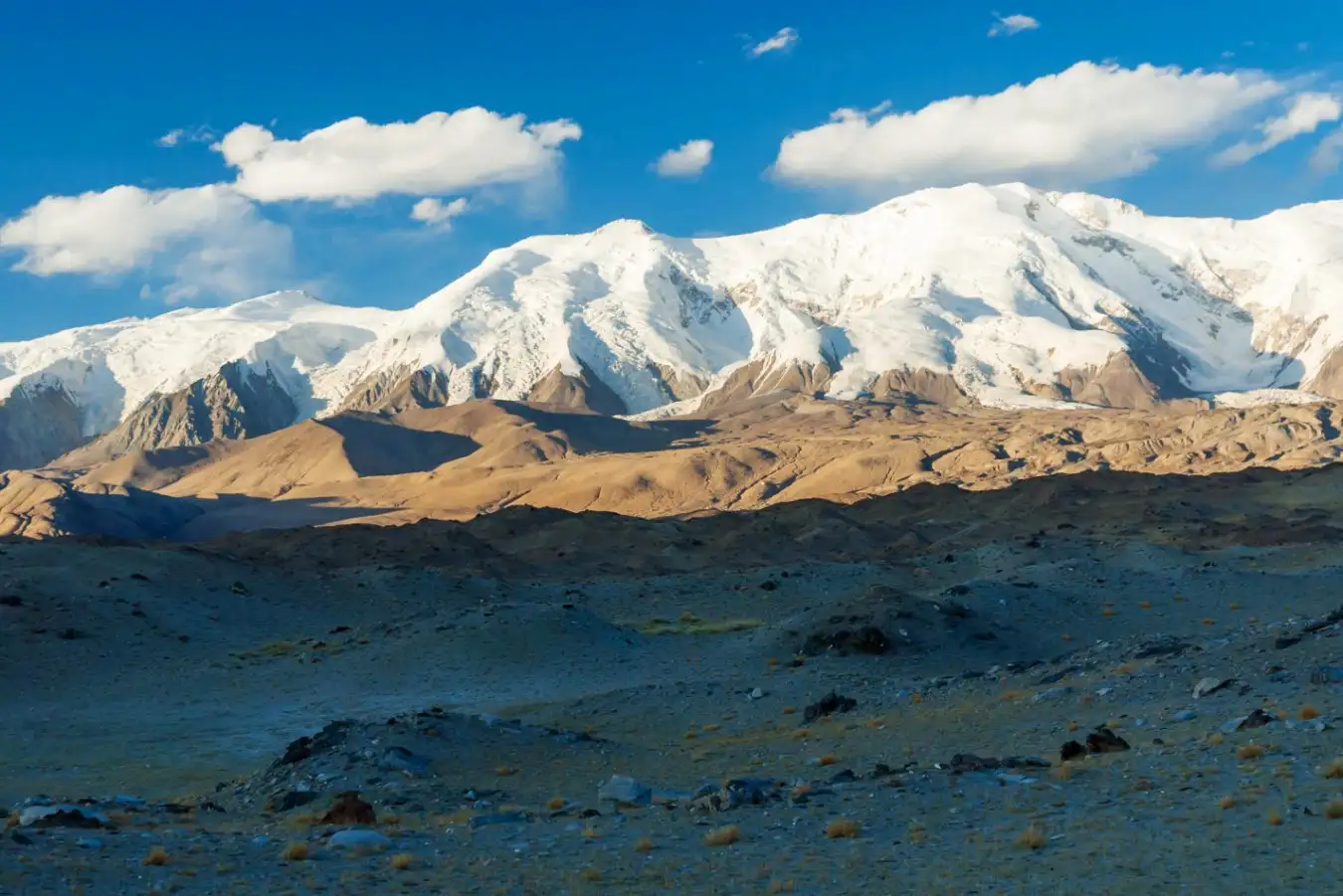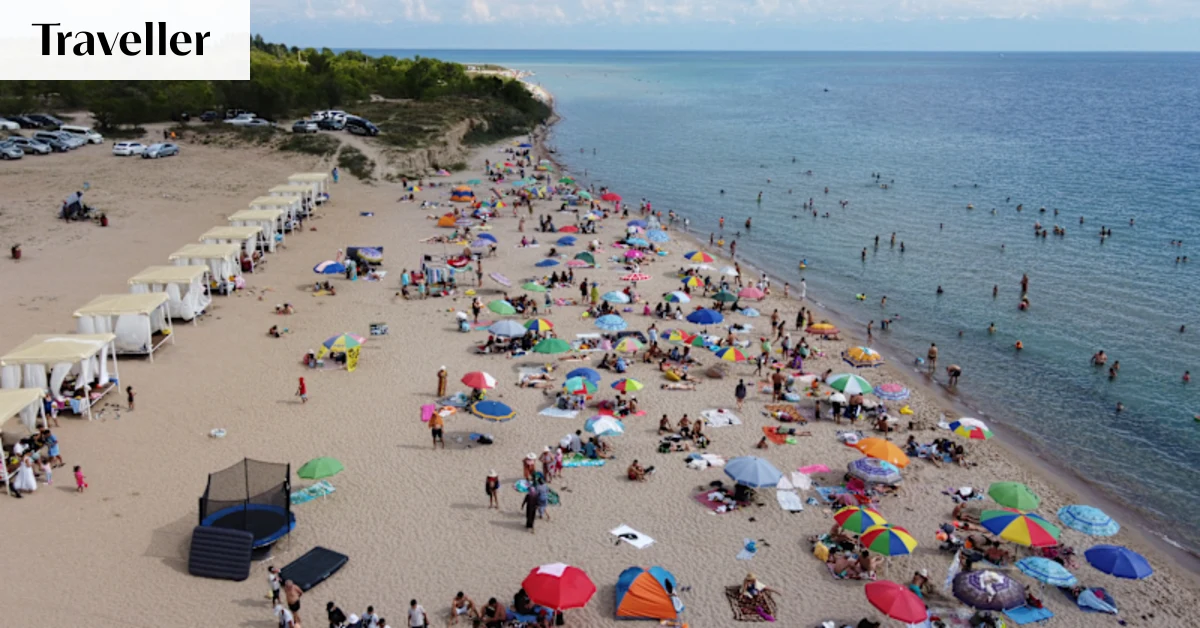
May 25, 2026 — 5:00amOn a fine summer day in Kyrgyzstan, the sandy beaches along Issyk-Kul are a mosaic of beach umbrellas and towels. Teenagers leap from a jetty, young boys wander among the sunseekers selling fish, and a parasail floats across the sky like a jellyfish. It could be a scene from almost any coast were it not for the snow-covered peaks, and the fact that the nearest coastline is more than 2000 kilometres away.On the beach at Issyk-Kul.Getty ImagesAt 1600 metres above sea level and framed by one of the world’s highest mountain ranges – the Tian Shan – it’s an incongruous spot for such a beach scene, but for Central Asia and much of Russia, this enormous alpine lake has long been the beach destination of choice or necessity.Even before we hit the queue of beaches along its northern shores, there’s a sense of something special about Issyk-Kul, which is as voluminous in statistical accolades as it is in water. The world’s second-largest alpine lake (behind only South America’s Lake Titicaca), it’s also the world’s eighth-deepest lake and the 11th largest in volume. Stretching about 180 kilometres from end to end, it’s fed by more than 100 rivers and creeks, yet it doesn’t have a single outlet stream.But the statistic I’m most interested in, and the one that draws the visitors, is water temperature. Despite harsh, subzero winters, Issyk-Kul is noted for its warmth, owing to the geothermal springs that feed into it.As we head for its waters on my first afternoon, a sign at the reception desk of the Hotel Karven announces that the water temperature is between 18 and 20 degrees – similar to the summer ocean temperature on Victoria’s Surf Coast, but high in a mountain range that exceeds 7000 metres.Sign up for the Traveller Deals newsletterGet exclusive travel deals delivered straight to your inbox. Sign up now.The town of Cholpon Ata on the shores of Issyk-Kul.iStockStepping into the lake, which never freezes in winter, is less spa-like than it sounds, but it’s still far warmer than an alpine lake should rightly be. Ignore the mountain backdrop and the lake looks more Adriatic than alpine – its waters as blue as a Greek holiday, though the whitewash on show here is snow, shimmering high on the peaks.Most of Issyk-Kul’s largest resorts are along this northern shore, typically clustered around the holiday town of Cholpon Ata, where we share the beach with a host of local holidaymakers.It’s a region on the rise, as evidenced by the ongoing construction of a new three-storey terminal at the international airport outside Cholpon Ata, and a new ski resort – the largest in Central Asia – slated for completion by 2030.Also at Cholpon Ata is one of several intriguing lakeside sights unrelated to water. Stretched across the base of the mountains is a field-like plain covered in thousands of boulders, almost resembling a landscaping supplies outlet.Once an open-air temple, this rock garden features more than 1000 ancient rock carvings, some said to be up to 4000 years old. Among the petroglyphs are images of ibex, deer and snow leopards, including hunters using snow leopards to chase deer.The red rock landscape behind Issyk-Kul.iStockBut it’s on the lake’s southern shores that we find Issyk-Kul’s most fascinating terrestrial site. Two kilometres off the main road, tucked into the toes of the mountains, Skazka – aka Fairytale Canyon – is a landscape that’s fantastic in every sense of the word.Etched into the soft rock, it’s like a Utah canyon adrift in the middle of Asia. In this barren chasm, red cliffs drape down into bluffs coloured yellow, white and purple, and towers of rock fluted by erosion rise like Corinthian columns. It’s a landscape in abstract, and every bit the fairytale scene of its name.Crowds thin along the southern shore, where we spend a night in the village of Tamga, tucked behind a mounted Soviet MiG fighter that overlooks a lake beach. Before dawn, I set out on foot for the lake, wandering out of the village even as half its residents seems to be returning from their own morning walk.Beach life in the mountains.iStockOn the beach, watched by a horse grazing at the lake’s edge, I drop my towel and sprint over the round stones into the water. Inside this snowy frame of mountains, I’m braced for the coldest of welcomes, but again it never comes. Instead, it’s the best of mountain swims.THE DETAILSTOURWorld Expeditions runs a 15-day Kyrgyzstan & Tian Shan Mountains trip, from $5290 a person, including all meals and accommodation and two nights on the shores of Issyk-Kul. See worldexpeditions.comFLYThe tour begins and ends in Kyrgyzstan’s capital city, Bishkek. Emirates flies to Bishkek from Sydney and Melbourne, transiting though Dubai. See emirates.comMORESee too.kg/en/issyk-kul-regionThe writer travelled as a guest of World Expeditions.From our partners
More than 1600 metres above sea level, this beach is 2000km from a coast
The shores of the world’s second-largest alpine lake seem like any other beach, until you notice the snow-capped mountains surrounding it.
804 words~4 min read