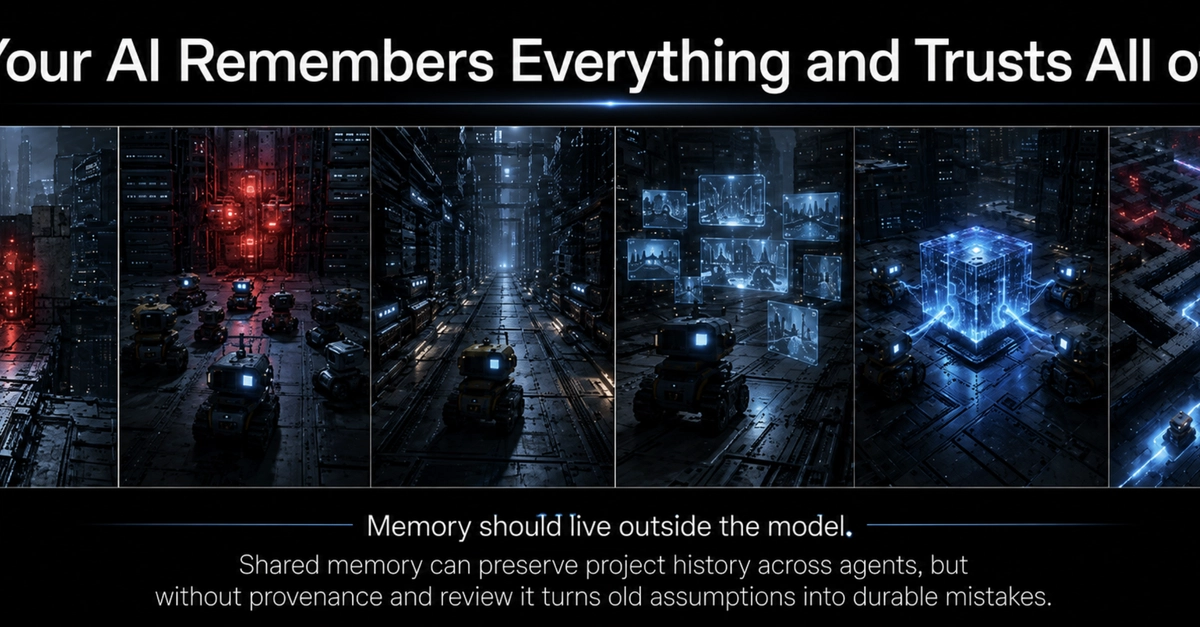
The quiet mistake people make with AI memory is resolving too much.
Most memory systems want to compress the past into something neat: a summary, a decision, a preference, a corrected belief. That is useful when the matter is settled. But a lot of serious work is not settled. It is provisional, contested, partly evidenced, or waiting for the next signal.
If your memory system cannot preserve that state, it will flatten uncertainty into fake clarity. The agent may sound organized, but it will inherit a cleaned-up lie.
That is the failure mode: not forgetting, but remembering too cleanly.
Sycophancy is memory that agrees too much. Premature closure is memory that resolves too much. Both come from the same root: a memory system that optimizes for comfort and efficiency over judgment.