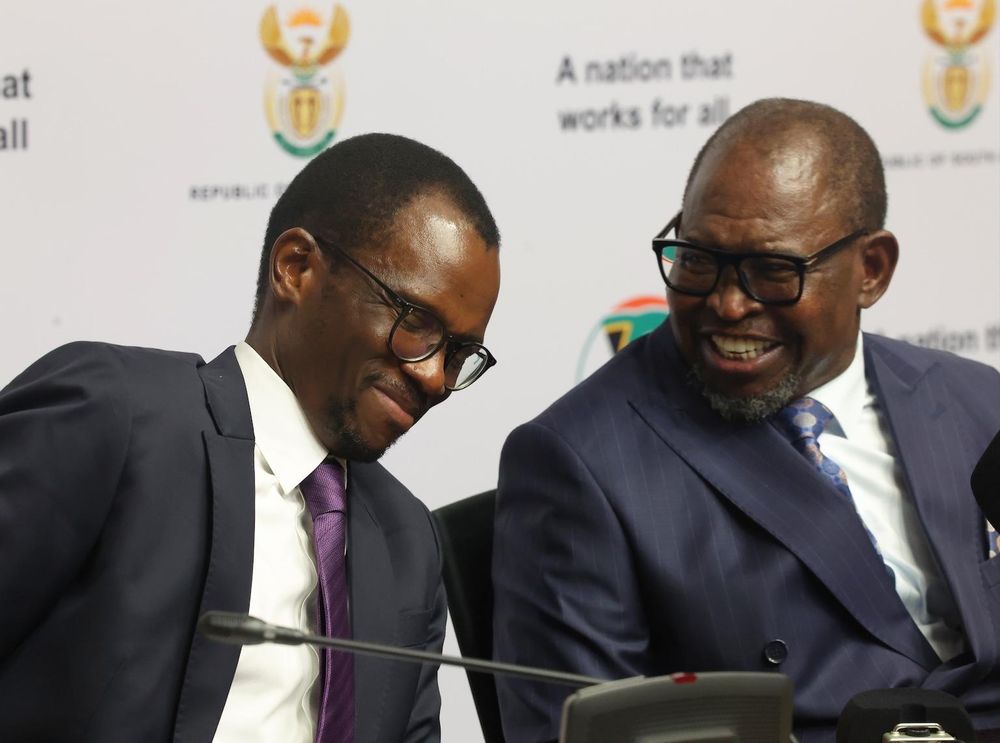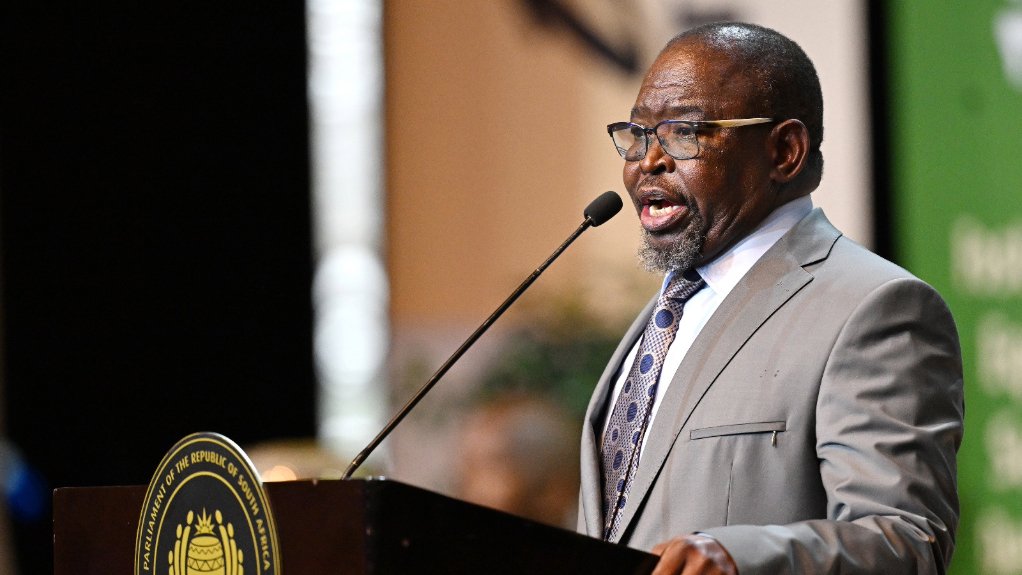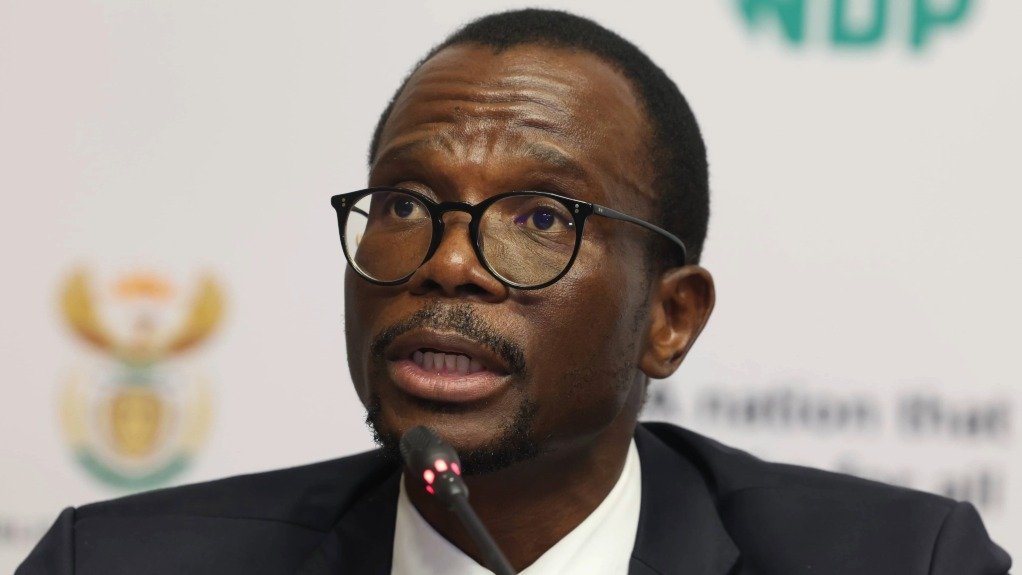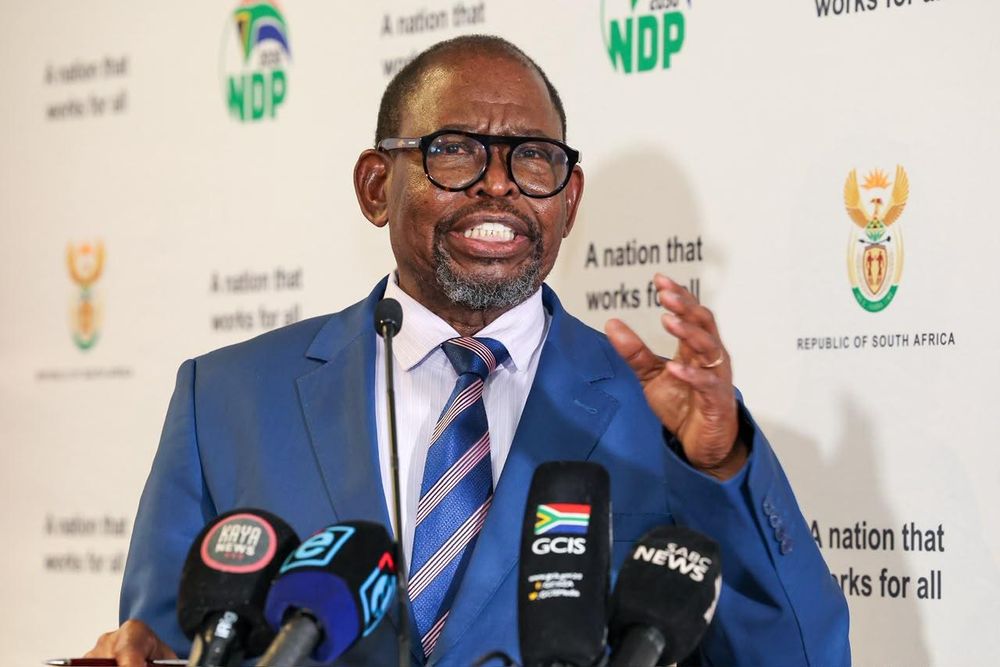
Finance minister Enoch Godongwana’s Treasury budget vote speech was overshadowed on Friday by a clash between DA MP Mark Burke and deputy finance minister David Masondo over the Public Investment Corporation’s (PIC) unlisted investment portfolio.Godongwana used the debate on Budget Vote 8 to warn that South Africa was operating in a difficult global macroeconomic environment marked by heightened geopolitical uncertainty, trade tensions and the effects of the conflict in the Middle East.He said the conflict had contributed to higher fuel prices, fertiliser and shipping costs and intensifying inflationary pressures, with inflation jumping to 4% in April.He pointed out how the Treasury had responded to fuel price pressures by temporarily reducing the general fuel levy, an intervention that had cost the fiscus about R17.2bn. The measure was intended to ease pressure on consumers at a time when global instability was feeding into domestic costs.The department would review its growth and fiscal numbers in the medium-term budget policy statement, as global developments would affect revenue, expenditure, debt sustainability and the broader fiscal framework, Godongwana said.The Treasury did not intend increasing taxes and would instead focus on improving efficiency across government and public entities funded by the fiscus, he said.He identified municipalities as a main area of concern. Several, he said, had complained that the Treasury deducted money from them when they failed to pay Eskom and other state entities, while national departments and other public institutions that owed municipalities were not treated the same way.Godongwana said the Treasury had quantified the debt owed to municipalities by other spheres of government, with provincial governments owing about R14bn and national government departments owing about R8.2bn. The Treasury intended to ensure the money was paid back to municipalities.He added that the Treasury wanted to address water infrastructure failures by consolidating fragmented grants into a single grant of about R66bn. The aim was not only to fix leaks but also to repair the underlying infrastructure that caused them.Godongwana said the Treasury would also work with municipalities on inner-city development to bring people closer to work and avoid reinforcing apartheid spatial patterns “in concrete”.The debate’s main confrontation came after Burke used his speech to launch a sustained attack on the PIC’s unlisted investments, saying the portfolio was where “pension fund money goes to get stolen”.Burke said the DA had through a written parliamentary question obtained information showing that the PIC had invested about R67bn in about 130 entities since the unlisted investment portfolio was established. He said the PIC claimed the investments had grown by just more than 4% a year but argued that, taking inflation into account, pensioners had not seen real growth.Lost valueAt least 78 investments had lost money, Burke said, while one in five had lost all their money.He listed several investments that had declined in value or collapsed, including Daybreak Farms, Independent News and Media, Smile Communications, African Bank, the SA Home Loans mortgage fund, Paycorp, Bophelo Insurance, VBS Mutual Bank-related investments, Lanseria Airport, Ayo-linked investments and other infrastructure, housing, agriculture and private equity funds.He said the PIC would probably argue that many losses came from the state capture era, while in fact about 15 of the investments he mentioned involved money invested after 2022.“That’s not a historic investment,” Burke said.He said the PIC’s turnaround and value-add unit was undercapacitated and argued that the corporation continued to produce “another questionable investment, another compromised official” while pensioners received small pension increases.He said the DA would probably support the Treasury budget vote because entities such as the South African Revenue Service (Sars) did important work but would continue using the vote to hold the PIC to account.Masondo, who chairs the PIC board, rejected Burke’s framing, saying the DA’s attack ignored money recovered by the corporation.“It is true that money was lost,” Masondo said. “We went after those [responsible], we got R19bn back.”Masondo said Burke should report both the losses and the recoveries. He said the unlisted portfolio made up less than 5% of the PIC’s total portfolio, with about 95% invested in listed assets.He said opposing growth in unlisted investments was “anti-transformation” because the portfolio allowed the PIC to intervene directly in the economy, change ownership patterns and influence control of companies.Masondo said the PIC used its unlisted investments to support infrastructure, student accommodation and procurement from black-owned suppliers. He accused Burke and the DA of defending “colonially accumulated privileges”.He said some of the investments raised by Burke had been considered by the Mpati commission of inquiry and that in any investment strategy “you miss some, you hit some”.Masondo added that the PIC had co-invested with predominantly white-owned asset managers in some cases where money was lost and accused Burke of being silent about those losses.He said the PIC’s assets under management had grown from about R2.5-trillion in the 2022 financial year to almost R4-trillion by March this year, meaning workers were “more than R1-trillion richer” since the current board took over.Masondo said the internal rate of return in the unlisted portfolio was 16%, arguing that the portfolio had made workers and pensioners richer.“You don’t concentrate your money in one asset class,” Masondo said.ANC MP and chair of the standing committee on finance Joe Maswanganyi backed Masondo’s position, saying his party supported the Treasury budget vote.Maswanganyi said the PIC should grow its unlisted portfolio “unapologetically”, arguing that people in areas such as Giyani, Polokwane and Tshandama needed support from developmental investment. He said black farmers and small businesses should also be supported and accused critics of pushing a “right-wing agenda” against the PIC.MK MP Des van Rooyen rejected the budget vote, saying it came at a time when most South Africans were facing severe hardship from rising fuel prices, transport costs and inflation.Van Rooyen said debt-service costs of more than R432bn were more than 11 times the retained programme allocation of the Treasury, and the budget prioritised creditors over communities while municipalities crumbled and township enterprises struggled to access finance.He called for a debt-service cost reduction roadmap, full independence for the office of the tax ombud, binding financial sector transformation targets and immediate implementation of the Public Procurement Act with enforceable regulations.EFF MP Omphile Maotwe also rejected the budget vote, saying parliament conducted weak oversight over the Treasury despite the department’s influence over the economy, public spending and the financial sector.Maotwe accused the DA of suggesting in committee deliberations that small black-owned businesses were inherently corrupt. She said corruption was not based on skin colour and argued that white-collar corruption was not reported with the same intensity as corruption involving black people.She said the Treasury had presided over years of low growth, deindustrialisation, unemployment above 40% on the expanded definition, collapsing municipalities and deepening inequality while avoiding proper scrutiny.ActionSA MP Alan Beesley supported the budget vote but raised concerns about Sars funding, illicit trade and the Road Accident Fund.Beesley said Sars had been underfunded by about R43bn over the past eight years, contributing to a tax gap estimated at R350bn-R500bn. He said additional funding allocated to Sars had delivered results, with the revenue service collecting more than R2-trillion, R155bn more than the previous year and R25bn more than budgeted.He said illicit trade was costing the fiscus more than R100bn a year and called for a dedicated Treasury programme to combat the illicit economy.Beesley also warned that the RAF posed an escalating fiscal risk, with total liabilities estimated at more than R500bn and current liabilities of about R100bn.
Masondo and Burke clash over PIC’s unlisted investments
DA MP accuses state asset manager of squandering pensioners’ money
1,232 words~6 min read