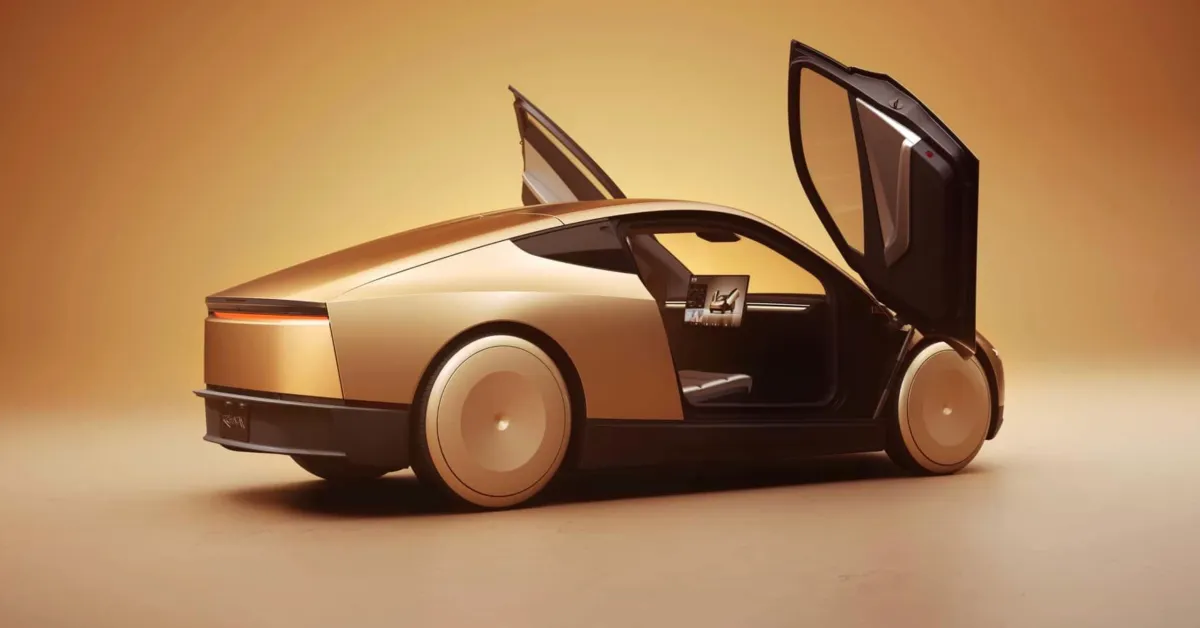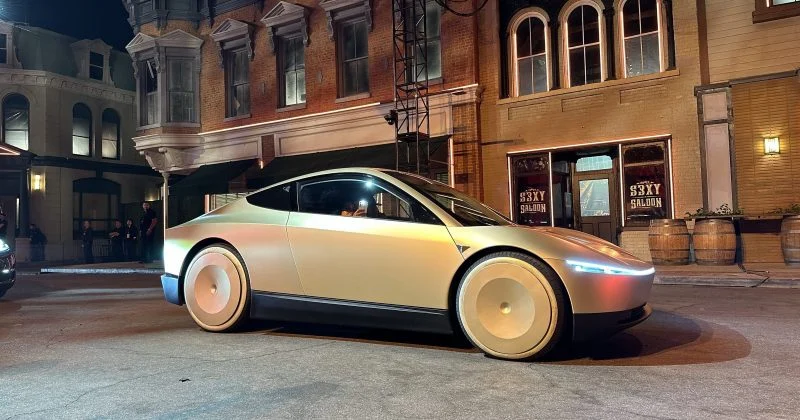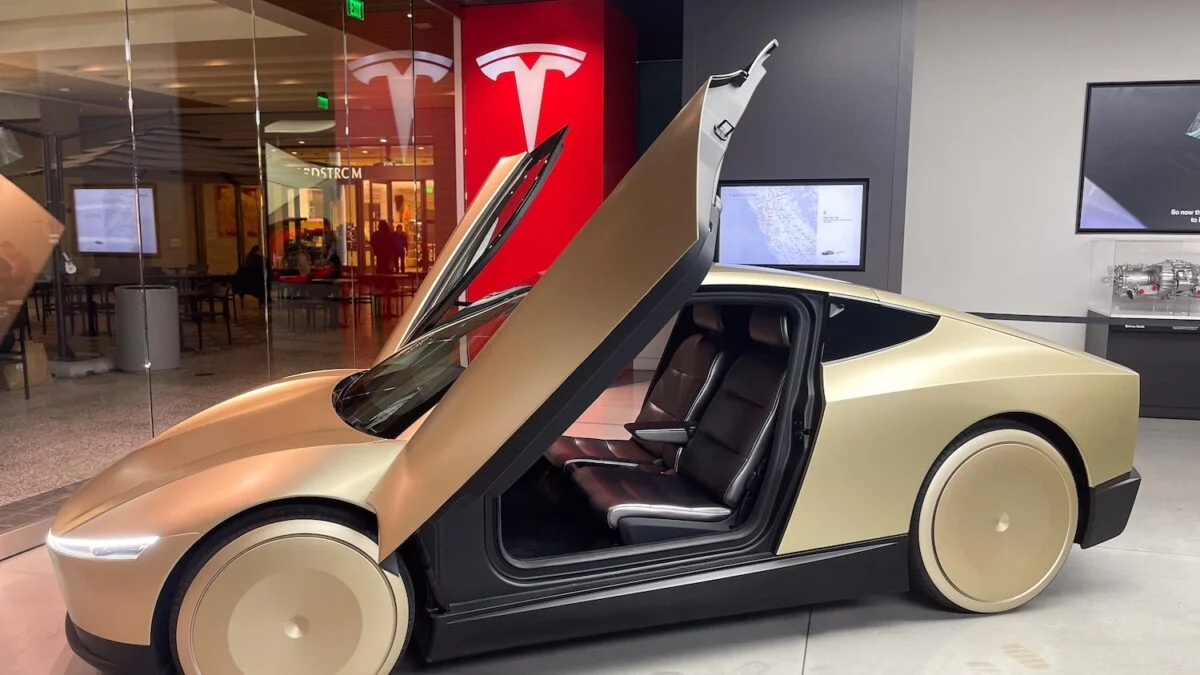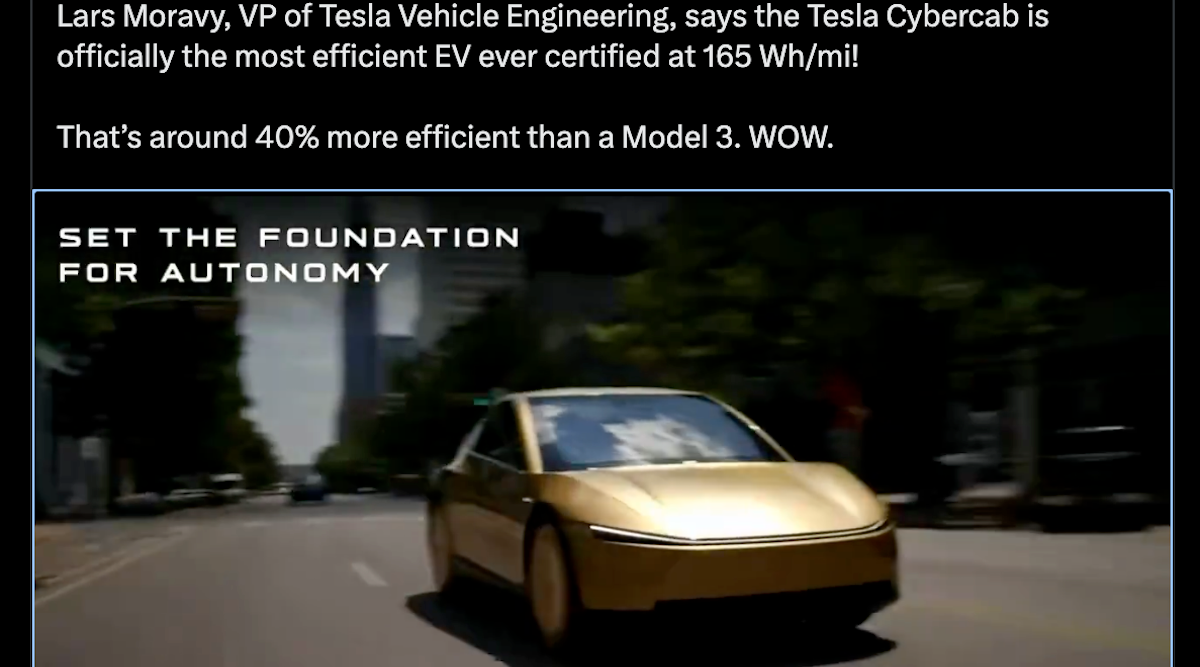
FORWARD-LOOKING: Tesla has set a new benchmark for electric-vehicle efficiency, but it did so with a vehicle that breaks nearly every convention of modern car design. The company's Cybercab, an autonomous two-seater designed specifically for ride-hailing, has been certified at 165 watt-hours per mile, according to Tesla VP Lars Moravy. That figure makes it the most energy-efficient EV in production, and not by a small margin. The next closest competitor, the Lucid Air Pure, consumes about 28% more energy per mile.
On paper, the number is striking. In practice, it reflects a very different kind of vehicle.
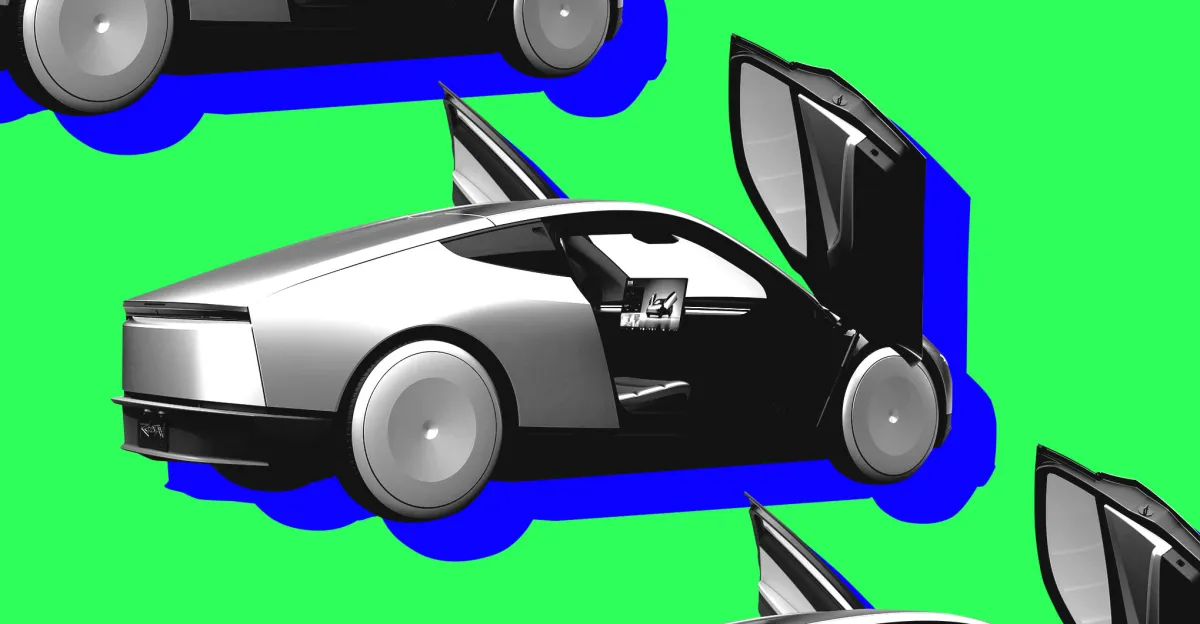
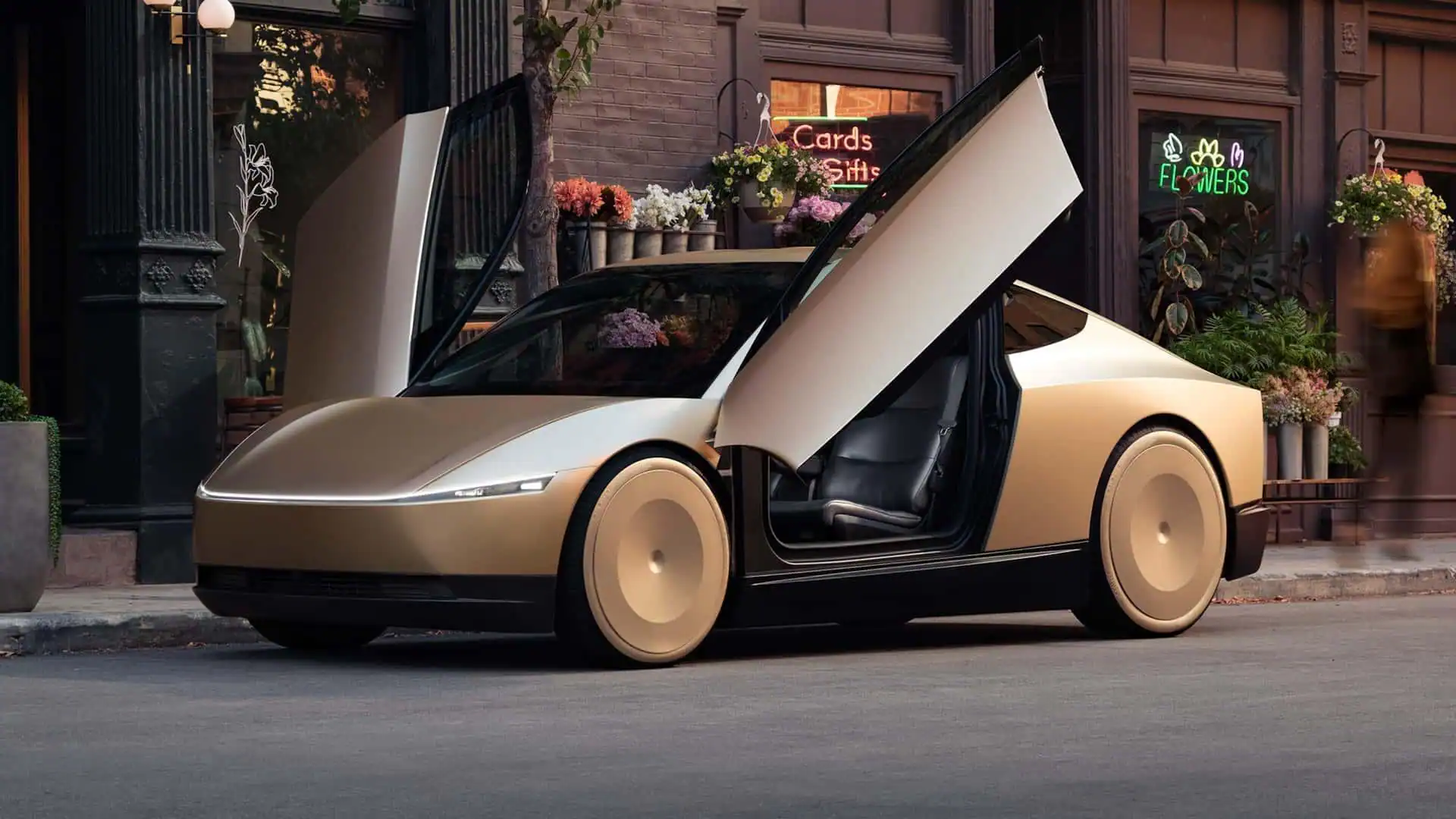
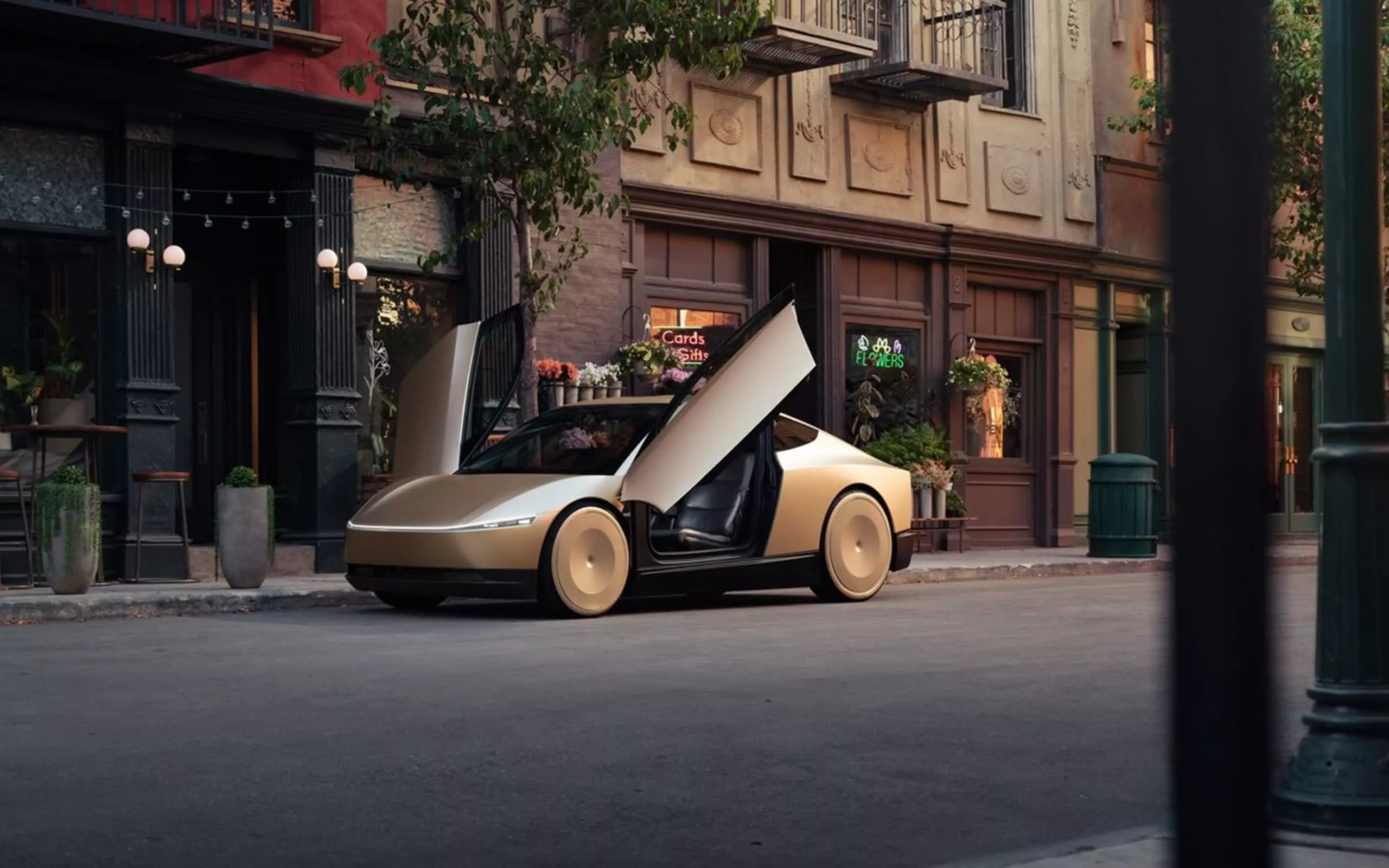
The Cybercab strips away nearly everything associated with human driving. There is no steering wheel, no pedals, and no expectation that a person will ever take control. What remains is a compact, two-passenger pod built around a single goal: moving people as efficiently as possible.
Its sub-50 kWh battery is smaller than what most modern EVs carry, and its body tapers toward the rear in a way optimized for aerodynamics, a profile that would be impractical in a conventional car.
Those design choices are doing most of the work.