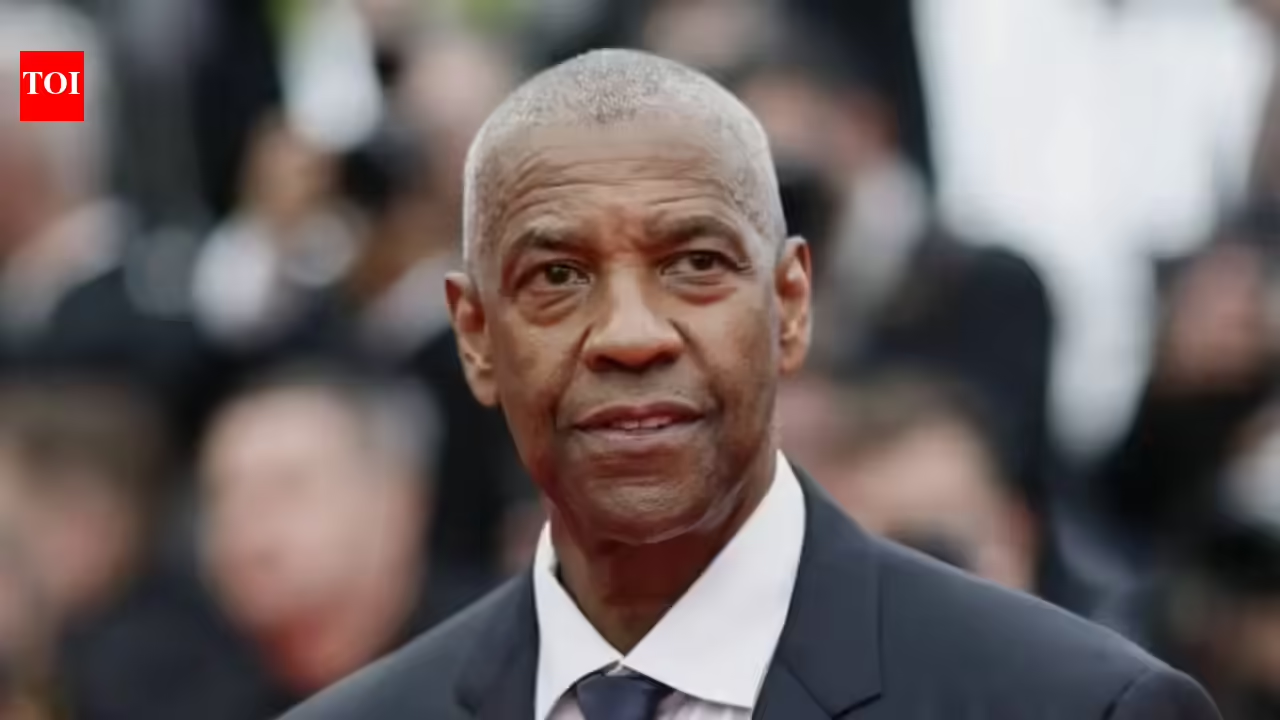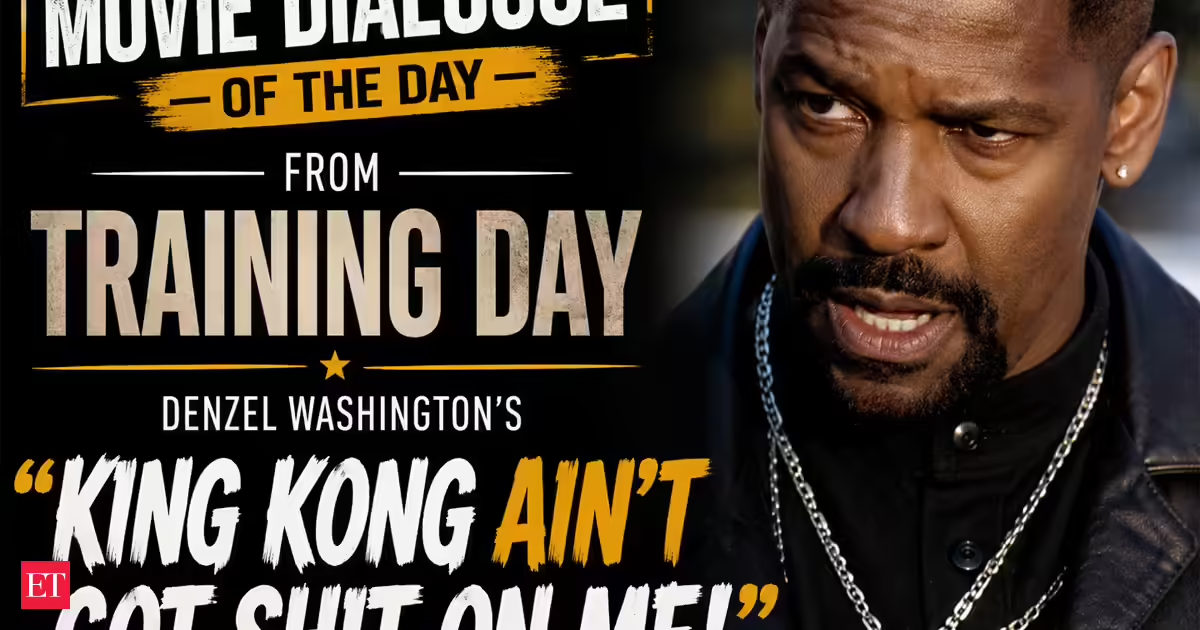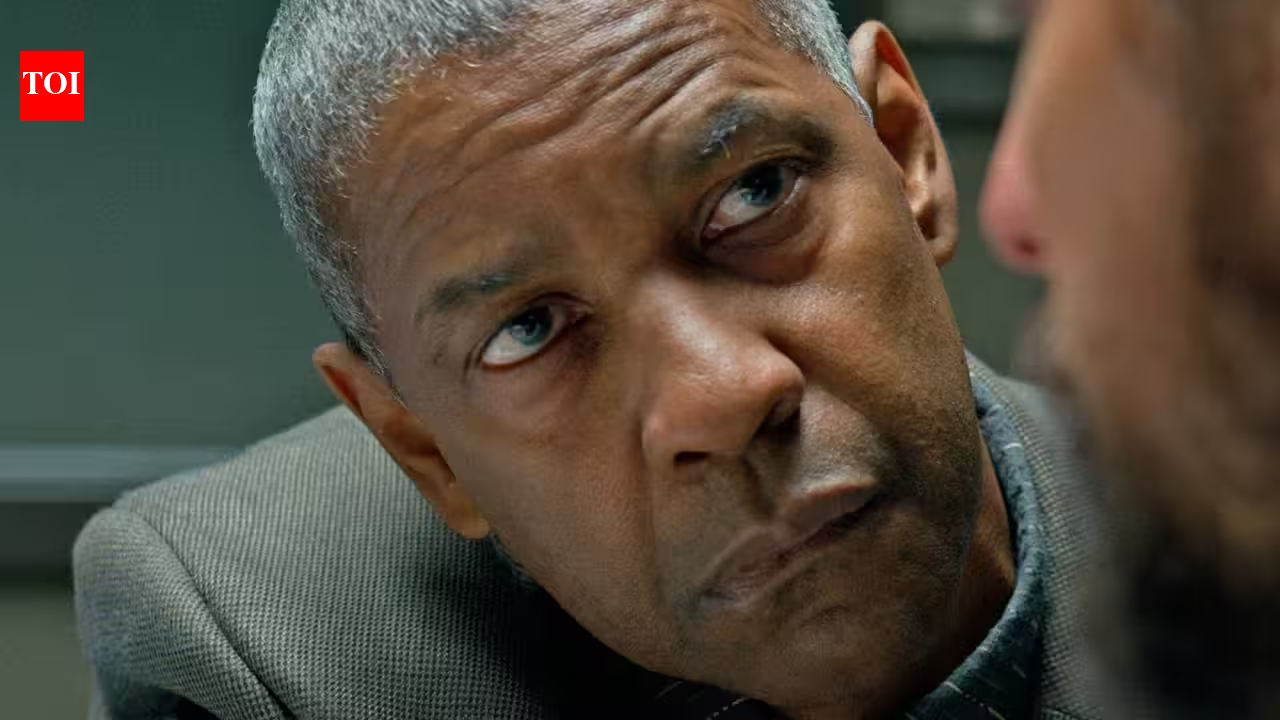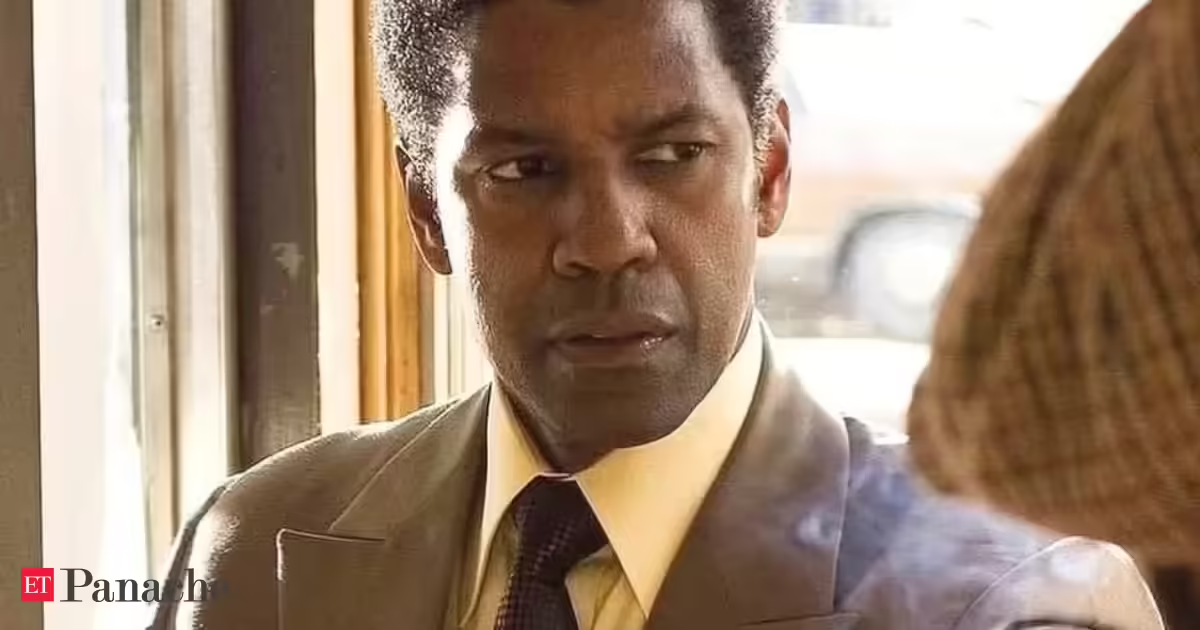
In Hollywood cinema, certain dialogues outgrow the films they belong to and slowly turn into everyday references for how people think about life, behaviour, and power. One such line comes from the 2007 crime drama American Gangster, where actor Denzel Washington plays the role of Harlem drug kingpin Frank Lucas. The film is remembered not only for its storytelling and performances but also for this one sharp observation.The movie dialogue of the day by Denzel Washington goes: “The loudest one in the room is the weakest one in the room.”On the surface, the dialogue sounds simple, but it carries a deeper meaning that connects to human behaviour and psychology. The line suggests that people who constantly try to dominate attention through noise, overconfidence, or aggressive behaviour are often not as strong as they appear. Instead of reflecting true strength, loudness can sometimes point to insecurity or a need for validation.The idea also flips a common assumption. In many situations, people tend to associate loud speech or strong display of opinions with authority. However, the quote challenges that thinking by suggesting that real strength does not need constant announcement. A person who is truly confident in their position usually does not feel the need to prove it repeatedly in front of others.There is also an angle of emotional control in this statement. Individuals who are steady, calm, and observant often have better control over situations because they are not reacting impulsively. In contrast, loudness can sometimes come from a lack of control or an attempt to mask confusion. The dialogue indirectly points out that silence can often be more powerful than noise, especially in situations where awareness and patience matter.How the dialogue fits into American GangsterThe line is spoken in American Gangster, directed by Ridley Scott, and is delivered by Denzel Washington in the role of Frank Lucas. In the film, Lucas uses this philosophy while speaking to his younger brother, offering advice shaped by his experience in a dangerous criminal world.Within the story, Frank Lucas is shown as someone who prefers discipline over chaos. He builds his influence carefully and avoids unnecessary attention. The dialogue reflects this mindset, where staying quiet and controlled is seen as a way to survive and grow in a competitive and risky environment.His character treats visibility as a risk rather than an advantage. The idea is that the more attention someone attracts, the more exposed they become. In that sense, the line is not just philosophical but also practical within the world the film shows.Character behaviour and the meaning in contextFrank Lucas is portrayed as someone who operates differently from many others in the criminal world shown in the film. He does not rely on public display or constant confrontation. Instead, he builds power quietly and maintains strict control over his operations.The dialogue fits into this personality. It reflects the belief that power is most effective when it is not constantly announced. In Lucas’ world, loud behaviour attracts unwanted attention, and attention often leads to downfall. The line becomes a warning more than a lesson, especially when spoken to someone younger who might not yet understand the consequences of standing out too much.At the same time, the film shows that this philosophy is not perfect. Even characters who try to stay silent and hidden eventually face situations where attention finds them anyway. This adds a layer of realism to the idea, showing that while silence can protect power, it cannot guarantee safety forever.The film’s wider narrativeAmerican Gangster follows two parallel paths. One tracks Frank Lucas building a drug empire in Harlem, and the other follows detective Richie Roberts, played by Russell Crowe, who works to uncover the supply chain behind the drug trade.Set in late 1960s and early 1970s New York, the film shows a period marked by crime, corruption, and shifting power structures. Lucas’ rise is connected to real historical elements, including drug trafficking routes linked to Southeast Asia during the Vietnam War era. The story blends personal ambition with larger social and institutional issues.Directed by Ridley Scott, the film focuses not just on crime but also on mindset. That is why dialogues like this stand out. They are not just written for impact but also to reflect how characters think and justify their actions.Performance and delivery by Denzel WashingtonThe impact of the line is also tied closely to the performance of Denzel Washington. His portrayal of Frank Lucas is calm and controlled throughout the film. He does not rely on exaggerated expressions or dramatic delivery. Instead, he keeps the character grounded, which makes moments like this dialogue feel more natural.The line is delivered in a simple tone, almost like advice rather than a dramatic statement. That understated delivery is part of why it has stayed memorable. It feels realistic, like something someone might actually say in a serious conversation rather than a scripted movie moment.Over the years, this performance has been widely discussed as part of Washington’s larger body of work, where he often plays characters who carry authority through restraint rather than volume.
Movie dialogue of the day by Denzel Washington 'The loudest one in the room is the weakest one in the room...' - The American Gangster dialogue explains how silence often signals real strength
Denzel Washingtons dialogue from the 2007 film American Gangster explores the idea that true strength often comes from calmness, restraint, and emotional control rather than aggression or attention-seeking behaviour. Spoken by Washingtons character Frank Lucas, the line reflects his philosophy of staying disciplined and avoiding unnecessary visibility in a dangerous world where attracting attention can become a weakness.
841 words~4 min read