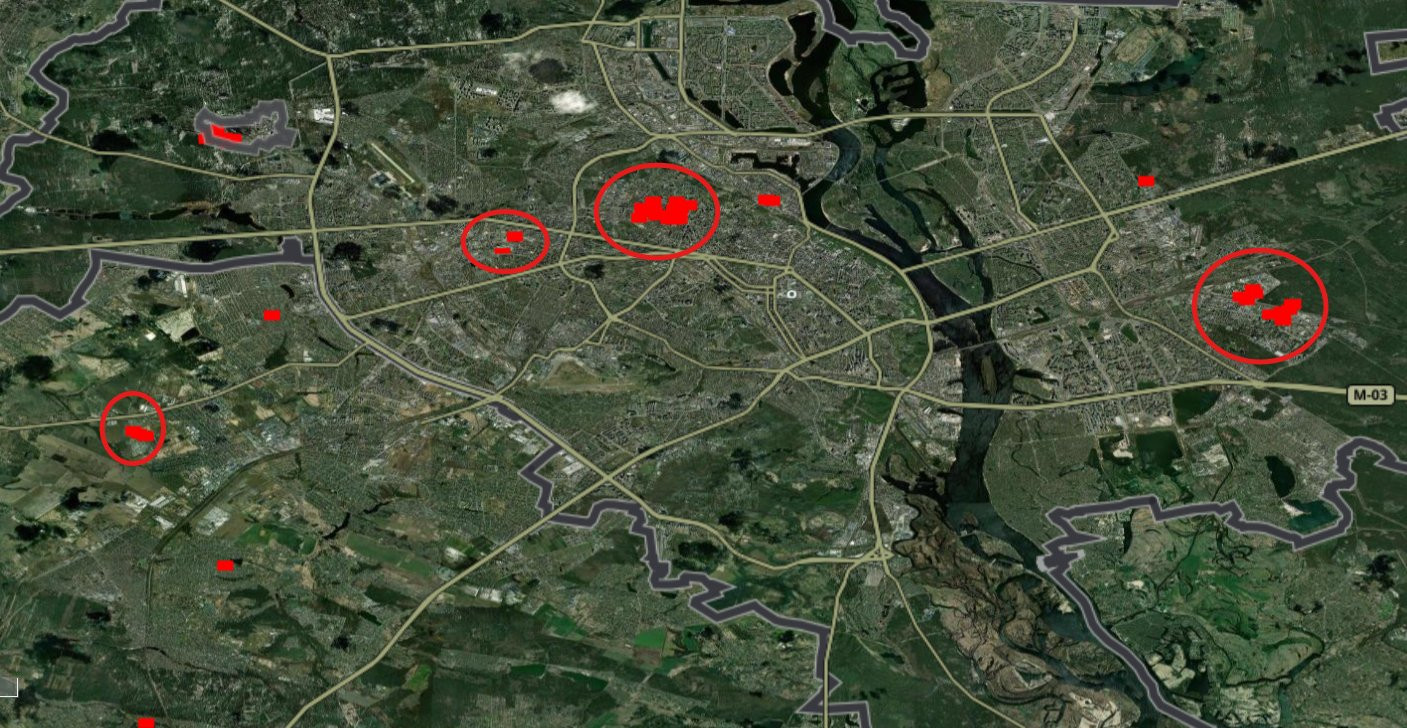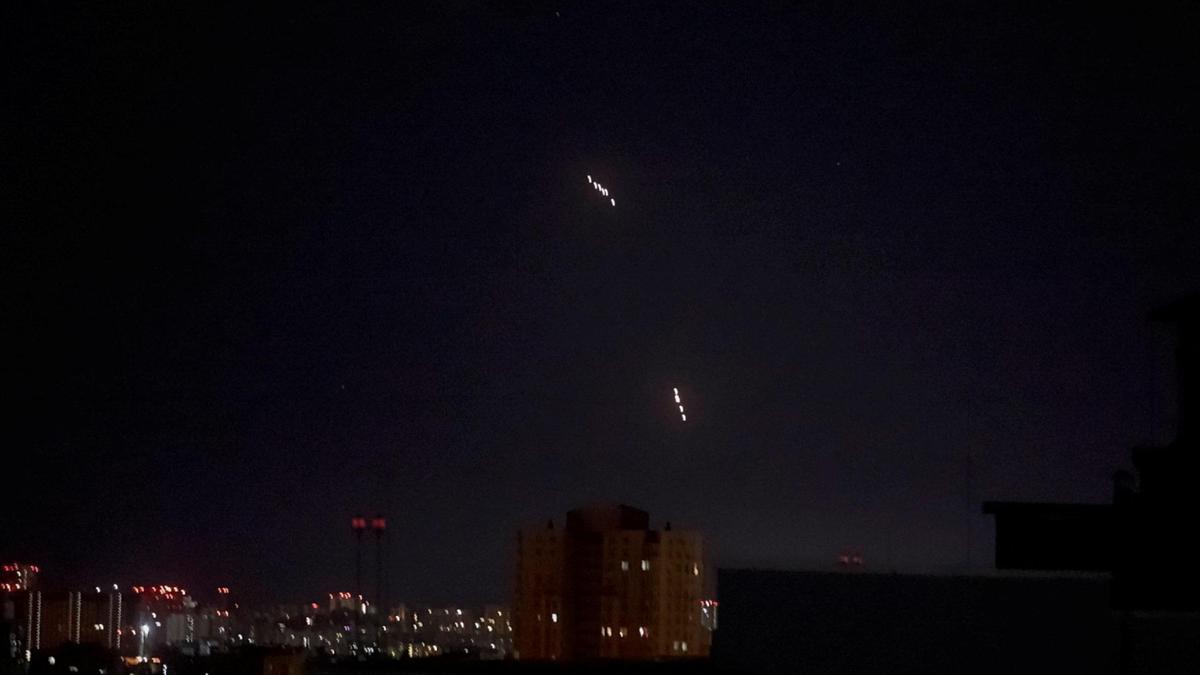
Less than two days after President Vladimir Putin vowed revenge for a Ukrainian strike that hit a secondary-school dormitory in the Russian-controlled Luhansk oblast, Russia unleashed a massive, multi-weapon barrage on Kiev early Sunday, one that apparently included the rare use of Oreshnik hypersonic ballistic missiles. Private videos show clusters of bright objects at supersonic speed descending from the sky near Kiev May 24, 2026. They claim to be Russia’s intermediate-range hypersonic Oreshnik system. Moscow has not officially confirmed the use.
The footage resembles videos that circulated… pic.twitter.com/lSDg8iydzX
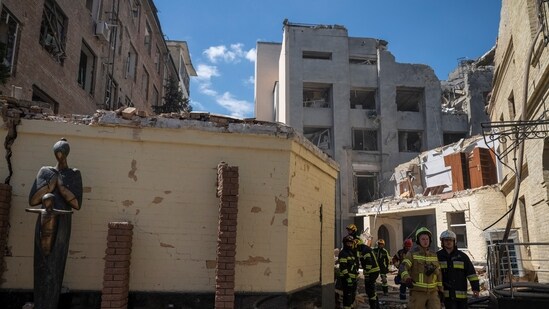
— T. Sassersson, Editor@NewsVoice (@newsvoicemag) May 24, 2026While authorities are still sorting through the wreckage, they say at least one person was killed in the blitz that started a 1 am and continued into the early morning light, when a nine-story residential building was hit. Others were trapped in an air raid shelter, its door having been buried in debris. At least 20 people were injured. Many videos purporting to capture the attack and its aftermath assault are circulating on social media:
— OSINTtechnical (@Osinttechnical) May 24, 2026AMK Mapping, a pro-Ukraine account that chronicles the war on X, described the Russian attack on Kiev as "enormous," saying it included hundreds of Geran-2 drones, at least 20 Iskander-M ballistic missiles, 12 Kh-101 cruise missiles, 6 Kalibr cruise missiles, 4 Zircon hypersonic cruise missiles and 2 Oreshnik intermediate range ballistic missiles (IRBMs). Putin has hailed the Oreshnik as un-interceptable, as it reportedly travels at more than 10 times the speed of sound. Everyone’s counting missiles. The interesting part is the variety. Ballistic, cruise, hypersonic, IRBM, and drones converging in one window is a deliberate saturation profile, forcing the air defense to solve too many different problems at the same time. Mixing an Oreshnik IRBM…