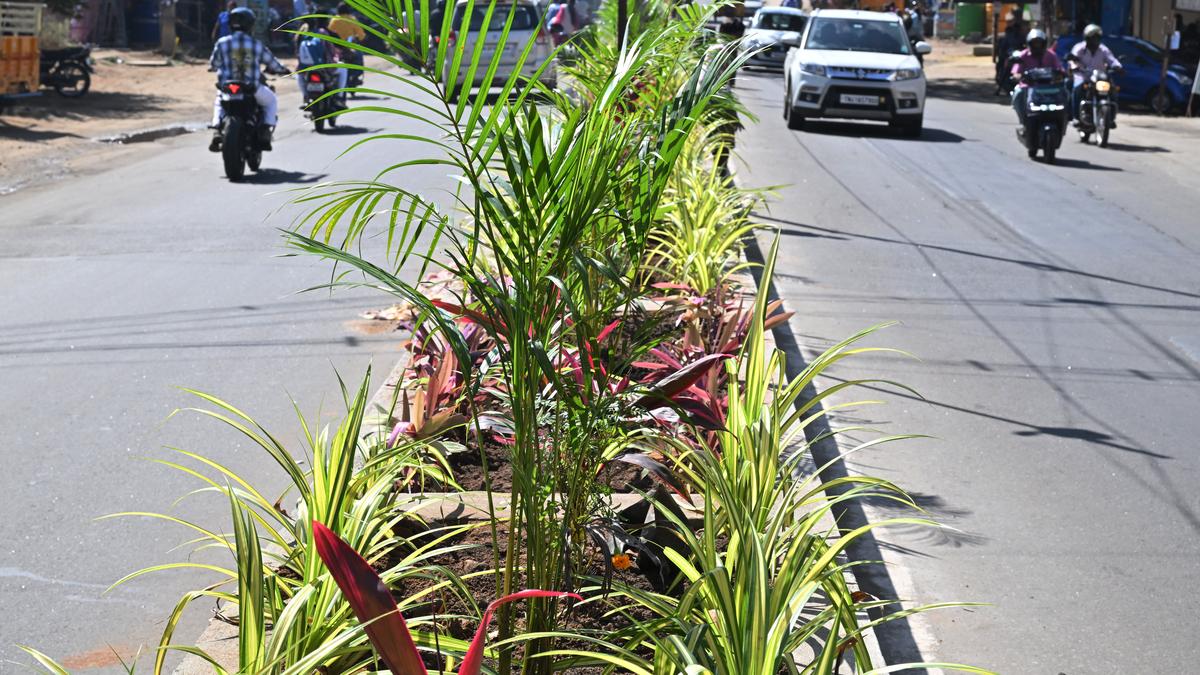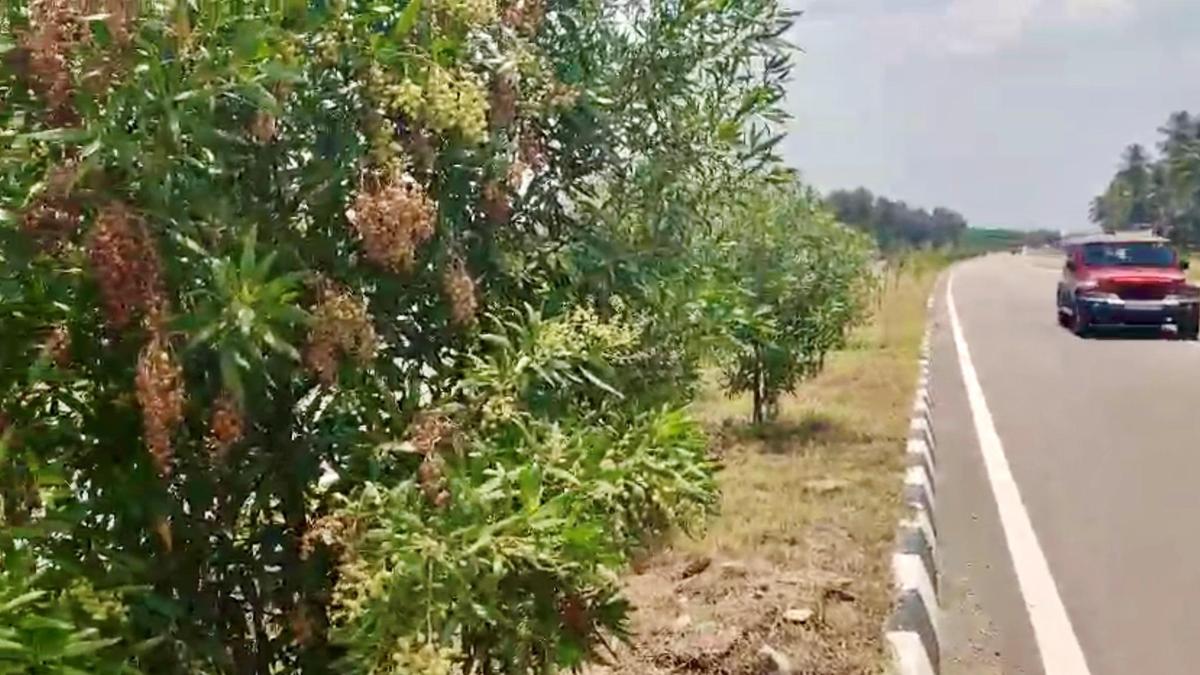
Conocarpus plant species planted in a median on a highway in Tamil Nadu.
| Photo Credit: SPECIAL ARRANGEMENT
Despite explicit warnings from environmentalists and blanket bans in States like Gujarat and Telangana, recent highway development projects across Tamil Nadu are inexplicably continuing to plant the invasive Conocarpus tree.For years, the sleek foliage of the Conocarpus tree (Conocarpus erectus), native to the tropical America and Mexico, was hailed as the ultimate saviour for India’s urban afforestation. Chosen by highway planners and civic authorities for its lightning-fast growth and ability to stay lush during brutal summers, this exotic species was planted by the millions. However, this cosmetic greening has come at a severe ecological and public health cost. This, according to ecologists, prompted strict government bans and mass uprooting drives across states like Gujarat and Telangana. An ecologist named Saravanan from Udumalpet, said, during winter, the tree releases massive amounts of airborne pollen, which public health data directly links to a severe spike in seasonal allergies, chronic coughs, and asthma attacks. Beneath the surface, its aggressively invasive root system wreaks havoc on urban infrastructure. “In search for moisture, the roots effortlessly penetrate concrete, fracturing drinking water pipelines, damaging telecommunication cables, and choking city sewage networks,” he added. “This degradation is particularly acute along India’s expanding national highways. Planted densely within narrow medians, Conocarpus acts as a massive subterranean network,” he added. It sucks out tremendous volumes of water daily, severely depleting localised groundwater reserves and dehydrating adjacent agricultural soil, Mr. Saravanan noted. “It’s aggressive root mats choke out hardy native shrubs like Nerium and Bougainvillea, altering the soil’s nutrient cycle and destroying essential microbial habitats. Above ground, its rapid growth frequently obstructs streetlights, highway signage, and safety cameras, creating a direct hazard for commuters,” he noted. Despite clear warnings regarding these ecological hazards, recent highway development projects have inexplicably continued to introduce the species. Experts argued that the Highways Department must strictly monitor and regulate these plantations, as such invisible, slow-burning environmental threats can ultimately inflict catastrophic damage on the local ecosystem. This should be replaced with native Indian species like Neem, Peepal, Pongam, and local Banyan that ensures sustainable greening. Published - May 24, 2026 08:19 pm IST