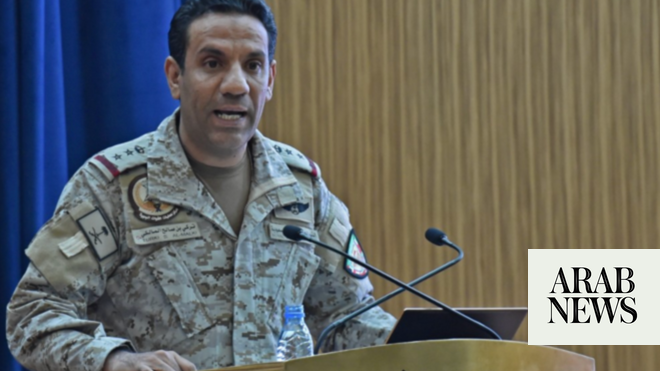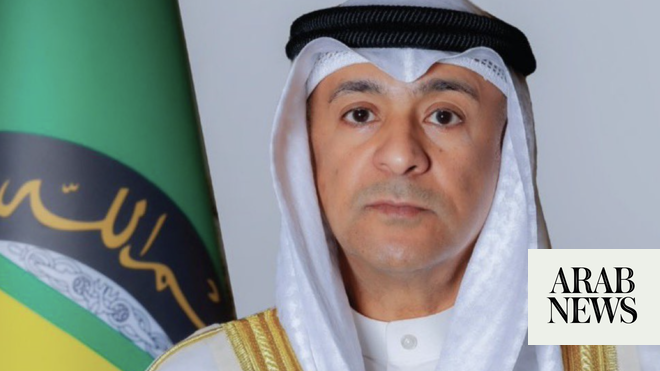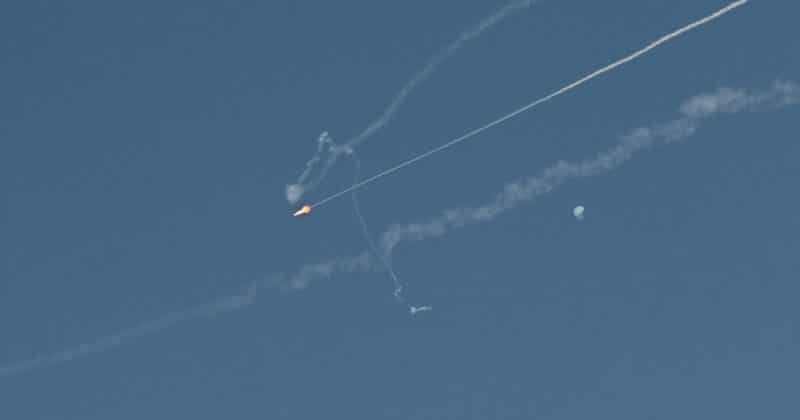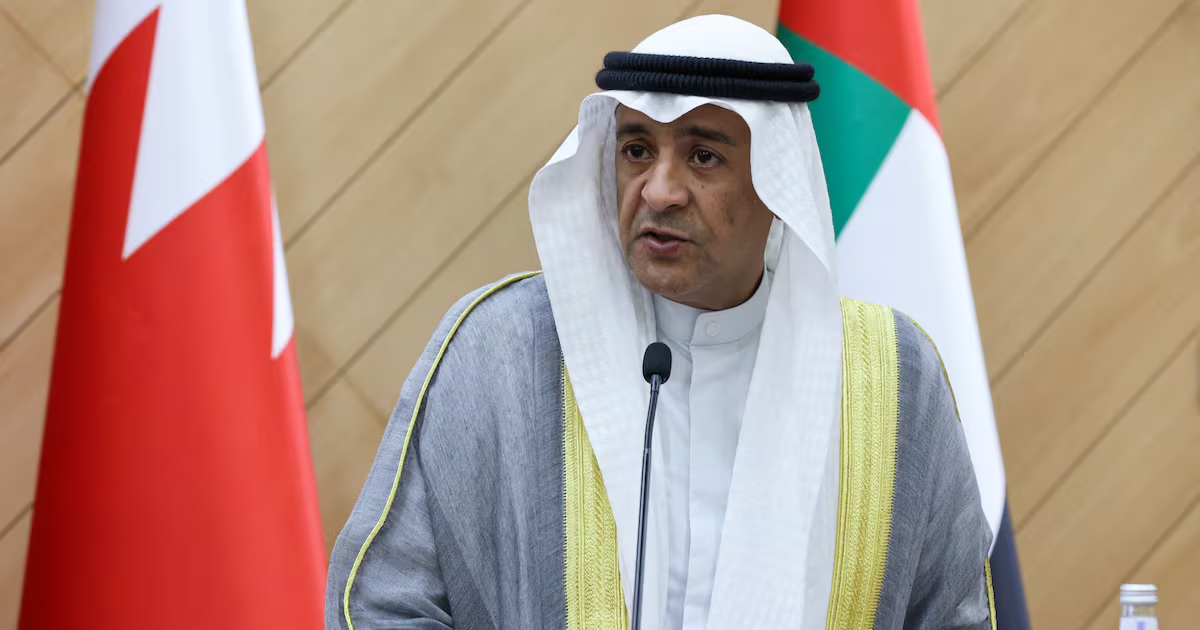
Jasem Al Budaiwi, Secretary General of the Gulf Co-operation Council, has condemned a drone attack on Saudi Arabia from Iraqi airspace as “a flagrant violation of security and stability in the region”.Saudi Arabia's Ministry of Defence said on Sunday that its air defences had intercepted and destroyed three drones that entered the kingdom’s airspace from Iraq.There was no claim of responsibility from the so-called Islamic Resistance in Iraq, a group of Iran-backed militias that have claimed responsibility for similar attacks on neighbouring countries after joining the Iran war in solidarity with Tehran.A statement issued by Iraq’s Ministry of Foreign Affairs said it had “received preliminary information regarding an attack on the kingdom with three drones” and that “competent authorities immediately initiated the necessary verification and investigation procedures to determine the circumstances”. The ministry said Iraqi air defences and optical equipment had not detected the attacks and called on Saudi authorities to “exchange relevant information, which would contribute to reaching accurate information that enhances security and stability for the two brotherly countries”.It is the first such incident since Iraq installed a new government last week, raising questions about Baghdad’s control over armed factions operating from its territory.In a statement, Mr Albudaiwi condemned “the hostile attack that targeted the kingdom of Saudi Arabia by drones launched from Iraqi airspace” and said it reflects “the continuation of an escalatory approach that undermines security and threatens the safety of vital facilities, infrastructure and regional security”.He said Saudi Arabia's security was “an inseparable part of the security of the GCC states” and that its member countries stood united with the kingdom in all measures it took “to preserve its security, stability, sovereignty and territorial integrity”.Brig Gen Turki Al Malki, the Saudi Defence Ministry's spokesman, said the kingdom “reserves the right to respond at the appropriate time and place” and would “implement all necessary operational measures” to respond to any attack.A billboard in Baghdad shows Iran's late supreme leader, Ayatollah Ali Khamenei, and Hashim Al Saraji, leader of the Iran-backed Iraqi militia Kataib Sayyid Al Shuhada. AFPInfoTehran-backed militias in Iraq have claimed responsibility for hundreds of attacks inside and outside the country since the US and Israel began their war on Iran on February 28.They said the attacks were intended to support Tehran, to avenge the killing of Iranian supreme leader Ayatollah Ali Khamenei and to respond to air strikes on their bases.Drones and rockets were launched at several US-linked sites in Iraq, including the country's embassy in Baghdad; a logistics site used by American troops at Baghdad International Airport; and the Harir airbase, which houses US personnel, and Washington's consulate in Erbil, the capital of Iraq's semi-autonomous Kurdistan Region.They have also claimed attacks on US troops in Jordan, Kuwait, Saudi Arabia and Bahrain, prompting calls from those countries, as well as the UAE and Qatar, for Baghdad to take steps to halt the strikes.Sunday's attack places pressure on new Iraqi Prime Minister Ali Al Zaidi, who has pledged to assert state authority and tackle groups operating outside the formal command of the Iraqi armed forces.It came hours after Fuad Hussein, Iraqi Minister of Foreign Affairs, said the country's relations with Gulf states “have become a victim to the continuing war in the region”, and that one of the government's priorities was to restore these relations.For Baghdad, the incident is a test of both its foreign and domestic policies. Diplomatically, Iraq risks further strain with Saudi Arabia and the wider GCC if it is perceived as unable or unwilling to prevent its airspace and territory from being used for attacks on neighbouring states. Iraq relies on improving ties with Gulf states for investment, energy co-operation, and regional integration. A failure to act could set back that agenda.Domestically, the attack is a test of how the new government will deal with Iran-backed militias. Many of these groups operate under the umbrella of the state-run Popular Mobilisation Forces, but some factions maintain independent operational capacity and have been blamed for previous drone and rocket attacks on Saudi Arabia, Israel and US assets in the region.
GCC condemns drone attack on Saudi Arabia 'launched from Iraqi airspace' | The National
Iraq says no signs of attack detected so far and calls for Saudi co-operation in investigating the incident
677 words~3 min read