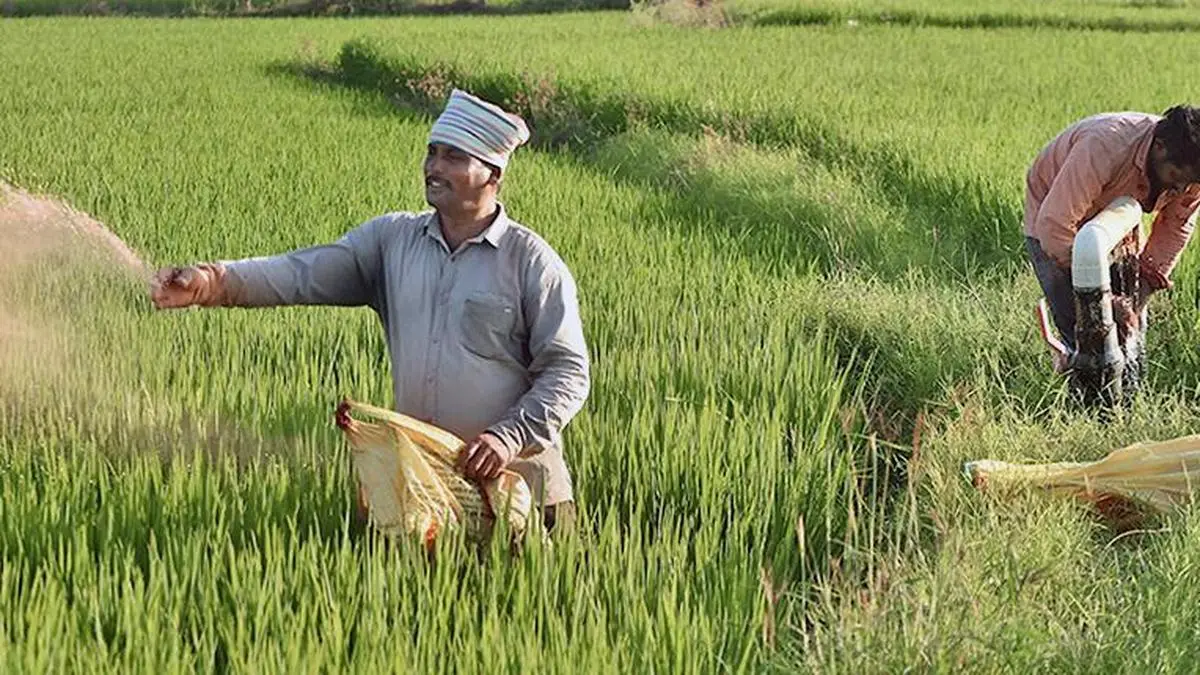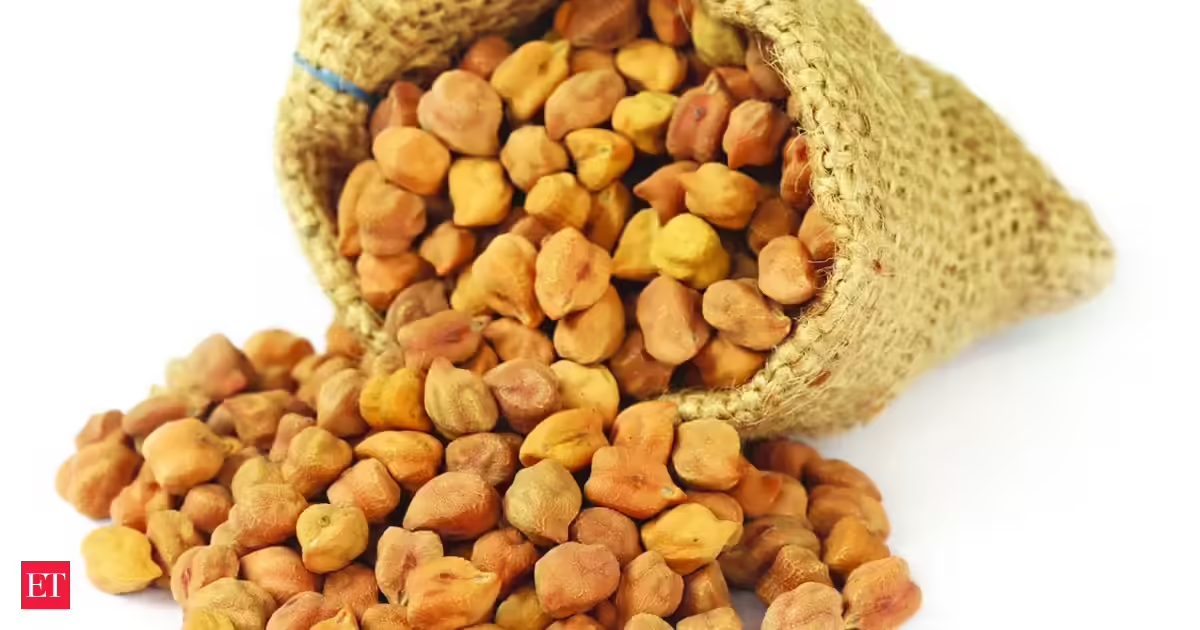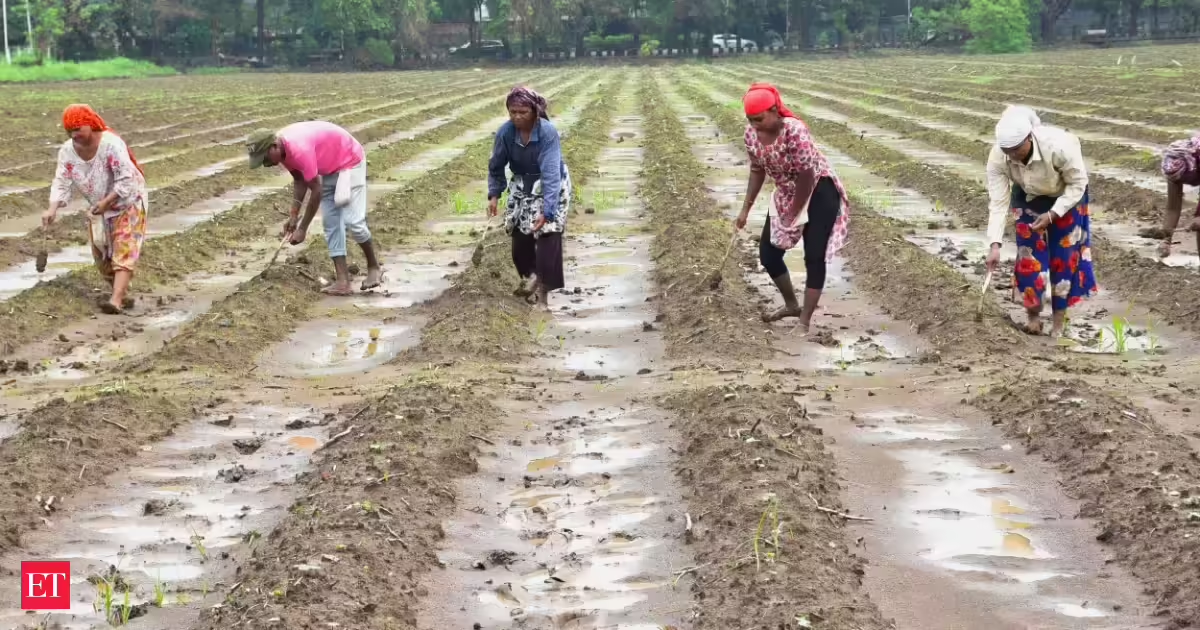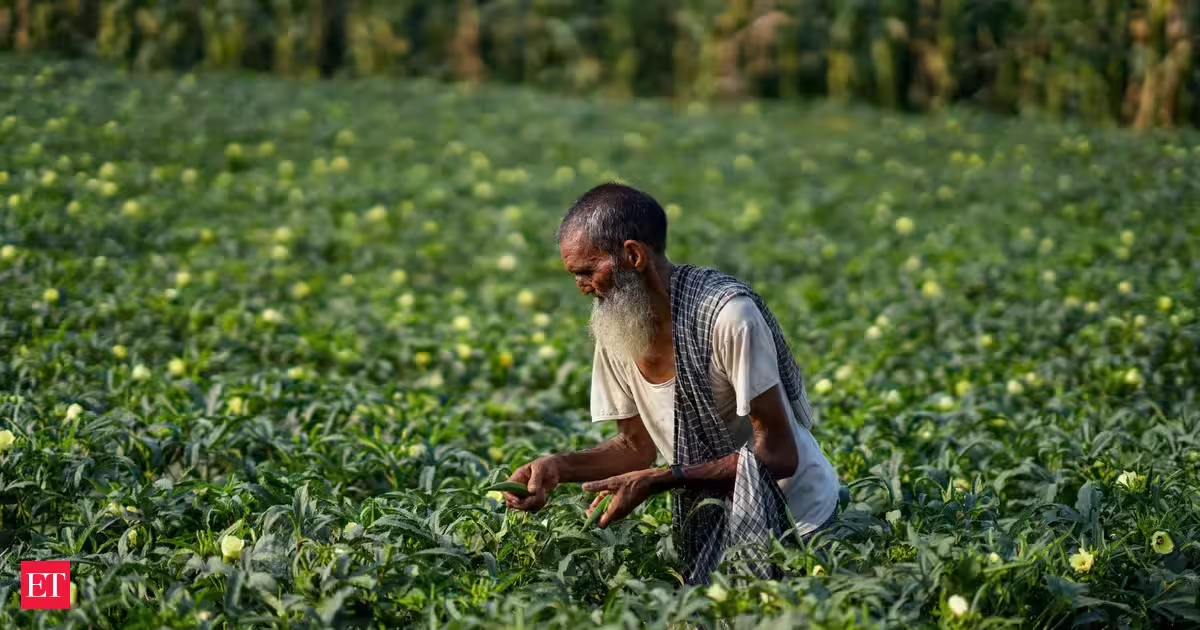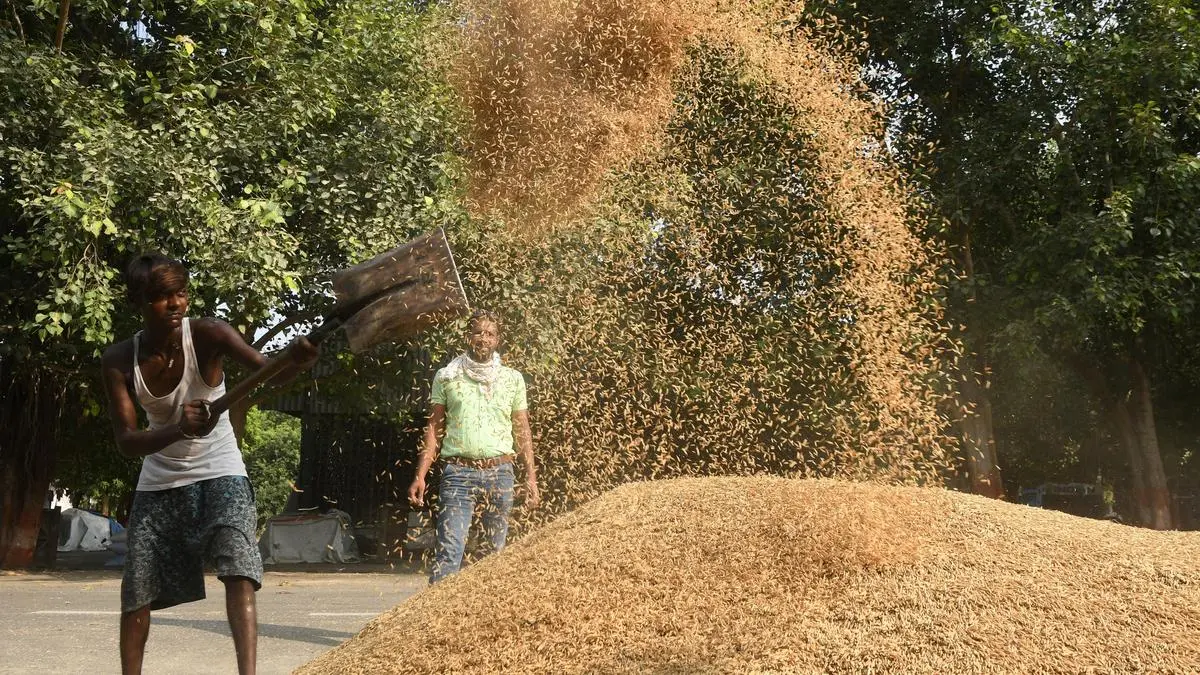
The average mandi (agriculture market yard) prices of two of main five Rabi crops – wheat, chana (gram), mustard, masur (lentil) and barley -- during the current main harvesting season that started in April and will continue until end of June, were ruling 4-5 per cent below their respective minimum support prices (MSPs) while three other crops reported up to 14 per cent higher than the benchmark government-set rates.While the higher than MSPs for Rabi crops are good for farmers, in the current situation when there have been increase in rates of other items in recent weeks, better rates in agricultural markets are seen to help the growers who solely depend on agriculture crops.According to mandi price data maintained by Agmarknet portal, among the cereals group, the average all India farm-gate wheat was ₹2,456/quintal on May 22, down by 5 per cent from its MSP of ₹2,585/quintal. Barley rate in mandis (agriculture market yards) was average ₹2,198/quintal, up 2 per cent from ₹2,150/quintal MSP. The price of maize, which is also grown in Rabi season, was down by 21 per cent at ₹1,896/quintal from ₹2,400/quintal MSP.In pulses category, average mandi price of chana (gram) was 4 per cent below its MSP at ₹5,656/quintal against MSP of ₹5,875/quintal. But, masur rate was reported at ₹7,045/quintal, a tad above its MSP of ₹7,000/quintal.Rabi season’s main oilseed mustard continues to be on higher side by registering 14 per cent surge at an average ₹7,081/quintal from the MSP of ₹6,200/quintal.Government sources maintained that up to 5 per cent below MSP should be seen as normal market behaviour and should not warrant artificial intervention. “The demand-supply should be allowed to play in the market sometimes to correct surplus situation in any crop as buying those under official procurement system will have its challenges on disposing the commodity,” a government ooficial said.The government has raised 2025-26 crop year’s wheat production to a record 120.21 million tonnes (mt), which is 2 per cent higher from 117.51 mt in 2024-25. The production of rapeseed/mustard has also been pegged higher at 13.33 mt against 12.67 mt in 2024-25 and that of chana at 11.79 mt against previous year’s 11.11 mt. Production of masur too is estimated to be higher at 1.73 mt against 1.65 mt.“We have seen in the past also for some commodities, market prices during and immediately after harvesting season are lower than the MSP. However, for some commodities it is higher than the MSP. Presently, while mustard market prices are around 14 per cent higher than the MSP, the same for maize is around 20 per cent lower,” said D K Pant, chief economist at India Ratings & Research.He attributed the current prices of these commodities to the present stock position in the country and their domestic demand. “The impact of these prices on farmers will be felt differently, while the mustard farmers are clear winner, the maize farmers are looser. The farmers will benefits if the prices of agri commodities grow faster than the cost of cultivation,” he added.Retail food inflation, a key constituent of the country’s consumer price index, hit 4.2 per cent in April, up from 3.87 per cent in March. The overall retail inflation in India accelerated for the sixth consecutive month to a 14-month high of 3.48 per cent in April.Published on May 24, 2026
Mixed trend in mandi prices of Rabi crops
Mandi prices for Rabi crops show mixed trends, with wheat and chana below MSPs, while mustard prices exceed benchmarks.
554 words~3 min read