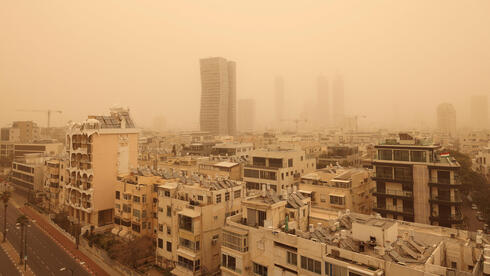
Soroka and Ben-Gurion University study finds air pollution, extreme heat and shifting climate conditions may worsen migraines and raise the risk of acute attacks, as experts warn cumulative exposure affects the conditionAir pollution and extreme weather conditions do not just make it harder to breathe; they may also worsen migraines, according to a new study conducted by researchers at Soroka Medical Center and Ben-Gurion University of the Negev. The study, published recently in the leading journal Neurology, found that prolonged climate conditions and short-term exposure to pollution affect the risk of migraine attacks and urgent medical visits. Cumulative exposure over time to the same pollutants was linked to an increase in the frequency and severity of migraines.5 View gallery Haze in Tel Aviv drives up air pollution, and with it, the risk of migraine (Photo: REUTERS/Tyrone Siu)“The understanding that air pollution affects not only people suffering from lung diseases, and that it has long-term effects, is significant,” said Prof. Gal Ifergane, head of the neurology department at Soroka Medical Center, part of Clalit Health Services, and one of the study’s lead researchers. He said the findings could help in the future development of personalized recommendations for migraine patients, including air quality monitoring, avoiding exposure on certain days and early use of medication during high-risk periods.Migraine is a moderate to severe headache with distinct characteristics that set it apart from an ordinary headache. It is often a throbbing pain, sometimes on one side of the head. Attacks are frequently accompanied by nausea, sensitivity to light and noise and, in some cases, warning symptoms such as flashes of light or sensory disturbances. A migraine attack can last for hours or even days and has a significant impact on quality of life.“People who suffer from migraines know that there are more difficult days — very hot days, days with sandstorms or a fire whose smoke reaches their area — and it affects them,” Ifergane said. Over the past decade, he said, it has been shown that migraine activity is influenced not only by biological vulnerability but also by environmental factors that may affect sensitivity and lead to fluctuations in the onset of attacks, although the evidence on the issue has not been consistent.Prof. Gal Ifergane Photo: Rachel DavidThe researchers said most studies conducted so far have focused on isolated immediate triggers but did not examine the connection between prolonged environmental factors and acute triggers. They also noted that recent studies found a link between long-term exposure to air pollution and temperature, but these were examined on monthly and annual scales, reflecting chronic effects rather than the development of immediate triggers.The current study was retrospective and analyzed data from 7,032 migraine patients from the Be’er Sheva area between 2000 and 2023, based on electronic medical records from Clalit Health Services and Soroka University Medical Center. The patients were adult city residents diagnosed with migraine, most of them women, who accounted for 77.4% of the group. The average age was 46.9.Dr. Ido Peles Photo: Soroka Medical CenterThe study focused, among other things, on exposure to nitrogen dioxide air pollution, or NO₂, fine inhalable particles known as PM2.5 that originate from traffic pollution, industry and dust, solar radiation and climate conditions such as temperature and humidity.The researchers compared pollution and weather data obtained from fixed monitoring stations with urgent medical visits, including emergency room or community clinic visits in which the main diagnosis was acute migraine, as documented in electronic medical records. They said these urgent visits represent the severe end of the clinical spectrum and serve as a measure for all patients throughout the follow-up period.“It is very easy to understand how air pollution triggers asthma, but it has other effects on health as well,” Ifergane said. “Particles that enter the lungs create an inflammatory process that spreads throughout the body. In addition, some particles reach various receptors in the nose that have a direct connection to the brain, to reservoirs linked to the development of migraine attacks.”5 View gallery The study followed more than 7,000 migraine patients for over 20 years (Photo: Shutterstock)The researchers also examined patients’ quarterly use of triptans, common medications for treating migraine attacks that are taken when an attack begins, as a measure of ongoing migraine activity.Of the 7,032 patients, 2,215, or 31.5%, had at least one urgent migraine-related visit during the follow-up period, with more than 24,000 events recorded in total. Among those with documented visits, 48.4% had only one visit, about 22% had two to three visits and about 30% had four visits or more.5 View gallery Can air pollution and extreme heat worsen migraine attacks? (Photo: Shutterstock)Analysis of triptan use was conducted only among patients who had used the medication at least once, accounting for 46.7% of participants. To assess the stability of the measure, the researchers examined repeat purchases across different quarters. Among users of the medication, 49.4% purchased it for at least two years and 36.4% for three years or more. The researchers said these patterns support the use of triptan purchase frequency as a long-term marker of sustained migraine burden in this group.The findings showed that short-term exposure to nitrogen dioxide, which mainly originates from traffic pollution, was linked to an approximately 41% increase in the risk of an urgent medical visit due to migraine. Increased exposure to solar radiation was linked to an approximately 23% increase in the risk of an urgent migraine-related visit. The study also found that prolonged exposure to nitrogen dioxide and fine air pollutants was linked to increased use of triptans, indicating heightened disease activity over time.The study further found that weather conditions intensified the effect of pollution: high heat and low humidity in the summer increased the impact of nitrogen dioxide, while cold and humid winter conditions strengthened the effect of fine air pollutants.5 View gallery Researchers found a link between traffic-related pollution and an increase in urgent medical visits due to migraine (Photo: Oz Mualem)“For more than a decade, we have known that pollutants and weather have an effect, but the current study shows us that it does not only create a trigger on a specific day, but that cumulative exposure affects disease activity,” Ifergane said.However, the researchers stressed that the study does not prove that air pollution directly causes migraines, but points to a clear association between environmental conditions and increased disease activity.The researchers propose a new model in which migraine is influenced by a combination of personal biological sensitivity and both cumulative and immediate environmental triggers. “The basic tendency to suffer from migraine is indeed biological, and we see patients with the condition everywhere in the world — in urban and rural populations — but this tendency worsens under certain conditions, and it is important to be aware of that,” Ifergane said.“There are usually warnings about high air pollution, and the study emphasizes the importance of awareness not only among lung patients but also among those who suffer from migraines,” he said. “In the case of people who suffer from significant migraines, it may be advisable for them to avoid prolonged time outdoors on days with air pollution and thereby reduce exposure to pollutants.” He added that the study could also help the health system prepare for such days.Today, migraine treatment includes a combination of painkillers to relieve symptoms during an attack and preventive treatments aimed at reducing the frequency and severity of attacks. According to Ifergane, “It is possible that in the future we will be able to better tailor treatment to each patient. For example, during periods when pollution levels are high or weather conditions trigger attacks, it may be possible to consider adjusting the treatment dosage. That way, we will be able to fine-tune not only the type of medication for each patient, but also adjust the treatment for that same person according to changing periods and environmental conditions.”5 View gallery Migraine is not 'just a headache' but a chronic neurological condition (Photo: Shutterstock)The study also highlights the implications of climate change for public health. “As the climate changes, we and northern countries will be exposed to more sandstorms. There are people trying to stop climate change, and I hope they succeed, but for now, it does not seem to be happening. Therefore, we must prepare for days when extreme weather conditions and air pollution will be more complex and be ready to deal with the health problems they cause,” Ifergane said.In recent years, migraine treatment capabilities have improved significantly with the development of preventive medications for the condition. Ifergane said these medications work by inhibiting the CGRP protein, which plays a central role in the development of migraine and severe pain.However, he said, “Even today, there are many people with migraine who have never been diagnosed.” He added that only a minority of people in Israel who suffer from migraine receive the preventive treatment they should receive, due to lack of access to advanced treatments, most of which are not included in the state health basket. “Even if they are aware that such treatment exists, they cannot afford it,” he said.Ifergane said there is also a need to raise public awareness of the condition and the difficulties patients experience. “This is not an ordinary headache, but a chronic disease that, for many people, impairs functioning, causes lost workdays and affects their lives in ways that are hard to describe.”The study was led by Dr. Ido Peles of Soroka’s Clinical Research Center, in collaboration with Prof. Lena Novack, director of the Negev Environmental Health Research Institute; Dr. Michal Gordon, director of the research data unit and spatial research room; Prof. Batya Sarov of Ben-Gurion University’s epidemiology department; Prof. Victor Novack, head of Internal Medicine Department H, director of the Clinical Research Center and head of the research authority; and Prof. Gal Ifergane, head of the neurology department.
Extreme heat and air pollution may worsen migraines, study finds
Soroka and Ben-Gurion University study finds air pollution, extreme heat and shifting climate conditions may worsen migraines and raise the risk of acute attacks, as experts warn cumulative exposure affects the condition
1,635 words~7 min read