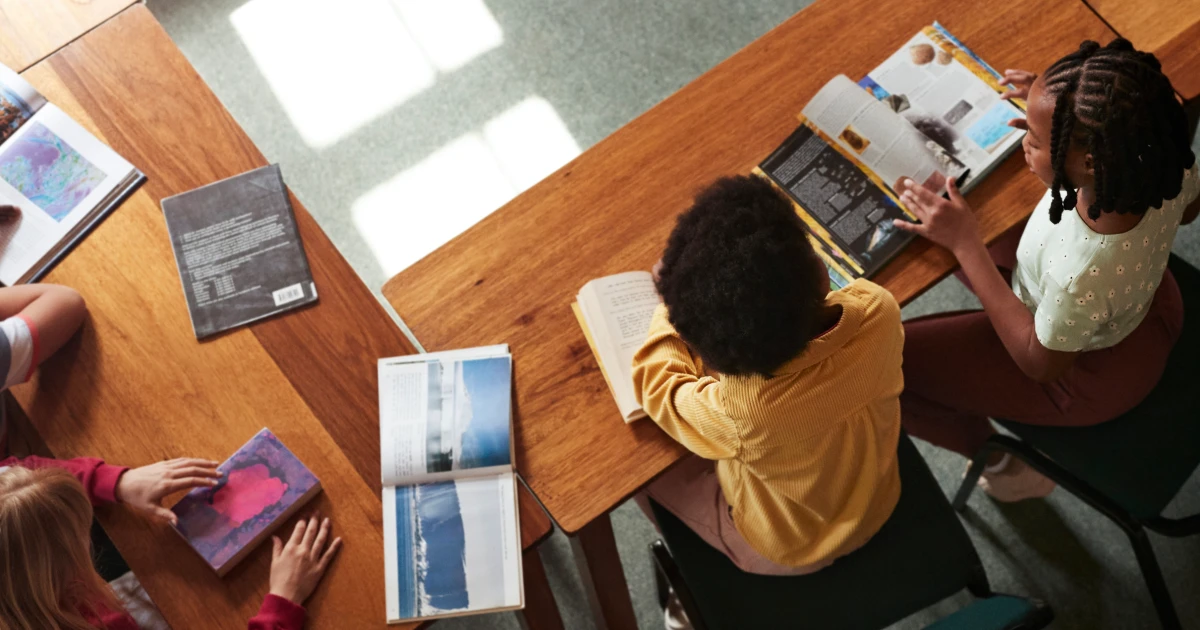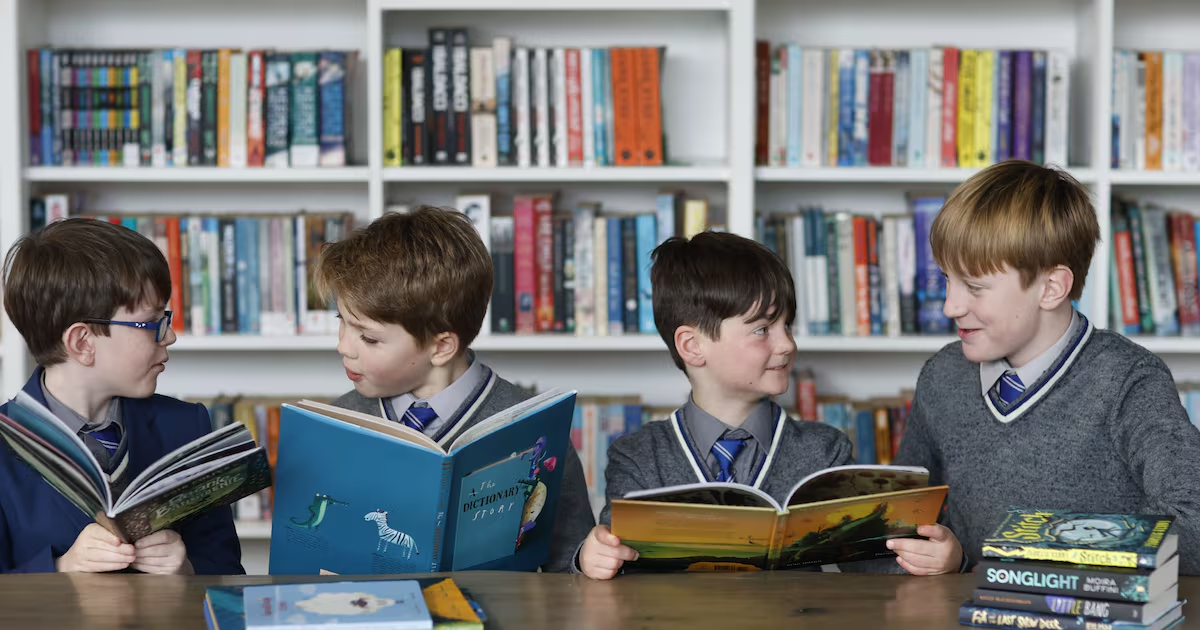
When you write for children you get used to instant feedback when reading to a roomful of them. Vocal, unrestrained feedback.Sometimes you even get the anticipatory buzz before you’ve hit the punchline in a paragraph or the cliffhanger at the end of a chapter. A shouted guess of what’s going to happen. They will laugh. They will gasp. They will groan. They might also drift into a bored, disengaged silence if your story isn’t cutting the mustard. Those are the moments you learn most from.Even after a dozen years doing this job, I find that surprise lurks behind every classroom door. Take a moment at Drimnagh Castle Primary School, in Dublin, earlier this year when I was previewing my new book, Minotaur Boy, to the boys there, focusing on a part where our 12-year-old hero (who has newly discovered that he is part mythical beast) wakes up with a bushy beard and hairy toes.A boy in the front of the class declared with great pride that he has very hairy legs. This was greeted with giddy agreement by the other boys, and soon enough a trouser leg had been raised, a hirsute shin shown off and the entire class was cheering with delight.Yet, that was not the most striking part of the visit. That came in the boys’ never being shy in telling of what books they were reading, or in brandishing the stories they had written, the illustrations they had drawn and generally treating creativity as something to shout about – as if they had scored a winning goal over the weekend.It’s not as if I don’t see great enthusiasm for books from schools across Ireland – and I visit a great many of them – but there was something particularly notable about Drimnagh Castle. As part of a vital book-gifting programme, Children’s Books Ireland had sent me there as a “champion of reading”, but the school already seemed to be full of them.It went firmly against the narrative about boys and their reading rates. Survey after survey, in country after country, tells us that boys are reading for pleasure at lower rates than girls, and in numbers that have been in decline for some time.Last year, Children’s Books Ireland released research with parents showing that 19 per cent of boys up to the age of 18 never read for pleasure, compared with 12 per cent of girls. Similar research in the UK shows that reading rates are lower for boys of every age; it’s particularly acute in the teenage years, when fewer than one in 10 boys said they read for pleasure.Nearly a fifth of boys don't read for pleasure, according to research last year by the Children's Books Ireland. Photograph: Damien Eagers/Julien Behal Photography/Children's Books Ireland In the United States, it has been described as a “literacy crisis” among boys, who are behind girls in the metrics to such an extent that it’s said to be having an impact on overall academic performance as well as behaviour.[ Best new children’s books: Making history funOpens in new window ]“What is even more striking than this is that these patterns appear all over the world,” says Elaina Ryan, the chief executive of Children’s Books Ireland. The Progress in International Reading Literacy Study, which Ireland participates in, “includes about 400,000 students worldwide at fourth-grade/fourth-class level, and it shows us that girls in general enjoy reading more than boys, read more frequently outside of school than boys and display greater confidence in their reading abilities.“And enjoyment of reading is linked to reading performance: girls performed better in reading in 51 of the 57 education systems that participated in the study. Given the cultural and political variances in participating countries, this tells us there is a fundamental structural issue.”There were positives in the Irish research, notably the high number of parents who still read to their children, but its finding that children own fewer books than in the past also tapped into a fear that they are just not reading as much as they used to.Many of the reasons are obvious. The encroachment of the phone is a big one. One UK charity recently described the phenomenon of children arriving into early education without knowing how to properly use a book; some instinctively swipe pages as if they were a tablet.Further up the age ladder, any parent of a teen knows that the combined pressures of homework, study, longer school days, devices, gaming, part-time work, sports and life in general mean that reading can fall away dramatically. A high number of parents in Ireland still read to their children, research shows. Photograph: Julien Behal Photography/Children's Books Ireland Nevertheless, girls are more likely to come back to reading in their later teenage years; boys’ rates have remained stubbornly low (although some recent research has suggested that could be changing because of the many TikTok book influencers).[ Would it not be better if children could take the books home from school?Opens in new window ]There is the suggestion of a major impact as they hit their adult years. In 2024, the US magazine Atlantic reported on the increasing problem that US university students were having in reading entire books. Not just any university students but literature students. It acknowledged that students have always skipped through books – or over them entirely – but that the issue had reached a level that was ringing very loud alarm bells.There is a strong element of “if you can’t see it, you won’t be it”. And adults too know the lure of the phone and what it does to our own reading habits and attention spans. It’s not hard to understand why this is happening to the generations following behind.But when it comes to reading for pleasure in general, the two greatest determining factors are gender and socioeconomics. The Children’s Books Ireland report emphasised the gender gap and the need for greater examination of why it’s happening.“It’s possible that the adults in children’s lives fall into a vicious circle, not reading to or buying books for boys because we keep hearing these statistics about boys not enjoying reading,” Ryan says. [ Here’s what you’ll be reading in 2026, according to Irish booksellersOpens in new window ]“Or there might be a deeper belief about the kinds of activities – and here you could substitute clothes, toys, imaginary play – that are appropriate for boys or girls; these gendered differences, while archaic, are still present, and children absorb these messages from a very young age.”The report noted the dearth of reading role models. Irish primary teachers are five times more likely to be female than male. One British primary teacher – @theteacherwithpinkhair – posted a popular reel about sitting her class in front of CBeebies to have that day’s story read to them by an actor on a screen. Why? “This is a man,” she explained bluntly. In that school, no child below the age of seven had a male teacher to read to them.“Seeing a role model doing something normalises that behaviour and makes it part of the culture of the family, or the school,” Ryan says. “A 2025 study from the National Literacy Trust in the UK found that parents who read with their child daily were more often mothers, mostly from higher social grades, and non-readers were distinct: they were more likely to be fathers, more likely to have sons, and more likely to come from lower social grades.”My experience is that it’s not a new concern. More than a decade ago, someone in publishing explained to me quite casually that boys’ reading levels “fall off a cliff” at 13, suggesting it was effectively a lost cause.But in recent years, I’ve met booksellers, librarians, teachers and publishers alike who have asked for more “boy-centred” stories, even knowing that they are harder to reach – or because of that.There is still the problem of many children not seeing themselves represented in books. Photograph: Damien Eagers/Julien Behal Photography/Children's Books Ireland There has also been a growing concern over the messages those boys are getting online when books are known to foster empathy as well as mental wellbeing and happiness, even before you get to the benefits for vocabulary and wider academic success.And there is still the problem of many children not seeing themselves represented in books: the changing demographics in Ireland are only slowly being reflected in the stories available.Ryan talks of targeted initiatives across Europe, some tying into more stereotypically male spaces such as stadium-based events for soccer-themed books and book clubs for men, held in pubs and with the aim of promoting reading to their sons.So what did they do in Drimnagh Castle that made its boys so proud of their love of reading? A lot.The school made reading a key focus of its Deis plan, and the result is a building in which stories are in every room, in the halls and on the walls.“We have ‘Dear’ time every day,” says Brenda Weir, the school’s literacy co-ordinator. “They ‘drop everything and read’ for 10 or 15 minutes a day. Then some teachers let them bring in blankets or cushions so they can sit wherever they want to. “Teachers and kids alike really enjoy it. And that’s the time when we might target a boy who we feel doesn’t like reading and help them find a book that they like. I suppose a little bit of encouragement can go a long way.”A book-buddy scheme matches older and younger boys to read together. TY students visit for reading sessions too. The boys have their own book committee, which gives them a say on the books they want to read. Book boxes are put together for children and parents to read at home.[ How do I get my teenager off her phone and back reading?Opens in new window ]“We have a reading tree,” Weir says. “Each teacher puts a simple outline of a tree and we give them ‘leaf’ Post-its, so every time they read a book, they write the name of the book on it, and it becomes a real leafy tree. “I really like that one, because even if a child is really struggling with reading, they’ll be reading a book with a support teacher or somebody, and their name goes up on the tree as well.”The result has been a measurable increase in reading for pleasure and a big jump, from 60 per cent to 80 per cent, in boys reading at home.“There’s no pressure on boys,” Weir says. “They’re immersed in all these books.”And of course, at the heart of it all, it’s still ultimately about writing stories that boys, and all kids, will want to read – and to gasp and laugh and shout about it.Shane Hegarty’s new book, Minotaur Boy, is published by DK Flip
How Irish schools are combating the decline in reading
Boys especially are reading for pleasure less than they used to. It’s a global trend. But there are ways to fight back
1,802 words~8 min read