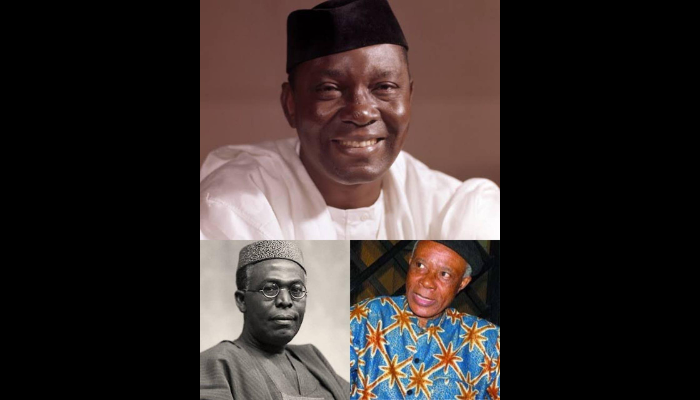
adsLast Sunday, I indicated that this week’s edition of The Sunday Stew would pay tribute to the late political economist and public intellectual, Claude Ake. That tribute remains, but its timing has shifted. Later this year will mark the 30th anniversary of his passing — a more fitting moment to revisit the life and legacy of one of Africa’s most consequential intellectual minds. Until then, this column turns to a related but less discussed tradition in Nigerian thought: the rare lineage of framework builders who operated outside the academy yet reshaped how society understood itself.
Nigeria’s intellectual landscape faces a persistent challenge: not the total absence of indigenous frameworks, but their relative scarcity and limited institutional consolidation. Much of our analytical vocabulary still arrives pre-assembled from elsewhere — adapted to Nigerian conditions rather than born from them. We reach habitually for tools forged in other fires, calibrated for other crises, and carrying the residue of other civilisational assumptions. The consequence is not merely intellectual dependency. It is explanatory incompleteness. Borrowed frameworks, however sophisticated, can illuminate local realities, but they do not always capture the structures beneath them.