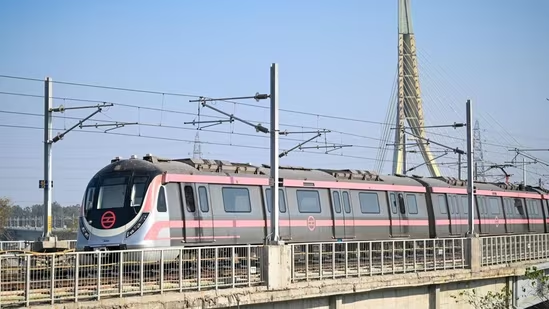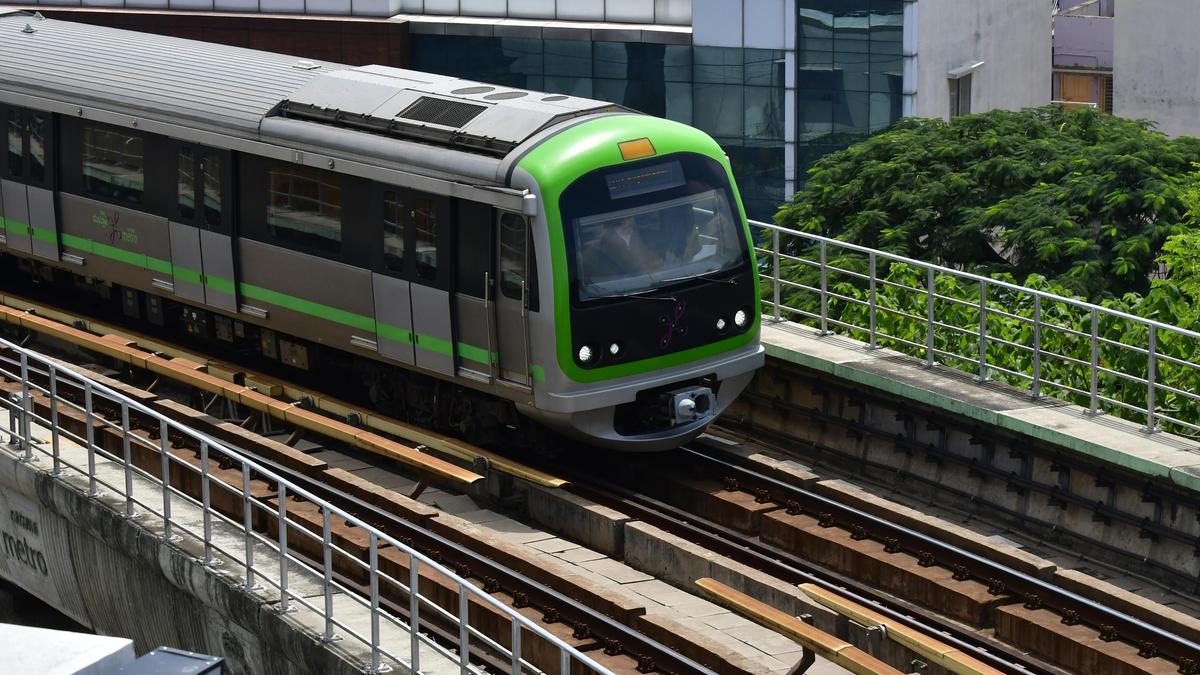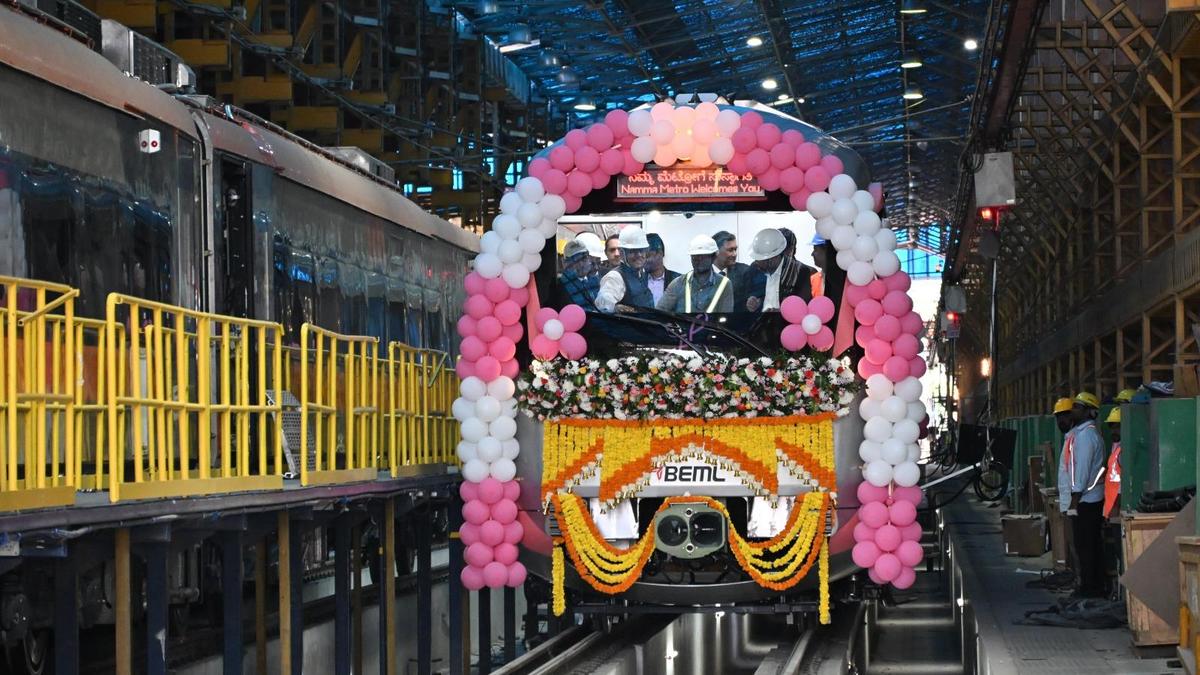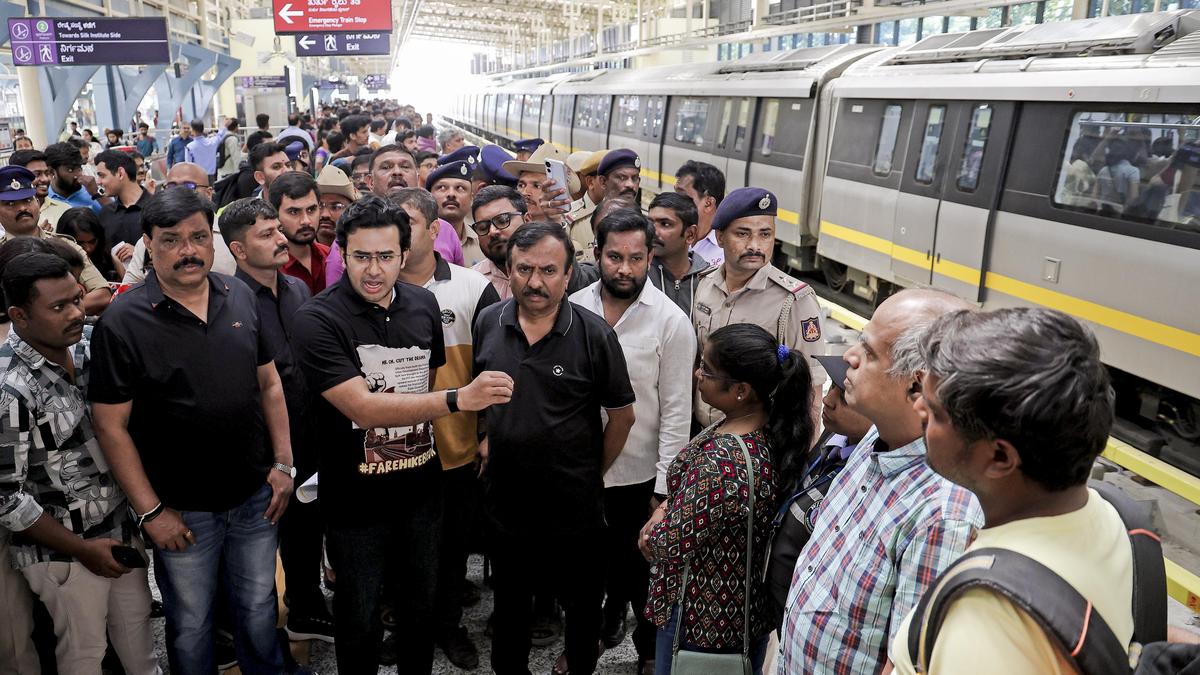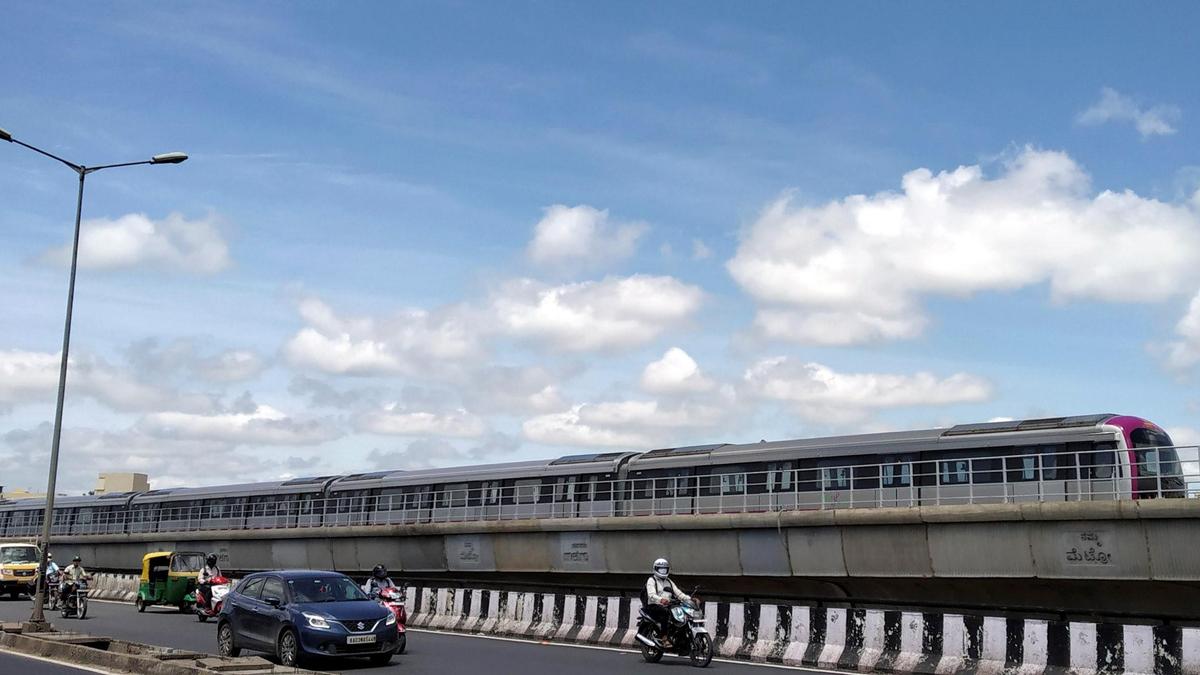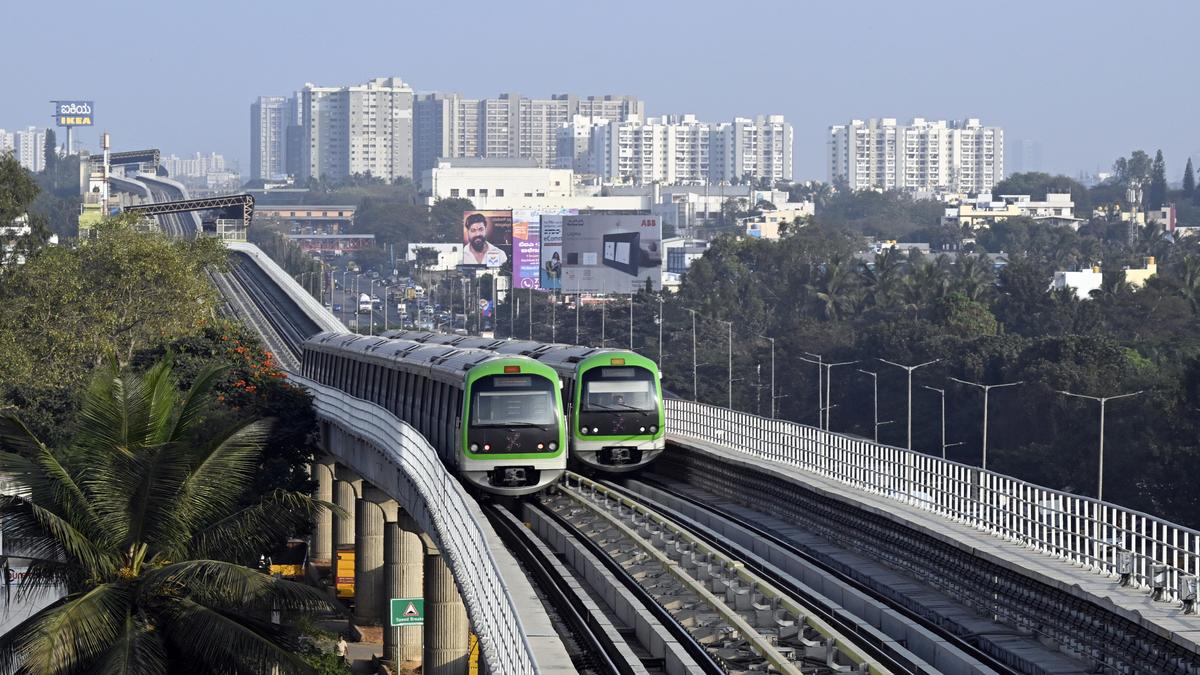
The Bangalore Metro Rail Corporation Limited (BMRCL) has submitted the Detailed Project Report (DPR) for the proposed Madavara (BIEC)-Tumakuru Metro Rail corridor to Home Minister G. Parameshwara on Saturday, with the report proposing implementation of the nearly 60-km corridor under a Public-Private Partnership (PPP) model, particularly the Build-Operate-Transfer (BOT) framework.The submission comes even as several transport experts and urban planners have raised concerns over the practicality and financial viability of extending metro connectivity up to Tumakuru.Dr. Parameshwara said that the DPR would be placed before the State Cabinet for discussion. “The report will be discussed in the Cabinet meeting and a decision will be taken thereafter,” he said.According to the DPR accessed by The Hindu, the proposed metro corridor from Madavara (BIEC) to Tumakuru will cover a distance of 59.96 km via Nelamangala, Dobbspet and Kyathasandra.The DPR indicates that the Bangalore Metro Rail Corporation Limited (BMRCL) is considering multiple PPP structures for the project, with the BOT model identified as the “suitable PPP model” for its implementation. Under the proposed BOT framework, the private sector partner would be responsible for designing, financing, constructing and operating the metro system for a concession period of 25 to 30 years, after which the ownership would remain with or revert to the government.“The BOT model is chosen due to its ability to balance private sector efficiency with government control, ensuring that the project is delivered on time, within budget and with optimal operational standards,” the DPR noted.Project implementationThe report also outlines broader PPP possibilities at both the project implementation and operational stages. It proposes monetisation avenues such as metro station naming rights, earmarked advertising spaces, commercial areas and corporate access arrangements for employees. Revenue generated through such measures, the DPR stated, could help reduce the financial burden on the Government of India and the State government.In addition, the DPR proposes outsourcing several operational and maintenance activities to private players, including maintenance of rolling stock, signalling systems, telecom infrastructure, power supply and fare collection systems.The DPR discusses multiple PPP formats, including BOT (Build-Operate-Transfer), BOOT (Build-Own-Operate-Transfer), BOLT (Build-Own-Lease-Transfer), and standard Operations and Maintenance (O&M) contracts.FundingThe report also presents two major funding scenarios for the project. Under the Special Purpose Vehicle (SPV) model with “innovative finances”, the estimated project cost is pegged at ₹17,785.69 crore. The funding pattern envisages 20% contribution each from the Centre and the State government, while 60% would come through senior debt sourced from multilateral agencies, bilateral agencies or commercial loans.The DPR stated that the Government of India’s share would amount to ₹2,524.48 crore, while the State government’s contribution would also stand at ₹2,524.48 crore. Senior debt is estimated at ₹7,573.45 crore. Additional components include ₹800 crore through value capture financing, ₹2,710.93 crore towards land acquisition and rehabilitation and resettlement by the State government, ₹1,097.47 crore towards State taxes support, ₹150 crore through private participation and ₹404.87 crore towards interest during construction.A second financial model proposed in the DPR is the PPP model based on Viability Gap Funding (VGF). Under this scenario, the total project cost is estimated at ₹19,361.23 crore. The report proposes 24% VGF support each from the Centre and the State governments amounting to ₹2,934.43 crore each. The concessionaire’s equity contribution is estimated at ₹2,640.98 crore, while debt raised by the concessionaire is estimated at ₹6,162.29 crore.The DPR also notes that the State government would bear land acquisition costs amounting to ₹3,617.29 crore. Interest during construction on loans is estimated at ₹1,071.81 crore. According to the DPR, private operators may seek assured returns in the range of 16% to 18% or demand guaranteed ridership because metro rail projects are generally considered socially oriented infrastructure projects with long gestation periods.The implementation timeline proposed in the report suggests that the project could take close to four to five years after approvals and financial closure. The DPR allocates 48 months each for depot construction, viaduct construction and elevated station works, while land acquisition and utility shifting are expected to take 24 months each.
DPR proposes Public-Private Partnership model for Madavara–Tumakuru Namma Metro line
BMRCL proposes a PPP model for the Madavara-Tumakuru Metro line amid concerns over its financial viability and practicality.
660 words~3 min read